
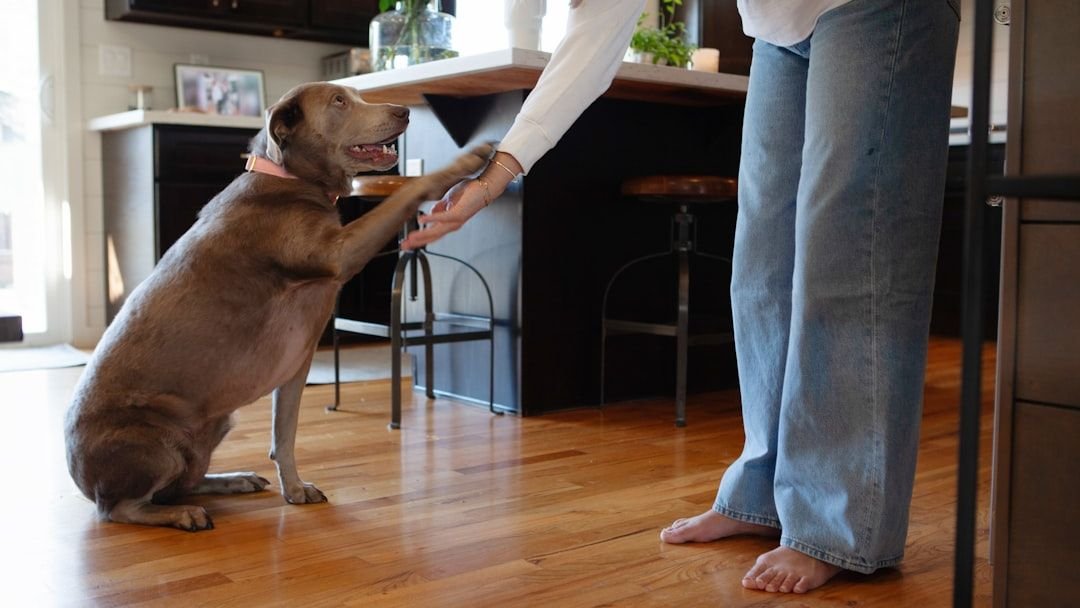
Picture this. You’re deep in the zone, laptop open, deadline looming, coffee going cold. Then it happens. A warm, deliberate weight settles onto your knee. You look down and there it is – your dog’s paw, resting on you like the world’s most sincere reminder that you’re not alone.
It’s one of those small moments that stops you mid-thought. Is it love? Is it hunger? Are they bored? Honestly, the truth is richer and more beautiful than most dog owners realize. That little paw is carrying a whole conversation. Let’s dive in and unpack what your dog is really saying.
Your Dog Is Speaking a Language Called “Manding” – and It’s Fascinating
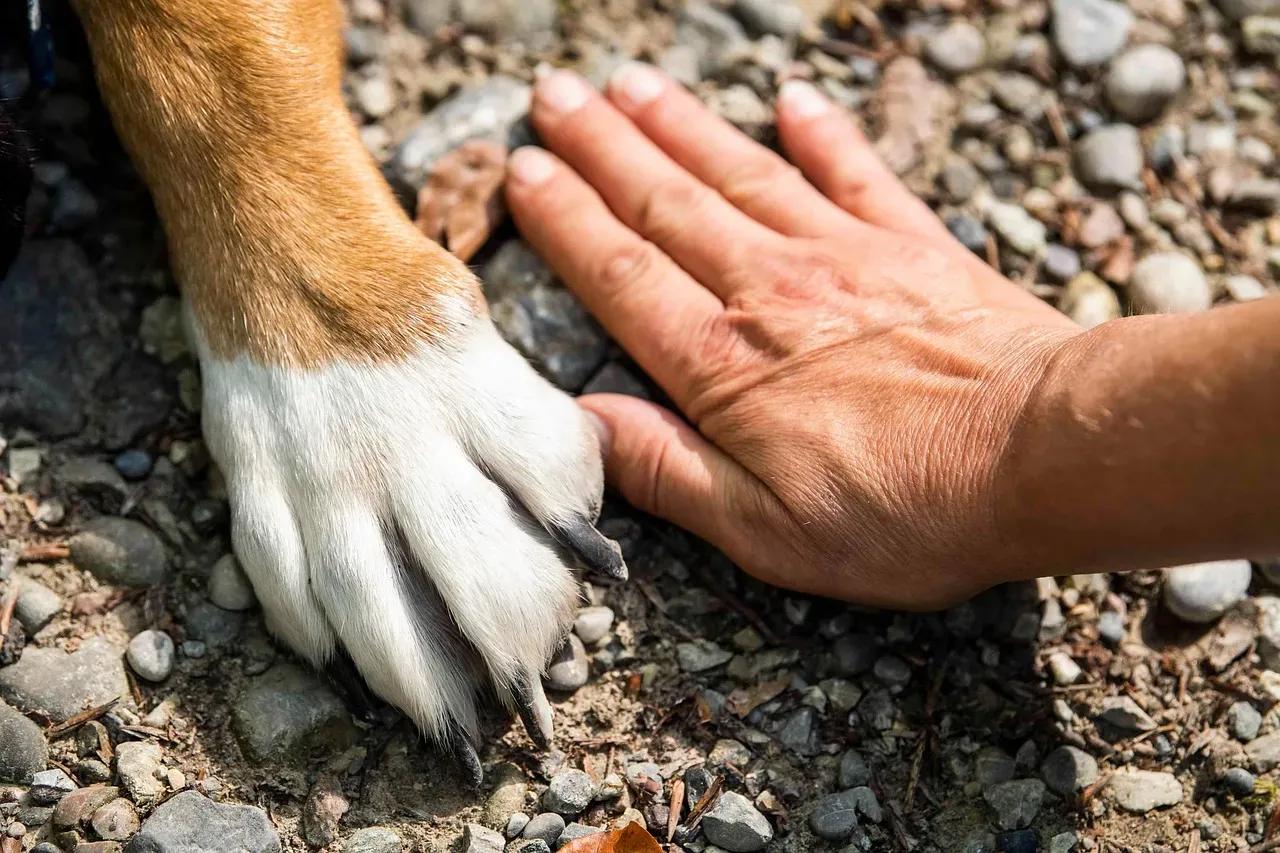
Animal behaviorists borrowed the term “manding” from practitioners who work with non-verbal individuals to describe this behavior. A mand is, at its core, a request for something. Think of it like your dog’s version of raising their hand in class. Simple. Urgent. Impossible to ignore.
All dogs are born knowing how to request what they need. Puppies instinctively paw at their mothers for milk, so by the time your dog is resting a paw on your thigh during a Zoom meeting, they’re drawing on one of the oldest survival tools in the canine playbook. It’s not manipulation. It’s ancient, instinctive communication dressed up in an adorable package.
A mand can be a physical need like having to go out to potty, being hungry, or being thirsty. It can also be a request for a social need like affection, play, or comforting touch. So the next time that paw lands on you, think of it less like an interruption and more like a text message from your best friend who just can’t type.
They Can Actually Sense When You’re Stressed – and They’re Trying to Help
Here’s where things get genuinely mind-blowing. Your dog isn’t just randomly choosing the moment you’re overwhelmed to bother you. Research has shown that dogs can smell the volatile organic compounds emanating from breath or sweat when their human is stressed. They literally smell your anxiety. They know before you do.
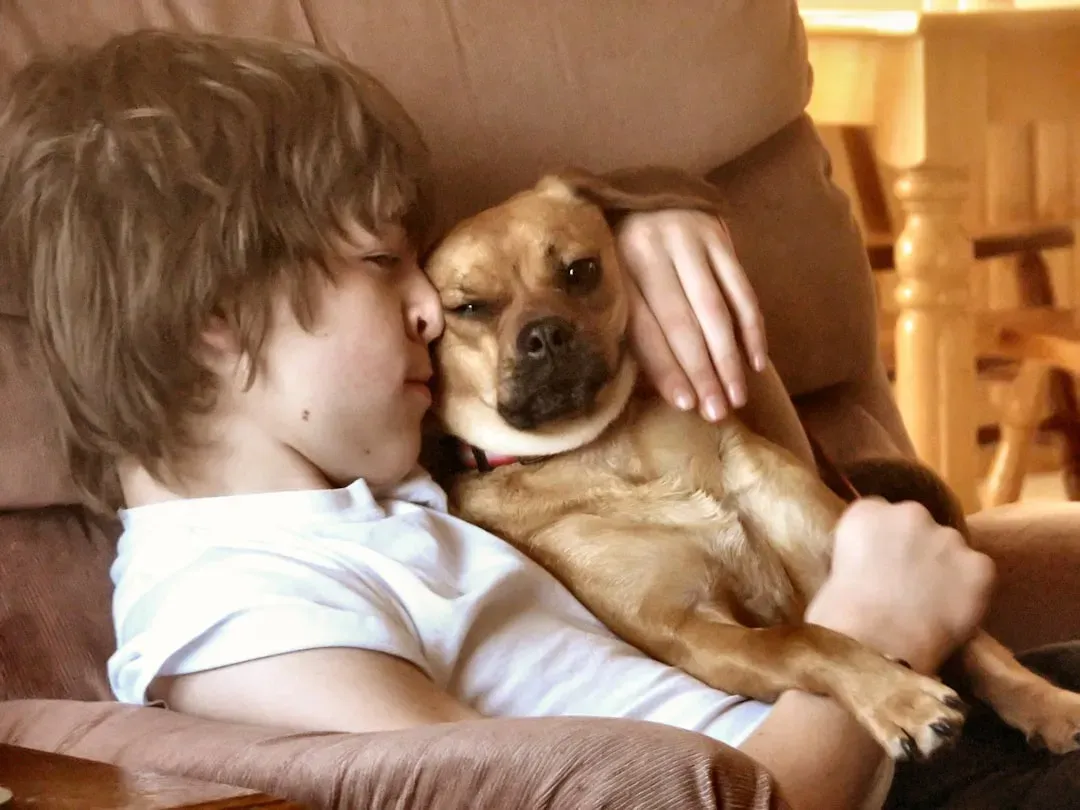
Your dog chooses this specific form of touch during moments when they’re either seeking comfort or trying to provide it. The behavior typically appears when dogs detect stress, sadness, or anxiety in their owners. That paw on your arm while you stare at a spreadsheet? That’s your dog essentially saying, “Hey. I’ve got you.”
Dogs are highly perceptive creatures, and many can sense when their owners are feeling sad, lonely, or disappointed. If you’re feeling any of these emotions, they may try to cheer you up by pawing at your hands or feet to give you extra love. Honestly, that’s the kind of emotional intelligence most of us humans could only dream of.
The Oxytocin Effect: Why This Tiny Gesture Is Good for Both of You
Let’s be real for a second. When your dog places their paw on you and you respond with a gentle pet, something almost magical happens in your body. Studies show that touch, in this case petting, releases the feel-good hormone oxytocin in both petter and pettee, and in a self-supporting cycle, the calmer the person got, the calmer the dog got.
It’s essentially a biological feedback loop of calm. You relax, your dog relaxes, which makes you relax more. Think of it like a mutual pause button your dog is offering you. One gentle paw, and suddenly the deadline feels a little less sharp.
Pets can be emotional support during stressful times, and the more you understand what your pet is communicating, the stronger the bond and support may be. That’s not a soft, feel-good claim either. It’s backed by real science and it makes the pawing behavior feel far less like a distraction and far more like a gift.
Reading the Body Language: Not All Paws Mean the Same Thing
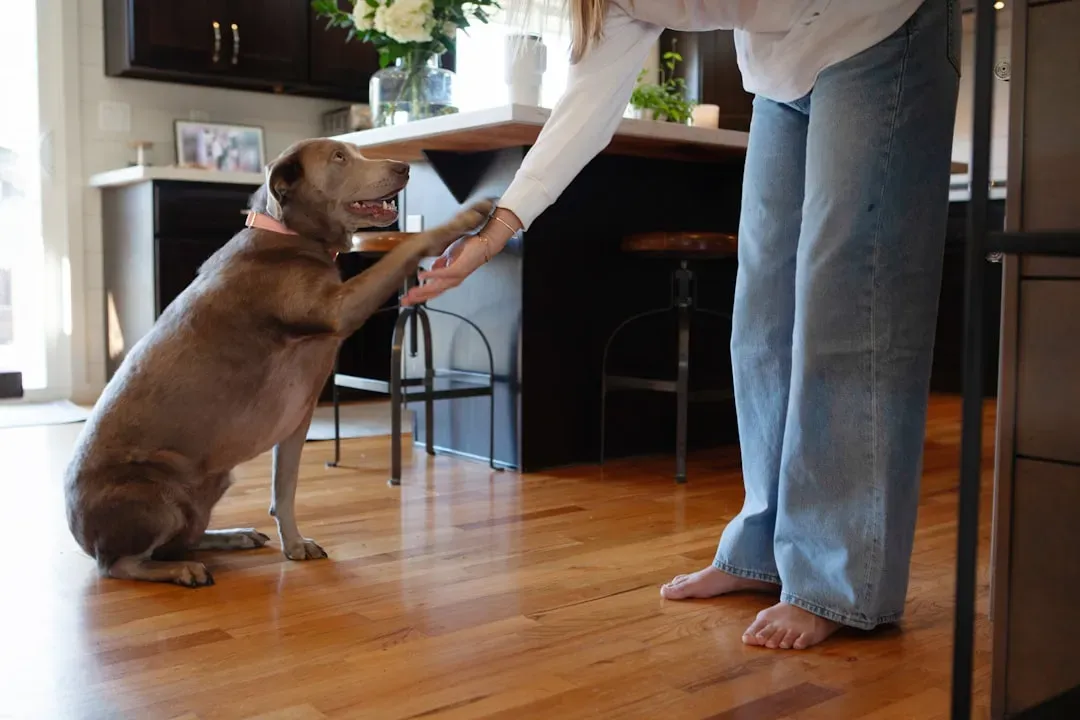
Here’s the thing though. Not every paw placement carries the same message. Context is everything, and learning to read the full picture is what separates a good dog parent from a great one. Dogs who are pawing simply to say “I love you” will have a relaxed posture including naturally-positioned ears, a gently wagging tail, and a soft gaze. Calm eyes, soft body. That’s love.
Sometimes when your pup is feeling stress, they will paw you for reassurance and to ask for your help. These are usually paired with other body language that signals distress, such as lip licking, ears tucked back flat, or yawning. Those signals matter. A stressed paw looks very different from an affectionate one, and treating them the same way does your dog a disservice.
If your dog paws you, you should first look at the situation. Pawing that indicates stress, anxiety, or medical issues needs to be handled differently than pawing for pets and playtime. It’s a small habit to build, glancing at their full body language before responding, but it deepens your connection enormously.
How to Respond So You Both Win (Without Creating Chaos)
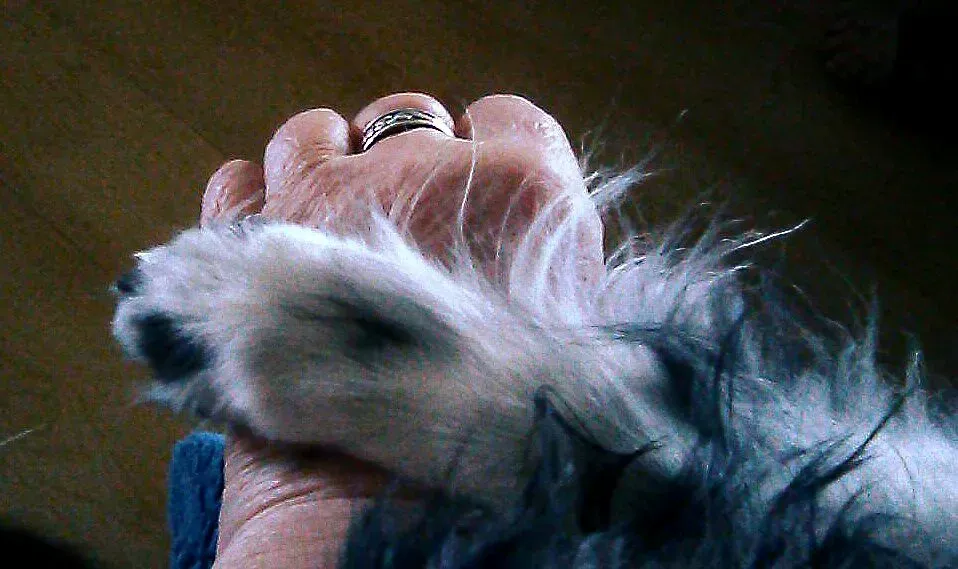
Now for the practical part. You love the paw. You love your dog. You also have actual work to do. So how do you honor this beautiful communication without accidentally training your dog to paw you every three minutes until the end of time? It’s a balance, and it absolutely can be done.
One approach that works well is to intervene before your dog even gets to the pawing stage by inviting them to sit nearby and giving them affection right away. Then returning to work, and offering more affection after a few minutes before they feel the need to ask again. Systematically over time, the duration between check-ins can extend so the dog learns that affection comes during natural breaks.
If your dog regularly paws you at a certain time of day to tell you they need to go potty, schedule your walks for that time so they won’t need to ask. Keep enriching toys in your dog’s environment so they can stay physically and mentally active. A puzzle toy before a big meeting is honestly a game-changer. For both of you.
Conclusion: That Paw Is a Love Letter in Disguise
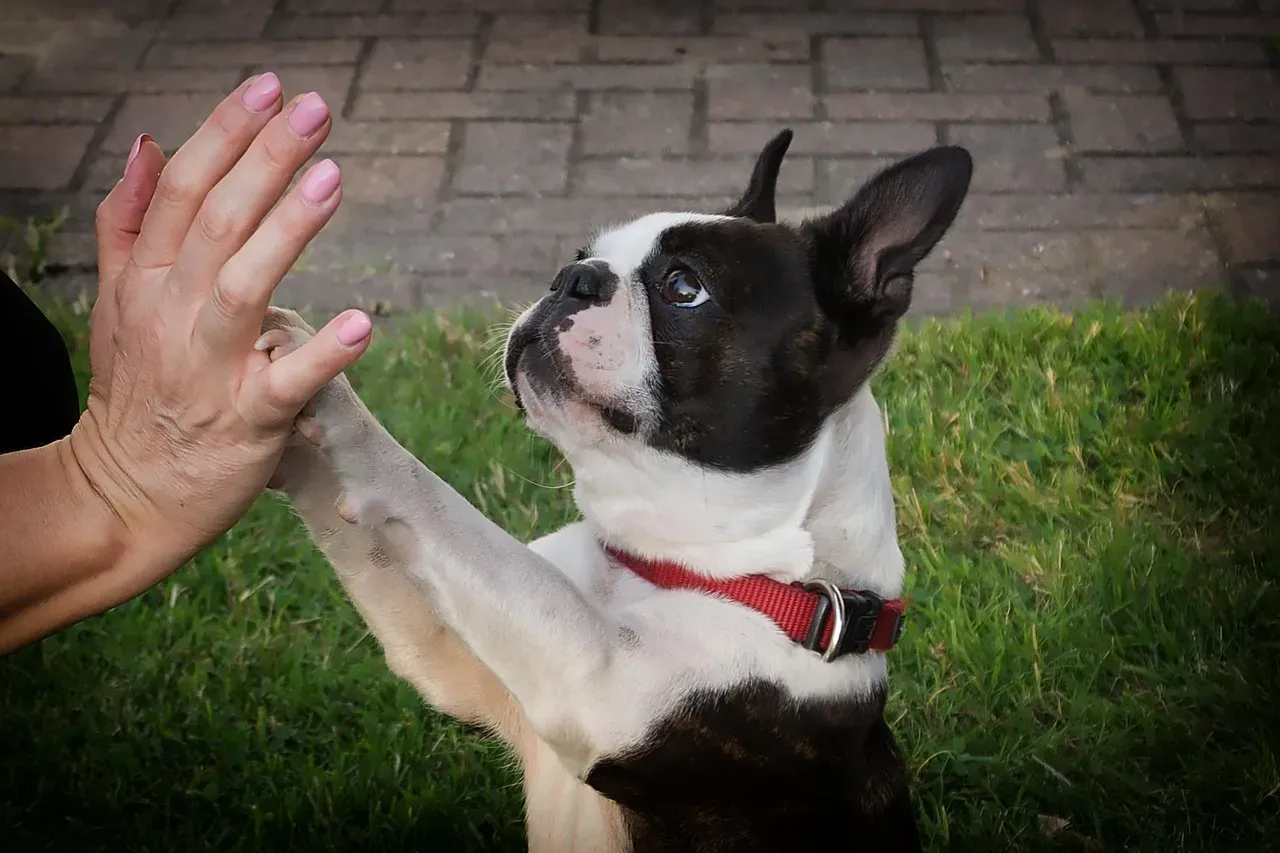
By understanding why a dog puts a paw on you, you’re able to build a bond with your dog or strengthen the one you have. That single gesture, so easy to brush off in a busy moment, is actually one of the most honest things another living creature can offer you. Pure, wordless, unconditional presence.
Your dog isn’t interrupting your work. They’re grounding you in the most literal sense. They’re saying, “You’re here. I’m here. That matters.” In a world full of notifications and deadlines and noise, a dog’s paw on your knee might just be the most meaningful message you receive all day.
So the next time it happens, pause for five seconds. Look at those eyes. Feel that warmth. You might just realize your dog understands what you need even better than you do. What would you do without them?


