
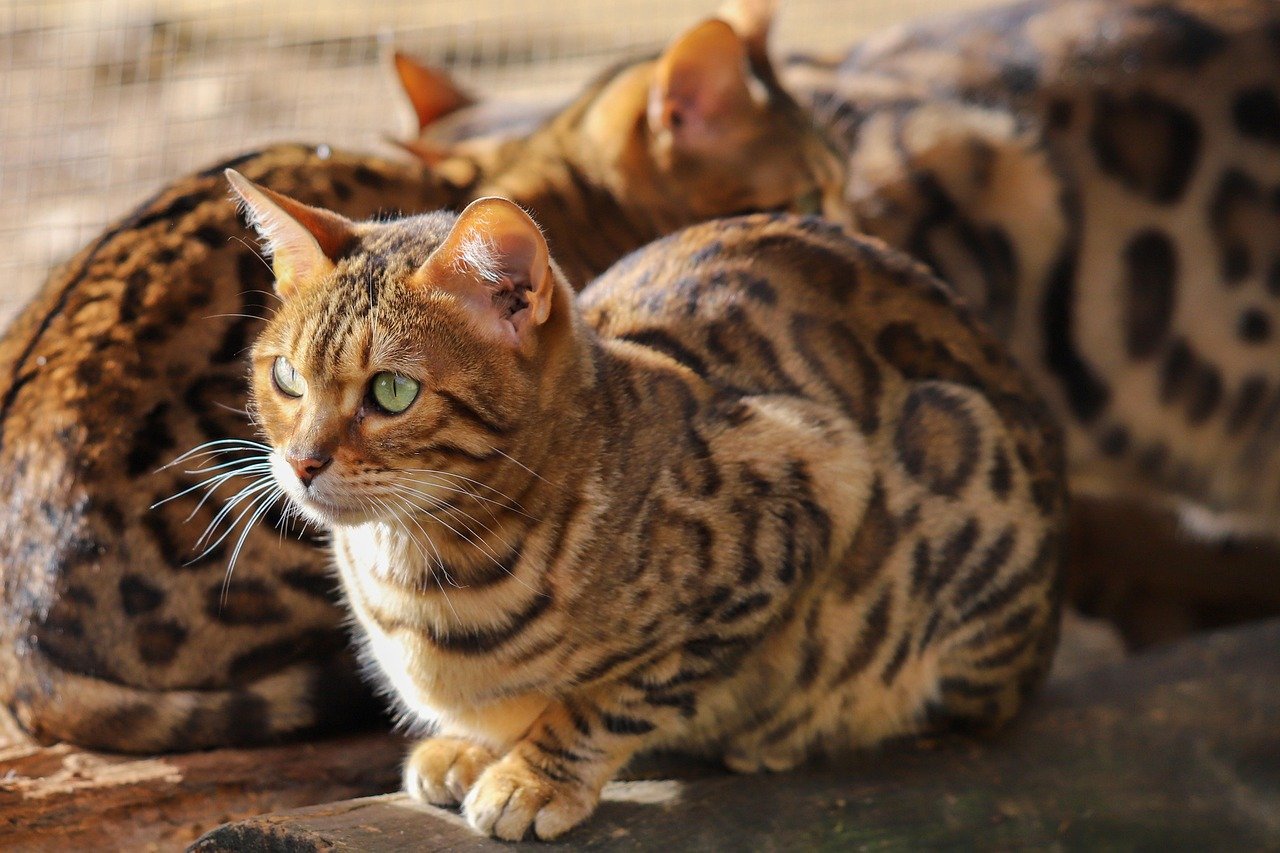

While most cats are cuddly companions, some breeds come with a wild streak that’s not for the faint of heart. Breeds like the Savannah, Bengal, and Chausie are hybrids with wild ancestry, giving them high energy, strong hunting instincts, and unpredictable behavior if not properly socialized. The Sphynx might look sweet, but they can be demanding and territorial without enough attention. Even the beautiful Siamese and Abyssinian cats are known for their assertive, vocal personalities and occasional aggression when stressed. These breeds aren’t necessarily dangerous in a violent way, but they do require experienced owners who understand their unique needs. In the wrong hands, these high-maintenance felines can become more than a handful!
Savannah Cat: The Wild at Heart
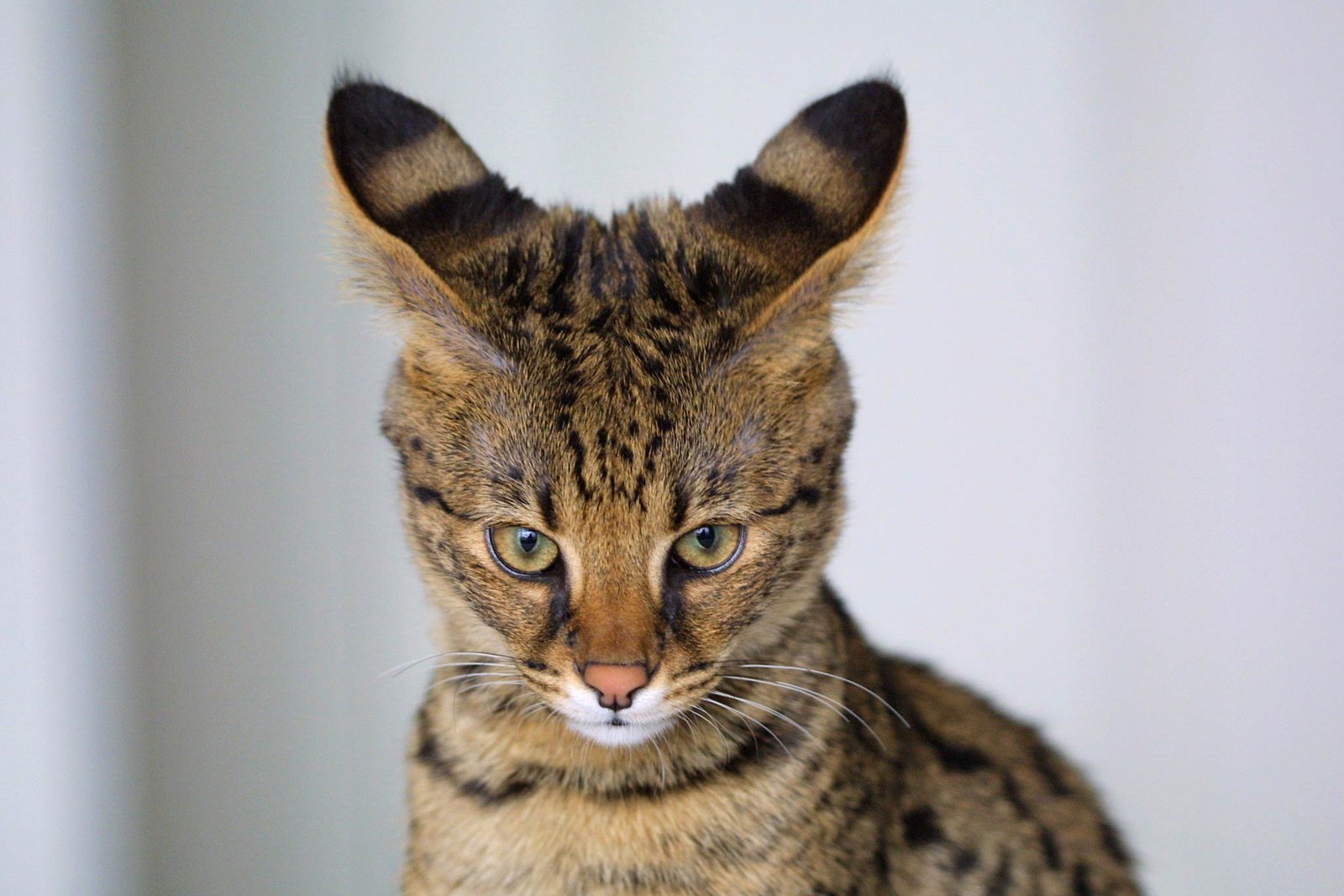
The Savannah cat is not your average house pet. Bred from a domestic cat and a serval—a wild African feline—these cats are stunningly beautiful but come with a dramatic personality. Their long legs, spotted fur, and piercing gaze instantly remind you of their wild heritage. Many owners adore their playful and energetic behavior, but this breed is not for the faint-hearted.
Savannah cats are known to be incredibly intelligent and curious, which sometimes translates into mischief. They have a powerful jump, can open doors, and may even learn to escape from enclosures. This breed bonds closely with its family but can be unpredictable with strangers. Their energy and unpredictability mean they need lots of stimulation and space. Without it, their wild instincts might come out in destructive or aggressive ways.
Bengal Cat: The Leopard’s Shadow
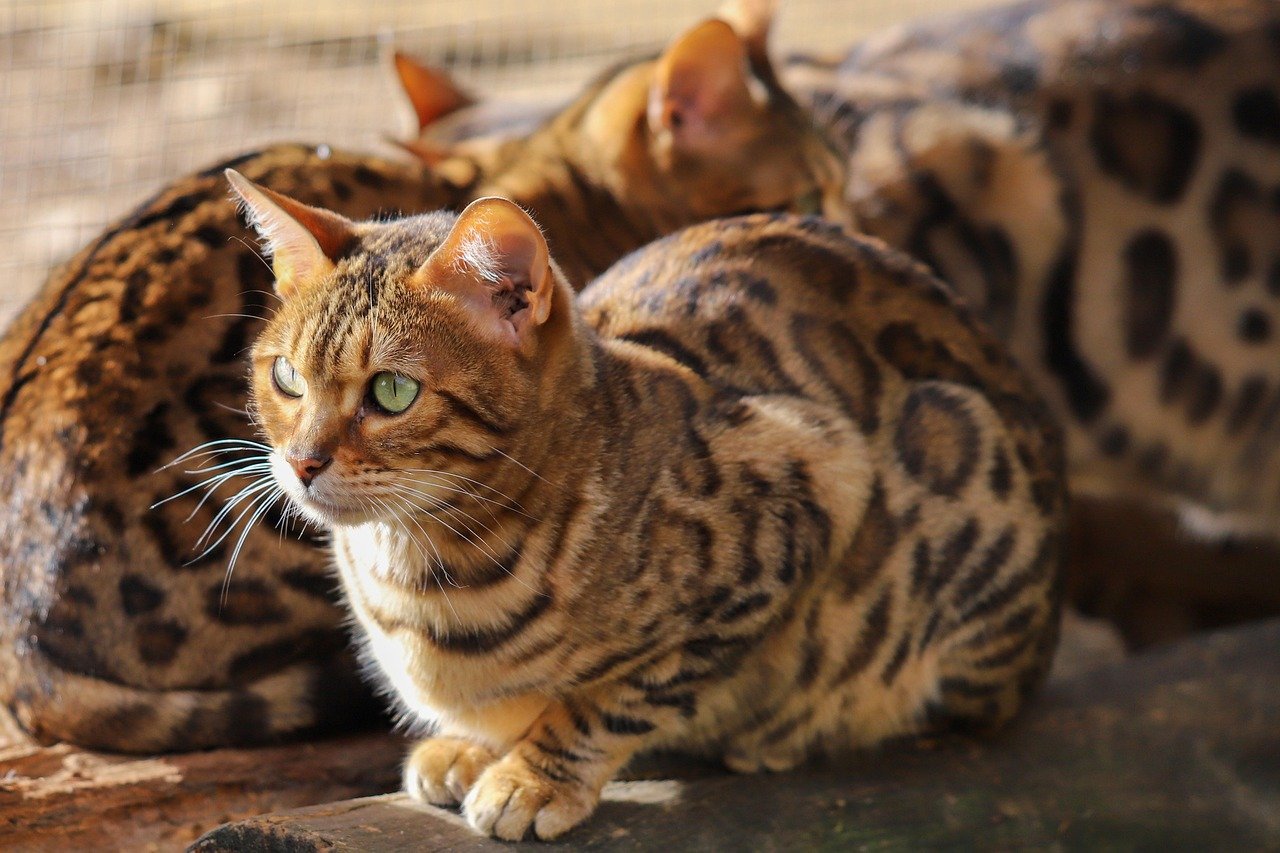
With their exotic, leopard-like spots and muscular bodies, Bengal cats often look like miniature jungle cats prowling through your living room. This breed was created by crossing domestic cats with the Asian leopard cat, resulting in a feline that’s as striking as it is spirited. Bengals are famous for their intelligence and are always looking for new challenges.
However, their wild ancestry also gives them a stubborn streak. Bengals can be territorial and sometimes aggressive, especially if they feel threatened or bored. They require constant mental and physical engagement, otherwise, they might act out with biting, scratching, or even attacking other pets. While they can be affectionate, their boldness isn’t for everyone. If you want a Bengal, be prepared to keep up with its wild side.
Chausie: The Jungle’s Echo
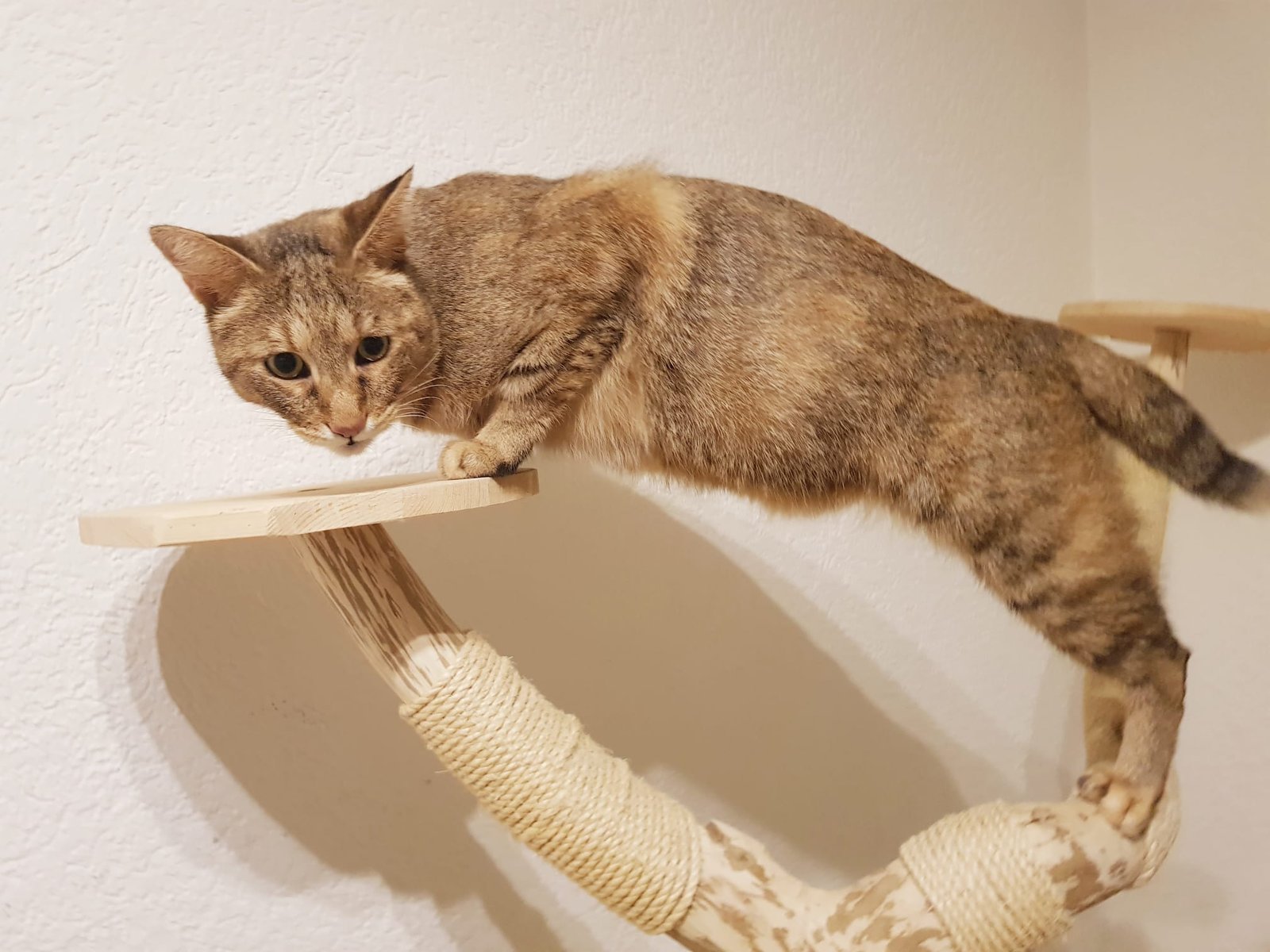
The Chausie cat looks like it stepped straight out of an ancient Egyptian mural. This breed is a cross between domestic cats and the jungle cat (Felis chaus) found in Asia and the Middle East. Their athletic bodies and intense eyes give them an unmistakable air of wildness. Chausies are endlessly energetic, constantly leaping, running, and exploring.
What makes them dangerous is their unpredictable temperament. Chausies are highly intelligent but can be moody and impatient. If they’re not properly socialized, they can lash out or become extremely territorial. Their need for stimulation is intense; without it, they can become destructive or aggressive toward humans and other animals. They’re best suited for experienced cat owners with lots of patience and time.
Serval: The Exotic Predator
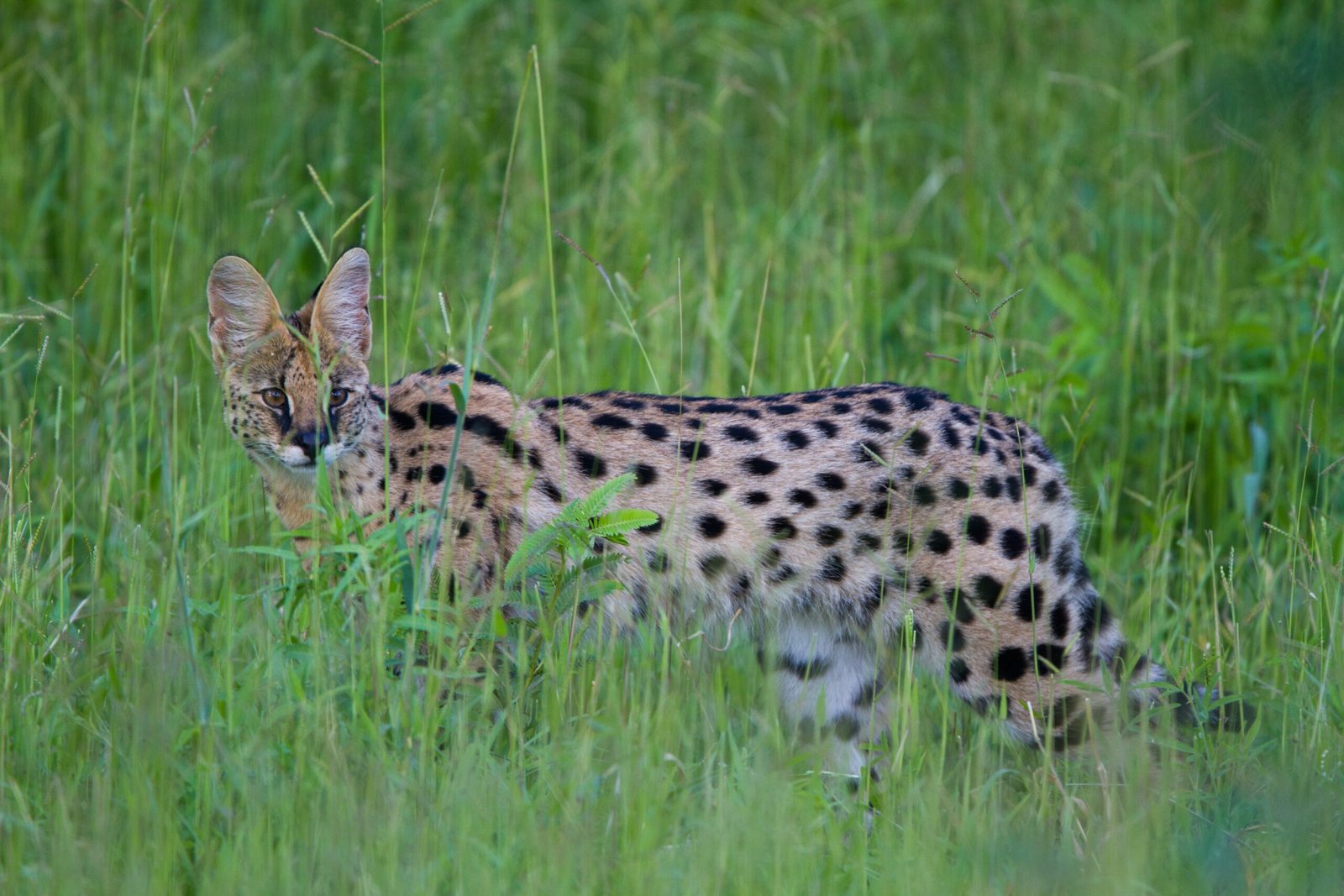
Servals are not fully domesticated cats—they’re wild African predators that some people keep as exotic pets. These cats are tall, sleek, and have large ears that give them an otherworldly appearance. Servals are built for hunting, and they never truly lose that instinct, even in a home environment.
Owning a serval comes with enormous responsibility and risk. They can be affectionate but are quick to assert dominance, often using their teeth or claws. Servals are known for their impressive leap and agility, which makes containing them a real challenge. Their unpredictable behavior and sheer strength mean they can cause serious injury if startled or provoked. Servals are beautiful, but their wild nature makes them one of the most dangerous cat breeds you can bring home.
Caracat: The Wild Hybrid
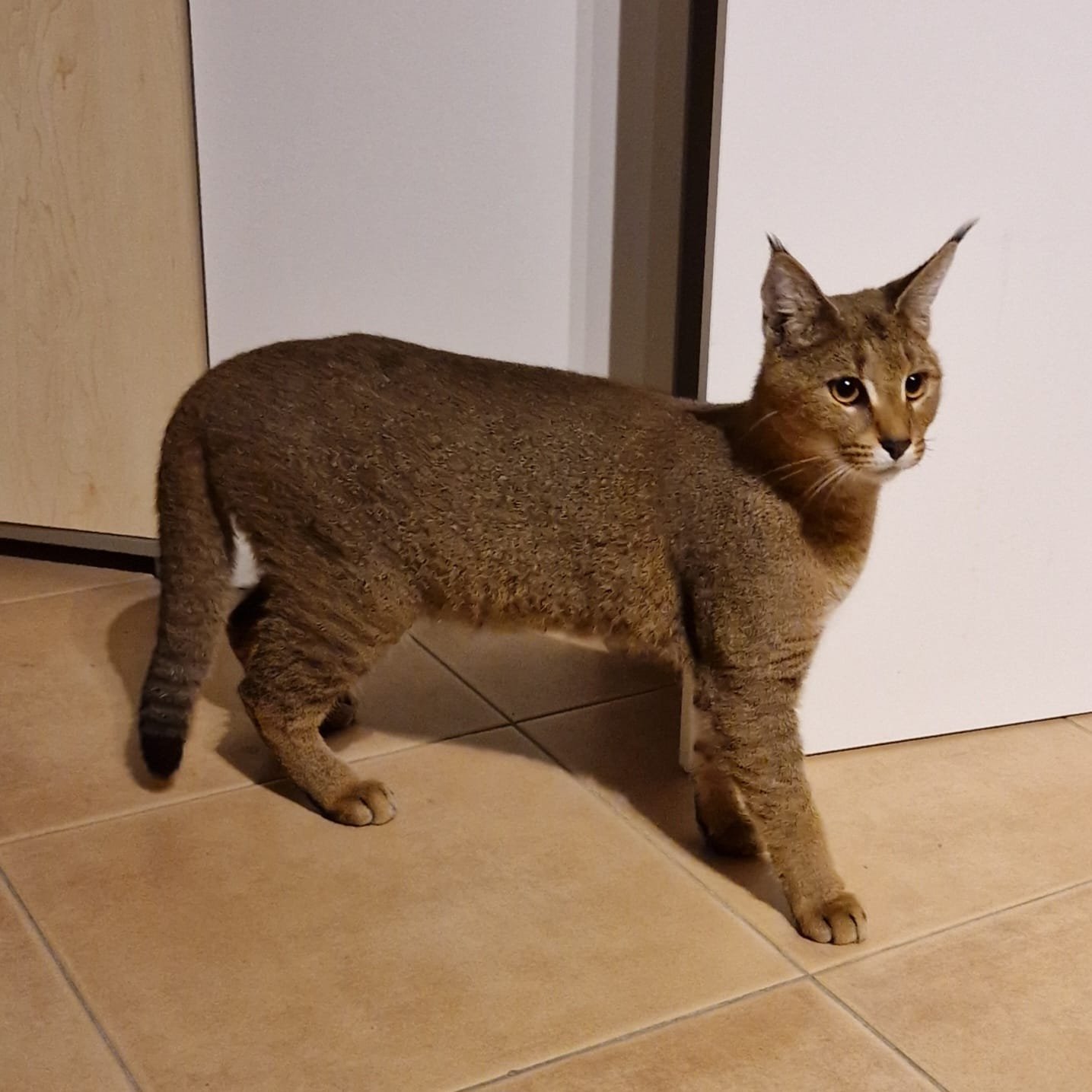
The Caracat is a rare and striking hybrid, formed by breeding a caracal—a wild African cat—with a domestic feline. The result is a cat that looks almost mythical, with tufted ears and a powerful build. Caracats are not just beautiful; they’re also known for their unpredictable temperament.
These hybrids can be affectionate with their owners but are often wary or even hostile to strangers. Their wild genes make them far more challenging than the average house cat. Caracats often require specialized care, including a secure outdoor space and a diet closer to that of a wild cat. They may display aggressive or dominant behaviors if not raised with expert handling, making them unsuitable for most households.
Ocicat: The Spotted Daredevil

Despite their wild appearance, Ocicats are entirely domestic in origin. Yet, don’t let their charming spots fool you—these cats are bold, energetic, and sometimes a little too fearless for their own good. Ocicats crave attention and can become demanding, often acting out if they feel ignored.
Their danger lies in their intensity. Ocicats can develop aggressive behaviors if not socialized well, and their strength and speed mean they can do real damage in a burst of frustration. They’re highly active and need lots of play and interaction. Without it, their pent-up energy can turn into trouble. For families with small children or other pets, the Ocicat’s strong personality can sometimes be overwhelming.
Bombay Cat: The Mini-Panther
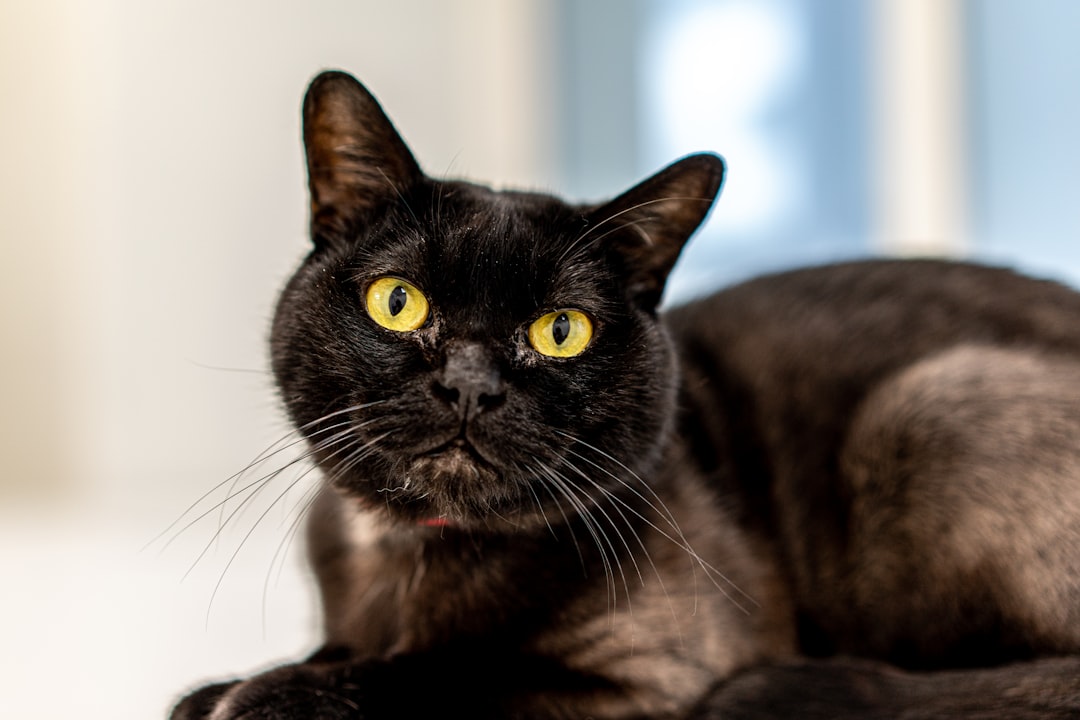
The Bombay cat is often called the “mini-panther” for its glossy black coat and mysterious aura. While Bombays are affectionate and can be playful companions, they have a reputation for jealousy and possessiveness. They bond closely with their favorite human and can become territorial, sometimes to the point of aggression.
Bombays may react poorly to strangers or changes in their environment. If they feel threatened, they may bite or scratch. Their intelligence adds another layer—they know how to get what they want and aren’t afraid to use their sharp claws or teeth to make a point. This breed needs consistent boundaries and lots of love to keep their mood balanced.
Sphynx Cat: The Bold Exhibitionist
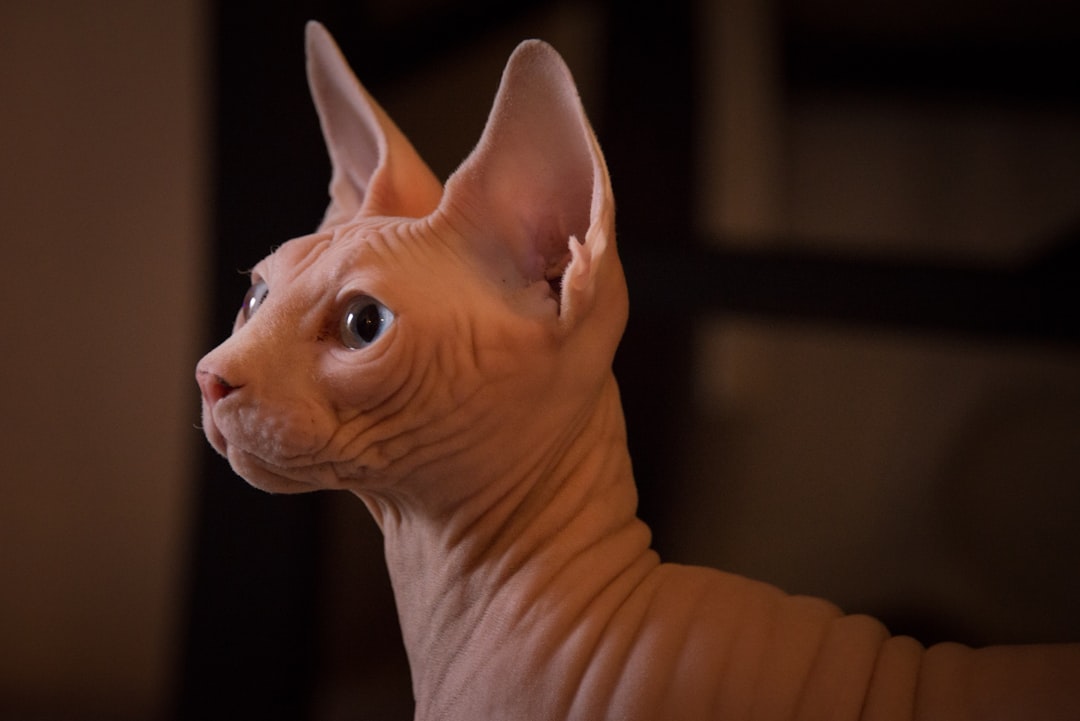
With their hairless bodies and expressive faces, Sphynx cats are hard to miss. They’re famous for their friendliness, but their boldness can sometimes cross the line into dominance or aggression. Sphynx cats demand constant attention and don’t like being left alone.
When their need for interaction isn’t met, Sphynx cats may act out—sometimes by biting or scratching. Their lack of fur also means they’re easily startled by sudden changes in temperature or environment, which can trigger defensive reactions. These cats thrive in homes where they’re the center of attention, but their dramatic personalities can be a handful for inexperienced owners.
Siberian Cat: The Forest Survivor
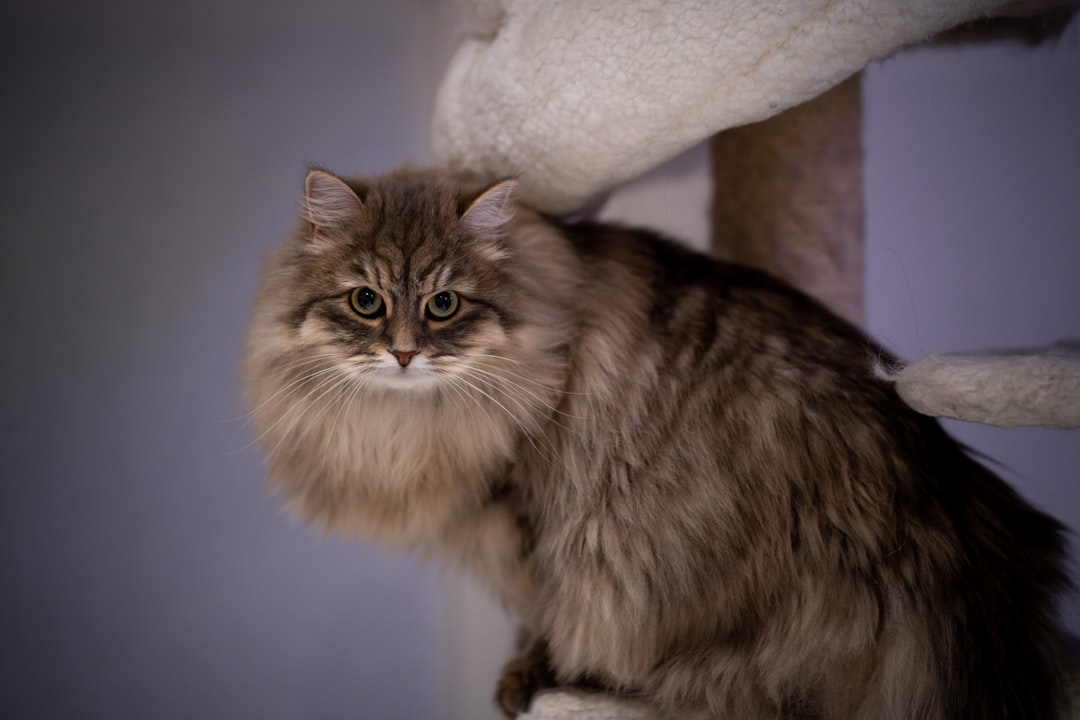
Siberian cats hail from the cold forests of Russia, where survival required strength and adaptability. This breed is large, powerful, and incredibly agile. Their thick coats and muscular builds make them look like warriors of the feline world. Siberians are known for their intelligence and curiosity, sometimes getting themselves into trouble.
While they’re often gentle with family, Siberians can be territorial and assertive if challenged. Their history as hunters means they have a strong prey drive, which can sometimes turn into aggressive play or scratching. They need plenty of stimulation and patience from their owners. Without it, their independent streak can become difficult to manage.
Egyptian Mau: The Speed Demon
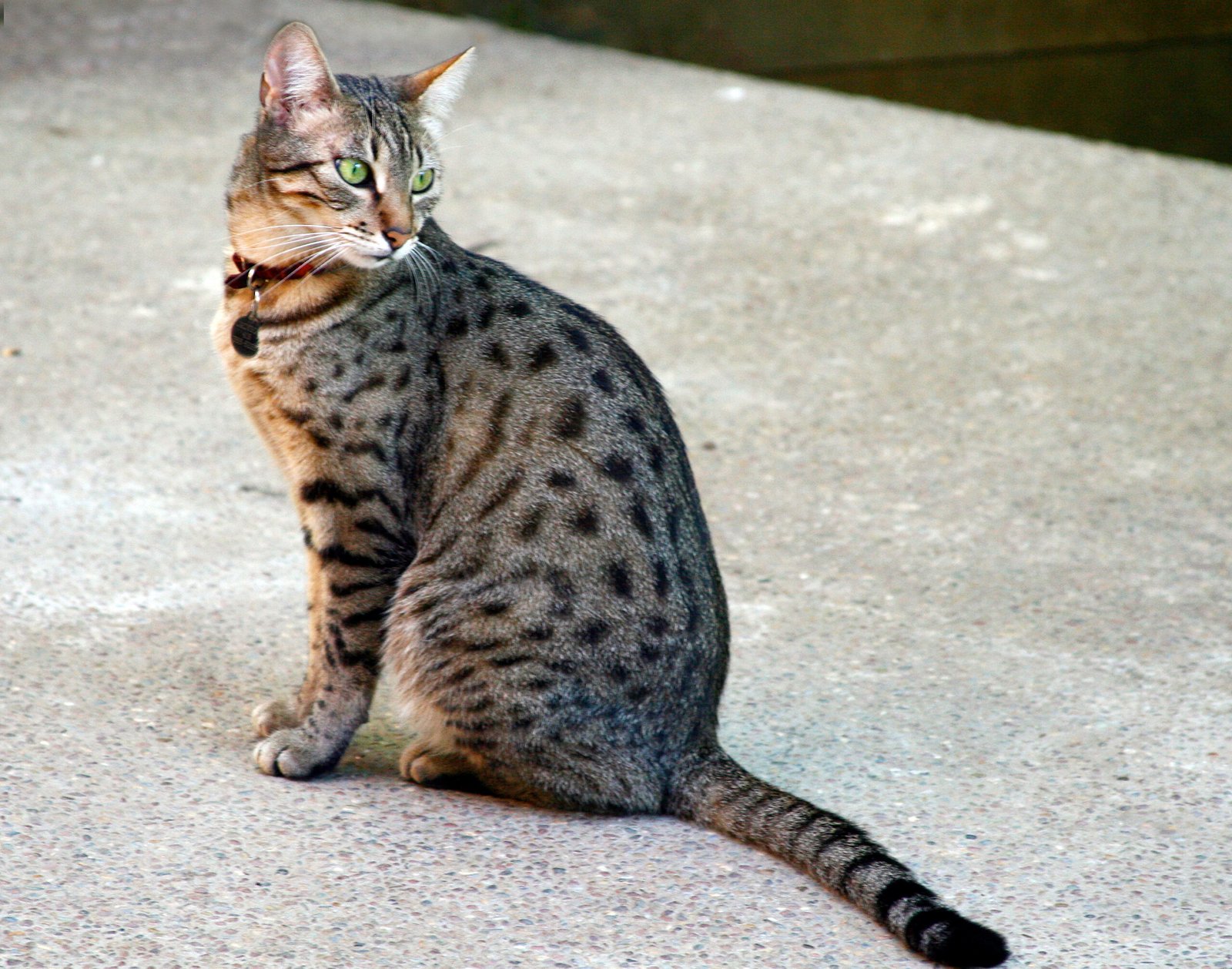
The Egyptian Mau is the fastest domestic cat in the world, capable of reaching speeds up to 30 miles per hour. Their lithe bodies, expressive eyes, and spotted coats give them an air of mystery and elegance. Maus are fiercely loyal to their families but can be wary of strangers.
Their danger lies in their sensitivity and speed. If startled, an Egyptian Mau can react in the blink of an eye—running, clawing, or even biting if they feel cornered. They need a calm, stable environment and lots of playtime to keep their energy in check. Owners must be patient and understanding, as Maus don’t respond well to harsh discipline or unpredictable households.
The world of cats is full of surprises. Some breeds, with their wild looks and unpredictable personalities, remind us that our feline companions are never too far from their ancient roots. Each of these dangerous cat breeds brings beauty and excitement, but also a need for respect, patience, and understanding. While these cat breeds may be labeled “dangerous,” it really comes down to understanding and meeting their unique needs. With the right environment, training, and socialization, even the feistiest feline can thrive. They’re not bad cats—just ones that need a little extra care and experience. So if you’re up for the challenge, they can be wild, wonderful companions!


