

You probably already suspect your dog is smarter than they let on. Maybe it’s the way they sprint to the door the moment you say “walk” in a hushed voice, or how they tilt their head knowingly when you’re on the phone. There’s something going on in that furry little head, and honestly, science keeps proving it’s far more impressive than most of us realize.
The relationship between dogs and human language is one of the most fascinating frontiers in animal cognition. Researchers are peeling back layer after layer, and what they’re finding is nothing short of breathtaking. So if you’ve ever whispered “treat” only to find yourself immediately surrounded by an excited, spinning dog, this article is for you. Let’s dive in.
They Actually Know What Certain Words Mean, Not Just How They Sound

Here’s the thing most people get wrong: they assume dogs only react to tone, not the actual word. But groundbreaking research published in the journal Current Biology using EEG brain scans tells a very different story. A study found that dogs generally know that certain words “stand for” certain objects, and when dogs hear those words, brain activity recordings suggest they activate a matching mental representation in their minds.
Think of it like this: when you say “ball,” your dog isn’t just hearing a pleasant sound. Their brain is actually picturing the ball. As one study co-author described it, the dog was thinking “I heard the word, now the object needs to come,” and when their owners presented a mismatched object instead, their brains had to do extra processing to make sense of the difference.
They Have Their Own Working Vocabulary
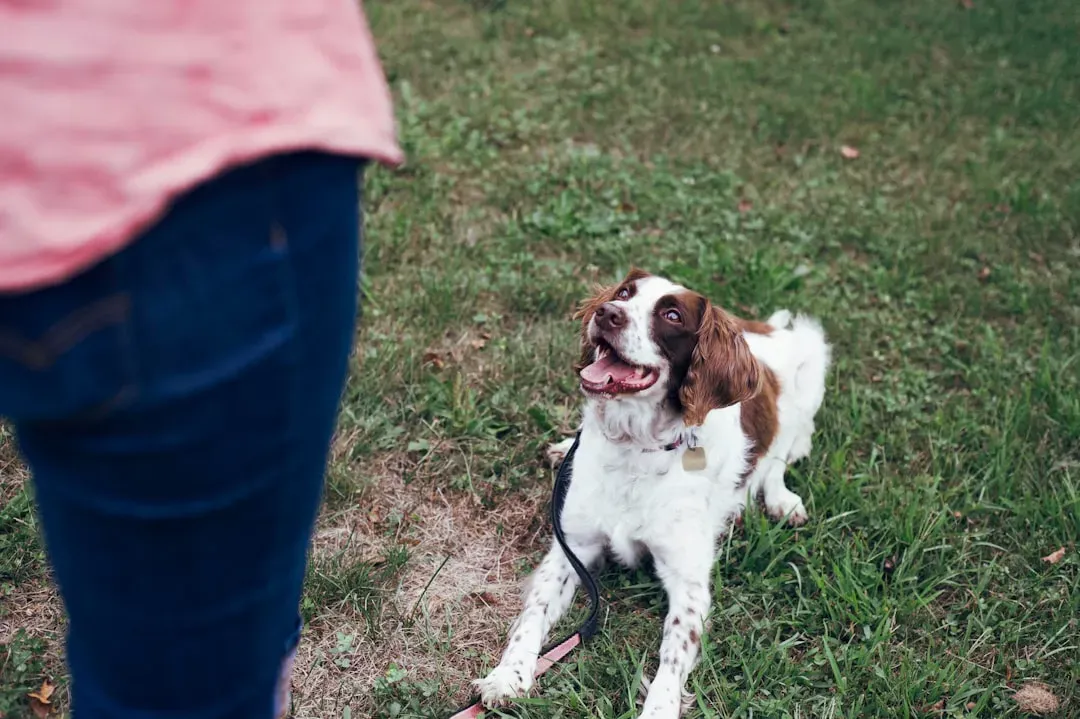
On average, dog owners identified roughly 89 terms that their pets responded to consistently, about half of which were classed as commands. There were outliers too, with one clever dog reported to respond to 215 words. That’s not a small number. For context, that’s more vocabulary than most of us use in a typical morning before coffee.
Altogether, there were ten words or phrases specifically recognized by more than nine in ten dogs. These included the dog’s name, as well as “sit,” “come,” “good girl/boy,” “down,” “stay,” “wait,” “no,” “ok,” and “leave it.” Practical tip: use these words consistently, every time, with every family member at home. Inconsistency is the enemy of a dog’s learning.
They Understand Both What You Say and How You Say It
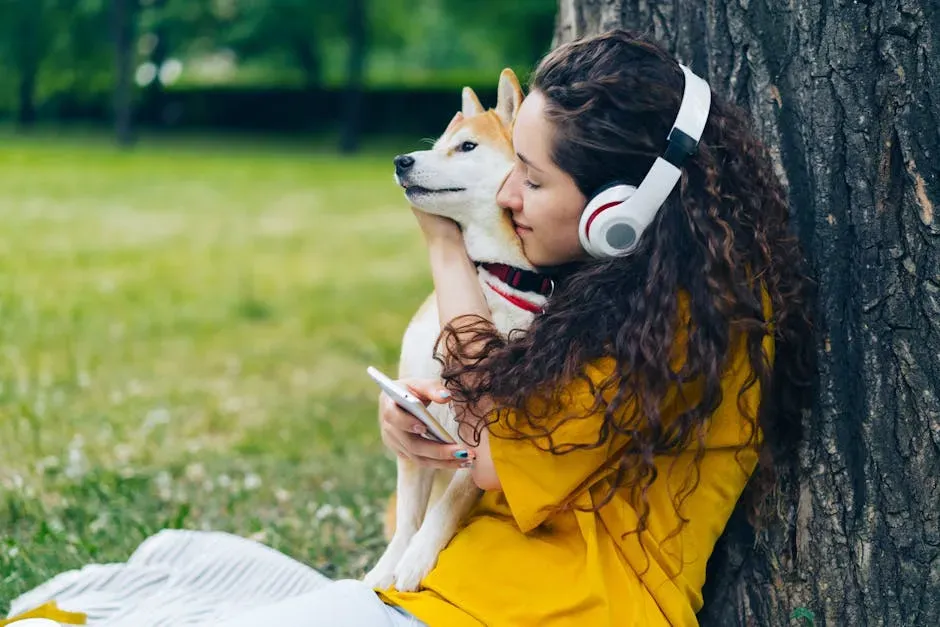
This is where it gets really remarkable. Dogs use the left hemisphere of the brain to process words, similar to humans. Meanwhile, dogs also use a right hemisphere brain region to process intonation independently of words, which means they may separate what you say from how you say it. It’s like having two separate interpreters working at the same time.
Monitoring of the reward regions of the brain revealed that dogs responded best when praising words were used in combination with praising intonation. As one researcher put it, dogs “not only separate what we say from how we say it, but also combine the two for a correct interpretation of what those words really meant.” So “good boy” in a flat, distracted voice? Honestly, it just doesn’t land the same way. Your pup knows the difference.
They Can Pick Out Their Name Buried in a Stream of Conversation

You might think your dog only notices their name when you’re speaking directly to them. Surprise. Research published in Animal Cognition explains that dogs actually “listen in” when we are speaking, even if the speech is not directed at them, and they possess the neurological capacity to passively sift through information and commands relevant to them when humans are talking.
The researchers found that dogs could “absolutely find their name when presented in a monotone way and buried in a stream of irrelevant speech,” which is considered a prerequisite for comprehending language. This means your dog is essentially eavesdropping on your entire conversation, quietly scanning for anything useful. They’re not being nosy. They’re being brilliant.
Some Dogs Learn Words Just by Eavesdropping on Conversations

I know it sounds wild, but a remarkable study published in the journal Science showed that certain “gifted” dogs can pick up brand new words simply by overhearing human conversations. Researchers demonstrated that a small group of Gifted Word Learner dogs, which possess an extensive vocabulary of object labels, can learn new labels by overhearing their owners’ interactions, even acquiring novel object-label mappings when the labels and objects are not presented simultaneously. Their sociocognitive skills are functionally parallel to those of 18-month-old children.
Known as “Gifted Word Learner” dogs, these animals have previously been found to learn the names of toys after hearing them only four times, learn up to 12 toys or even more per week, and remember toy names for more than two years. While these gifted dogs are relatively rare, it’s a powerful reminder that the ceiling on canine intelligence is much higher than we’ve assumed.
They Recognize and Respond to Human Emotions in Your Voice

Your dog is not imagining the tension in your voice when you’re stressed. They feel it. A study published in the journal Current Biology concluded that dogs’ brains contain a vocal region that functions similarly to the region located in the temporal lobe of human brains, and that vocal emotional cues activated a similarly located non-primary auditory region in both humans and canines.
Studies show how behavioral and chemical cues from humans can affect dogs in ways that enable them to not only discriminate between their owners’ fear, excitement, or anger, but also to “catch” these feelings from their human companions. This is emotional contagion. Your dog isn’t just hearing you, they’re absorbing you. When your world feels heavy, so does theirs.
They Know What “No” Means Without Any Training

Scientists have observed that dogs respond much like human infants in understanding language. In fact, dogs may have roughly the same cognitive ability as a 6 to 12-month-old human infant. Just like a toddler, a dog figures out pretty fast that “no” means stop what you’re doing. It’s a universal boundary they absorb naturally from daily life with humans.
Both a dog and a human baby quickly grasp the meaning of “no” when they grab something they shouldn’t. The question is whether they really know the difference between “yes” and “no,” or whether they are responding to our commanding tone of voice and anxious body language. Honestly, the answer is probably both, which means your tone when saying “no” matters just as much as the word itself.
They Can Distinguish Between Familiar and Unfamiliar Languages

This one genuinely surprised me when I first read it. Researchers placed dogs in an MRI machine to monitor brain activity while reading them a story in both Hungarian and Spanish, and also a scrambled computer-generated version of language. Dogs’ brains lit up when they heard human speech, regardless of whether it was in Hungarian or Spanish, compared to the garbled recordings.
Even more impressively, when dogs heard the language they were most familiar with, their brains showed stronger activity. This suggests that not only can dogs recognize human language, but they also process the specific language spoken most often by their families. It’s a bit like how we feel slightly more at ease hearing our mother tongue. Dogs, it turns out, share that same comfort in familiarity.
They Understand Routines Through Repeated Language Patterns

Dogs are extraordinary creatures of habit, and language is a massive part of how they build their internal calendar. Dogs use context to help them interpret sounds. For example, if you always call your dog’s name before giving them food or going for a walk, they begin to anticipate the outcome based on the context, and this ability to link sounds to specific events is a form of learning that goes beyond simple association.
The more time a dog spends in an active lingual environment, the more it is exposed to human language, and the more opportunities it has to learn word-meaning associations. Think of language as a map your dog is constantly drawing from your daily routine. Every repeated phrase adds another landmark. The more consistent you are, the richer their map becomes.
They Separate Your Words from Your Gestures, and Pay Attention to Both
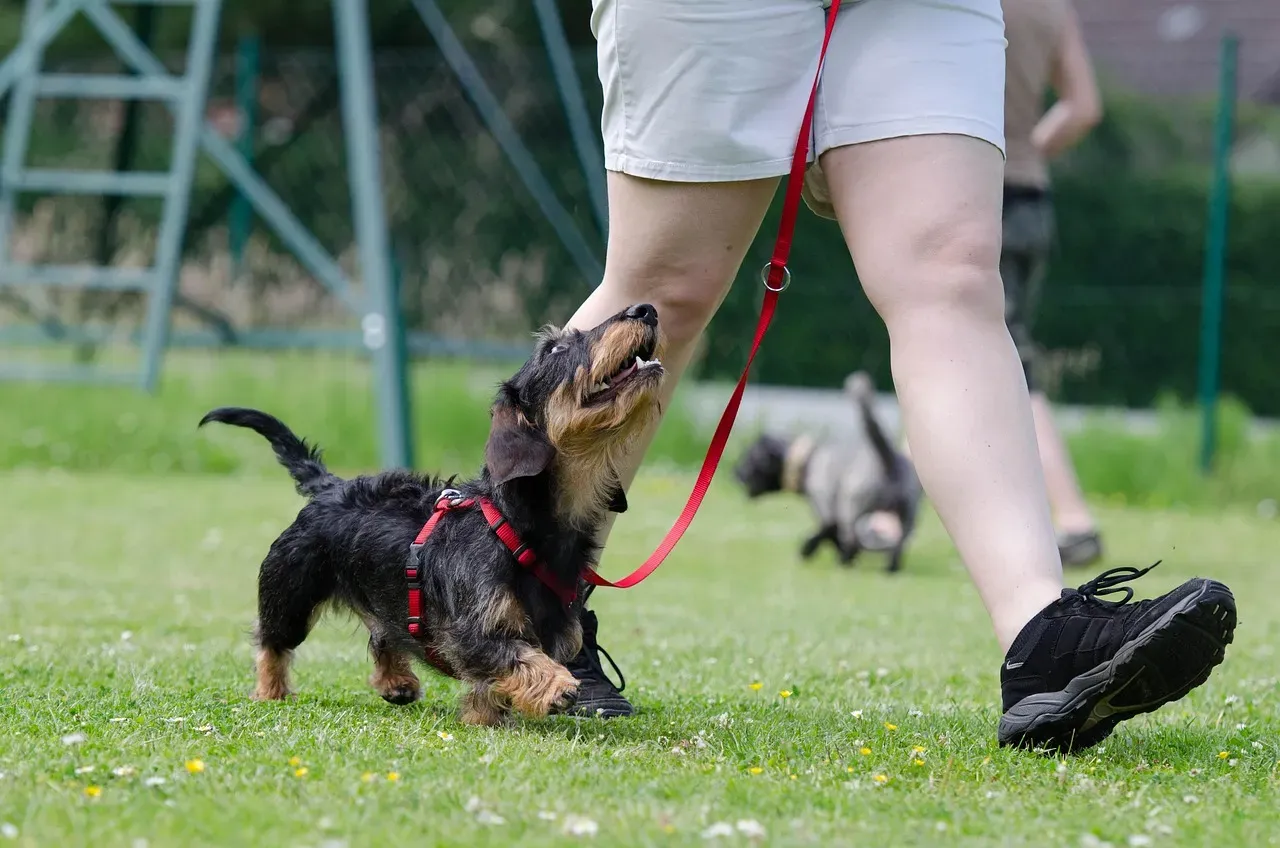
Dogs are multi-channel listeners. They’re processing your words, your body language, your tone, and your gestures all at the same time, kind of like watching a show with subtitles, audio, and background music running simultaneously. Dogs are very good at reading visual cues, and the physical movement or gesture that accompanies a command helps them associate the word with the expected behavior. Dogs learn by observing both verbal and non-verbal cues from their owners.
Through scientific research, we know that dogs keenly read our tone of voice, body language, and facial expressions. Some scientists think these factors play a far greater role in dogs’ word recognition abilities than in actually understanding the meaning of words. The practical takeaway here is simple. When you want your dog to understand a new word, pair it consistently with a gesture. The two together are far more powerful than either one alone.
They Process Praise Differently Than Neutral Words

There is something genuinely moving about this one. The combination of both praising words and an enthusiastic tone of voice caused the reward center, a part of the brain associated with getting something pleasing, to become more active. This means that dogs had the same neurological response to an excited “Good dog!” as they might to being petted or receiving a treat.
When praise words or an enthusiastic tone were used separately, they didn’t have the same effect. So that soft, almost absent-minded “good boy” you mutter while scrolling your phone? Your dog notices the disconnect. Meaningful praise, given with real warmth and the right tone, lands in their brain like a reward. Give it freely. It costs nothing and means everything.
They Recognize and Respond to Emotional Words Across Faces and Voices Together

One of the most extraordinary things dogs do is integrate emotional signals across multiple senses at the same time. Using a cross-modal preferential looking paradigm, researchers presented dogs with human or dog faces with different emotional expressions, paired with a single vocalization. Dogs looked significantly longer at the face whose expression was congruent to the valence of the vocalization, for both their own species and for humans, an ability previously known only in humans.
A study in a 2018 issue of the journal Learning and Behavior found that dogs respond to human faces that express six basic emotions including anger, fear, happiness, sadness, surprise, and disgust, with changes in their gaze and heart rate. In other words, your dog isn’t just listening to you. They’re watching you, reading you, and cross-referencing everything in real time. That’s not just loyalty. That’s genuine emotional intelligence.
Conclusion: Your Dog is Listening More Closely Than You Think

The science has spoken, and it keeps saying the same thing: dogs are remarkable language partners. They may not understand every sentence you speak, but they’re decoding your words, your tone, your emotions, and your patterns in ways we are only beginning to fully appreciate. They are not passive companions. They are active, engaged listeners who are building a picture of you, day by day, word by word.
What this means for you as a dog owner is genuinely empowering. Speak consistently. Use the same words for the same things. Pair praise with real warmth and eye contact. Talk to your dog, not just at them. Dogs may not talk like humans, but they’re listening more closely than you think, and with the right training and communication, your bond can become stronger than ever.
The next time your dog tilts their head at the sound of your voice, remember: that’s not just cuteness. That’s comprehension in action. So here’s a question worth sitting with: if your dog already understands this much about your language, how much more could your relationship become if you started paying just as much attention back? What do you think? Share your experience in the comments below.


