
We’ve all been there – that moment when you suddenly find yourself face to face with a dog that’s clearly not in a friendly mood. Your heart starts racing, your palms get sweaty, and every instinct tells you to do something. But here’s the thing about dog attacks: the natural human reactions we have are often the exact opposite of what we should do.
As someone who’s spent years working with dogs and understanding their behavior, I’ve seen how quickly situations can escalate when people make the wrong moves. Most dogs don’t actually want to hurt you – they’re usually scared, territorial, or feeling threatened themselves. The good news is that knowing what NOT to do can often be the difference between a scary moment and a dangerous encounter. Let’s dive into the five crucial mistakes that could turn a manageable situation into something much worse.
Never Run Away From An Approaching Dog
I know it sounds completely backwards, but running past a dog triggers their natural instinct to chase and catch things, which can make them excited or aggressive. Think about it like this: dogs are hardwired to chase moving objects. It’s the same reason your dog goes crazy when you throw a ball or why they love chasing squirrels.
When you run, you’re essentially activating their prey drive, even if they weren’t initially planning to chase you. You can’t outrun a dog, and running will only trigger prey drive and increase the possibility of an attack and being bitten. Instead, if a dog approaches to sniff you, stay still, and in most cases, the dog will go away when they determine you are not a threat. This might feel like the longest few seconds of your life, but staying calm and motionless is your best defense.
Don’t Make Direct Eye Contact or Face the Dog Head-On
This one’s tricky because we’re taught from childhood to look people in the eye when we talk to them. But dogs see direct eye contact very differently – it’s a challenge, not politeness. You should avoid eye contact and try to stay still until the dog leaves, or back away slowly until the dog is out of sight. Instead of staring them down, avoid direct eye contact and turn your gaze slightly away while lowering your head, then slowly pivot your body to the side, keeping the dog within view without turning your back.
Your body language sends powerful signals to dogs. Challenging a strange dog with your “body language” such as making direct eye contact, facing the dog directly, or reaching out to make contact can escalate the situation quickly. Think of yourself as trying to appear as non-threatening as possible – you want to seem boring and harmless, not like a rival who’s ready for a confrontation.
Never Scream, Yell, or Make Frantic Movements
Your voice and movements can either calm a situation or send it spiraling out of control. Don’t scream or yell – if you say anything, speak calmly and firmly. When we’re scared, our natural reaction is to make noise, but screaming, yelling, or trying to punch or kick the dog can antagonize the dog further, as any sound or movement you make might trigger more aggression.
Frantic gestures can also make things worse. Dogs pick up on our energy, and if you’re flailing around or making sudden movements, they might interpret this as aggressive behavior or playful invitation – neither of which you want. Cross your arms over your chest and stand still without making any sudden movements, and do not yell, speak, or engage with the dog, as this can escalate the situation. Remember, you’re trying to be as calm and predictable as possible.
Don’t Try to Fight Back or Use Aggressive Force
Here’s where things get really counterintuitive. Every movie and TV show might make you think you need to fight off an attacking dog, but resist the urge to yell or fight back because if a dog has gotten to the point of attack, they are no longer thinking and are just reacting, and they will fight until they feel you are no longer a threat – if you are quiet and calm, you are no longer a threat and they will stop. Fighting back often makes you seem like more of a threat, not less.
Using pepper spray might actually trigger an explosion if the dog is not yet attacking you, because treating aggression with aggression only makes things worse. If you absolutely must protect yourself during an actual attack, try to “feed” the dog your jacket, purse, bicycle, or anything that you can put between yourself and the dog. The goal is always to de-escalate, not to win a fight.
Never Try to Break Up a Dog Fight With Your Bare Hands
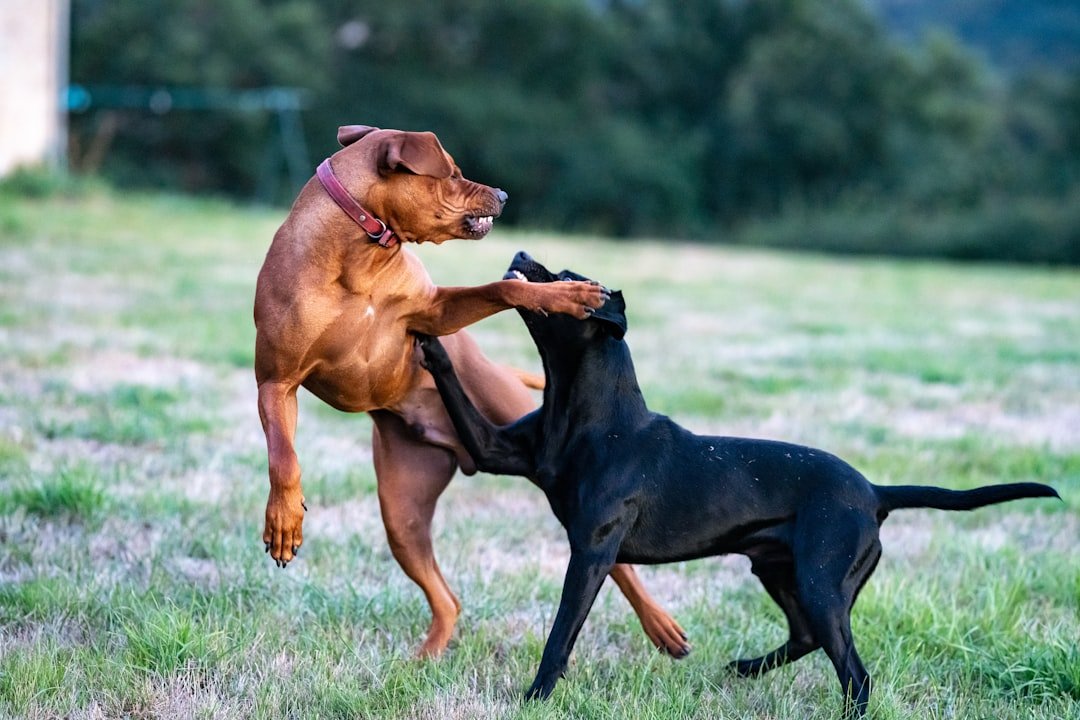
This might be the most dangerous mistake on our list. Many people are bitten trying to break up a dog fight, and it makes perfect sense why. When dogs are in fight mode, they’re operating on pure instinct and adrenaline. If a dog attacks your dog, do not put any part of your body between the two dogs, and don’t put your hand near the fighting dogs’ mouths or touch them where they could easily turn around and bite you – do not grab collars.
Do not try to break up an attack as you might get bitten, do not yell, hit, or kick the attacking dog as this might raise their arousal level even more, and do not pull the attacking dog off because pulling might make the wounds worse and the dog may redirect their aggression at you. Instead, find objects to put between the two dogs like a chair, umbrella, or garbage can lid, or remove visual stimulus by getting something between you like an umbrella, car, or blanket. Your safety comes first – you can’t help anyone if you become another victim.
Conclusion

Dog attacks are terrifying experiences that nobody wants to face, but knowing what NOT to do can literally save your life. The key thing to remember is that most dogs don’t actually want to hurt you – they’re usually just scared, confused, or protecting something they care about. By avoiding these five critical mistakes, you’re giving both yourself and the dog the best chance of getting through the situation safely.
Remember, dog bites are a serious problem with millions of people bitten by dogs each year in the United States, and hundreds of thousands seeking medical attention. But with the right knowledge and preparation, many of these incidents could be prevented or minimized. Stay calm, stay smart, and always prioritize de-escalation over confrontation.
Your dog-loving heart wants to help every pup you meet, but sometimes the best help you can give is simply knowing how to keep everyone safe. Did you expect that staying still could be more powerful than fighting back?


