

You’ve probably heard people joke that their dog is their therapist, their personal trainer, and their best friend all rolled into one. Here’s the thing – it’s not really a joke. Science is catching up to what dog lovers have known forever: these four-legged companions aren’t just adorable. They’re actively working behind the scenes to keep us healthier and happier in ways we’re only beginning to fully understand.
Think about it for a moment. When was the last time your dog looked at you with judgment? Never, right? That unconditional acceptance is just the tip of the iceberg. From your heart health to your mental wellbeing, dogs influence nearly every aspect of our lives in surprisingly profound ways. So let’s dive into the remarkable science behind why sharing your life with a dog might just be one of the best decisions you’ll ever make.
They Keep Your Heart Beating Strong

Let’s start with something pretty incredible: dog ownership is associated with lower risk of cardiovascular disease and death over the long term, possibly driven by a reduction in cardiovascular mortality. I’m not making this up. Dog ownership is probably associated with decreased cardiovascular disease risk, according to research from the American Heart Association.
What’s happening here? Pet ownership has been shown to provide increased physical activity, favorable lipid profiles, lower systemic blood pressure, and improved autonomic tone. Your pup doesn’t just tug at your heartstrings – they’re literally helping your heart function better. Studies have found that people with pets had significantly lower resting baseline heart rates and blood pressure, significantly smaller increases in response to stress, and faster recovery.
For people living alone, the benefits are even more striking. In single-person households, dog ownership was associated with lower risk of death, with hazard ratios showing substantial protective effects. Think about someone coming home to an empty apartment versus someone greeted by an enthusiastic tail-wagger. That difference matters more than we might imagine.
They Get You Moving When You’d Rather Not

Here’s something I’ve noticed: dog owners don’t really have the option of skipping exercise. Rain or shine, your dog needs that walk, and honestly? That’s probably saving your life. Physical activity is linked to better cognitive health, and fewer owner-reported medical diagnoses, because exercise lowers rates of obesity.
The Association for Pet Obesity Prevention recommends at least 30 minutes of aerobic activity a day, and dog owners are far more likely to hit that target than non-owners. It’s not about becoming a marathon runner overnight. Sometimes it’s just a 10-minute trot around the block or playing fetch in the backyard.
The beauty of it is the consistency. Moderation and a consistent amount of daily exercise are best, according to veterinary experts. Even senior dogs – and their senior owners – benefit tremendously from maintaining regular physical activity. Your aging pup might move a bit slower, but that gentle pace might be exactly what you need too.
They’re Your Personal Stress-Relief System
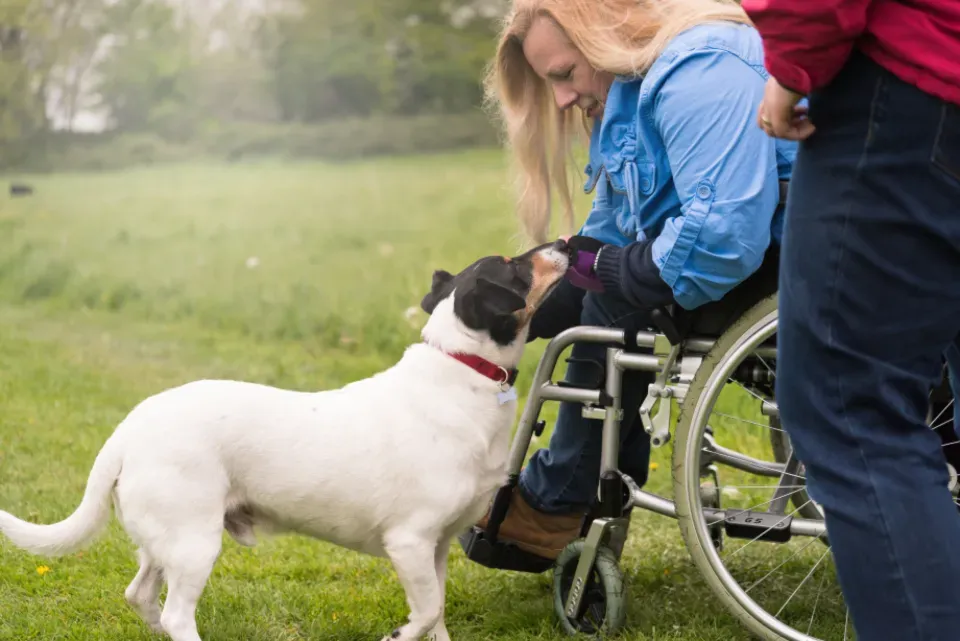
Ever notice how petting your dog after a terrible day instantly makes everything feel more manageable? There’s actual biology behind that feeling. Interacting with a dog can have stress reducing impacts such as decreased cortisol, heart rate, and blood pressure, and increases in oxytocin. Oxytocin, by the way, is often called the “love hormone” – it’s the same chemical released during hugging and bonding.
People who interacted with a dog after a stressful task experienced greater mood boosts and reduced anxiety, more than those who tried coloring or waiting quietly. The key factor was simply spending active time with the dog. Not meditation apps, not breathing exercises – just being with your pup.
What’s remarkable is how quickly this works. We’re not talking about weeks of therapy here. The calming effect happens almost immediately when you stroke your dog, make eye contact, or even just sit quietly together. It’s like having a reset button for your nervous system right there in your living room.
They Chase Away Loneliness and Depression

This one hits differently for a lot of people. Having and loving a dog is associated with lower symptoms of depression and anxiety, according to research from Harvard’s Nurses’ Health Study. There is an inverse association between pet attachment and negative mental health outcomes, with effects particularly strong among women who had a history of abuse.
Dog owners had significantly lower depression scores than potential dog owners, and reported a significantly higher degree of perceived social support, which may have helped buffer some of the negative impacts during challenging times like the COVID-19 pandemic. That wagging tail greeting you at the door isn’t just cute – it’s a genuine antidote to isolation.
Dogs don’t offer the complicated parts of human relationships. They won’t judge you for having a bad day or staying in your pajamas until noon. Companionship can help prevent illness and even add years to your life, while isolation and loneliness can trigger symptoms of depression. Coming home to that wet nose and excited wiggle? That’s powerful medicine.
They Connect You to Other People

If you’re a dog owner, you already know this: dogs are the ultimate conversation starters. Dogs are wonderful social icebreakers and referred to as the great leveler – people will risk directly engaging with unfamiliar people when there is a dog present, and pet owners have made friends through their companion animals.
Think about your typical walk through the neighborhood. Without a dog, you might pass dozens of people without a single word. With a dog? Suddenly everyone wants to stop and chat, ask about the breed, share stories about their own pets. Having a dog by your side is often the ultimate conversation starter, igniting connections, thus reducing feelings of social isolation.
This isn’t trivial stuff. These casual interactions build community connections and can blossom into genuine friendships. Dog parks, training classes, pet stores – they all become social venues where the shared love of dogs breaks down the usual barriers between strangers. Your dog isn’t just your companion; they’re your social facilitator.
They Give Your Days Structure and Purpose

Let’s be real – some days it’s hard to find a reason to get out of bed. Depression, grief, or just the general weight of life can make everything feel pointless. That’s where dogs become absolute lifesavers. Dogs provide a sense of obligation to another living being, and by having the responsibility to care for them, the internal focus a lonely person has becomes an external focus towards the dog.
Your dog needs to eat breakfast. Your dog needs that morning walk. Your dog is sitting there with those expectant eyes, reminding you that someone depends on you. Caring for an animal can help make you feel needed and wanted, and take the focus away from your problems, especially if you live alone. That might sound simple, but for someone struggling, it can make all the difference.
Dogs impose a healthy routine whether you want one or not. Feeding times, walk schedules, play sessions – these create a framework for your day. There’s something deeply grounding about that predictability, especially during chaotic times when everything else feels uncertain.
They Might Actually Help You Live Longer

Here’s where everything comes together in one stunning conclusion. Studies show that having pets may reduce the risk of death from any cause, particularly from cardiovascular causes. We’re not talking about marginal improvements here. The research is consistently showing measurable differences in mortality rates between dog owners and non-dog owners.
The goal is to maximize your dog’s health span – the length of a dog’s life they’re active and disease-free. Interestingly, this same philosophy applies to us. It’s not just about adding years to your life; it’s about adding life to your years. The daily walks, the stress reduction, the social connections, the sense of purpose – all these factors compound over time.
The most compelling part? Dogs may be beneficial in reducing cardiovascular risk by providing a non-human form of social support and increasing physical activity, and dog ownership has been associated with alleviation of social isolation and improved perception of wellbeing. Every belly rub, every game of fetch, every quiet moment together is an investment in your long-term health.
Scientists are even studying longevity drugs for dogs now, which tells you something profound about how seriously researchers take the human-animal bond and its health implications.
The Bottom Line

Dogs aren’t magic. They won’t cure serious illnesses or replace proper medical care and therapy. They’re messy, they’re expensive, and yes, they’ll eventually break your heart when their time comes. Yet despite all that – or maybe because of it – they teach us something essential about living well.
They show us how to be present, how to find joy in simple moments, how to love without conditions. They remind us to move our bodies, connect with others, and show up for someone who depends on us. In return for food, shelter, and affection, they offer us longer, healthier, happier lives. When you think about it, that’s not a bad deal at all.
So the next time your dog interrupts your doomscrolling to demand a walk, or wakes you up too early on a Saturday, or tracks mud across your clean floor – remember this: they’re not just being a dog. They’re being your partner in a longer, fuller life. What do you think? Does your dog do this for you?


