
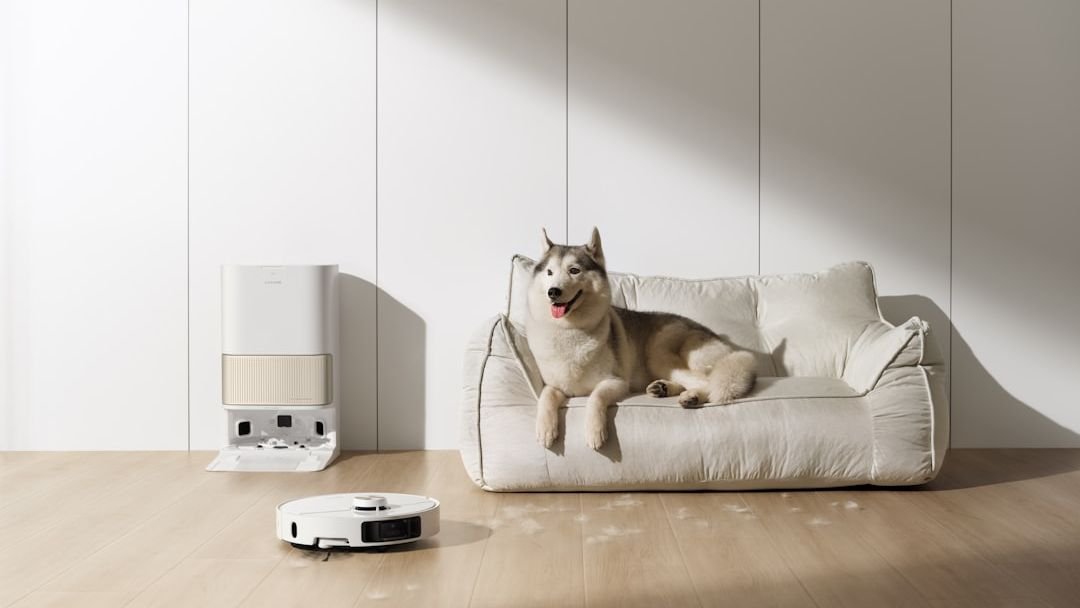
You know your dog better than almost anyone. You know the way their tail wags, when they’re faking a limp for attention, and exactly which corner of the couch they claim as their throne. So it can be genuinely heartbreaking when something invisible – just a sound – sends even your boldest pup into a spiral of panic. The scary part? Some of these sounds are things you probably hear every single day without thinking twice.
Sudden, loud noises are one of the most common triggers for fearful behaviors in dogs, and many companion dogs suffer from noise sensitivity. What’s even more surprising is that it’s not always the dramatic, once-a-year sounds doing the damage. Anecdotally, and based on reports of undesirable behaviors in response to noises in the home, many common household noises may also be causing fear and anxiety in companion dogs. Let’s dive into the seven sounds most likely to send your dog into distress – and more importantly, what you can do about it.
1. Thunderstorms: Nature’s Most Overwhelming Symphony

If there’s one sound that practically every dog owner knows can unravel their pup, it’s a thunderstorm. Storm phobia, or fear of storms, is a common behavior in dogs. Many dogs are terrified of the noise and react by hiding, pacing, panting, trembling, peeing, pooping, drooling, and destroying things. Think about it from your dog’s perspective – the sky is rumbling, the light is flashing, the pressure in the air is literally changing. That’s a lot.
Desensitization doesn’t work well for thunderstorm phobia since storms are multisensory. While it may be possible to desensitize your dog to the sound of thunder with the help of a recording, they will still be nervous with the sound of wind, flashes of lightning, rain, pressure change, and the static electricity in the air. Your best bet is a combination approach. The first step in managing all types of noise phobia in dogs is to give them a safe place to hide – a windowless basement, closet, crate, or bathroom.
2. Fireworks: Beautiful for Us, Terrifying for Them
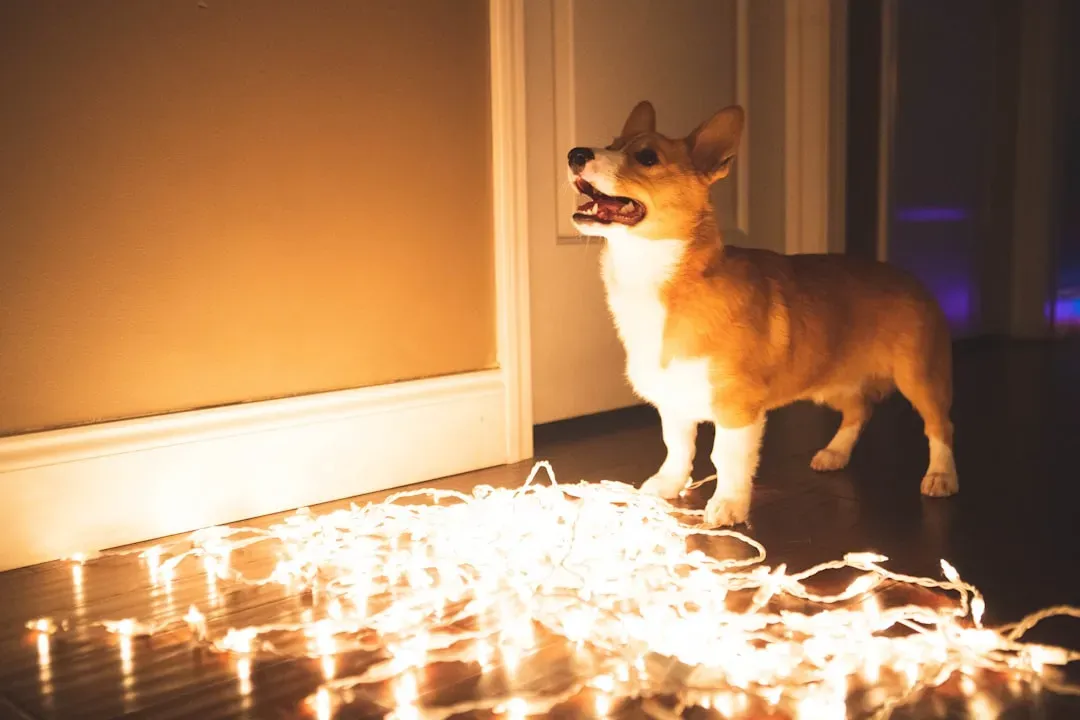
Fireworks are honestly one of the cruelest ironies in dog ownership. We celebrate with dazzling light shows while our pups sit trembling behind the sofa. A study of over 13,700 pet dogs in Finland puts the prevalence of sound sensitivities at 32 percent, and fear of fireworks in particular at 26 percent. That’s roughly one in every four dogs you’ll ever meet.
Hearing the noise and not knowing where it’s coming from is probably much scarier for a dog, and this is why fireworks are much scarier for a dog. The random, unpredictable bursts with no identifiable source are especially destabilizing. Research on what helps dogs with fear of loud noises shows how important it is to do something, rather than to wait and see, because doing nothing is associated with the problem getting worse. Ad hoc counterconditioning – responding to sounds as they happen – can be very successful.
3. Smoke Detectors: The Beep That Breaks Your Dog

Here’s one that genuinely surprises people. That little chirping beep your smoke detector makes when the battery is dying? It may be one of the most psychologically torturous sounds in your home for your dog. Research found that high-frequency, intermittent noises such as the battery warning of a smoke detector are more likely to cause a dog anxiety, rather than low-frequency, continuous noise. The randomness is what makes it so hard for dogs to cope.
Dogs were more likely to have a strong, anxious reaction to high-frequency, intermittent sounds, such as smoke detector warning beeps, than to low-frequency continuous sounds, such as microwave humming. The fix here is genuinely simple. Minimizing exposure may be as simple as changing batteries more frequently in smoke detectors or removing a dog from a room where loud noises might occur. Honestly, that one’s on us as pet parents.
4. Vacuum Cleaners: The Monster That Lives in the Closet
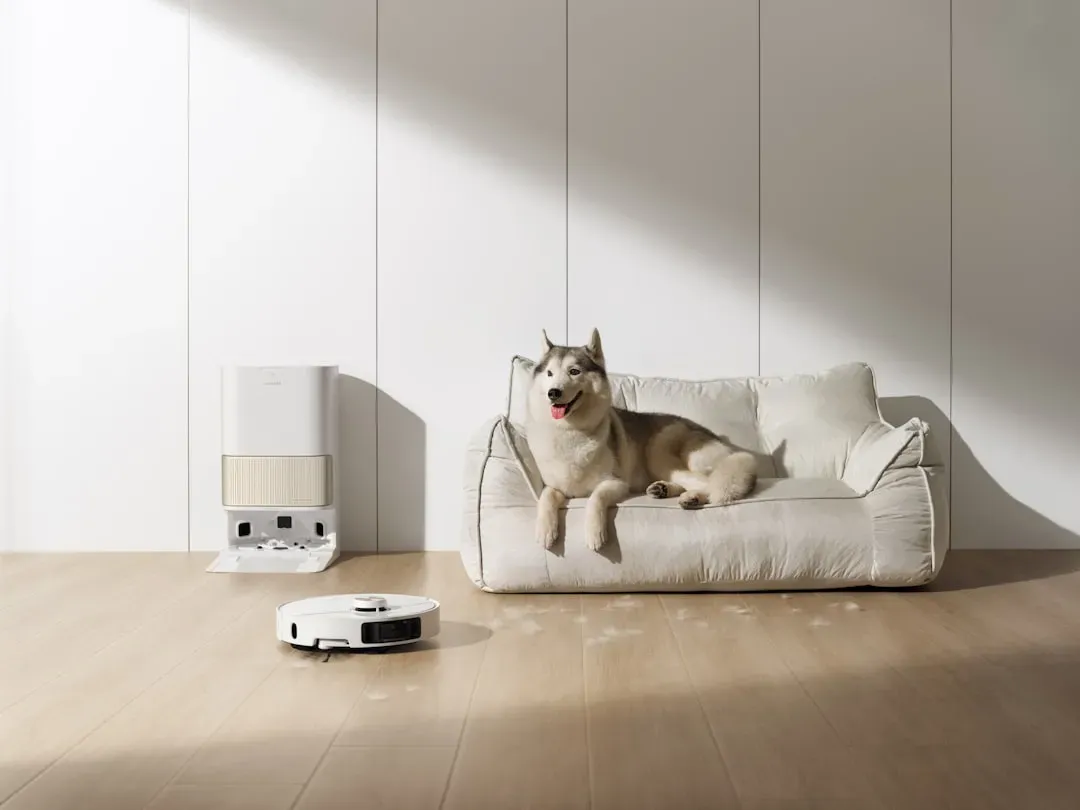
Let’s be real – no list of scary dog sounds would be complete without the vacuum. The low-frequency roar and unpredictable movement of vacuum cleaners make them surprisingly effective at driving dogs away. From a dog’s eye view, this machine appears from nowhere, roars, moves erratically, and then disappears again. It’s basically a monster story playing out in the living room.
Many dogs don’t like the sound of vacuum cleaners, nail guns, electric drills, loud blenders, and high-efficiency washers that have a loud spin cycle. The good news is that this is one of the most treatable sound fears. If you realize your dog is starting to develop a noise phobia for discrete sounds such as the vacuum cleaner, systematic desensitization and counterconditioning can be very effective. Start by leaving the vacuum in plain sight, turned off, while rewarding your dog calmly with treats nearby.
5. Sirens and Car Alarms: Sounds That Trigger Something Ancient

You’ve probably noticed your dog throwing their head back and howling at a distant ambulance siren. It looks almost comedic – until you realize it’s a stress response. Dogs have more sensitive hearing than humans, and loud, sudden, or unpredictable sounds can trigger the brain’s fear center. Common noises that scare dogs include thunderstorms, fireworks, alarms, vacuums, garbage trucks, motorcycles, sirens, and other loud or repetitive sounds.
Dogs hear more than twice as many frequencies as humans, and they can also hear sounds roughly four times further away. So while a passing ambulance sounds manageable to you, your dog is experiencing something far more intense and close-feeling. If your dog appears frightened, it is fine to gently pet them or allow them to sit close to you. Remain calm yourself – don’t make a fuss. Your energy is contagious, so staying steady really does help.
6. Construction Noise and Power Tools: Chaos Without Context
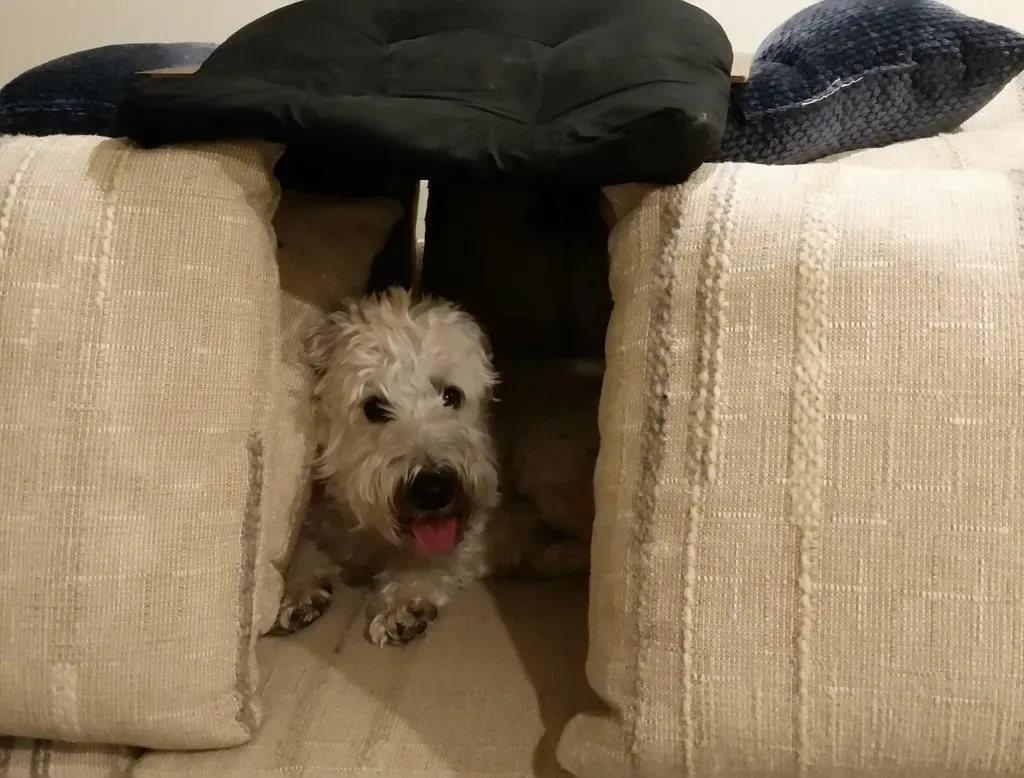
Renovation season hits dog owners hard in a way that rarely gets talked about enough. Jackhammers, nail guns, power drills, the sudden bang of heavy equipment – these create a soundscape that has no pattern, no warning, and no end in sight. The fear response is a normal, adaptive behavior that helps protect the individual from harm. However, fear responses can be considered abnormal when they are repeatedly and consistently triggered by non-threatening stimuli, or when the level or duration of response is out of proportion compared to the actual threat level posed by the stimuli.
Like human infants, puppies undergo critical stages of development when their brains form associations that can influence behavior for the rest of their lives. If, for example, a construction worker was hammering in a neighboring apartment while a puppy was left home alone, that puppy might associate banging with abandonment. That association could trigger a fear response in the dog every time they heard a bang. If construction near your home is ongoing, try to keep your dog in the quietest interior room and consider using white noise or calming music to buffer the chaos.
7. Everyday Household Beeps and Alarms: Hidden Triggers Right at Home

This last one is perhaps the most underestimated of all. Washing machines, dishwashers, microwave beeps, alarm clocks – these humble everyday sounds are quietly stressing out a huge number of dogs. Researchers discovered high-frequency beeping and low-frequency continuous sounds such as alarm clocks, plumbing, smoke detectors, cell phone noises, washing machines, dishwashers, vacuum cleaners, and fans can stress dogs out. Most owners don’t even connect the behavior to the sound.
Studies found that owners not only underestimated their dogs’ fearfulness, but the majority of people in videos responded with amusement rather than concern over their dog’s welfare. That’s not a criticism – it’s just how easy it is to miss. Stressed dogs could pant, lick their lips, turn their head away, or even stiffen their body. Sometimes their ears will turn back, and their head will lower below their shoulders. Learning to read those subtle cues is one of the most powerful things you can do for your dog.
What Every Dog Owner Should Know About Helping Their Pup

Knowing the sounds is only half the battle. The other half is understanding how to genuinely help. It is important to understand that dogs experiencing noise aversion are akin to a person having a panic attack. These dogs are suffering, and noise aversion is a true welfare concern that should be considered an important medical condition. Treat it like one.
Single, traumatic experiences or repeated exposure to frightening stimuli can cause reactions ranging from mild fear to extreme phobic reactions. Mild fear responses may include panting, pacing, and attempts to hide, whereas phobic responses may include panic, extreme agitation, attempts to escape, and destructive behavior. The earlier you act, the better the outcome. With the right help, time and patience, most dogs with noise phobias can improve significantly.
A combination of environmental management, behavior modification, and medication may be recommended to treat noise aversion. In severe cases, all three approaches are the most effective. Never hesitate to bring your vet into the conversation. Make an appointment with your veterinarian if your dog suddenly becomes sensitive to noise. Underlying health problems could be to blame. Even if this isn’t the case, the sooner treatment begins, the more effective it will be.
Conclusion: Your Dog Is Counting on You to Listen

It’s a strange and humbling thing to realize that a sound you barely notice can completely undo your dog’s sense of safety. I think that’s what makes this topic so worth paying attention to. Your dog communicates volumes without a single word – through a tucked tail, a lowered head, a suddenly rigid posture. The number of sounds to which dogs are harmfully sensitive and the severity of that sensitivity are often underestimated by owners.
The relationship between you and your dog is built on trust. Every time you notice their distress and respond with calm, patience, and action, you’re deepening that trust. Ad hoc counterconditioning whenever a loud noise occurs is easy to implement in everyday life and is effective in preventing and improving noise fears in dogs. Since dogs respond to our emotions and seem to adapt their perception of a situation based on humans’ emotional communication, it is also recommendable to show signs of positive emotions whenever potentially startling stimuli happen.
Your calm really is their courage. So next time the smoke detector chirps or a siren wails past the window, take a quiet breath, reach for a treat, and remind your pup that everything is okay. They’ll believe you – because you’ve earned it. Did any of these sounds surprise you? Tell us in the comments which ones your dog reacts to most!


