
You’ve probably noticed your dog reacts to certain sounds. Maybe they hide under the bed when the vacuum comes out, or tremble during storms. Here’s the thing though: while we tend to think about obvious noise triggers like fireworks or thunder, there’s a whole world of everyday sounds that might be secretly stressing out your best friend. Some of these noises are so ordinary, so woven into our daily lives, that we don’t even register them anymore.
Nearly half of all dogs are affected by noise phobias, which is honestly staggering when you think about it. Dogs hear sounds that reach frequencies as high as 47,000 to 65,000 HZ, compared to our measly 20,000. That means your dog is experiencing an entire sonic universe you’ll never know. Let’s dive into the surprising sounds that might be frightening your furry companion, and what you can actually do to help.
The High-Pitched Beep of Smoke Detectors

Let’s start with something that might shock you. That smoke detector beep when the battery runs low? It could be absolutely terrifying your dog. Research shows dogs were more likely to have a strong, anxious reaction to high-frequency, intermittent sounds, such as smoke detector warning beeps, than to low-frequency continuous sounds.
Think about it from their perspective. These beeps are sharp, unpredictable, and pierce through walls. Your dog can’t escape them. You might notice your pup pacing, panting excessively, or trying to hide in the furthest corner of your home when that dreaded chirp starts. Some dogs will even refuse to enter rooms where smoke detectors are installed.
The solution here is pretty straightforward but often overlooked. Replace those batteries regularly before they start chirping. If you’re testing your smoke alarm, consider giving your dog a heads-up with treats and moving them to another part of the house first. Create positive associations by offering high-value rewards in rooms with detectors when they’re silent.
Vacuum Cleaners and Their Unpredictable Roar
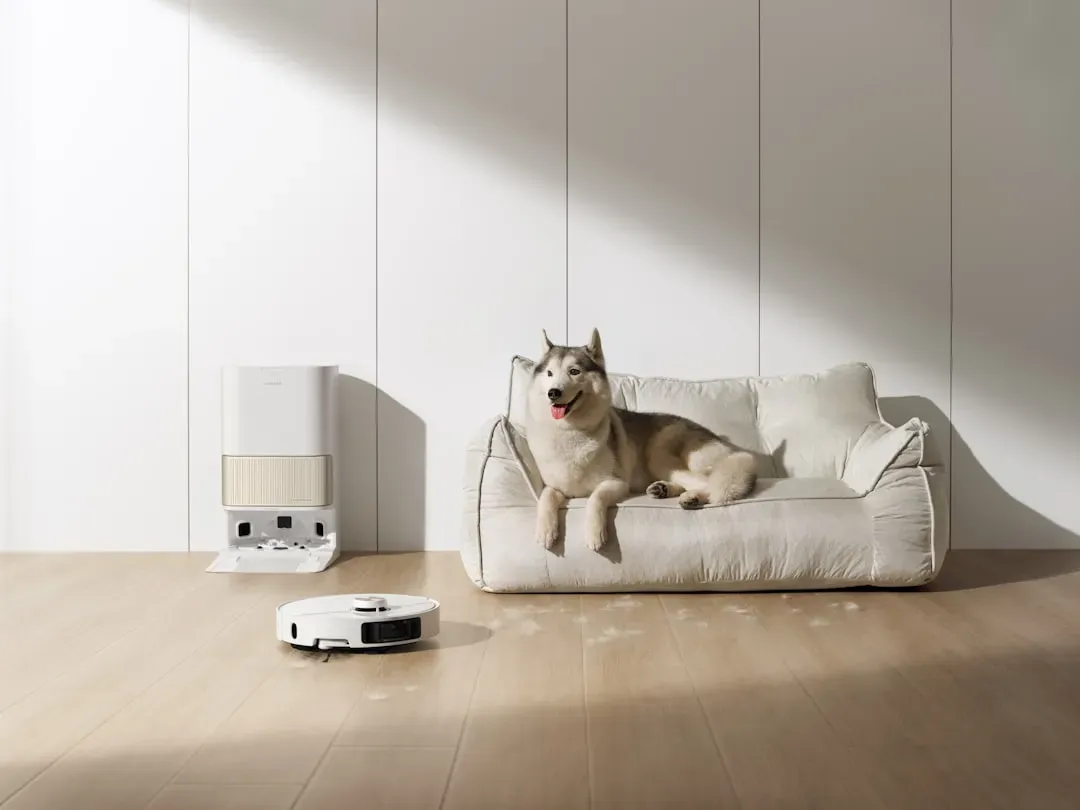
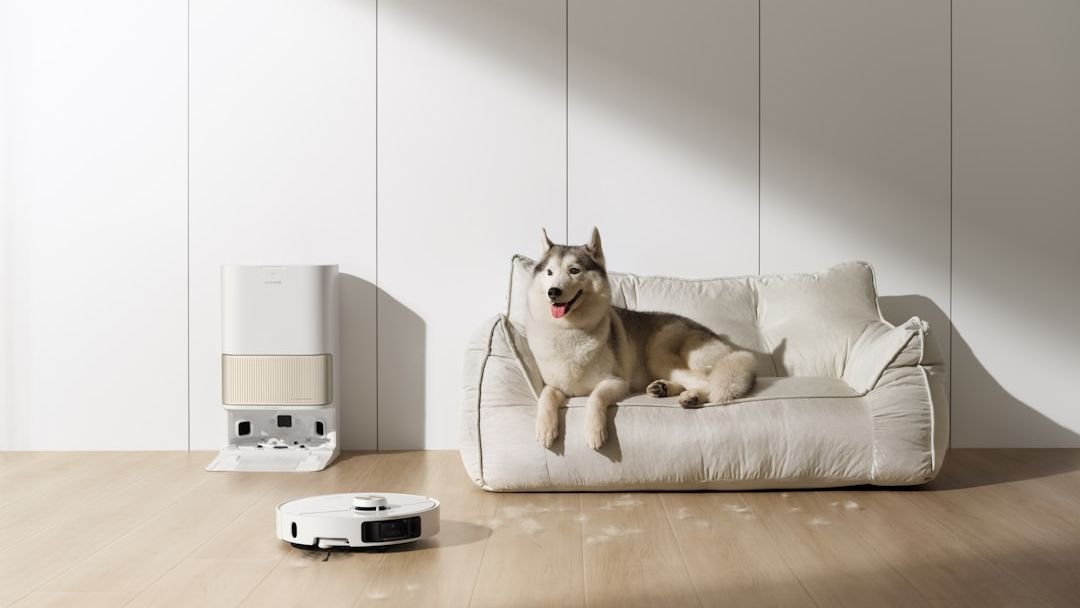
Many dogs don’t like the sound of vacuum cleaners, and honestly, can you blame them? It’s loud, it moves erratically across the floor, and from a dog’s point of view, this growling monster seems to chase them around their own home. The combination of the motor’s drone and the unpredictable movement creates a perfect storm of anxiety.
Watch for signs like your dog barking frantically at the vacuum, retreating to another room, or showing stress signals like pinned-back ears and a tucked tail. Some dogs become so distressed they’ll scratch at doors trying to escape the noise.
Try gradual desensitization. Start by leaving the vacuum out (turned off) with treats scattered around it. Let your dog investigate on their terms. Over several days or weeks, progress to turning it on briefly in another room while someone feeds your dog their favorite snacks. The goal isn’t to make them love the vacuum, just to reduce the panic response. You could also consider a quieter vacuum model or schedule cleaning time when your dog can be in another part of the house or yard.
Construction Noises and Power Tools

If you or your neighbor are doing a home renovation, the sound of construction can be extremely disruptive to your dog. Power tools and heavy machinery aren’t particularly known for their silence, and having to listen to them for extended periods can be very stress-inducing.
The issue with construction noise is its duration and intensity. Drills, saws, hammering – these aren’t brief sounds your dog can quickly recover from. They go on for hours, creating sustained stress. You might see your dog drooling, trembling, or refusing to eat during renovation periods.
If construction is happening in your home, create a safe retreat space as far from the noise as possible. Consider doggie daycare or asking a friend to watch your pup during the loudest work hours. Play calming music or white noise to help mask the sounds. Use white noise or turn on a noisy bathroom exhaust fan to muffle the sounds. Music therapy may promote calm and reduce the salience of sounds that trigger anxiety.
Garbage Trucks and Street Machinery

That weekly rumble of the garbage truck might seem routine to you, but to your dog, it’s a mechanical beast invading their territory. The beeping of reversing trucks, the crash of bins being emptied, the hydraulic hiss – it’s a cacophony that can send sensitive dogs into a panic.
Common noises that scare dogs include thunderstorms, fireworks, alarms, vacuums, garbage trucks, motorcycles, sirens, and other loud or repetitive sounds. These street noises are particularly challenging because they’re unpredictable and your dog has zero control over when they’ll happen. Some dogs will bark frantically at windows, others will hide, and many will pace anxiously.
The trick here is counterconditioning. When you hear the garbage truck approaching, immediately start a fun activity or break out the highest value treats. The goal is to change your dog’s emotional response from “scary thing coming” to “garbage truck means amazing treats appear.” Keep windows closed on collection days to muffle the sound, and consider closing curtains so your dog can’t see the truck either.
Household Appliances With Sudden Beeps
Your microwave beeping, the washing machine’s end-of-cycle alert, even your phone ringing – these ordinary household sounds can be sources of anxiety. Numerous signs of canine fear and anxiety were reported by survey respondents and observed in videos, in response to both daily, and irregular but normal, household noises.
What makes these sounds particularly problematic is their suddenness. Your dog might be relaxing peacefully when BAM – the dryer buzzes. That startle response, repeated over and over, can build into genuine anxiety. Look for subtle signs like your dog’s ears flicking back when certain appliances are running, or them leaving the room when you start the dishwasher.
Where possible, adjust appliance settings to lower volumes or less jarring tones. For inevitable beeps, try pairing them with positive experiences. When the microwave beeps, toss a treat. When the washer buzzes, start a game. You’re teaching your dog that these sounds predict good things, not threats. It takes patience, but it works.
Sirens and Emergency Vehicle Sounds

Emergency sirens cut through everything. They’re designed to alert humans, but for dogs with their sensitive hearing, sirens can be genuinely painful or at minimum deeply unsettling. You’ve probably heard your dog howl when a siren passes – that’s not them joining in for fun. It’s often a distress response.
The unpredictable pitch changes and volume of sirens can trigger your dog’s instinctive response to perceived danger. Some dogs will howl, others will tremble and seek comfort, and still others might try to escape the sound by bolting. Many of the behaviors seen, such as trembling, panting, retreating from the sound source, are commonly associated with noise phobias.
You can’t prevent sirens, but you can manage your dog’s response. Stay calm yourself – dogs pick up on our emotions. Offer a safe space where your dog can retreat. If sirens are frequent in your area, work on desensitization using recordings at very low volumes, gradually increasing over weeks while pairing the sound with treats and play. Never force your dog to endure the sound – let them self-soothe in their safe space if that’s what they need.
Electronic Device Alerts and Ringtones

In our hyper-connected world, our devices are constantly pinging, buzzing, and ringing. Each notification is a potential stressor for noise-sensitive dogs. Honestly, think about how many times your phone makes noise in a day. For a dog already on edge, each alert can be like a tiny alarm bell going off.
The problem with electronic alerts is their frequency and variety. Your dog might just be getting used to one sound when suddenly there’s a new text tone or notification style. Individual dogs may find different sounds scary, and these can include the noise of objects falling, phones beeping or ringing, cars idling, noisy traffic, and more. While most dogs might be startled by an unexpected sound and then move on, a sound-sensitive dog does not recover from that initial reaction.
Consider putting your devices on silent or vibrate mode when you’re home with your dog, especially during their rest times. Choose softer, lower-pitched notification sounds. If your dog seems particularly reactive to your phone, you can actually condition them to associate your ringtone with treats by playing the sound (at low volume) and immediately giving a reward.
Understanding When to Seek Professional Help

Look, sometimes love and patience aren’t enough, and that’s completely okay. A sudden change in noise sensitivity can signal pain, illness, age-related changes, or increased anxiety. Always check with your veterinarian if your dog suddenly becomes fearful of everyday sounds. This is crucial because noise sensitivity can sometimes indicate underlying health issues.
Treatment involves a multi-faceted approach, including environmental modifications, behavior modification, and potentially supplements or anti-anxiety medication. There’s no shame in medication if your dog needs it. Would you tell someone with anxiety to just tough it out? Your dog deserves the same compassion.
Board-certified veterinary behaviorists can create customized treatment plans. With patience, consistency, and the right treatment plan, most dogs can overcome their noise anxiety and lead happier, more comfortable lives. The key is early intervention – the longer noise phobias go untreated, the worse they typically become. So if your dog is showing signs of genuine distress around sounds, reach out to your vet sooner rather than later.
Conclusion
Your dog’s world is so much louder than yours. What seems like background noise to us can be overwhelming, even frightening, to our canine companions. The beautiful part is that you have the power to make their world safer and calmer. Start paying attention to what triggers your dog’s anxiety, create safe spaces, and work gradually on building positive associations with scary sounds.
Remember, learning and early socialization are even more important than genetics when it comes to noise sensitivity. Whether you’re working with a puppy or helping an older dog, positive change is possible. Be patient with them, be consistent in your approach, and never hesitate to ask for professional help when you need it.
What sounds does your dog react to most? Have you noticed any patterns or triggers we didn’t cover? Every dog is unique, and sharing experiences helps us all become better dog parents.


