
Chimpanzees Caught Sharing Alcoholic Fruit in the Wild

Wild Chimps Spotted Sharing Naturally Fermented Fruit
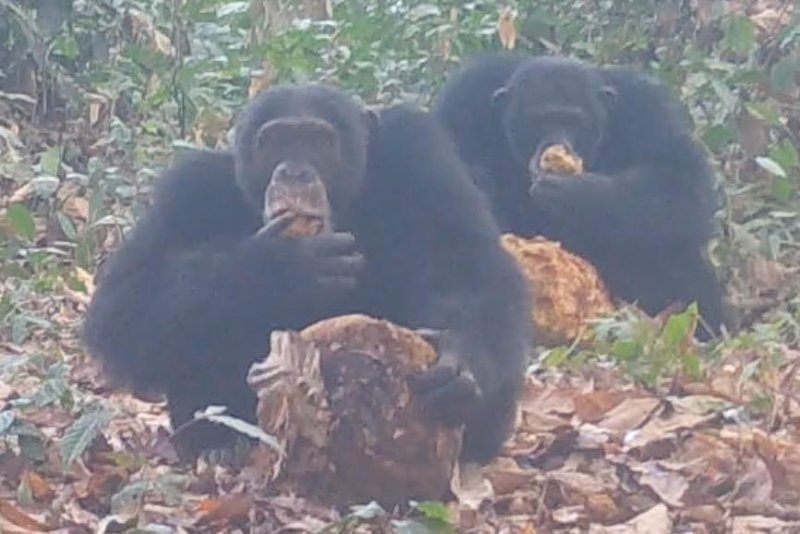
Deep in the forests of Guinea-Bissau’s Cantanhez National Park, a remarkable moment has been captured on camera: wild chimpanzees eating and sharing naturally fermented fruit. In a first-of-its-kind study, scientists from the University of Exeter documented this behavior using motion-activated cameras, revealing a glimpse into the complex social lives of our closest living relatives.
The footage shows chimpanzees picking African breadfruit and passing it among one another, a behavior rarely observed even with non-fermented foods. Laboratory testing confirmed that the fruits contained ethanol—the same type of alcohol found in human beverages—suggesting that the chimps may have been experiencing low levels of natural intoxication.
A Taste of Alcohol and a Step Toward Social Bonding?
The discovery raises fascinating questions about the possible evolutionary roots of alcohol consumption. The fruit samples showed an alcohol content of about 0.61% ABV (alcohol by volume), a relatively low concentration. However, given that fruit comprises a large portion of chimpanzees’ diets, researchers suggest that even small amounts of alcohol could accumulate over time.
“For humans, we know that drinking alcohol leads to a release of dopamine and endorphins, creating feelings of happiness and relaxation,” said Anna Bowland from the Centre for Ecology and Conservation at Exeter’s Penryn Campus. “Sharing alcohol, through traditions such as feasting, strengthens social bonds.”
Could chimpanzees be engaging in an early form of social drinking?
Researchers believe it’s possible. The fact that chimps were not just eating the fruit individually but actively sharing it suggests that fermented foods might play a role in strengthening group ties.
Ancient Origins of a Human Tradition
Although the chimpanzees are unlikely to become intoxicated to the point of affecting their survival, the behavior could reflect an ancient link between fermented food and communal gathering. Dr. Kimberley Hockings, also from the University of Exeter, emphasized that the sharing of fermented fruit might represent early evolutionary steps toward organized feasting.
“Chimps don’t share food all the time, so this behavior with fermented fruit might be important,” said Hockings. “We need to learn more about whether they deliberately seek out ethanolic fruits and how they metabolize them. But this could be the beginning of something resembling human feasting traditions.”
Interestingly, a molecular adaptation discovered in the common ancestor of African apes and humans suggests that the ability to metabolize alcohol efficiently dates back millions of years. This supports the idea that consuming fermented fruit—and the social behaviors tied to it—could have deep evolutionary roots.
The research, funded by the Primate Society of Great Britain, was published in Current Biology under the title Wild chimpanzees share fermented fruits.
To learn more about the ongoing work in Cantanhez National Park, visit the Cantanhez Chimpanzee Project website.