

Ever feel like your dog just knows when something’s off, even before you say a word? That’s not your imagination — dogs are incredibly tuned in to human emotions. They pick up on subtle cues like body language, facial expressions, and even changes in your scent when you’re stressed or upset. Their keen senses and strong bond with humans allow them to respond with comforting behavior or alertness, depending on what you need. Research shows dogs can distinguish between happy and angry faces, and some even react to the tone of your voice alone. It’s like emotional radar, hardwired into their brains through thousands of years of companionship. So when your pup cuddles up to you on a rough day, it’s not just sweet — it’s science.
The Silent Language Between Species

Your dog knows you’re having a rough day before you’ve even said a word, and recent scientific breakthroughs are finally proving what pet owners have intuitively understood for centuries. While we pride ourselves on our sophisticated communication skills, dogs’ most dominant sense is actually smell, which gives them a very different perspective on the world around them. They’re reading an emotional symphony that plays out through subtle body chemistry changes, micro-expressions, and energy shifts that escape our conscious awareness.
What makes this even more remarkable is that dogs are remarkably good at recognizing human emotional expressions and can tell what emotion a human face is showing or respond with empathetic concern to a weeping person. This isn’t just coincidence or clever training – it’s a sophisticated biological system that has evolved over thousands of years of human-dog partnership.
The Incredible Nose Knows Everything

Dogs can smell human stress and make decisions accordingly, because being a species that we’ve lived and co-evolved with for thousands of years, it kind of makes sense that dogs would learn to read our emotions. This isn’t just about detecting obvious scents like perfume or food.
Dogs are highly sensitive to changes in our body odor that are undetectable to other humans and can smell the chemical changes that occur when we feel different emotions, such as happiness or anger. Think of it like this: while we might notice someone looks upset, your dog can literally smell the cortisol stress hormones being released through your skin. Dogs experience emotional contagion from the smell of human stress, leading them to make more ‘pessimistic’ choices. It’s as if they have a built-in emotional weather station that’s constantly monitoring the atmospheric pressure of your feelings.
Reading Your Face Like an Open Book

Dogs can recognize six basic emotions – anger, fear, happiness, sadness, surprise, and disgust – and process these in similar ways as humans, with changes to heart rate and gaze. Your furry friend isn’t just looking at you with those adorable eyes – they’re conducting a masterclass in facial analysis.
Research from the University of Lincoln showed dogs were presented with images of people and dogs showing negative, neutral, and positive expressions, and dogs are more sensitive to changes in facial expressions of other dogs, but they show different responses to human expressions too. What’s fascinating is that dogs engaged in mouth-licking in response to angry expressions and mouth-licked when they saw images of angry human faces, but not when they heard angry voices. This mouth-licking serves as an appeasement signal, essentially their way of saying “Hey, let’s all calm down here.”
The Sound of Your Soul

Your voice carries more emotional information than you realize, and dogs have become expert interpreters of human vocal nuances. Dogs are also able to understand the emotional tones of our voices – particularly the difference between positive and negative sounds. They’re not just responding to the words “good boy” or “bad dog” – they’re analyzing the pitch, tone, rhythm, and even the subtle tremors in your voice that indicate stress, excitement, or sadness.
Dogs looked significantly longer at the face whose expression was congruent to the valence of vocalization, for both conspecifics and heterospecifics, demonstrating that dogs can extract and integrate bimodal sensory emotional information. It’s like they’re running a continuous emotional soundtrack analysis of everything you say.
Body Language Speaks Volumes

Only 10% of what humans communicate is actually verbal, while non-verbal posture, gestures, body carriage, and facial expressions communicate 90% of what we have to say, so our dogs have learned to monitor these physical actions very closely. Your posture tells a story that your dog reads fluently – the slight slump of your shoulders when you’re tired, the tension in your neck when you’re stressed, or the bouncy energy in your step when you’re excited about something.
Dogs discriminate and show differential responses to emotional cues expressed through body postures, facial expressions, vocalisations and odours. They’ve essentially become professional body language experts, and they’re constantly taking notes on your physical presentation. Think of your dog as having a PhD in “Human Studies” with a specialization in reading the subtle signs that even your best friends might miss.
The Mysterious Energy Connection

There’s something almost mystical about how dogs sense our emotional states that goes beyond the five traditional senses. When they pick up on human emotions, dogs use composite signals, which includes information coming in from a cocktail of their senses, including sight, hearing, olfaction, and maybe through touch.
Some researchers and animal behaviorists describe an “energy” that dogs can detect – that intangible quality of being calm, anxious, confident, or fearful that seems to radiate from us. It demonstrates the concept of cross-species empathy; a concept which underpins the theory of an energetic connection that is powerful enough to allow one living being to influence the energy of another. Whether you call it energy, vibration, or simply the culmination of multiple sensory inputs, dogs seem to have access to an emotional frequency that humans have largely forgotten how to tune into.
The Science of Emotional Contagion

Mirror neurons—brain cells that react both when a particular action, like smiling, is performed and when it is observed—fire, conjuring up the emotion as if you were experiencing it naturally, and this rapid mimicry also occurs in dogs when they interact or play with each other. This means your dog isn’t just observing your emotions – they’re literally experiencing a version of them.
Dogs have “affective empathy”—which is defined as the ability to understand someone else’s feelings, and emotional contagion is a primitive form of affective empathy that reflects the ability to actually share those feelings. It’s like having an emotional mirror that reflects and amplifies feelings between you and your four-legged companion. This biological synchronization explains why your dog seems to get sad when you’re depressed or becomes anxious when you’re stressed – they’re not just reacting to your behavior, they’re sharing your emotional experience.
When Dogs Become Emotional Barometers

Dogs behaved differently depending on the owner’s emotional state: they gazed and jumped less at owners when they were sad, and their compliance with the ‘sit’ command was also diminished. Your dog becomes a living, breathing emotional barometer, reflecting the atmospheric pressure of your household’s feelings.
Quiet, anxious caregivers typically had dogs who were reserved and often unwilling to offer creative, problem solving behaviours, while flamboyant, confident, and expressive caregivers tended to have dogs who were overly friendly and exuberant. This isn’t just correlation – it’s emotional synchronization in action. Approaching training while stressed could have a negative effect on how a dog feels and learns, highlighting how in-tune dogs are at picking up on mood. Your emotional state becomes the background music of your dog’s entire day.
The Evolutionary Advantage of Emotional Intelligence

The ability to perceive and recognize human emotions may have developed in dogs over the long co-evolution process between dogs and humans as it has been adaptive to perceive negative or positive emotions in humans and respond by either avoiding or approaching them. This emotional intelligence isn’t just a cute party trick – it’s been a survival mechanism honed over thousands of years.
For many years, researchers assumed that when dogs became domesticated, the possibility of emotional contagion served as a survival mechanism—if dogs were able to read and share their owner’s emotions, they would be better cared for. Dogs who could read human emotions more accurately were more likely to receive food, shelter, and protection. Dogs’ ability to recognize human emotions appears to exceed the ability of other taxa, including wolves and chimpanzees, and it may be the result of the domestication process having selected for dogs that most proficiently communicate with humans.
The Stress Smell That Changes Everything

Researchers put human volunteers through a stress test, forcing them to prepare and deliver a five-minute speech on the spot and do a high-pressure math task, as researchers maintained serious expressions throughout to increase social anxiety. What they discovered was groundbreaking: When dogs are exposed to the scent of fear, they exhibit more stressful behaviors and higher heart rates than when they were exposed to happy scents.
A quick approach reflected ‘optimism’ about food being present in ambiguous locations whilst a slow approach indicated ‘pessimism’ and negative emotion, and trials were repeated whilst each dog was exposed to either no odour or the odours of sweat and breath samples from humans in either a stressed or relaxed state. Essentially, your stress becomes airborne and changes your dog’s entire worldview from optimistic to pessimistic.
The Tail That Tells All
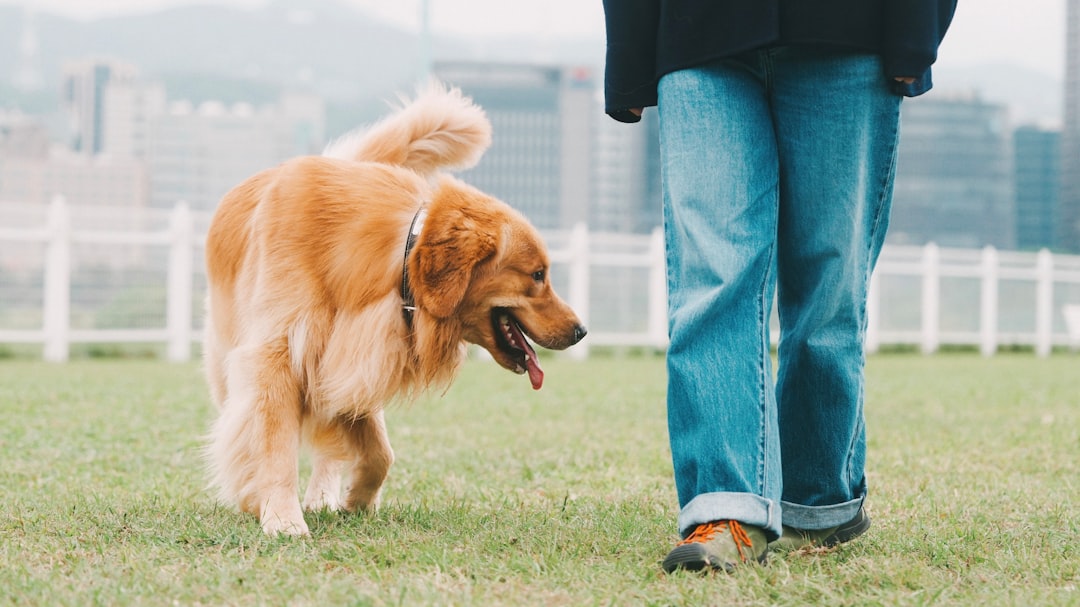
Dogs showed a strong, consistent bias to wag their tails to the right when shown their owner or an unfamiliar human but a leftward bias toward the unfamiliar dog, indicating that dogs’ wagging tails show their emotional state not simply by how much they wag them but also by the side of the body they wag their tails toward. While we’re busy misreading our dogs’ emotions, they’re broadcasting detailed emotional information through tail positioning that we completely miss.
When dogs saw videos of other dogs wagging their tails, if the dogs saw a left-wagging tail, their heart rate revealed they were more anxious than when they watched a right-wagging tail. Despite intense intuitions, people are poor at recognizing the emotional states of dogs and look at everything around the dog to guess what our pet must be feeling but fail to look closely at the animal itself. It’s ironic – dogs are reading us like emotional open books while we’re still struggling with the first chapter of understanding them.
The Hormonal Dance of Connection

Oxytocin release is stimulated by eye contact or social touch such as petting, and it works both ways—from dog to human and from human to dog; it’s like a feedback loop, and in order to have emotional contagion, dogs need to be able to recognize the emotions of their owner—that requires attention, which oxytocin facilitates. This creates a beautiful biological symphony where your emotions and your dog’s emotions become synchronized through hormonal harmony.
Oxytocin levels are an important physiological measure of emotional expression in dogs and modulate the way dogs perceive human faces and human facial expressions. Oxytocin has the potential to decrease vigilance toward threatening social stimuli and increase the salience of positive social stimuli thus making eye gaze of friendly human faces more salient for dogs. It’s like nature’s way of ensuring that the human-dog bond becomes stronger through shared emotional experiences.
Your dog’s ability to sense your emotions before you speak isn’t magic – it’s millions of years of evolution creating the perfect emotional companion. They’ve developed into sophisticated emotional detectives who can read your chemical signatures, decode your facial micro-expressions, analyze your vocal patterns, and even mirror your feelings through neurological pathways. The next time your dog seems to know exactly how you’re feeling, remember that they’re not just being intuitive – they’re using a complex arsenal of biological sensors that put our human emotional intelligence to shame. What would you have guessed was the most powerful sense your dog uses to read your emotions?


