
Pittie Keeps Her Rescue-Day Pink Bunny — 4 Years Later, She Still Won’t Let Go
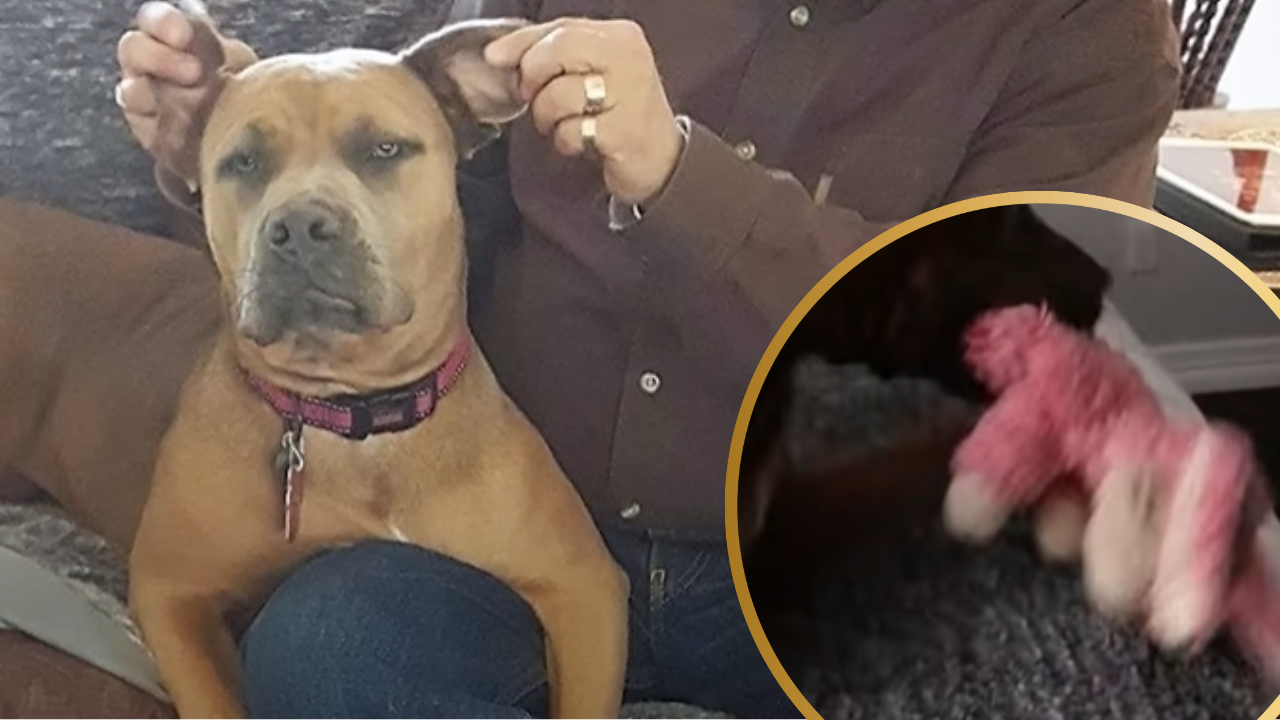
Four years after the day she was rescued, this pittie still won’t go anywhere without the same pink stuffed bunny — and that’s the kind of tender, stubborn love that stops you in your tracks. The video centers on a small comfort object that became a lifeline, and it’s surprisingly moving to watch a tough-looking dog soften the second the bunny lands in her mouth. If you’ve ever seen a child cling to a blanket during a scary moment, you’ll recognize the look in her eyes when she finds her toy. The Dodo presents the story simply: a dog, a rescue day, a pink bunny that never left her side, and a routine that says, “I’m safe now.” That one sentence in the video description sums it up perfectly and explains why viewers keep replaying the moment. The detail about “pink” isn’t just cute — it’s specific, visual proof of continuity from the hardest day to the happiest everyday. It’s the kind of tiny, unforgettable fact that makes this rescue story feel personal and real.
“She got a pink stuffed bunny for comfort, and 4 years later, she still won’t go anywhere without it.”
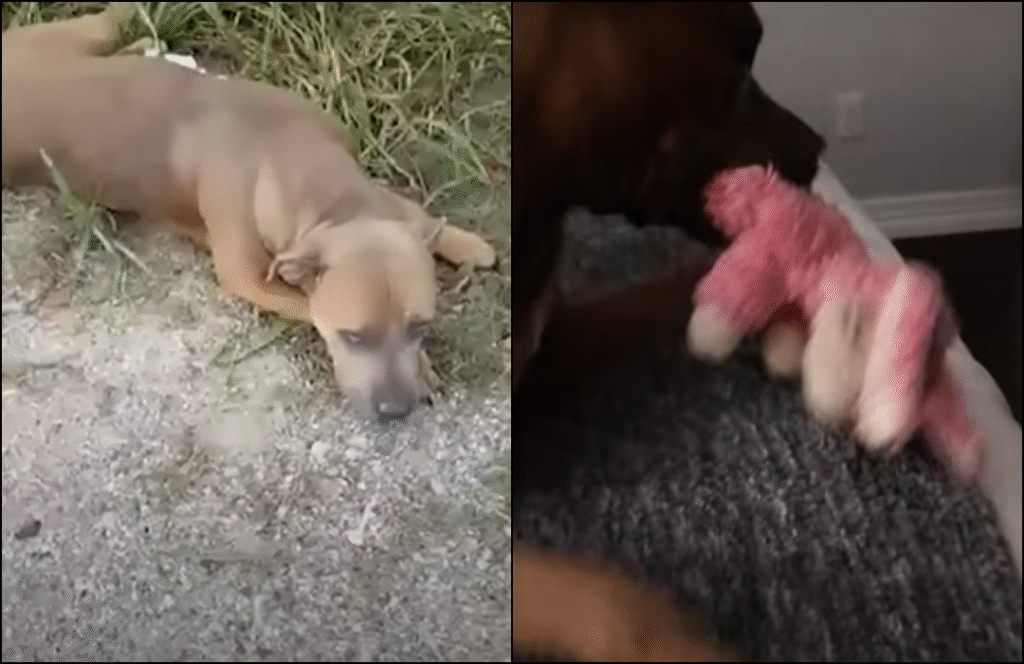
Details around the clip also point viewers to The Abandoned Ones Animal Rescue (TAO), the Texas group that regularly pulls dogs from dangerous dumping sites and nurses them into new lives. Seeing that credit matters because it anchors the feel-good moments in years of gritty, early-morning work rescuers put in before any camera shows up. TAO’s pages and public listings confirm the nonprofit’s mission, home-visit adoption standards, and Fort Worth base — context that makes this pittie’s transformation make even more sense. So when the video asks fans to learn more about TAO, it isn’t a throwaway line; it’s a direct bridge between one dog’s pink bunny and the people who made that bond possible.
From Rescue Day to Everyday: What the Video Shows
The heart of the piece is continuity — the way a single toy stitches together a dog’s past and present. You watch a pattern unfold: new places, new routines, maybe even new people, but always the same bunny tucked into her jaw like a promise. That’s the emotional engine of the story, and it’s why the clip resonates with anyone who’s ever adopted a pet and wondered what “safety” actually looks like. It’s not complicated; it’s the quiet insistence of a dog who says, “This helped me then, it helps me now.” The Dodo has told variations of this theme before — pitties who refuse to part with a favorite plush, who protest when it goes in the wash, who light up when they get it back — and the new video fits neatly into that lineage. When you notice this thread across episodes, the pink bunny stops being a prop and becomes a symbol you recognize. That pattern gives viewers context even if they’ve never met this dog before.
Framing the story inside The Dodo’s long-running Pittie Nation universe also matters because it signals what to expect: everyday heroics, big feelings, and small objects that carry outsized meaning. The series has stacked seasons of vignettes that show pit bulls as tender, goofy, deeply bonded family dogs — a counterweight to old stereotypes. In that setting, the moment a pittie guards a worn-out bunny reads like a thesis statement: strength doesn’t cancel softness. It also explains why viewers keep following these episodes — there’s a familiar rhythm, but each dog gives the melody a new turn. The latest clip leans into that rhythm without repeating it beat-for-beat, which makes the pink bunny feel uniquely hers. The series page underscores that this is exactly the kind of story Pittie Nation exists to tell.
Why Comfort Toys Help Trauma-Exposed Dogs
There’s real science behind why a battered toy can have such a calming effect on a dog who’s been through chaos. Consistent, familiar cues — a scent, a texture, a pressure point — can lower arousal and help animals self-soothe during stress spikes. Behavior veterinarians point out that gentle, consistent pressure and tactile comfort can reduce heart rate, support bonding chemistry, and take the edge off scary triggers like separation, travel, or loud noises. In other words, the pink bunny isn’t “just a toy”; it’s a portable safety signal the dog can control. That’s also why short-term breaks from the shelter environment and stable foster routines measurably reduce stress in dogs — stability and predictability change bodies, not just moods. Put together, these insights explain the on-screen magic: a soft object that started as a stopgap becomes an anchor around which new, confident behaviors can grow. And because smell is the strongest canine sense, the bunny’s familiar scent likely amplifies the effect over time.
Rescue organizations and experienced adopters lean on this principle all the time. They’ll send a blanket or toy home with newly adopted dogs so the smell of the foster home follows them into the next chapter. Trainers also encourage pairing comfort items with predictable routines — meals, walks, crate time — so the object keeps reinforcing “we’re safe” across different settings. It’s not a cure-all, but for a sensitive dog, the difference between “random noise” and “my bunny, my rules” can be massive. Watching the pittie in the video cart her pink toy everywhere is a textbook example of that strategy working. It’s small, it’s simple, and it’s exactly what nervous systems crave after upheaval.
The Abandoned Ones (TAO) and The Dodo’s Spotlight
The video’s callout to TAO isn’t incidental; it ties this specific dog’s comfort to a rescue with a long, documented track record in North Texas. TAO’s public materials outline how they pull dogs from the streets, vet them, and place them through a home-visit process — the slow, careful kind of rescue that gives pink-bunny moments a chance to happen. The nonprofit’s footprint is visible across official listings and media features, including prior stories The Dodo has produced about their work. That overlap makes the collaboration feel natural and gives viewers a concrete next step if they want to support the kind of rescue that leads to scenes like the one in this clip. When a video pairs a single dog’s ritual with a rescue’s donation link, it connects feeling to action. That bridge is where awareness turns into kibble, vet bills, and safe sleep.
Within The Dodo’s broader programming, this story sits alongside other “favorite toy” arcs that reframe pit bulls as tender-hearted and quirky — not just resilient but delightfully sentimental. That editorial choice matters because repetition changes public perception, adoption interest, and policy conversations over time. By threading this pittie’s pink-bunny routine into a series that consistently celebrates softness and joy, the platform helps normalize exactly the behaviors people love seeing in their own living rooms. It’s smart storytelling with real-world effects, especially for breeds that still face bias. And in this case, the credit sequence that points viewers to TAO helps ensure the story’s impact doesn’t stop at the share button.
Practical Ways To Help A Newly Adopted Dog Feel Safe
If you’re bringing a rescue home, take a page from the pink-bunny playbook and plan for comfort on day one. Start by choosing one soft object — a plush toy or small blanket — and keep it consistent during transport, first meals, and early sleep. Pair that item with a predictable routine so the dog can map safety onto both the object and the schedule. Consider tactile aids like snug wraps during thunderstorms or car rides; behavior vets note gentle pressure can help some dogs settle. Round it out with low-stakes enrichment — slow feeders, lick mats, and simple puzzle toys — so the brain has something calm and solvable to do while the heart catches up. Keep expectations modest; the goal in week one isn’t “obedience,” it’s “exhale.” When choice and predictability show up together, nervous systems start to stand down.
As the dog gains confidence, let the comfort item do its job instead of rushing to replace it with something “nicer.” Wash it gently when needed, but try to preserve the scent that tells your dog, “this is mine.” If you must swap in a backup (laundry happens), present the new item during a calm, positive moment so the association transfers cleanly. If separation triggers crop up when you head back to work or school, fold in low-key interventions — frozen KONG-style toys, snuffle mats, soothing music — rather than big, dramatic goodbyes at the door. Most importantly, observe what your dog chooses: the object they trot over to you, the corner they nap in, the ritual they repeat. Follow those choices, and you’ll build the same steady, portable safety the pink bunny brings to the pittie in the video.
Where This Story Lands — And Why It Sticks
In a few quiet minutes, the video shows how one rescued dog stitched her past to her present with a plush pink thread. It gives viewers a simple, concrete picture of recovery: a toy offered on a hard day becomes the thing she insists on holding during good ones. The credits point to TAO so that the energy of those good days can ripple out to other dogs still waiting for their first safe object and first safe sleep. It also fits into The Dodo’s ongoing tapestry of pittie stories that highlight gentleness and attachment, a narrative choice that steadily reshapes how people see the breed. And because the detail is so specific — a pink bunny, carried everywhere — it’s the kind of image you remember long after the video ends. The link and description confirm exactly what you’re watching: a rescued pittie who still won’t let go of the toy that made her feel safe the day her life changed.
Source: Original YouTube Video