
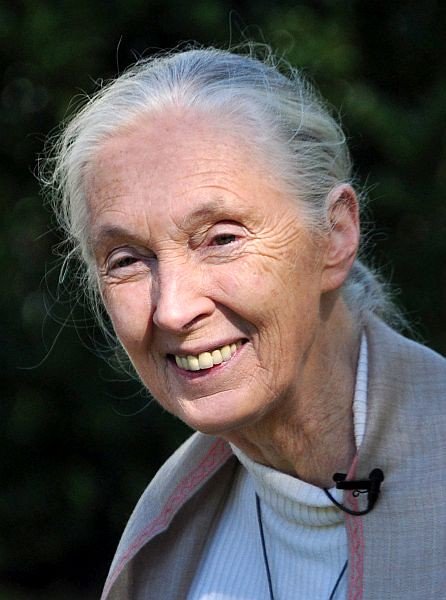

A Breakthrough in the Bush (image credits: Flickr)
In the dappled light of a Tanzanian forest, a young researcher sat patiently, her notebook filling with notes that would quietly upend centuries of assumptions about the creatures around us.
A Breakthrough in the Bush
Imagine spending years watching chimpanzees not as distant subjects, but as complex beings with personalities and bonds. That’s exactly what Jane Goodall did starting in the 1960s at Gombe Stream National Park. Her observations revealed tool use, social hierarchies, and even warfare among chimps—behaviors scientists once thought exclusive to humans.
Goodall’s approach was radical: she named the animals instead of numbering them, treating them like individuals. This empathy-driven method led to discoveries that forced the scientific world to rethink animal intelligence. By showing chimps grieving losses or hugging in comfort, she bridged the gap between us and them.
Her work earned her a PhD in ethology from Cambridge, despite lacking a traditional undergrad degree. It was a testament to the power of direct observation over rigid academia.
Shattering the Human-Only Myth
Back then, experts insisted animals operated on pure instinct, without emotions or culture. Goodall’s evidence said otherwise, sparking debates that rippled through biology and philosophy. She proved empathy and problem-solving weren’t human patents, challenging us to see wildlife as kin rather than resources.
This shift influenced fields beyond primatology. Zoos began rethinking enclosures, and labs questioned animal testing ethics. Goodall herself campaigned against the mistreatment of chimps in research, pushing for sanctuaries where they could live freely.
Her book In the Shadow of Man, published in 1971, brought these ideas to the public, translating into dozens of languages and inspiring a generation to look deeper at the natural world.
From Observer to Activist
Goodall didn’t stop at research; she turned insights into action. In 1977, she founded the Jane Goodall Institute, focusing on community-centered conservation in Africa. Programs there tackle deforestation and poaching by involving locals, proving that protecting wildlife means uplifting people too.
By the 1990s, she launched Roots & Shoots, a youth initiative that now spans over 100 countries. It empowers kids to lead projects on environmental care, animal welfare, and community service—turning passive learners into active changemakers.
Her tireless travel, often 300 days a year, spread this message to world leaders and schoolchildren alike. As a UN Messenger of Peace since 2002, she amplified calls for harmony between humans and nature.
Impacts Rippling Worldwide
Goodall’s influence shows in global policies and everyday attitudes. Sanctuaries she helped establish rescue chimps from labs and the bushmeat trade, giving them space to heal. Reforestation efforts in Africa restore habitats, benefiting not just primates but entire ecosystems.
Her advocacy extended to other species too—hyenas, wild dogs, even underground networks—broadening conservation’s scope. She reminded us that every action, from what we eat to how we vote, affects the wild.
In a world facing biodiversity loss, her model of empathetic science offers hope. It encourages seeing conservation as a shared responsibility, not a distant duty.
A Legacy That Endures
Even after her passing in October 2025 at age 91, while on a speaking tour in the U.S., Goodall’s voice echoes. Tributes from figures like Ellen DeGeneres highlight partnerships that built campuses for gorilla conservation and empowered women in the field.
Her 32 books, many for children, continue educating young minds. Organizations she inspired, like Save the Chimps, carry forward her fight against exploitation.
Goodall’s life proves one person’s curiosity can spark global change. She showed that understanding animals isn’t just science—it’s a path to a kinder world.
Key Takeaways from a Lifetime of Wonder
- Animals share emotions and cultures with us, urging more compassionate treatment.
- Community involvement is key to lasting conservation, blending human and wildlife needs.
- Youth empowerment through programs like Roots & Shoots builds the next generation of stewards.
Jane Goodall taught us that the line between human and animal is blurrier than we thought, inviting us all to live with greater awareness and care. What part of her story resonates most with you? Share in the comments below.


