
How to Manage a Hyperactive Dog
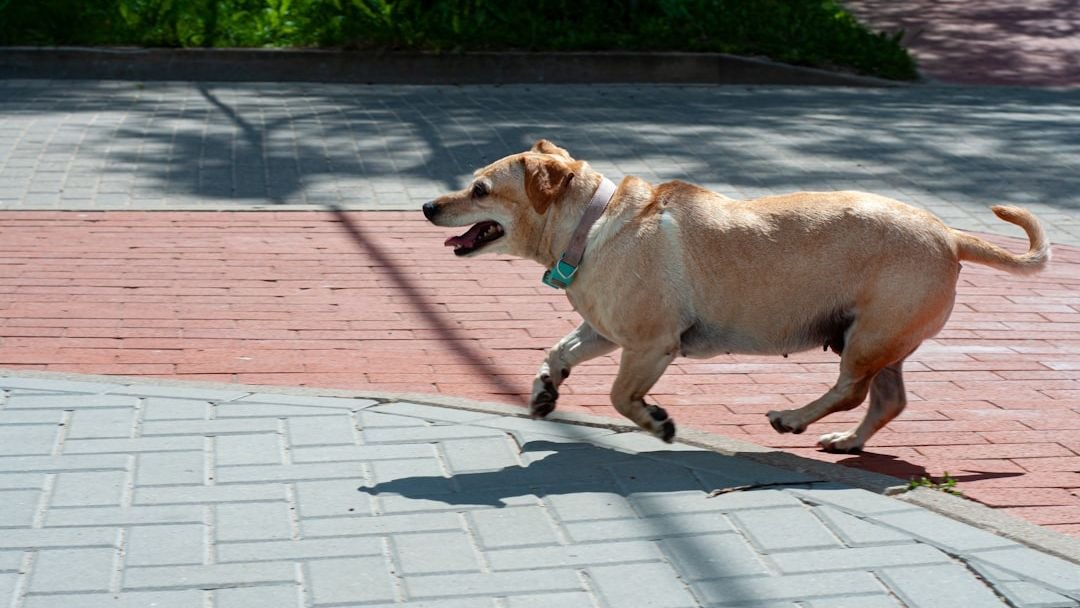
You know that feeling when your pup seems to have endless batteries, bouncing off the walls like a pinball? Maybe they’re jumping on guests, racing through the house, or pulling so hard on the leash you wonder who’s walking who. It’s exhausting, honestly. I’ve been there too, watching a friend’s Border Collie sprint circles around the yard even after an hour at the park.
Living with isn’t just tiring. It can be overwhelming, frustrating, and sometimes heartbreaking when you worry you’re failing them. The good news is that most dogs labeled as hyperactive aren’t suffering from a clinical condition. They’re just bursting with unmet needs, waiting for someone to understand their language. So let’s dive into what’s really going on with your energetic companion and how you can bring more peace to both your lives.
Understanding What Hyperactivity Really Means
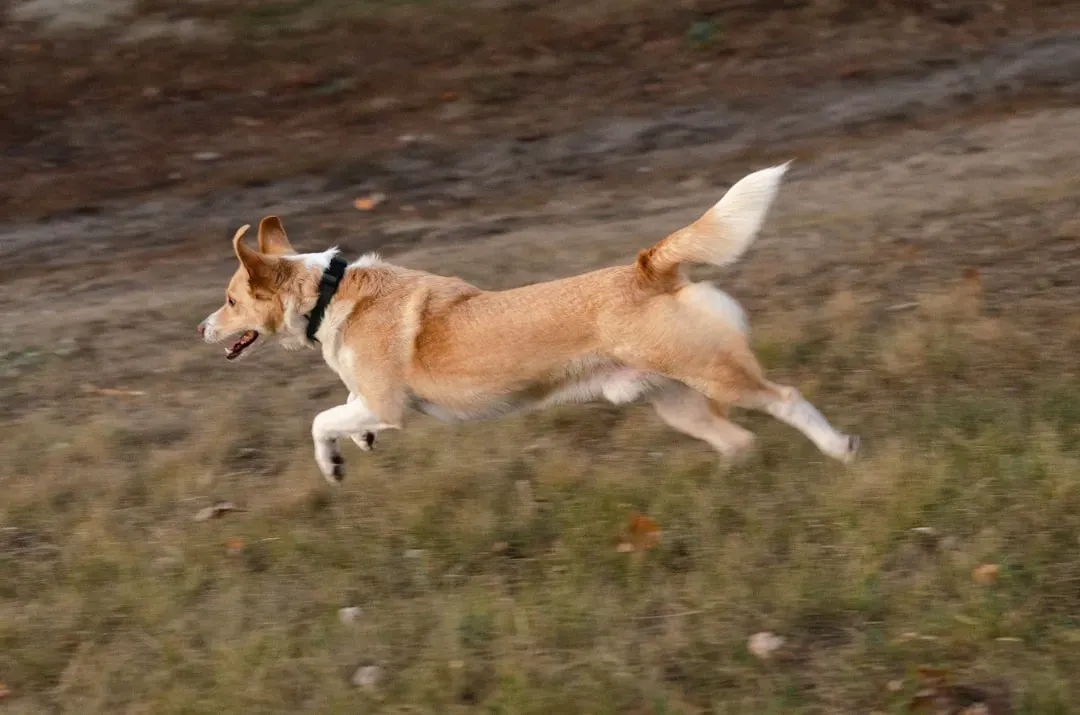
True clinical hyperactivity in dogs is actually quite rare, with hallmarks like the inability to fully relax even in familiar environments and elevated baseline respiration and heart rates. Most dogs we call hyperactive are simply high-energy animals whose physical, mental, and social needs aren’t being fully met. Think about it like this: imagine being a marathon runner forced to sit on a couch all day. You’d probably start climbing the walls too.
Many dogs present as high energy, but their perpetually restless behavior is often indicative of underlying anxiety or hyper-arousal issues rather than true hyperactivity. There’s a difference between a dog with genuine energy to burn and one who can’t settle because they’re anxious or overstimulated. Watch for signs like stress panting, dilated pupils, or an inability to focus even after exercise. These might point to something deeper than just needing more walks.
Some dog breeds are high-energy breeds that require more mental stimulation and physical activity than others, and when these energetic breeds don’t get proper daily exercise, they will likely exhibit unwanted behaviors in the home. Breeds like Australian Shepherds, Jack Russell Terriers, and Huskies were literally bred to work all day. Their genetics demand action and purpose.
Exercise: The Foundation of Calm Behavior
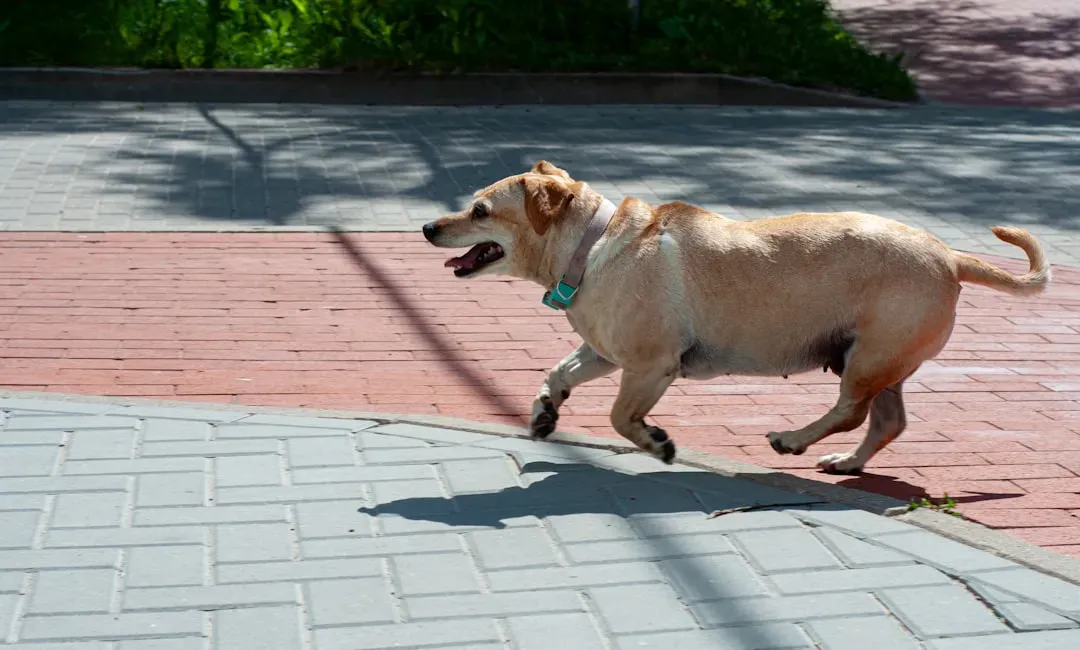
Let’s be real here. Most hyper dogs are just under-exercised, and a couple of days hiking can transform them into completely different animals. Physical activity isn’t optional for high-energy dogs. It’s as essential as food and water. Without it, all that pent-up energy has to go somewhere, usually into your furniture or your nerves.
Most dogs need at least thirty to sixty minutes of exercise and play per day, while high energy dogs will need this twice a day. Walking around the block simply won’t cut it for a Border Collie or a Labrador. They need activities that make them breathe hard and use their bodies fully. Fetch, swimming, running alongside your bike, or playing at a dog park all work wonders.
A combination of aerobic exercise and mentally stimulating activities like exploring walking trails with new scents or agility work is ideal, and swimming is great for high energy dogs as it’s easy on joints but very tiring. The beauty of water is that fifteen minutes of swimming can equal an hour of running. Plus, most dogs absolutely love it once they get used to the idea. Honestly, watching a dog discover the joy of splashing around is pure magic.
Mental Stimulation: Tiring the Brain, Not Just the Body
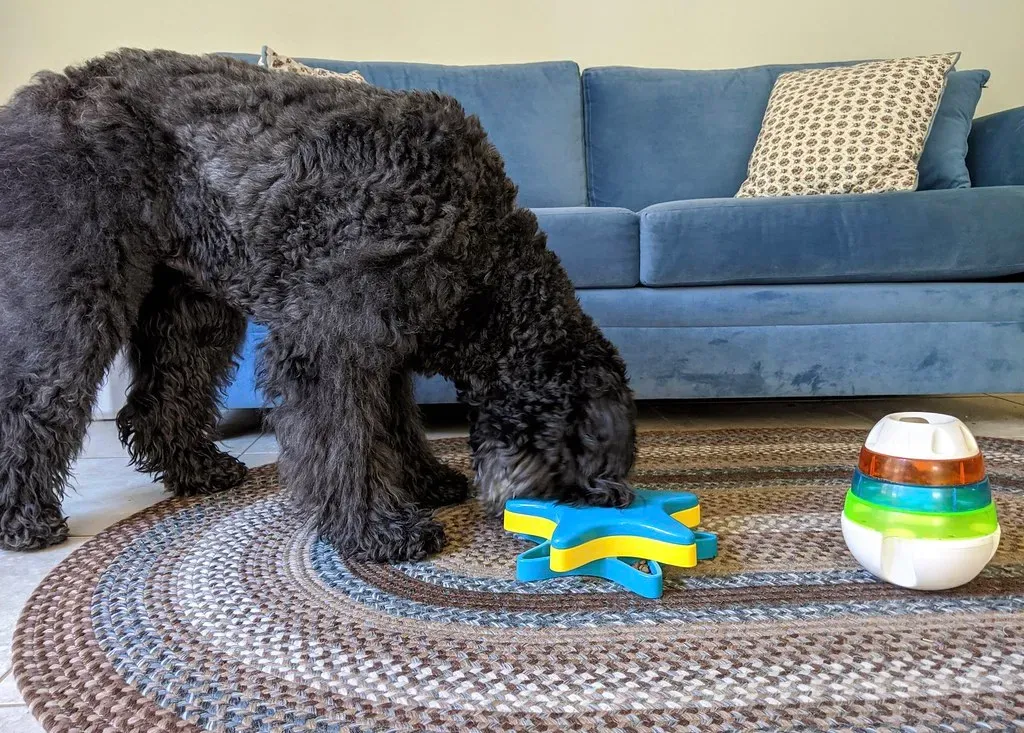
Taxing your dog’s brain through mental exercise is a phenomenal way to wear them out without requiring an all-day commitment or a huge yard, as it’s surprisingly easy to work their brains until they’re begging for a break. Think of mental stimulation as CrossFit for your dog’s mind. A tired brain equals a calm dog, sometimes even more effectively than physical exhaustion.
Engaging your pup in activities that challenge their brain, such as puppy puzzles or treat-releasing toys, can be just as important as physical exercise in calming . Hide treats around the house and let your dog use their incredible nose to hunt them down. Teach them a new trick every week. Work on scent discrimination games where they learn to identify different smells.
Training itself is mental exercise. Try training your dog for five-minute intervals throughout the day, and consider using clicker training to teach commands like lie down, sit, and stay, which can help your dog remain calm by giving them a job to do. Short, frequent sessions work better than marathon training blocks. Your dog stays engaged, and you’re building habits throughout the day rather than exhausting both of you in one go.
Training for Impulse Control and Calmness
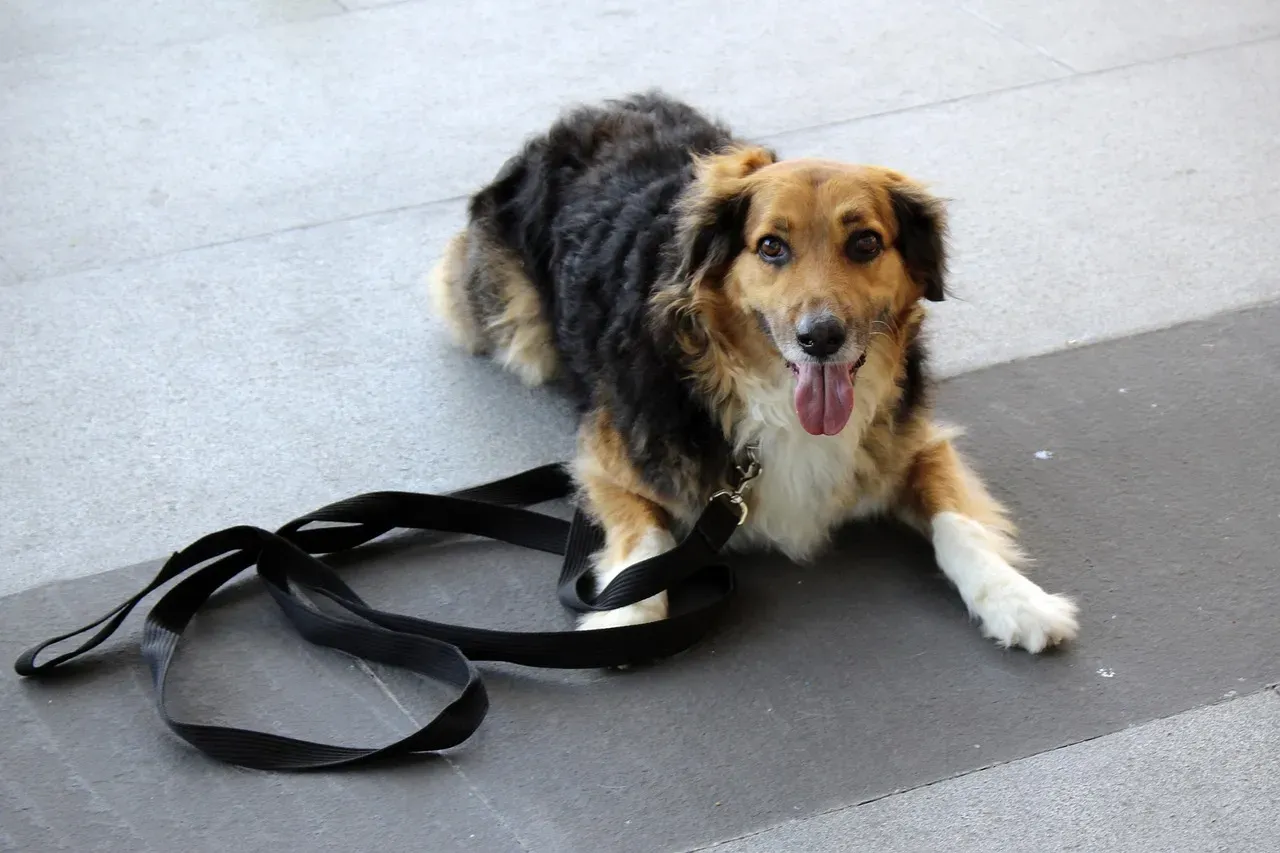
Here’s the thing about hyperactive dogs: they often lack impulse control. A dog who jumps when you clip on their leash or barks for dinner might seem hyperactive, but these behaviors actually signal a lack of manners, and manners training teaches impulse control, which is often the missing link. They want everything right now, and they never learned that patience pays off.
The core concept in manners training is teaching your dog to say please by sitting for anything they want, and before you throw the ball or open the door, first ask your dog to sit, then reward them immediately with what they want. This simple practice transforms your relationship. Suddenly your dog learns that calm, polite behavior opens doors, literally and figuratively. No treat necessary beyond the reward of getting what they already wanted.
Try to ignore a hyper dog until they calm down, rather than giving them attention while acting out, then reward them for calming down with lots of eye contact and treats. I know it sounds counterintuitive when your dog is going bonkers. Ignoring them feels impossible. Yet attention, even negative attention, reinforces whatever they’re doing. When you finally reward the calm moment, you’re teaching them what actually works.
Creating a Calm Environment and Routine
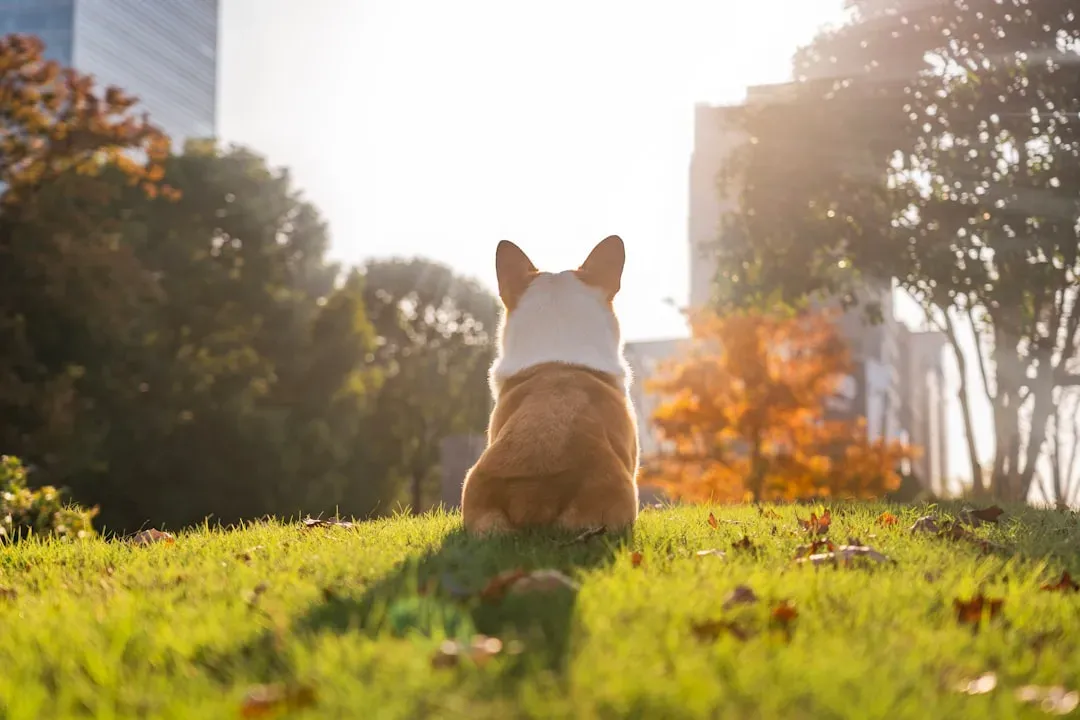
If a dog’s environment is noisy or full of constant disruptions, it can actually make them hyperactive, so creating a more relaxed and consistent atmosphere helps them stay cool and chill. Your home’s energy matters more than you might think. Chaos breeds chaos. Dogs are incredibly sensitive to the emotional temperature around them.
A structured routine with regular feeding, playtimes, and walks can have a calming effect on hyperactive dogs. Predictability reduces anxiety. When your dog knows that breakfast happens at seven, walk happens at eight, and training happens at five, they stop feeling like they need to be on high alert all the time. They can actually relax between scheduled activities.
Crates or pens can function as your dog’s sanctuary where they can be alone in peace and recharge, just make sure their playpen has enough space for them to sit, stand, and walk around. Think of the crate as your dog’s bedroom, not a prison. It should be cozy, safe, and associated with good things like special chew toys or frozen treats. Dogs should receive no less than twelve to fourteen hours of sleep per day, and sometimes they need help settling down for that rest.
When to Seek Professional Help

You should check in with your vet if your dog’s behavior is extreme or unsafe, if there’s a change in their energy level, or if your dog continues to show signs of hyperactivity after you try both training and lifestyle changes. Sometimes what looks like hyperactivity is actually a medical issue. Thyroid problems, neurological conditions, or even pain can manifest as restless, frantic behavior.
Some underlying medical conditions like metabolic disease associated with liver dysfunction, hyperthyroidism, and neurological conditions can manifest as hyperactivity. If your previously calm dog suddenly becomes a whirlwind, or if your efforts aren’t making any dent in the behavior, it’s time for a vet visit. Better safe than sorry. Professional trainers can also be lifesavers, especially those who specialize in positive reinforcement methods.
Don’t hesitate to reach out for help. There’s no shame in admitting you need support. In fact, recognizing when you’re in over your head is a sign of being a responsible, caring dog parent. Certified dog trainers and veterinary behaviorists have tools and insights you simply can’t Google your way to.
Conclusion: Finding Balance Together

Managing isn’t about squashing their personality or turning them into a robot. It’s about channeling all that incredible energy into positive outlets and teaching them the art of settling down. A successful hyper dog behavior modification program contains three elements: physical exercise, management, and training. None of these alone will solve the problem, yet together they create magic.
Remember that your dog isn’t trying to drive you crazy. They’re just being a dog, often one bred for intense work, now living in a world where their job description is unclear. When you provide structure, exercise, mental challenges, and calm leadership, you give them what they’ve been desperately seeking all along.
Have you noticed changes in your dog’s behavior when you adjust their routine? What’s worked best for calming your energetic companion? Every dog is different, and your experience might be exactly what another struggling dog parent needs to hear.