
Veteran Sumatran Elephants Tackle Debris in Aceh’s Cyclone Aftermath
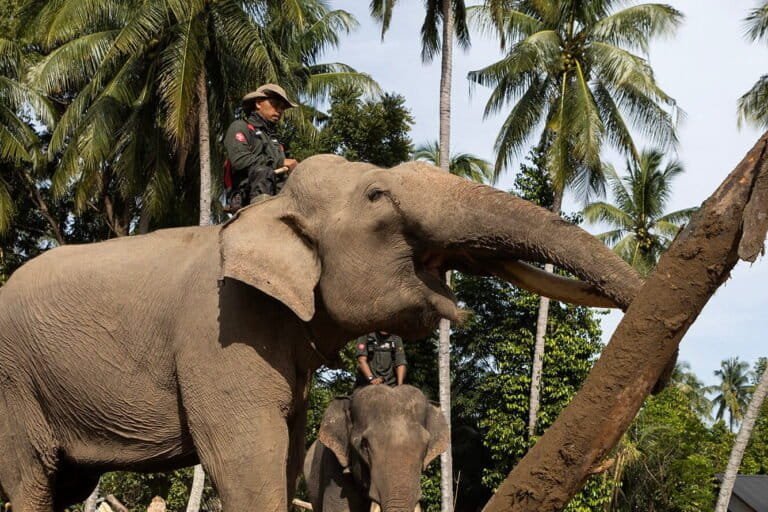
Pidie Jaya, Indonesia – Trained Sumatran elephants, once vital in the recovery from the 2004 Indian Ocean tsunami, have returned to the rugged terrains of Aceh to assist in clearing flood-ravaged areas following the rare Cyclone Senyar.
Echoes of Resilience from a Bygone Disaster
Two decades ago, these majestic animals played a crucial role in the aftermath of the Boxing Day tsunami that devastated Aceh and beyond. Rescue teams relied on their strength to haul away debris and reach isolated spots where machinery faltered. Now, in a striking parallel, the same species steps up against the scars left by Cyclone Senyar, which struck in late November 2025.
The cyclone, an unusual event for the Malacca Strait region, unleashed flash floods that isolated villages and buried communities under logs and mud. Officials reported at least 940 deaths across Sumatra, highlighting the storm’s ferocity. Sumatran elephants, native to the island’s forests, prove once again why they remain indispensable in such crises. Their deployment underscores a blend of tradition and necessity in Indonesia’s disaster response strategies.
The Unique Advantages of Elephant Assistance
In Pidie Jaya district, four specialist elephants began operations shortly after the floods receded. Guided by experienced mahouts, they navigate narrow paths and steep inclines inaccessible to bulldozers or trucks. These animals lift and transport heavy timber with precision, speeding up the restoration of vital roads and homes.
Their involvement extends beyond brute force; elephants detect hazards like unstable ground, reducing risks to human workers. Conservation agencies coordinated the effort, drawing from a pool of tame elephants trained at facilities like the Saree Elephant Training Center. This approach not only aids recovery but also raises awareness about the endangered Sumatran elephant population, which faces ongoing threats from habitat loss.
- Access to remote areas: Elephants traverse terrain where vehicles cannot.
- Efficient debris removal: They handle logs and rubble without damaging surroundings.
- Cost-effective: Lower operational costs compared to heavy equipment in isolated zones.
- Safety enhancement: Reduced need for human exposure to unstable sites.
- Community engagement: Local involvement fosters trust and cultural ties.
Human-Animal Partnership in Action
Mahouts, or elephant handlers, form the backbone of these missions. They direct the animals with subtle cues, ensuring smooth collaboration amid challenging conditions. One official noted that the mahouts’ deep understanding of each elephant’s temperament allows for safe and effective work. This partnership, honed over years, mirrors the bond seen during the tsunami recovery.
Deployment logistics proved complex, as transporting the elephants required careful planning to avoid stress. Veterinary teams monitored their health throughout, providing food and rest in temporary camps. The operation highlights Indonesia’s innovative use of wildlife in humanitarian efforts, though experts caution about balancing relief with conservation needs. Deforestation in the region, which worsened the cyclone’s impact by increasing runoff, adds urgency to protecting these animals’ habitats.
Broader Implications for Disaster Preparedness
Cyclone Senyar’s rarity does not diminish its lessons; climate patterns may shift, bringing more such events to unexpected areas. Indonesia’s weather agency emphasized the storm’s atypical formation, urging better forecasting tools. Elephants’ role in relief efforts points to sustainable alternatives in resource-limited settings.
While heavy rains have eased, recovery continues with communities rebuilding amid economic strain. Fishers in nearby Padang face obstacles from floating logs blocking waterways, illustrating the cyclone’s wide ripple effects. International observers praise the elephant initiative as a model for integrating local ecology into global disaster frameworks.
| Disaster | Elephants’ Role | Impact |
|---|---|---|
| 2004 Tsunami | Debris clearance in remote areas | Accelerated access to survivors |
| 2025 Cyclone Senyar | Log removal in flood zones | Reopened isolated villages |
Key Takeaways
- Sumatran elephants excel in terrains challenging for machines, aiding swift recovery.
- Their use revives historical practices while addressing modern conservation challenges.
- Future disasters may increasingly rely on such hybrid human-animal responses.
As Aceh rebuilds, the sight of these gentle giants at work serves as a powerful reminder of nature’s dual role in destruction and renewal. What are your thoughts on integrating animals into disaster relief? Share in the comments below.