
SeaWorld Announces Death of ‘Beloved’ Killer Whale Katina at 50

There’s something deeply stirring about the passing of a creature that’s lived almost a human lifetime in captivity. Katina, a killer whale who spent nearly four decades at SeaWorld Orlando, died this past Sunday at age 50. The park described her health as having declined significantly in recent weeks as she entered what they called her geriatric years.
For those who visited the park over the years, Katina was more than just an attraction. She was a personality, a presence. Yet her death raises questions that have lingered around SeaWorld for years, questions about what it means for these magnificent creatures to live their entire lives within concrete walls. Let’s dive into what we know about Katina’s life and what her passing represents.
A Life Spent Far From Home
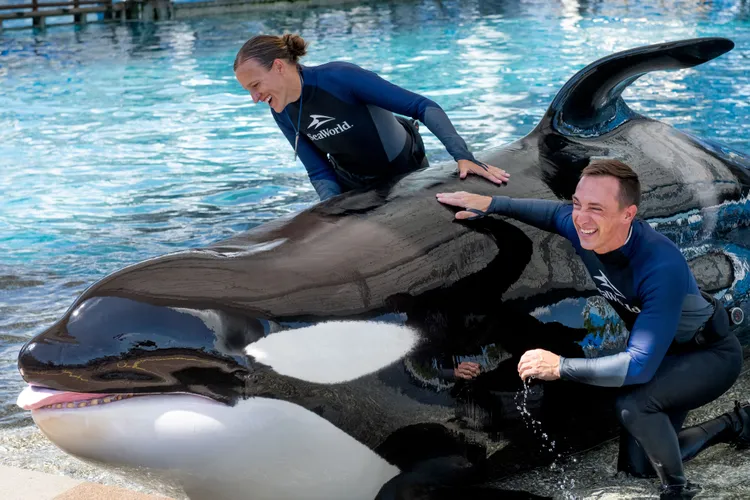
Katina was originally removed from the wild in 1978 when only 2 years old off the coast of Iceland, a fact that makes her story particularly poignant. Think about it: she spent just two years swimming freely in the ocean before being captured and brought to a life of confinement. She was one of only three remaining orcas that were captured in the wild still at one of SeaWorld’s parks, and was the only one of those at the Orlando location.
Her entire adult life unfolded in tanks rather than the open ocean. For nearly half a century, Katina knew nothing but the boundaries of SeaWorld. While the park celebrated her as an ambassador for her species, others see her story differently, as one of displacement and loss that began when she was barely more than a calf.
Her Final Days and Legacy at the Park
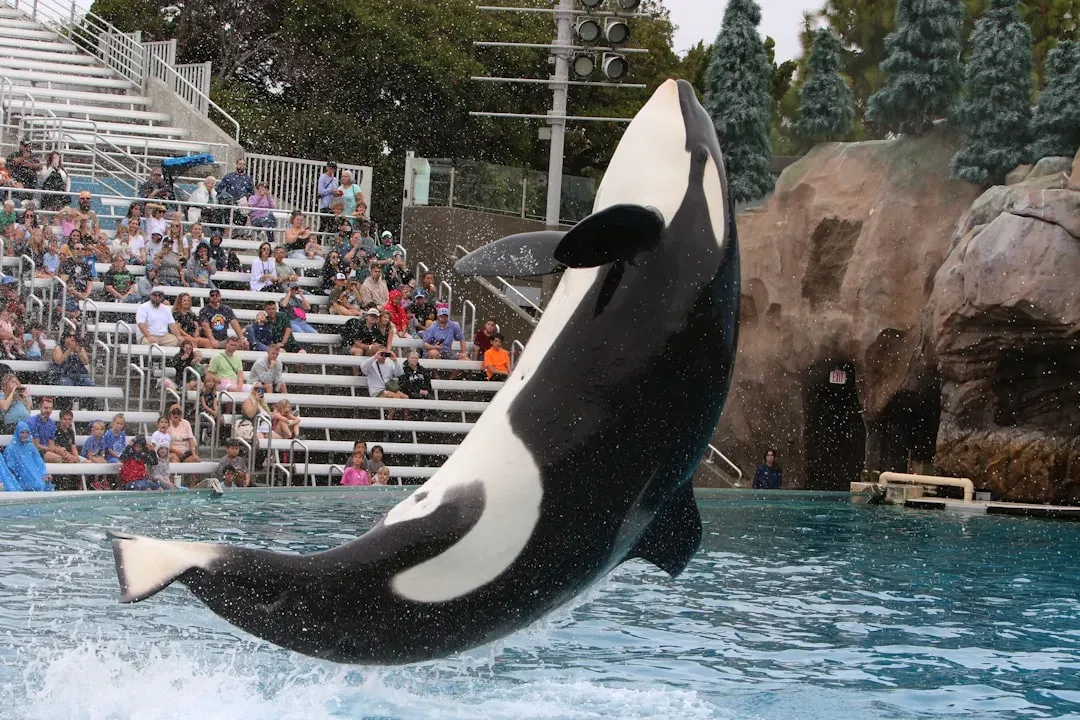
Katina had died at age 50 after a period of declining health, with her condition worsening in recent weeks as she entered her geriatric years. Animal care and medical teams worked around the clock to closely monitor her declining health, and she passed away while surrounded by animal care and medical teams who have worked closely with her for nearly 40 years. Seaworld shared her passing in an emotional post on Facebook.
SeaWorld described Katina as having a “big personality,” known for sticking out her tongue and performing a signature “speed swim” that sent a cyclone of water across her habitat. The orca whale gave birth to seven calves during her time at the theme park, making her a matriarch of sorts within the park’s orca population. Her offspring include some of the whales still residing at SeaWorld Orlando today.
The Controversial Reality of Captivity
Here’s where things get uncomfortable. PETA stated Katina was the 46th orca to die while in the care of SeaWorld, including four of Katina’s offspring. That’s a staggering number when you really sit with it. Four of her own babies died before she did, all within the same system of captivity.
PETA states orcas can swim 150 miles in a day and live up to 80 years old in the wild. Katina reached 50, which sounds impressive until you consider she might have had three more decades in the ocean. The contrast between what these animals can do in nature versus what they experience in captivity remains stark and troubling, no matter how SeaWorld frames its care.
A Symbol of Shifting Attitudes
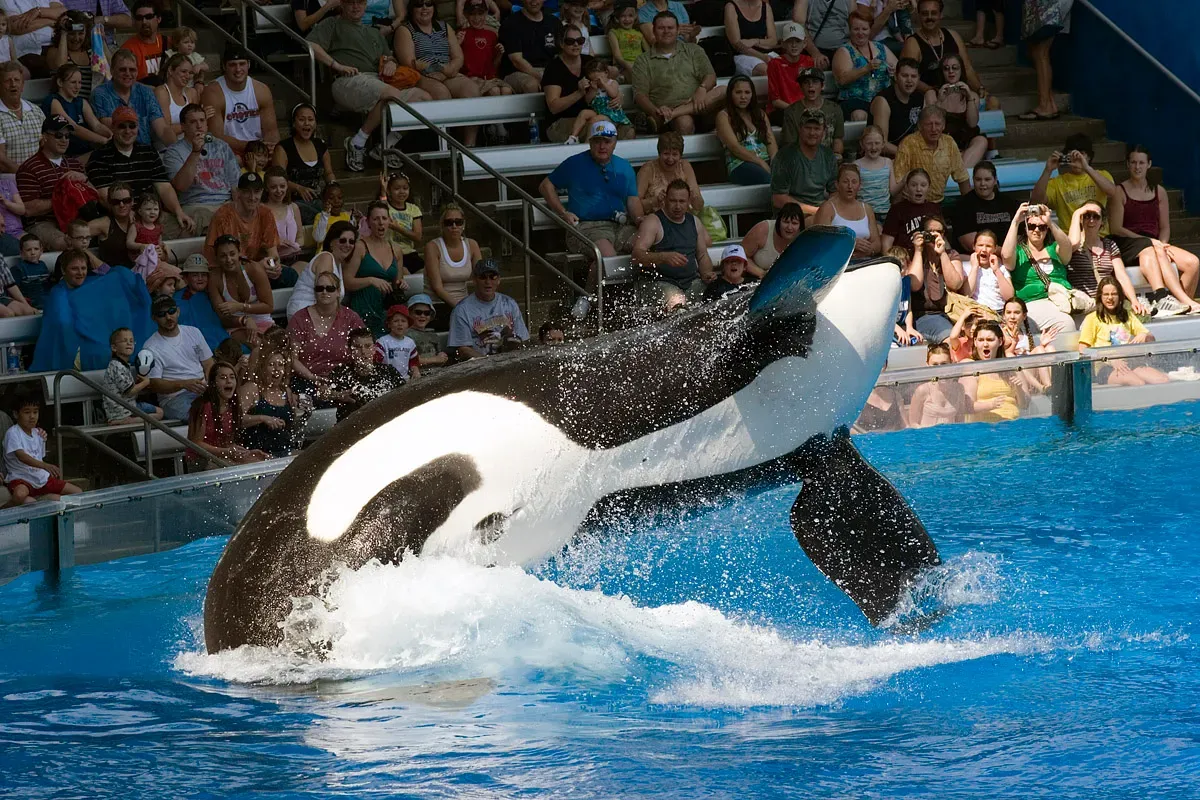
Katina was one of just five killer whales at the park, which halted its orca breeding program in 2016. That decision came after years of public pressure and growing awareness about the ethics of keeping these massive, intelligent animals in tanks. The documentary Blackfish had exposed many uncomfortable truths about orca captivity, forever changing how the public views these shows.
Honestly, Katina’s generation of captive orcas represents a chapter that’s slowly closing. In 2016, SeaWorld announced it would end its orca breeding program, essentially ensuring that the whales currently at their parks will be the last. It’s a bittersweet acknowledgment that perhaps this practice never should have begun in the first place.
What Her Passing Means Moving Forward
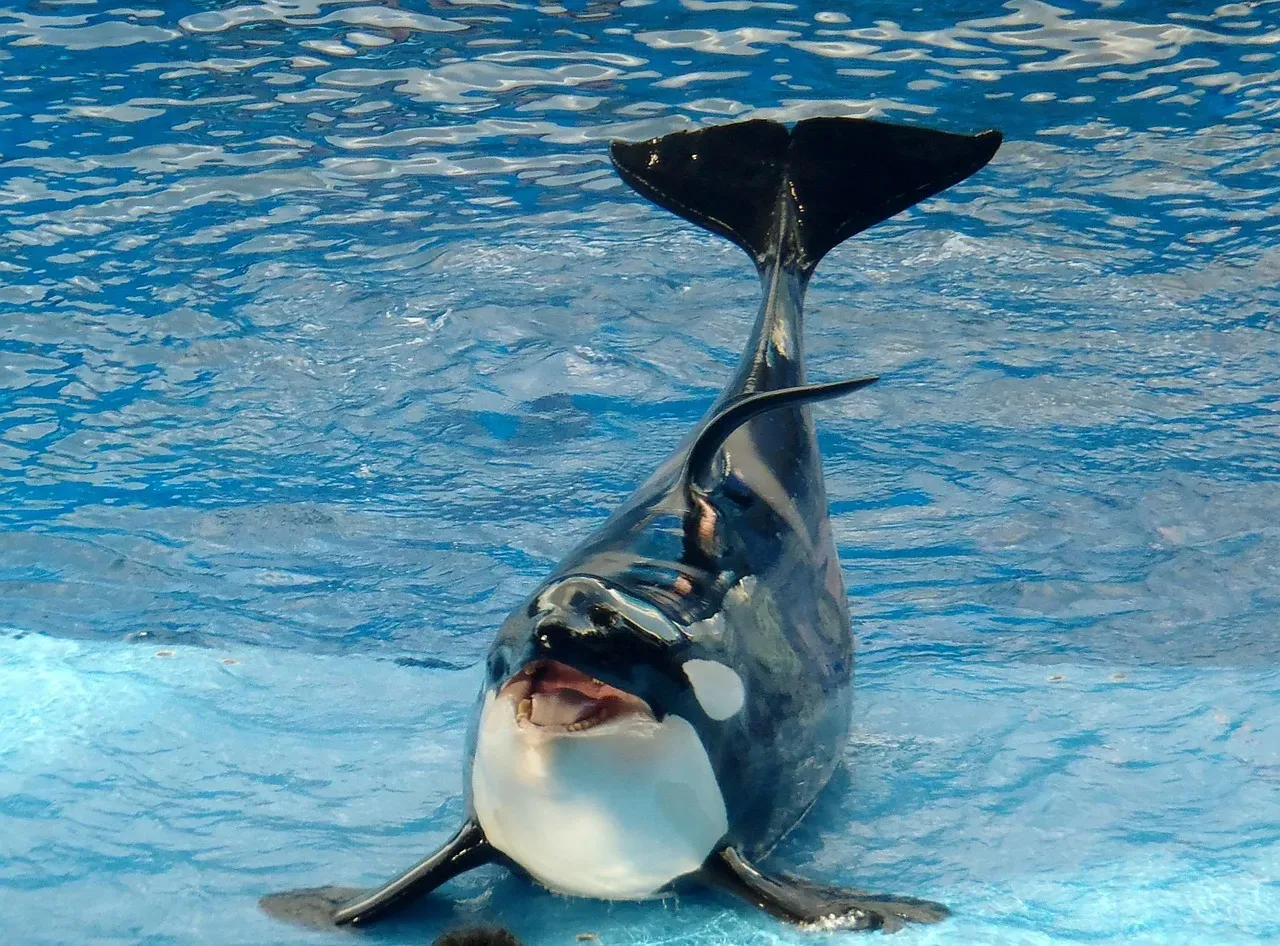
Katina’s death leaves SeaWorld Orlando with just four remaining orcas, several of whom are her direct descendants. Each loss brings the park closer to a future without killer whales, a future that seemed unimaginable just a decade ago. The park’s statement emphasized how she inspired millions to learn about her species, which is true in a complicated way.
She did teach people about orcas, though perhaps not in the way SeaWorld intended. Visitors learned about their intelligence, their family bonds, their need for space and stimulation. The question is whether that education justified keeping her confined for 48 years after she was taken from the ocean as a toddler. It’s hard to say for sure, but I think most of us know the answer deep down.
Katina is survived by her son Makaio and daughter Nalani, as well as orca group members Trua and Malia. The remaining orcas at SeaWorld will likely be the last, and when they’re gone, perhaps we’ll look back and wonder how we ever thought this was acceptable. What do you think about the legacy of captive orcas like Katina? Was the education they provided worth the cost?