

You’ve probably experienced it before. Your dog sits in front of you, stares directly into your eyes, and lets out a series of sounds that seem so deliberate, so purposeful, that you’re convinced they’re trying to tell you something important. Maybe it’s a soft whine mixed with what sounds like a grumble. Or perhaps it’s those strange “woo-woo” noises that almost sound like words. You laugh, you respond, and your dog seems satisfied, wagging their tail as if you’ve just had a real conversation.
Dogs have a remarkable ability to communicate through a variety of sounds, or vocalizations, and understanding the meaning behind different vocalizations can help owners address their pets’ needs more effectively, leading to a stronger bond and a happier, healthier dog. The truth is, your dog isn’t just making random noises. While speech, as we know, is a uniquely human trait, the evolution of dogs in close proximity to humans has allowed them to develop strategies that facilitate heterospecific communication with us. Every bark, whine, howl, and grunt carries meaning. Learning to decode these sounds transforms the way you understand your furry companion. So let’s dive in and explore what your dog is really trying to say.
The Bark: More Than Just Noise

High-pitched barks may be welcoming, while deep barks may be your dog issuing an alert, and a bark accompanied by a wagging tail often spells joy, while a crouched, angry bark with hackles up can indicate your dog is feeling fear or aggression. Think about it like this: barking is your dog’s most versatile communication tool. It’s like their version of language with different dialects for different situations.
Dogs bark for many reasons, including alert, alarm, boredom, demand, fear, suspicion, distress, and pleasure. The pitch, duration, and intensity all matter. A sharp, repetitive bark at the window likely means your dog has spotted something unfamiliar. Emotions can be expressed through barking, whether it is a higher-pitched bark for excitement, a repetitive and monotone bark for boredom, a sharp and intense bark to alert you of a sound or sight, or a short, quick bark directed at another dog as a way to say ‘stop it!’
Context is everything here. If your dog barks while bouncing around with a toy in their mouth, they’re inviting you to play. The same dog barking with a stiff body and fixed stare is sending a completely different message. Learning to read these cues alongside the sound itself helps you respond appropriately to what your dog needs in that moment.
Whining and Whimpering: The Language of Need

Whining might be one of the most attention-grabbing sounds dogs make. Whining or crying is another way dogs, especially puppies, express their needs, and the high-pitched cry is often your dog’s way of expressing what they want or letting you know they’re unhappy. It tugs at your heartstrings for a reason. Your dog knows this sound gets results.
Dogs may whine when they’re anxious, excited, in pain, or trying to get your attention. I’ve seen dogs whine when they want to go outside, when dinner is taking too long to arrive, or when their favorite human is about to leave. Crying and whining usually directed at humans as pups can become a learned response if it gets rewarded with attention.
Here’s the thing though: whining can also signal something more serious. Their body language, like crouching with their head or ears down, could mean pain, dogs may also whine when in pain, like a dog who steps on a burr and whines when they put their foot down. Pay attention to when and how your dog whines. If the behavior seems unusual or is accompanied by lethargy, limping, or loss of appetite, it’s time to check in with your vet.
Howling: Ancient Echoes

Howling is a distinctive and long vocalization, often transitioning from a low to high pitch, that reflects their long-range communication instinct passed down through their ancestral ties to wolves, and can be a response to external sounds such as sirens, music, or other dogs’ barking, or used when claiming territory, communicating to a pack or family members, or alleviating feelings of isolation. Some breeds howl more than others, particularly those with stronger genetic ties to their wild ancestors.
A dog howls if left without their pack and without being contained, literally calling out to us as we are too far for other forms of communication to reach. It’s honestly quite touching when you think about it. Your dog is reaching out across distance, hoping someone will answer. Some vocal dogs try to sing along by howling to music or sounds on television, and if a noise has the right pitch, like an operatic aria, your singing dog may belt out a chorus.
Not all howling is distress. Some dogs simply enjoy the sound of their own voice, especially when triggered by certain musical notes or sirens. It’s their way of joining in, of being part of something. Still, excessive howling can indicate separation anxiety or loneliness, so it’s worth paying attention to the frequency and context.
Growling: Not Always a Warning
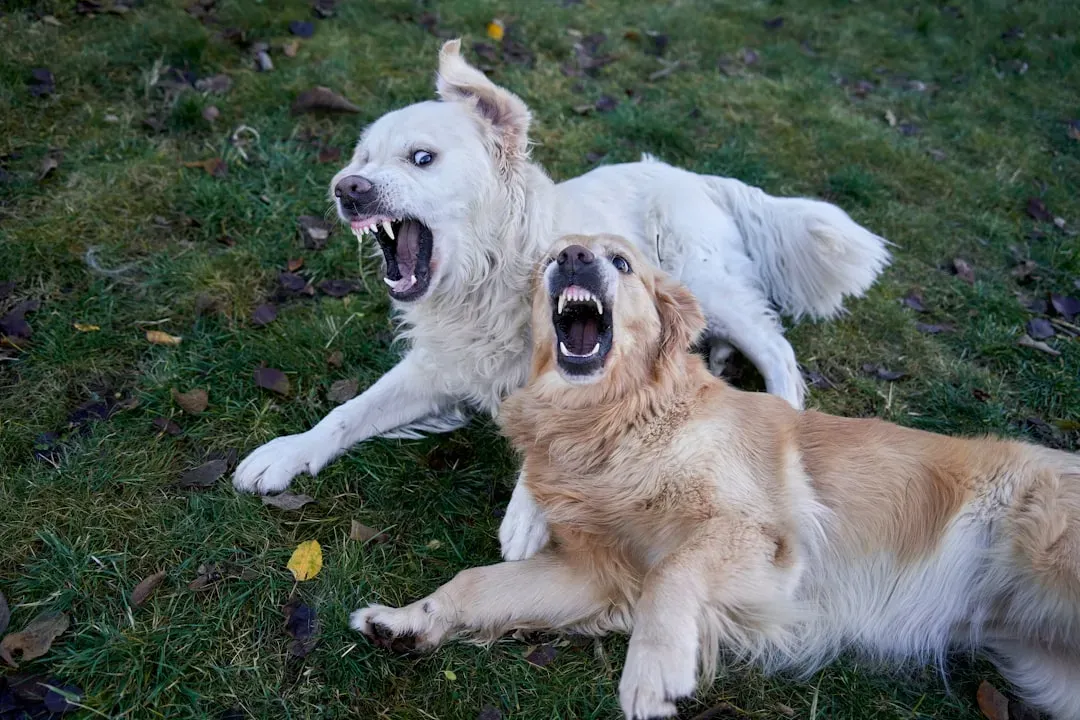
Though they can growl while playing, dogs tend to use growling when they are fearful, upset, sensing a warning or threat, or protecting their territory, and growling can be seen as a negative behavior, but it is an important form of communication that can help prevent potentially dangerous situations, such as a bite, by signaling to others to stay back or indicating a personal boundary has been crossed. This is where many people misread their dogs.
Growling is often a clear warning to dogs and humans alike, although the exact situation and other communications are important; consider a dog happily growling on cue for a treat with all smiles and wagging tale compared to a dog with a dead straight back from nose to tail walking with a fixed stare towards you, hackles raised. The difference between playful and serious growling lies entirely in body language. A dog play-growling during tug-of-war has loose, wiggly movements and maybe even a play bow. A warning growl comes with tension, stiff posture, and direct eye contact.
Never punish a dog for growling. It’s their way of saying they’re uncomfortable before things escalate. Taking away that warning system can be dangerous. Instead, respect what they’re telling you and give them space or address whatever is making them uneasy.
The Subtle Sounds: Sighs, Groans, and Grunts

Dogs also sigh when they’re relaxed, and even a dramatic sigh can mean they’re settling in after a long day. These quieter vocalizations are easy to overlook, yet they reveal so much about your dog’s emotional state. A contented sigh as your dog settles beside you on the couch is one of the most satisfying sounds in the world.
Sighing or groaning can happen when a dog is settling down to rest or being petted, but it can also be a sign of disappointment, such as when it is not mealtime yet or they’re not getting to go for a walk when they want. You might even catch your dog letting out an exasperated sigh when you’ve ignored their attempts to get you to play. It’s so human, isn’t it? Groaning is similar and can express either comfort or mild frustration depending on the situation.
For some dogs, a yawn is their version of a vocal stretch, and the ensuing sounds help them to warm up their vocal cords and provide a welcome release for them. Some dogs make endearing little noises when they yawn, stretch, or settle in. These sounds are usually nothing to worry about and are simply your dog’s way of releasing tension or expressing contentment.
Understanding the Whole Picture

Deciphering what dogs are trying to communicate with a particular vocalization depends on the tone of their communication, their body language, environmental factors, health, level of comfort, and emotion, such as stress, fear, or hunger. Honestly, this is where the real skill comes in. Vocalizations never happen in isolation.
In addition to vocalizations, dogs communicate through a combination of body postures, facial expressions, and tail movements, and a barking dog with a wagging tail and relaxed ears and face may be happy and barking from excitement, while a barking dog that is standing stiff with ears at attention may indicate they feel threatened. Watch your dog’s entire body. Are their ears forward or pinned back? Is their tail high and wagging or tucked? Are their muscles tense or relaxed?
Canine vocal communication needs to be understood in the context of other communication both visual and, would you believe it, olfactory at the time and the specific situation when it occurs. The more time you spend observing your dog, the better you’ll become at understanding what each sound means. You’ll start recognizing patterns and nuances that are unique to your individual dog. It’s like learning a new language, except this one is spoken entirely in barks, whines, and happy sighs.
Your dog has been trying to talk to you all along. Every vocalization is an attempt at connection, at communication, at sharing their inner world with you. By learning to understand these sounds and the context around them, you’re not just becoming a better pet owner. You’re strengthening the bond with a companion who already considers you their whole world. What new sounds have you noticed your dog making lately? Pay attention and see what conversations you might have been missing.


