
There’s something beautiful about watching a senior dog’s tail wag. It might move a bit slower than it once did, maybe with a slight stiffness in the hips, but that joy is still there. If you’ve noticed your older companion seems less interested in the frisbee or reluctant to leap after a tennis ball, I can assure you it’s not that they’ve lost their playful spirit. They’re just telling you something important: the way they want to engage with the world is changing.
You will likely need to adapt play and exercise to his slower movements, reduced energy level, declining eyesight and hearing, and any medical conditions he may have. This shift isn’t something to mourn. Instead, think of it as an invitation to discover new ways to connect with your dog, ways that honor where they are right now while keeping that beautiful spark alive. Let’s explore how we can keep our senior friends happy, engaged, and playful through their golden years.
Understanding What’s Really Happening as Your Dog Ages
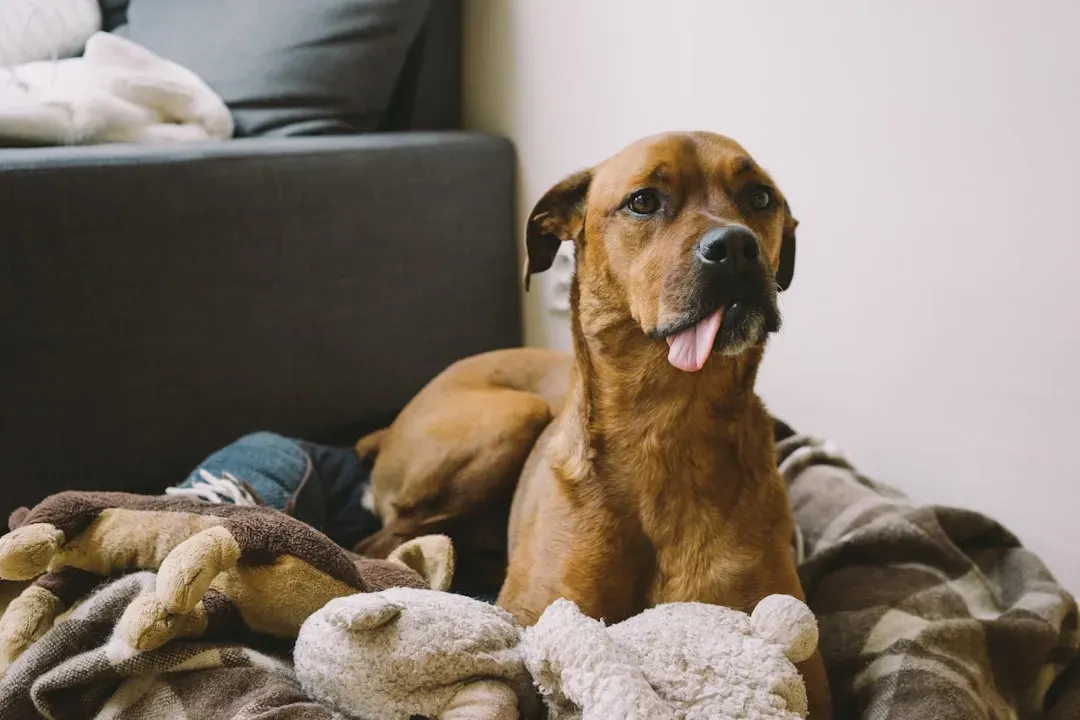
Here’s the thing about aging dogs. In general, seniors may prefer more relaxed activities than they did as rambunctious adults, and will likely spend more time resting and sleeping. Think about it like this: they’re not being lazy or stubborn when they hesitate at the stairs anymore. Their bodies are genuinely experiencing changes that affect how they move and interact.
Most dogs begin showing signs of arthritis around 7–8 years, though larger breeds may develop symptoms earlier due to added joint stress. Honestly, watching for subtle behavioral shifts can tell you more than any calendar date. Maybe your dog who once bounded to greet visitors now takes a moment to rise from their bed, or perhaps they lick a particular joint more often than before.
As they have aged and become more incapable of moving out of the way quickly or feel more sensitive to being pushed or jolted, their tolerance has significantly lowered. This reduced tolerance isn’t attitude; it’s communication. Your senior is asking for gentler, more considerate interaction.
The Signs Your Dog’s Play Preferences Are Shifting
Notice if your dog hesitates to climb stairs, jump on furniture, or go for walks. Slower movement, limping, or stiffness after rest are common early symptoms. I know it sounds obvious, but these changes can creep up so gradually that we miss them until they’re pronounced.
Watch how your dog moves after they’ve been resting. You might notice slowness in getting up, stiffness, and even limping for the first few steps in the morning or after a long nap. That initial stiffness often loosens up once they get moving, which is why many people dismiss it as nothing serious.
Dogs may become more irritable or reluctant to engage in their old favorite activities if they’re struggling with pain or discomfort due to arthritis or another condition. If your formerly ball-obsessed retriever suddenly seems indifferent to fetch, pain might be the real reason behind that change in enthusiasm. Pay attention to what they’re telling you through their behavior.
Rethinking Exercise for Senior Bodies
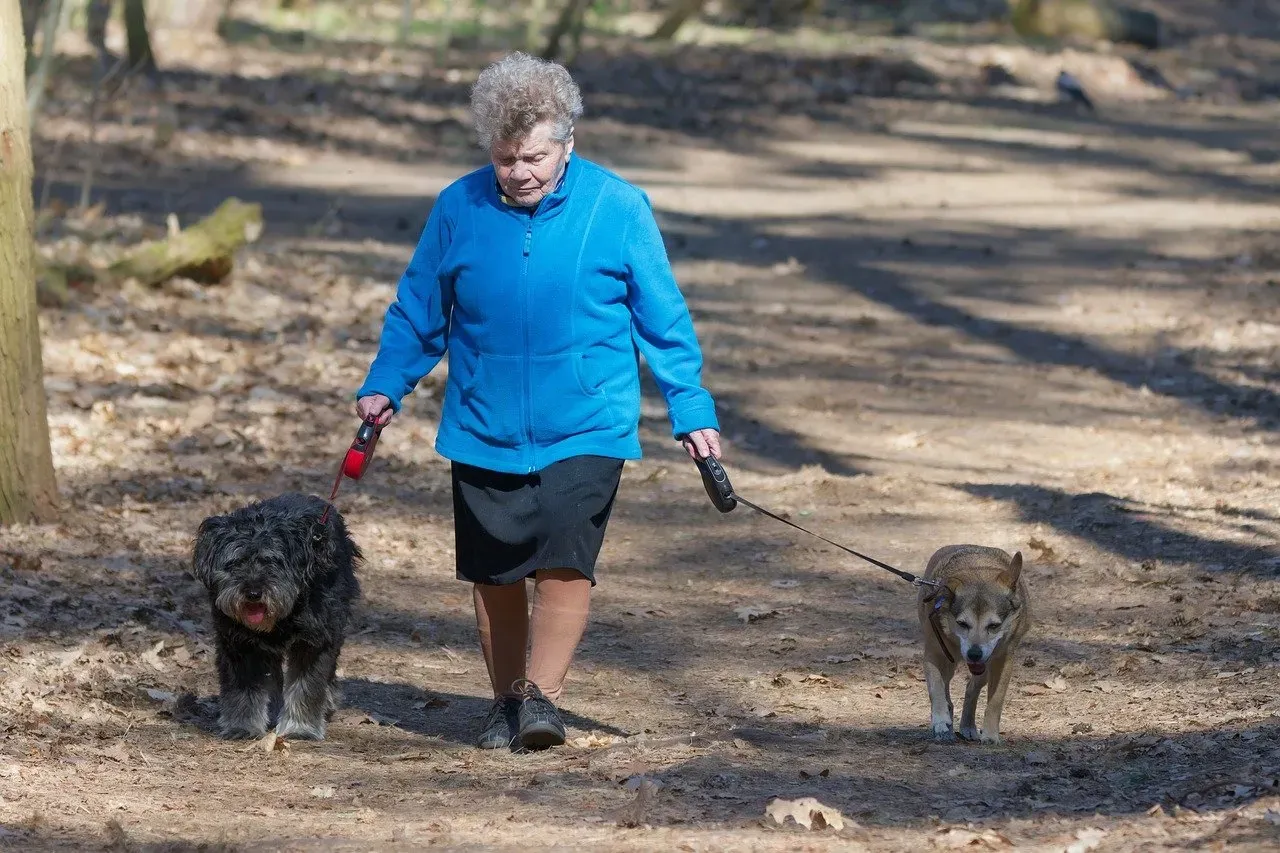
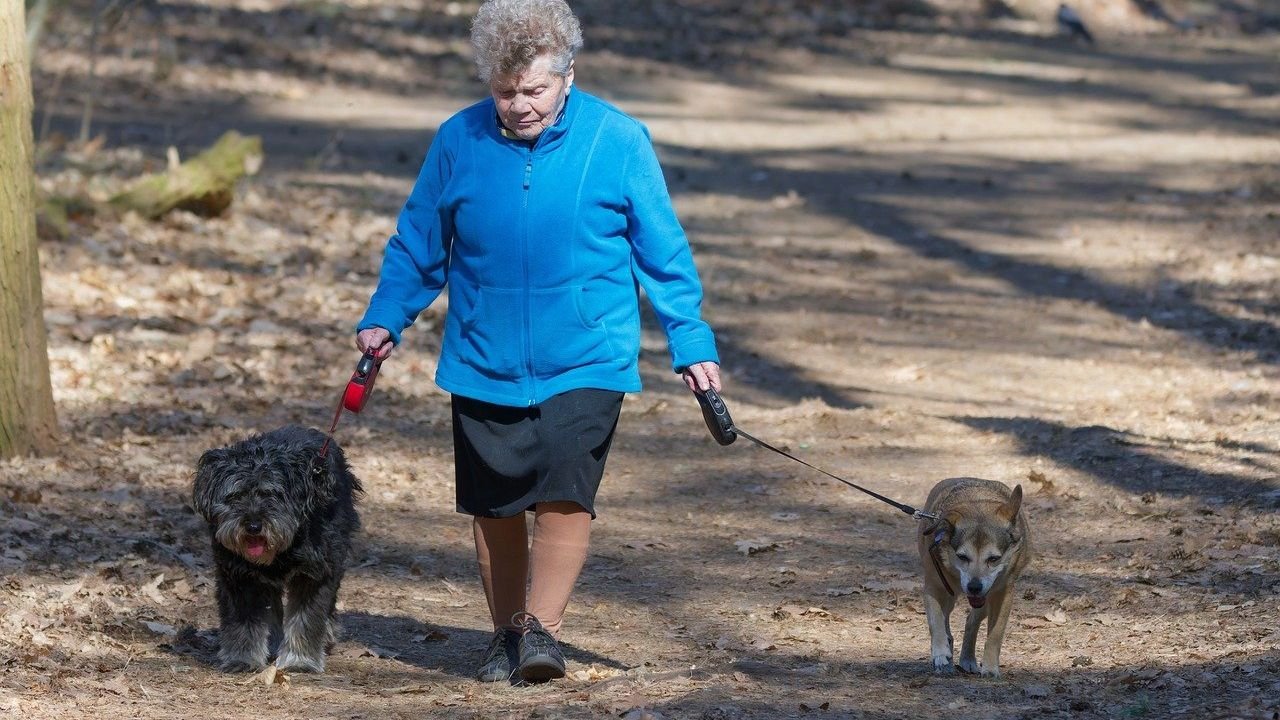
It’s generally recommended that senior dogs get at least 30 to 60 minutes of exercise daily. But for a senior dog with mobility issues or underlying medical conditions that make exercise more difficult, a 20-minute daily walk can be sufficient. The key word here is flexibility.
Multiple shorter walks often serve older dogs better than one marathon session. A regular routine of short- to medium-length walks is better than sporadic, longer walks. Think about breaking that half-hour into two fifteen-minute strolls, maybe one in the morning when joints are stiff and another later when they’ve loosened up.
Observe your dog carefully during and after walks. If they seem to be panting more, are slow, seem to be struggling to move or are waking up the day after a walk with discomfort – these may be signs that you need to slow things down. Your dog lives in the moment and won’t hold back during a walk even if they’ll pay for it later. It’s our job to be the voice of reason and adjust accordingly.
Play That Honors Their Pace
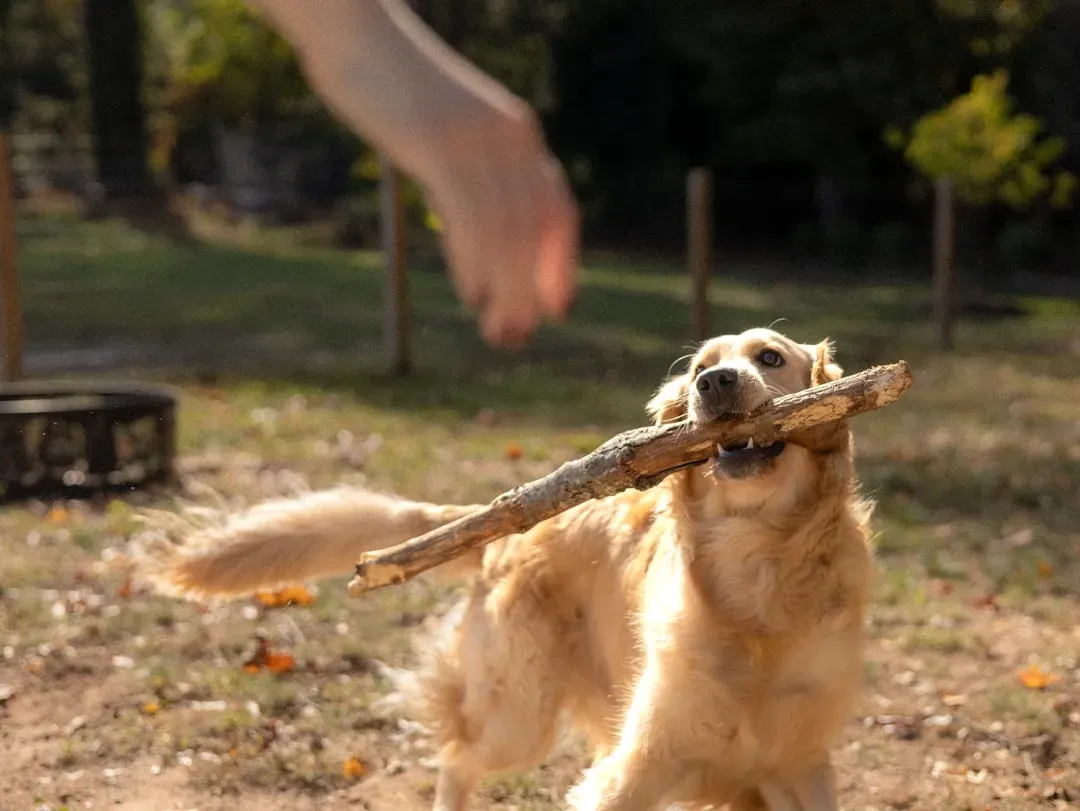
Let’s be real: the days of high-speed chase games are probably behind most senior dogs. That doesn’t mean playtime is over. Dogs love a game of fetch and who says older dogs can’t join? Since senior dogs often have to deal with mobility issues or arthritis, you can opt for a gentler version of fetch by rolling the soft toy on the ground instead of throwing it.
Water activities can be absolutely magical for older dogs. Water therapy (hydrotherapy) offers exceptional benefits for aging dogs. The buoyancy of water reduces joint impact while providing gentle resistance that builds muscle without strain. For dogs with significant mobility limitations, water often allows movement that’s impossible on land. If you have access to a calm, shallow area where your dog can wade or swim, you’ve found gold.
Balance exercises might sound complicated, but they’re surprisingly simple and beneficial. Balance is important to maintain strength. In any movement, stabilizer muscles act to steady one joint so the desired movement can be performed in another joint. Dogs have stabilizing muscles in their trunk and legs that need to be exercised regularly to help with balance. Something as simple as having them stand on a slightly unstable surface or lift one paw for a few seconds can help maintain their strength and coordination.
Mental Stimulation: The Underrated Game Changer
This is where things get really interesting. Cognitive dysfunction syndrome (CDS) affects approximately 50% of dogs over 11 years of age, with similar patterns observed in senior cats. The condition manifests through disorientation, altered sleep patterns, house soiling, changes in social interactions, and decreased activity levels. Mental exercise becomes just as crucial as physical activity, maybe even more so.
Recent research by psychologist Norton W. Milgram at the University of Toronto shows giving older animals mental exercise in the form of new problem-solving experiences, as well as exposing them to richer and different environments, helps to offset the usual decline in mental efficiency in senior dogs. Stimulating the mind in this way changes the physiology of the brain, creating new connections between existing neurons in the cortex as a result of experience. I find this absolutely fascinating because it means our old dogs can still learn and grow.
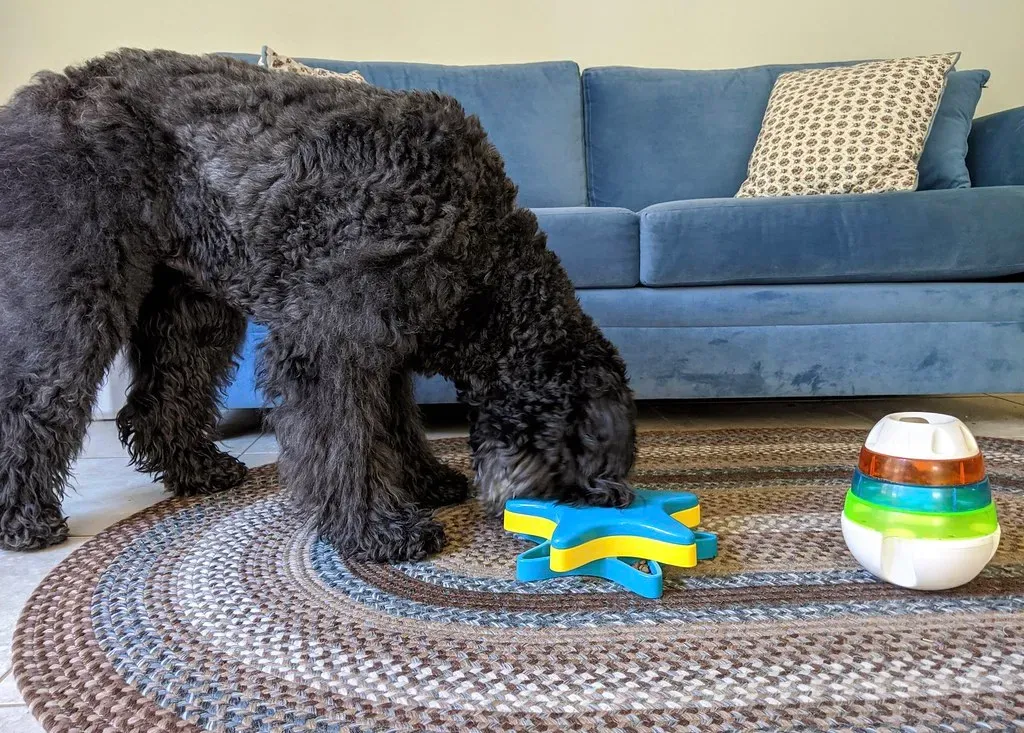
Puzzle feeders, scent games, and hide-and-seek with treats are wonderful options. Exposing your dog to new environments, smells, and experiences can help to stimulate his or her senses and maintain cognitive function. It is easy to get into the rut of taking the same path for your daily walks. But why not take a new route to add variety to your dog’s life? Even small changes to their routine can provide significant mental enrichment without requiring physical exertion.
Creating a Senior-Friendly Play Environment
Your home environment plays a huge role in keeping your senior comfortable and engaged. A well-padded dog bed is also a great help to keep an old dog off of cold, hard flooring that can exacerbate stiff, aching joints. High, soft, puffy beds can be difficult for an old dog to get in and out of, however, and may not provide the necessary support. Dog beds made with firmer orthopedic foam are a good choice for an older dog.
Think about traction too. Place rugs or mats around slippery areas to help your dog walk with confidence and prevent accidents. Hardwood floors can become treacherous for dogs with weakened legs or arthritis. Simple yoga mats or runner rugs in high-traffic areas can make a world of difference.
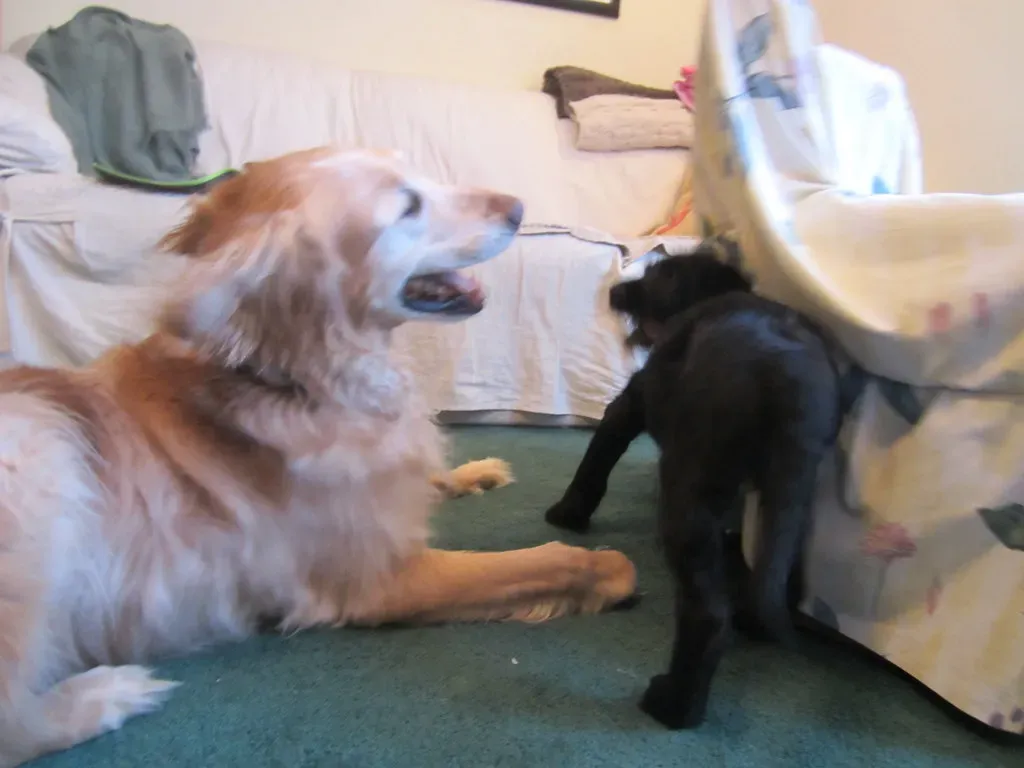
Finding a way to create a “senior spot” in your home is incredibly helpful for feeding times too. A safe and quiet space for them to have this with no worries of having other dogs, kids, or people invade them can reduce their vulnerability dramatically. Creating these safe zones where your senior can retreat and rest without being disturbed shows respect for their changing needs and helps reduce anxiety.
When to Seek Professional Guidance
Don’t assume that your dog is “just getting old” and nothing can be done to help him. Many changes in behavior can be signs of treatable medical disorders, and there are a variety of therapies that can comfort your dog and manage his symptoms, including any pain he might be experiencing. This is so important I can’t stress it enough.
Consult your veterinarian right away if your dog is having trouble exercising or seems to be in pain. Dr. Stelow says that groaning or an inability to do routine tasks – like jumping up on the sofa – might be the result of an injury or the onset of arthritis. Shortness of breath or general weakness during routine exercise might be a sign of cardiovascular or neurological issues. These symptoms deserve professional attention, not dismissal.
Although exercise may be difficult for some dogs with arthritis, you can work with your veterinarian to find appropriate activities. Your vet can recommend pain management strategies, supplements, physical therapy options, or other interventions that can genuinely improve your dog’s quality of life and ability to engage in play. Partnership with your veterinary team opens doors to solutions you might not have considered.
The beauty of senior dogs lies not in what they’ve lost but in the depth of connection they offer. They’ve spent years learning our rhythms, understanding our moods, and showing up for us every single day. Now it’s our turn to meet them where they are, to slow down and appreciate the quieter joys of companionship. Your older dog still has that same heart, that same love for you, and yes, that same desire to play. We just need to listen more carefully to how they want to express it now. What’s one small change you could make today to better honor your senior dog’s needs while keeping their spirit engaged?


