
The Best Hamster Cage Setup for a Happy and Thriving Pet

There’s something magical about watching a hamster explore its home with tiny paws and twitching whiskers. These little creatures have captured hearts for decades, yet so many of them live in spaces that barely meet their needs. It’s time we changed that.
Creating the perfect cage setup goes beyond just tossing some bedding into a plastic box. Think of it like designing a miniature world where your pet can truly flourish. The right environment can mean the difference between a hamster that simply exists and one that genuinely thrives. Let’s dive into what makes an exceptional home for these energetic little explorers.
Choosing the Right Cage Size
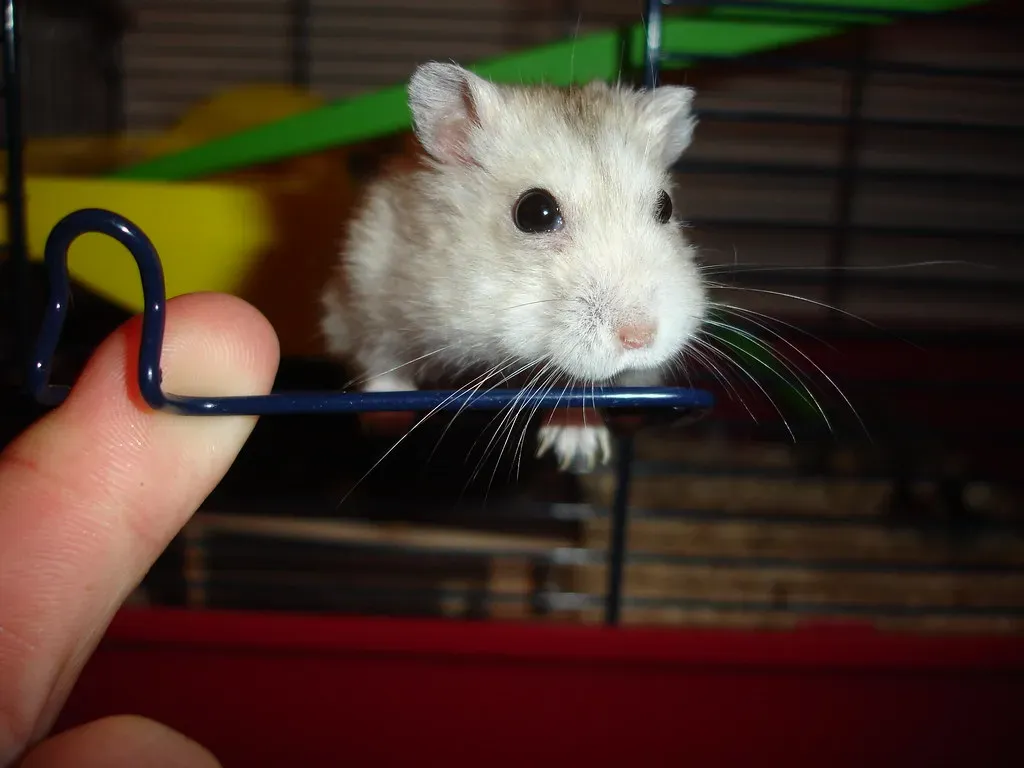
Here’s the thing about hamster cages: bigger is always better. It is recommended that the minimum size for a hamster cage is at least 100 cm x 50 cm x 50 cm tall for Syrian Hamsters, which translates to roughly 775 square inches of unbroken floor space.
Let’s be real, though. Hamsters are highly active animals – they can run 5 to 8 miles a night in the wild, so that minimum recommendation should really be viewed as just a starting point. I think we often underestimate how much space these tiny athletes actually need.
The height matters too, not just the floor area. The height needs to be around 24 inches tall at least to provide space for bedding and a small wheel. This allows for deep burrowing, which is absolutely essential for their mental wellbeing.
Wire cages from pet stores often fall short of these requirements. Most wire cages sold in pet shops are not big enough for hamsters. Those that are big enough are usually designed for larger animals such as rats so the bar spacing is too wide. It’s frustrating, honestly.
DIY bin cages have become increasingly popular among knowledgeable hamster owners. Bin cages are truly the most amount of space you can get for the least amount of money. A large storage container can be transformed into a spacious habitat with some basic tools and hardware cloth for ventilation.
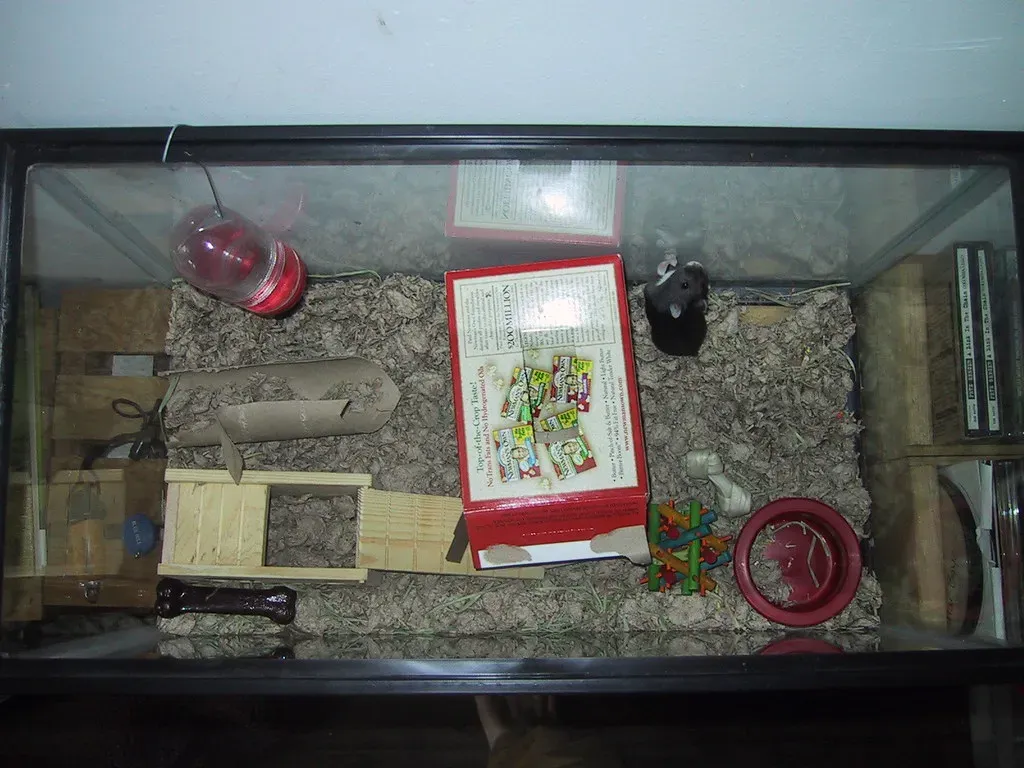
Glass aquariums offer another solid option. The 40 gallon breeder is popular for hamsters and gives them about 648 sq inches of living space. The clear walls let you observe your hamster’s natural burrowing behavior without disturbing their underground tunnels.
Syrian hamsters need more space than their dwarf cousins, though all species benefit from generous accommodations. Syrian hamsters typically require the most space, so plan accordingly when selecting your setup.
Remember that connecting smaller cages with tubes doesn’t count toward your floor space requirement. Your hamster needs one large, continuous area to truly feel comfortable and exhibit natural behaviors.
Proper Bedding Depth Makes All the Difference

If you want to see your hamster truly happy, watch what happens when you provide deep bedding. Hamsters whose cages have thick bedding experience greater health, so experts recommend aiming for 15cm (6 inches) or preferably more. Many experienced owners aim for 10 to 12 inches.
I like to use white, paper bedding, unscented since it allows you to spot clean effectively and doesn’t irritate your hamster’s sensitive respiratory system. Paper-based options hold burrows well, unlike aspen shavings which tend to collapse.
Creating variety in substrate is surprisingly beneficial. I like to pile one side of my cage high with paper bedding and use hemp bedding on the other side for a variety texture and as a foraging area. This gives your hamster different sensory experiences.
Never use cedar or pine shavings. Do not use scented bedding for your hamster, it’s not good for their delicate respiratory system. These contain aromatic oils that can cause serious respiratory problems over time.
Some owners add moss, coconut fiber, or other safe substrates in specific areas. Most hamsters love having a section of their enclosure that is coconut fiber so they can dig and play in it. One of my hamsters even enjoys sleeping in it. It’s fascinating how individual preferences can be.
The bedding depth directly impacts your hamster’s ability to create complex tunnel systems. In the wild, hamsters build elaborate underground homes, and this instinct doesn’t disappear in captivity. Shallow bedding prevents them from expressing this fundamental behavior.
Change bedding completely every one to two weeks, depending on cage size and how many hamsters you have. Spot clean soiled areas daily to maintain freshness without constantly disrupting their established tunnels.
Essential Accessories and Enrichment Items
A properly sized wheel is absolutely non-negotiable. Pick an appropriately sized wheel (often 8–11 inches in diameter for Syrians; 6–8 inches in diameter for many dwarfs). The wheel should have a solid running surface to prevent injury.
Hamsters need plenty of room to explore and play with toys, run on a hamster wheel, eat food, drink water, and burrow. Water access is critical. Honestly, I’d recommend providing both a bottle and a bowl in case one malfunctions overnight.
Hideouts give your hamster security. Hamsters are prey animals, and hiding is essential to their lifestyle. Multiple hide spots throughout the cage let them feel safe while moving around their territory.
I love using lightweight, grass or cork hides & tunnels on the surface of the bedding because they are lightweight and pose no risk to your hamster getting stuck under them. Heavy ceramic hides should be placed on platforms or secure surfaces, never directly on deep bedding.
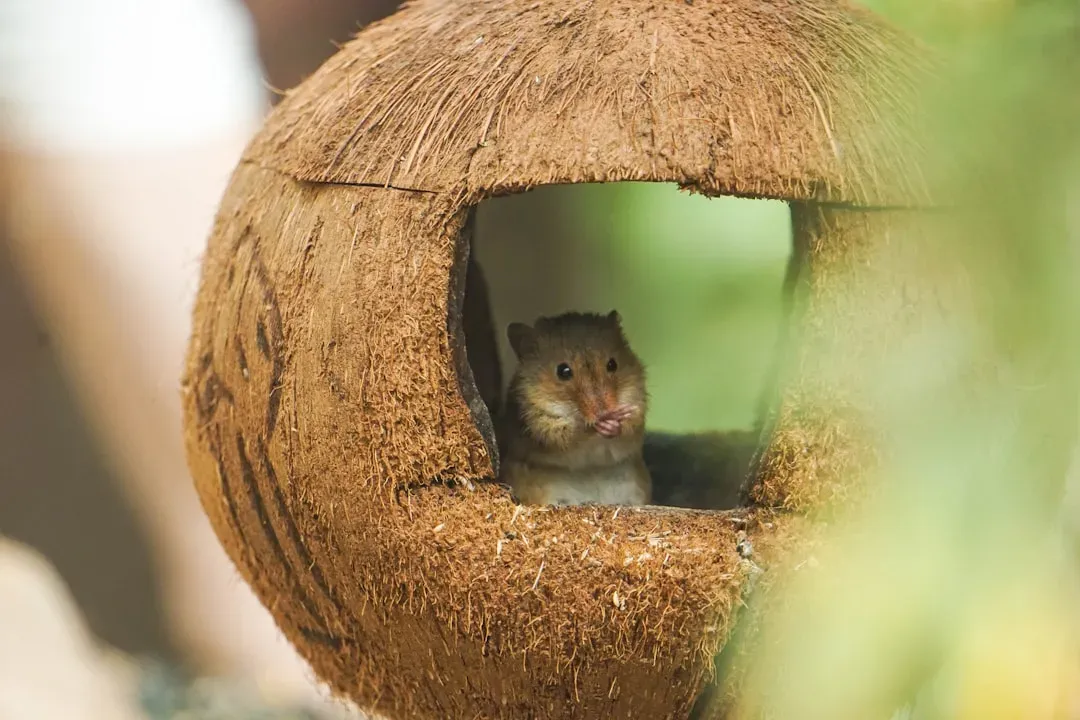
Chew toys serve multiple purposes. Chewing also prevents boredom and provides mental stimulation. The best chewing options include untreated wooden chew toys, willow sticks, mineral chews, cardboard, pumice stones, edible chew sticks and coconut shells.
Platforms and multi-level areas maximize vertical space. Whenever anyone asks what they can do to upgrade their hamster cage, I always say, “get some platforms!” They create more usable area without increasing the cage footprint.
Sand baths are wonderful additions. Many hamsters absolutely love rolling around in a shallow container of reptile sand, which helps keep their fur clean and provides entertainment. Just make sure the container is large enough for them to comfortably turn around.
Avoid narrow tubes and tunnels that could trap your hamster. Everything should be wide enough for them to turn around comfortably, especially Syrian hamsters who are significantly larger than dwarf varieties.
Feeding Strategies That Encourage Natural Behavior

Scatter feeding is one of the easiest sources of enrichment that there is. Hamsters are foragers by nature and by scatter feeding your pet, you are stimulating the brain and their senses. It mimics how they’d search for food in nature.
Instead of using a food bowl, sprinkle their daily portion throughout the cage. Don’t worry about smaller seeds sinking into the substrate; hamsters have a very keen sense of smell and this just adds to the fun for your pet. They’ll happily spend time hunting down every morsel.
You can create simple foraging toys using toilet paper tubes. In addition to scatter feeding, you can DIY some simple foraging toys using toilet paper rolls. These can be stuffed with some of your hamsters main food, healthy treats, or even fresh veggies. This makes your hamster have to work a little harder for their food.
Variety matters in hamster diets. They benefit from a mix of high-quality pellets, seed mixes, and occasional fresh vegetables. Small pieces of carrot, leafy greens, or scrambled egg make excellent treats that add nutritional diversity.
Adding dried herbs, flowers, and sprays to the cage encourages natural foraging behaviors. Adding sprays like millet, poppy heads, flax etc. will encourage your hamster to forage like they would in the wild. These items are typically inexpensive and highly engaging.
Never leave fresh foods in the cage for extended periods. Hamsters are hoarders who will stash perishables in their nests, where they can spoil and cause health issues. Give only small portions that they’ll eat immediately.
Location and Environmental Factors
Where you place the cage matters more than most people realize. It is recommended that you find a quiet place in your home away from electronics or plumbing or other animals. A good suggestion might be in your bedroom, where you can close the door.
Temperature stability is crucial. Hamsters are sensitive to extreme heat and cold, so avoid placing their cage near windows with direct sunlight, heating vents, or air conditioning units. Room temperature between 65 and 75 degrees Fahrenheit works well.
Wherever you situate the cages there should be as little cross drafting as possible. The air in their environment should be clean and circulating gently, but you should avoid any strong breezes, drafts or ambient odors. Air quality significantly impacts their respiratory health.
Basements often seem convenient but can be problematic. Basements, even finished basements, are generally not good settings for them due to potential carbon monoxide from furnaces, dampness, and poor air circulation.
Keep the cage away from strong smells like cleaning supplies, cooking odors, or scented candles. Hamsters have incredibly sensitive noses, and what seems mild to us can be overwhelming to them.
Lighting conditions matter too. Hamsters are crepuscular, meaning they’re most active at dawn and dusk. They need a natural light cycle, so avoid keeping them in completely dark rooms or areas with constant artificial lighting.
Consider your own sleep schedule. Hamsters are notoriously active at night, running on wheels and rearranging their homes. If you’re a light sleeper, placing the cage in your bedroom might result in sleepless nights listening to the pitter-patter of tiny feet.
Conclusion
Creating the perfect hamster habitat isn’t complicated, but it does require thoughtful planning. These small creatures deserve spaces where they can burrow, forage, run, and explore just like their wild cousins do. The investment in a proper setup pays dividends in your pet’s health and happiness.
I know it sounds crazy, but watching a hamster thrive in a well-designed environment is genuinely rewarding. You’ll notice the difference in their behavior almost immediately. More activity, less bar chewing, and those adorable moments when they pop up from their tunnels with cheeks full of food.
The cage setup you create today will be your hamster’s entire world. Make it count. What changes will you make to give your hamster the life they deserve?