

Have you ever caught your dog staring at you with those deep, soulful eyes, or watched them wander aimlessly around the house? Maybe you’ve wondered if something’s wrong, if they’re upset, or if they’re just being, well, a dog. Here’s the thing though. Sometimes that blank stare or restless energy isn’t just canine quirkiness. Your furry best friend might actually be bored out of their mind.
Dogs are remarkably intelligent creatures with emotional depth we’re only just beginning to fully understand. They need purpose, engagement, and mental workouts just as much as they need physical exercise. Left without proper stimulation, they can develop unwanted behaviors that leave you frustrated and them feeling unfulfilled. Recognizing the signs of boredom early can transform your relationship with your pup and give them the enriched life they truly deserve. Let’s dive into the telltale signals that your dog is craving more mental engagement.
Destructive Behavior That Seems to Come Out of Nowhere

Picture this: you come home from work, and there’s stuffing everywhere. Your favorite couch pillow has been shredded, the corner of the coffee table looks like it’s been through a wood chipper, or your brand new shoes have mysterious bite marks. If your normally well-behaved dog suddenly transforms into a demolition expert, boredom and lack of mental engagement can lead to destructive behaviours.
Chewing shoes and furniture, tearing up pillows or stuffed toys, getting into the trash, or digging at the floor or yard are all common signs your dog is looking for something to do. Think of it from their perspective. They’ve been alone for hours with nothing interesting happening, no challenges to solve, and no outlet for their natural instincts. So they create their own entertainment, and unfortunately, your belongings become the casualties.
Dogs aren’t being spiteful when they destroy things. They’re simply trying to occupy their brilliant minds in whatever way they can. When left to their own devices, bored dogs will chew furniture and shoes, shred pillows, or even unroll your toilet paper, doing whatever they can find to pass the time. And because you’re not there to stop them, it’s all the more exciting.
Excessive Attention-Seeking and Clingy Behavior

We all love a cuddle session with our dogs. Those moments when they curl up next to us on the couch or rest their head on our lap are pure magic. Yet there’s a difference between affectionate bonding and relentless pestering. If your dog is sticking to you like glue and shadowing your every move, it may be their way of telling you they’re bored, anxious, or in need of more stimulation.
If your dog barks, whines, jumps or nips at you many times each day, that may be his way of saying, “I’m bored. Pay attention to me!” If your dog is constantly bugging another pet in your household, that can be a sign of boredom, too. They’re basically saying, in the only language they have, that they need something more engaging to do.
This constant need for interaction can be exhausting for you and frustrating for them. Your dog might paw at your leg during work calls, nudge you while you’re trying to read, or bring you toy after toy with an almost desperate intensity. It’s not that they’re being annoying on purpose. They’re genuinely understimulated and looking to you to provide the mental enrichment they’re missing.
Repetitive or Compulsive Actions
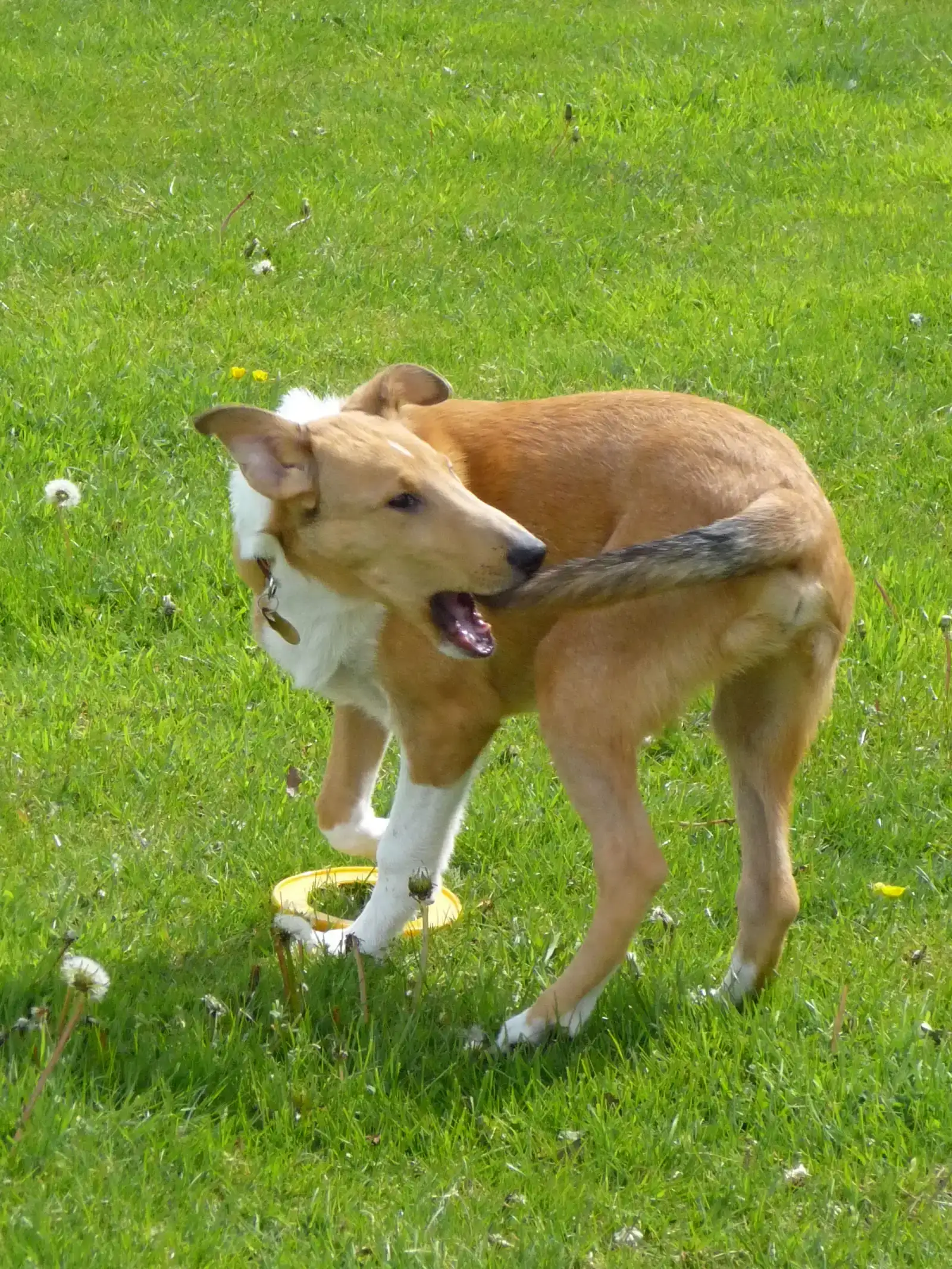
Have you noticed your dog chasing their tail more than usual, or perhaps obsessively licking their paws until they’re raw? Pets can develop impulsive actions as a form of pet obsessive-compulsive disorder (OCD). Usually, as a result of stress, anxiety, or boredom, they will continually repeat a behavior. These aren’t just quirky habits. They’re red flags that something needs to change.
Some dogs chew on their own bodies – paws, flank, etc. – or chase their tails (whether or not they catch them). While tail chasing might look amusing at first, it becomes concerning when it happens repeatedly throughout the day. These self-stimulating behaviors emerge when dogs lack proper mental and social engagement.
The troubling part is that these compulsive actions can become habitual and increasingly difficult to break. Your dog essentially creates their own stimulation loop, but it’s not a healthy one. Some animals will even engage in self-stimulating behaviors in an attempt to self-soothe, like repetitive or abnormal behaviors when they lack mental and social engagement. If you’re seeing these patterns, it’s time to introduce more brain games and enrichment activities into their daily routine.
Over-Excitement at the Slightest Stimulation

Does your dog absolutely lose their mind every time someone walks through the door? Jumping, barking, and practically bouncing off the walls whenever anyone comes through the door could be a sign that your pup is under-stimulated and craving more consistent interaction. Sure, dogs are naturally enthusiastic about greeting their favorite humans, but there’s a difference between happy excitement and frantic desperation.
When dogs don’t get enough mental stimulation throughout the day, any break in the monotony becomes overwhelmingly thrilling. They haven’t had the opportunity to engage their minds or satisfy their natural curiosity, so when something finally happens, they react with explosive energy. A bored dog might seem restless and unable to sit still, have a shorter attention span than usual, or have extra energy.
This hyperactivity can manifest in other ways too. Your dog might race around the house in circles, struggle to settle down even after a walk, or seem constantly on edge waiting for the next exciting thing to happen. It’s honestly exhausting for both of you. The key is providing regular mental challenges throughout the day so that your dog doesn’t build up this intense need for stimulation.
Unusual Changes in Eating or Sleep Patterns

Here’s something that might surprise you: Sure, dogs love their naps. But if your pup is snoozing all day out of sheer boredom (and not just because they ran a doggie marathon), it might be a sign that they’re lacking enough engagement or stimulation during the day. Just like humans who sleep to escape boredom or depression, dogs can do the same thing.
On the flip side, if you notice your pet is begging more than usual, there may be another issue going on. Eating too much and begging could suggest your pet needs more entertainment. They’re essentially eating out of boredom, much like we might mindlessly snack while watching television with nothing better to do.
Both excessive sleeping and food-seeking behavior indicate that your dog’s daily routine lacks the mental stimulation they need. Dogs thrive on having a “job” or purpose, even if that job is simply solving a puzzle feeder or learning a new trick. Without that sense of accomplishment and engagement, they retreat into either sleep or food as a way to pass the time. It’s actually kind of heartbreaking when you think about it from their perspective.
Inappropriate Elimination or Forgotten House Training

You’ve spent months, maybe even years, successfully house-training your dog. So why on earth are they suddenly having accidents in the house? Boredom can also look like pooping and peeing in places around the house not designated for potty trips. If your well-trained pet is suddenly changing their bathroom behaviors, it could be a sign.
Let’s be real, this one is frustrating. It’s easy to assume your dog is being rebellious or that there’s a medical issue at play. While you should definitely rule out health problems with your veterinarian, unusual accidents indoors can be a sign of boredom, as well as some health conditions. Dogs who are understimulated might forget or ignore their training simply because they’re not mentally engaged enough to care about the rules.
This behavior often stems from a combination of boredom and attention-seeking. Your dog has learned that accidents get a reaction from you, even if it’s a negative one. In their mind, any attention is better than being ignored all day while they sit around with nothing interesting to do. It’s not malicious. It’s a cry for help wrapped in an incredibly inconvenient package.
Conclusion

Boredom in dogs is far more than just a minor inconvenience. It’s a genuine welfare concern that affects their emotional health, behavior, and quality of life. The good news is that once you recognize these signs, you have the power to transform your dog’s daily experience. Research consistently shows that increased mental activity improves mental health, cognitive function, builds confidence, and strengthens the human–dog bond.
Simple changes can make a world of difference. Puzzle toys, training sessions, scent games, new walking routes, and even just ten minutes of focused interaction can significantly reduce boredom-related behaviors. Your dog doesn’t need expensive equipment or elaborate setups. They just need you to recognize their need for mental engagement and provide opportunities for their brilliant minds to stay active and fulfilled.
What changes have you noticed in your dog’s behavior recently? Have you spotted any of these boredom signals? Share your experiences in the comments below.


