
South Carolina’s Turtle Fortress: A Lifeline for Asia’s Rarest Reptiles
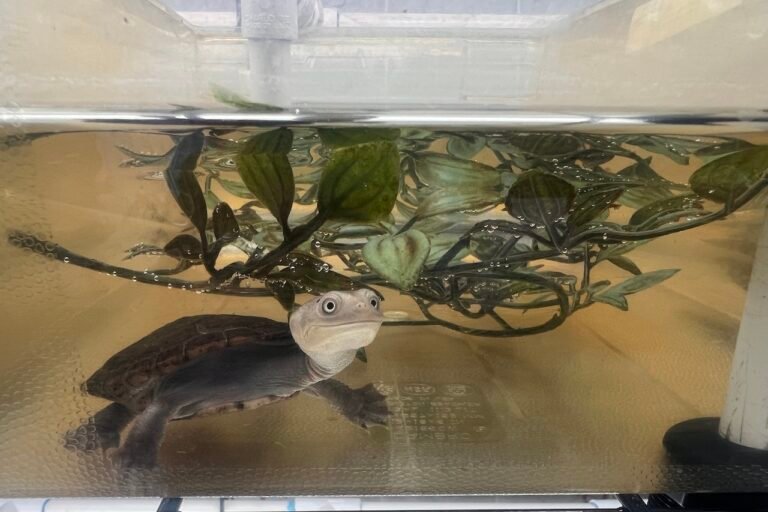
A Bastion Against Black-Market Thieves (Image Credits: Imgs.mongabay.com)
Cross, South Carolina – Concealed amid the coastal pines and guarded by razor-wire fences, a specialized facility houses the final hope for numerous endangered Asian turtle species on the brink of extinction.[1][2]
A Bastion Against Black-Market Thieves
High-value cargo demands ironclad protection. Turtles at this preserve fetch up to $10,000 each on the illicit wildlife trade, drawing poachers who have decimated wild populations.[1] Guard dogs patrol the grounds at night, while security cameras and locked enclosures deter intruders. The site, operated by the Turtle Survival Alliance since 2013, remains deliberately low-profile to shield its inhabitants.[2]
Facilities manager Nathan Haislip emphasized the stakes during a rare tour. “What’s in here are some of the rarest of the rare, species that we literally can’t replace,” he stated, unlocking a gate to the Asian box turtle area.[1] Enclosures mimic Southeast Asian habitats with tropical plants and misting systems, ensuring the reptiles thrive in South Carolina’s subtropical climate.
Assembling an Ark of Endangered Species
The center maintains over 800 turtles across 27 species, prioritizing those vanished from the wild. Asian box turtles dominate the collection, including rarities like McCord’s box turtle – ranked seventh most endangered globally with fewer than 800 survivors, all captive.[1][2]
Other highlights include Bourret’s box turtle, Vietnamese three-striped box turtle, and Burmese star tortoise. A flattened musk turtle from Alabama adds a local touch among the international roster. Larger tortoises roam masonry-walled pens, while smaller species occupy chain-link setups.
- Rote Island snake-necked turtle (Chelodina mccordi)
- Indochinese box turtle (Cuora galbinifrons)
- Spiny turtle (Heosemys spinosa)
- Sulawesi forest turtle (Leucocephalon yuwonoi)
- Asian giant tortoise (Manouria emys phayrei)
Breeding Programs Fuel Conservation Hopes
Ex situ breeding forms the core mission. The facility produces offspring for potential reintroduction, partnering with zoos and field programs worldwide. This “turtle bank” strategy counters habitat loss and poaching that wiped out species like Zhou’s box turtle entirely from nature.[1]
Educational classrooms host school groups, teaching husbandry and biology. Experts like director Cris Hagen oversee genetic management to sustain viable populations. Confiscated animals from smuggling busts bolster stocks, with plans for a dedicated U.S. intake center.[3]
| Species Example | Status | Native Region |
|---|---|---|
| McCord’s Box Turtle | Critically Endangered | China |
| Burmese Star Tortoise | Critically Endangered | Myanmar |
| Flattened Musk Turtle | Critically Endangered | Alabama, USA |
Threats and a Path Forward
Pet trade and food markets ravage turtle numbers, with smugglers shipping thousands illegally despite seizures. Native U.S. species like Eastern box turtles now face pressure as Asian substitutes dwindle.[3] The Turtle Survival Alliance’s global network amplifies efforts, aiming for zero extinctions.
South Carolina’s preserve stands as a model, blending security with science. Volunteers and interns contribute, fostering the next generation of stewards.
Key Takeaways
- The center houses 800+ turtles from 27 species, many Asian and irreplaceable in the wild.
- Breeding success supports reintroduction, combating poaching and habitat threats.
- High-tech enclosures replicate native environments in Carolina’s pines.
This unassuming fortress proves one region’s resolve can echo worldwide. As turtle populations teeter, such arks offer enduring promise – what role might you play in their story? Share your thoughts in the comments.