
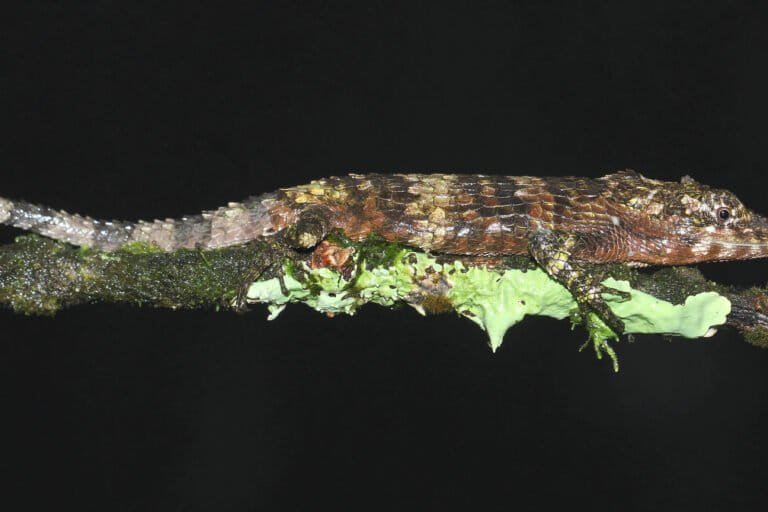
A Hidden Gem of Reptile Diversity Faces Collapse (Image Credits: Imgs.mongabay.com)
Sri Lanka – Over 20 species of agamid lizards, commonly known as dragon lizards, inhabit the island’s forests and mountains, with more than two-thirds unique to this biodiversity hotspot.[1]
A Hidden Gem of Reptile Diversity Faces Collapse
Sri Lanka hosts 22 agamid lizard species, 19 of which occur nowhere else on Earth, marking them as evolutionarily distinct and highly vulnerable.[1] These reptiles thrive in the wet zone forests and central highlands, but rapid changes now imperil their survival. A recent study assessed 14 threatened species, revealing that over 40% of their critical habitats lack protection.[1]
Range-restricted populations, such as those in the Dumbara Mountains, amplify the risk. Conservationists have tracked these lizards for decades, noting their slow reproductive rates hinder quick recovery from losses. Herpetologist Suranjan Karunarathna highlighted the danger: species with narrow ranges could vanish entirely due to targeted pressures.[1]
Habitat Loss Carves Away Vital Territories
Deforestation and land conversion have fragmented the lizards’ preferred arboreal and terrestrial homes in southwestern rainforests and montane areas. Key sites like Sinharaja Forest Reserve and Peak Wilderness Sanctuary hold concentrations of these habitats, yet unprotected zones suffer most.[1] Agriculture, plantations, and encroachments accelerate the decline.
Species distribution models pinpoint priority areas for intervention, emphasizing the need to safeguard corridors between protected zones. Without action, isolated populations face genetic bottlenecks and heightened extinction odds. Local communities near these forests report fewer sightings, underscoring the urgency.
Illegal Pet Trade Fuels a Shadowy Demand
Smugglers target striking species like the critically endangered Dumbara agama (Cophotis dumbara) and endangered Ceylon deaf agama (Cophotis ceylanica), shipping them to Europe and beyond.[1] Online platforms such as MorphMarket and Fauna Classifieds list juveniles for $500 to $3,000, often mislabeled as captive-bred to evade scrutiny. Social media amplifies the issue, with traffickers posting directly to buyers.
Herpetologist Anslem de Silva explained the appeal: “Cophotis lizards are considered as loveable pets… they breed well, thus the high demand in the pet trade.”[1] Seizures reveal the scale – a 2022 case fined smugglers over $28,000 for hundreds of reptiles, including Sri Lankan agamids. All 22 species enjoy national protection under the 1993 Flora and Fauna Protection Ordinance, yet enforcement lags.
Climate Change Intensifies Survival Struggles
Shifting temperatures and erratic rainfall disrupt microhabitats, pushing lizards beyond tolerable limits. Montane species, adapted to cool, humid conditions, suffer as warmer anomalies alter forest dynamics.[1] Combined with habitat fragmentation, these changes shrink viable ranges further.
Studies warn of cascading effects, from altered prey availability to increased invasive pressures. Narrow-endemic agamids, already stressed, stand little chance without broader ecosystem resilience.
| Species | IUCN Status | Key Habitat |
|---|---|---|
| Cophotis dumbara | Critically Endangered | Dumbara Mountains |
| Cophotis ceylanica | Endangered | Central Highlands |
| Ceratophora spp. (6 species) | Various Threatened | Wet Zone Forests |
Toward Safeguarding Sri Lanka’s Reptilian Treasures
Efforts include CITES listings since 2016 and community education programs to deter smuggling. Researchers advocate expanding protected areas and monitoring online trade. Stricter border controls and captive-breeding verification could curb laundering.
These lizards embody Sri Lanka’s ecological richness; their loss would echo far beyond the island. Protecting them demands global cooperation to halt trade and restore habitats. What steps should prioritize next?
Key Takeaways
What do you think about these threats? Share in the comments.


