
You’re Not Imagining It: Your Dog Really Does Understand Your Mood
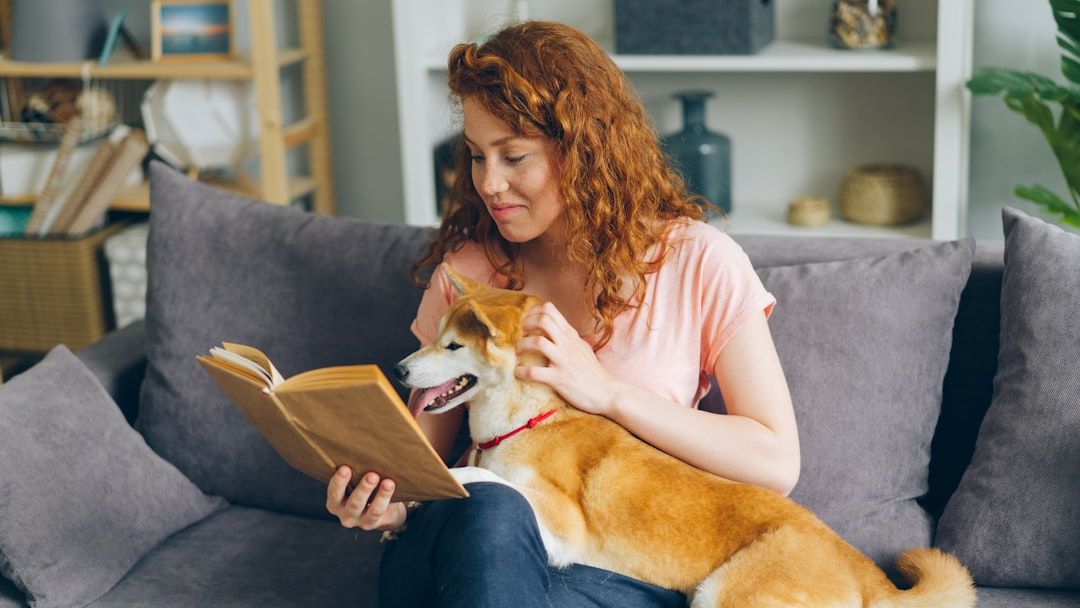
You come home after a terrible day. You haven’t said a word yet, but your dog is already there. Maybe they lean against your leg quietly. Maybe they bring you a toy with a soft whine. Maybe they just sit and watch you with those knowing eyes. It’s a moment that feels almost magical, but it’s not magic at all. It’s something far more remarkable.
For years, dog owners have insisted their pups can read their emotions, and for years, skeptics have dismissed it as wishful thinking. Honestly, I get why people were doubtful. Yet here’s the thing: science has finally caught up with what we’ve known in our hearts all along. Your dog really does understand when you’re happy, sad, stressed, or scared. They’re not just reacting to your tone of voice or the fact that you forgot to fill their bowl. They’re actually reading you, processing your emotional state, and responding to it in ways that researchers are only beginning to fully understand. Let’s dive into the fascinating world of canine emotional intelligence and discover just how deeply connected you and your dog truly are.
The Science Behind Those Soulful Eyes
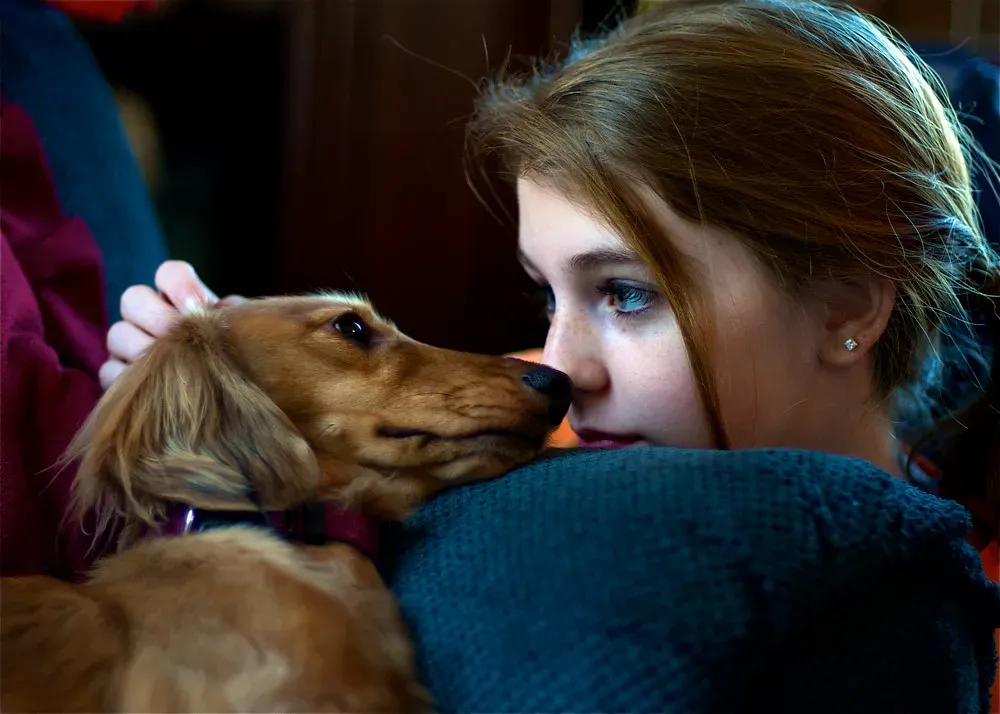
Dogs can integrate information from different senses to form a coherent perception of emotion in both humans and other dogs, requiring an internal system for categorizing emotional states. Think about that for a second. Your dog isn’t just noticing you’re frowning or that your voice sounds different. They’re putting together multiple pieces of information like a puzzle to understand what you’re feeling.
Research shows that dogs behaved differently depending on their owner’s emotional state, performing better at training tasks with a happy owner. Studies found that dogs gazed and jumped less at owners when they were sad, and their compliance with commands was also diminished. It’s not that they’re being stubborn when you’re down. They’re actually responding to your emotional reality.
What makes this even more incredible is that this ability may be intrinsic, as dogs in trials received no prior training with the subjects in the images or audio. Your dog didn’t need lessons to learn this skill. It’s wired into who they are.
Reading You Like a Book: The Many Ways Dogs Pick Up on Your Feelings

Dogs have a dedicated region of the brain for processing human faces, which helps explain their exquisite sensitivity to human social cues. Let that sink in. Evolution has literally shaped your dog’s brain to focus on you.
Dogs recognize facial expressions such as smiling or frowning, and they pay close attention to these cues. Dogs engage in mouth-licking in response to angry human facial expressions but not when they hear angry voices, emphasizing the importance of visual cues. Your facial expressions matter more than you might think.
Here’s where it gets really wild. When exposed to sweat samples collected from their owners during scary movies, dogs adopted behaviors consistent with the emotions experienced by the humans, with heart rates increasing and seeking comfort from owners when exposed to fear scent. They can literally smell your fear. Dogs use their acute sense of smell to detect hormonal changes like cortisol when we’re stressed. You can’t hide your feelings from a nose that sophisticated.
Your Stress is Their Stress

This one might be tough to hear, but it’s important. Research found that dogs’ stress levels were greatly influenced by their owners and not the other way around, with findings suggesting dogs mirror the stress levels of their owners to a great extent.
Studies measured cortisol in hair samples and found the only variable that corresponded to the dog’s anxiety level was their owner’s anxiety level, meaning an owner with high cortisol also had a dog with high cortisol. The relationship is that direct. Interestingly, the relationship didn’t work in reverse, with no evidence that anxious dogs created nervous owners.
What does this mean for you? Dogs likely pick up on subtle changes such as differences in their owner’s body odor and behaviors like pacing. Your dog is essentially a furry emotional mirror. When you’re chronically stressed, they feel it too. It’s a reminder that taking care of your own mental health isn’t just good for you. It’s good for them.
What Your Dog’s Response Really Means

Let’s be real about something though. Research indicates dogs may not be empathetic in the traditional sense, but their ability to perceive and distinguish human emotions is still highly valuable. Some scientists believe dogs are susceptible to emotional contagion, meaning they can respond to human emotions without fully understanding what the person is feeling.
Think of it like this: when one baby starts crying at daycare and others join in, they’re not necessarily understanding why the first baby is upset. They’re catching the emotion. Dogs might work similarly. When you are sad, your dog is affected by it and comes close to nuzzle you, comforting you while seeking comfort themselves.
Does that make their response any less meaningful? I don’t think so. Whether your dog fully grasps the complexity of your bad breakup or your work stress doesn’t really matter when they’re pressed against your side, offering their silent support. The connection is real either way.
Helping Your Dog Help You
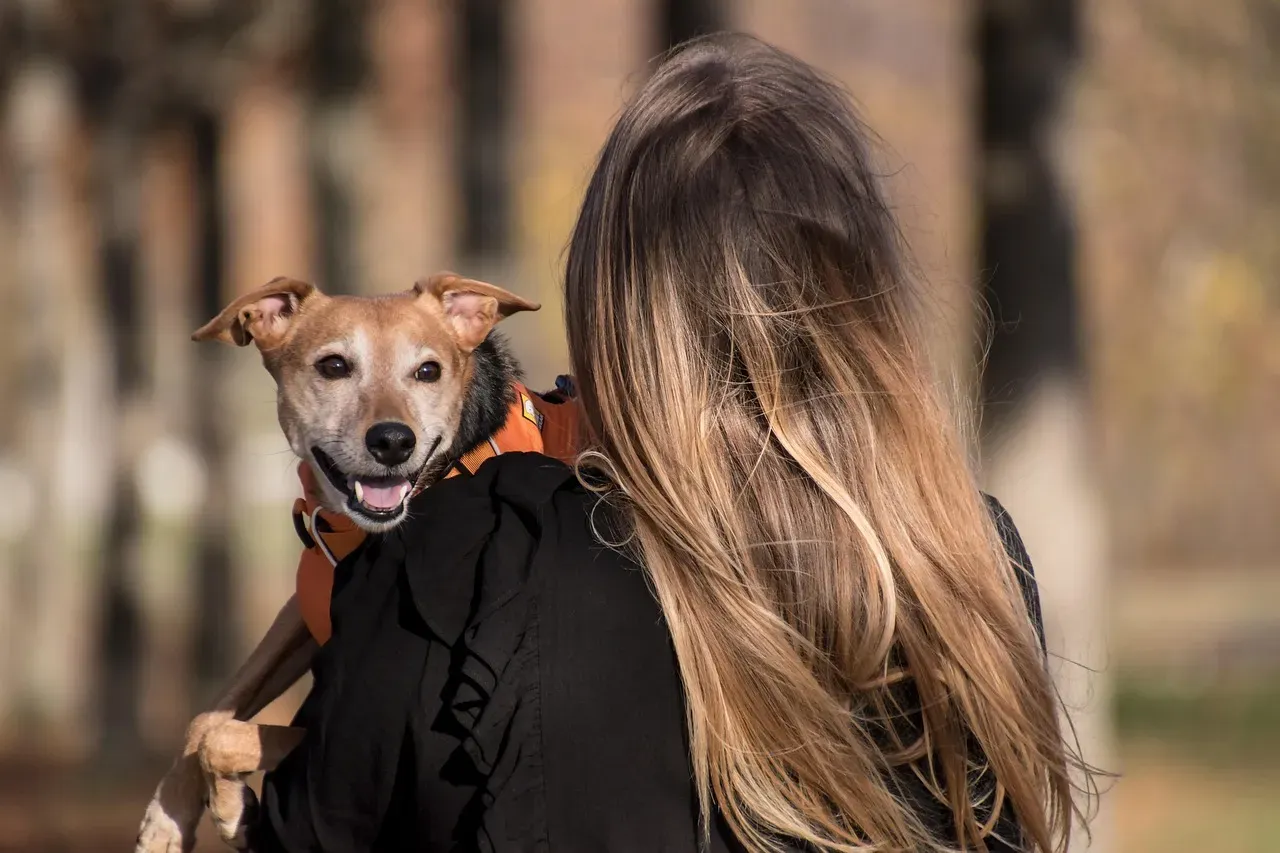
Now that you know your dog is tuned into your emotional frequency, what can you do with that knowledge? A relaxed dog usually has semi-erect or forward-facing ears, a soft mouth, and round eyes, distributing weight evenly on all four paws. Learning to read your dog’s signals means you can tell when your emotions are affecting them.
If you notice signs that your dog is stressed, first remove them from the stressor and find a quiet place to regroup. Sometimes the best thing you can do is give both of you space to decompress. Like human children, dogs benefit from predictability and scheduling, as lack of consistency can result in anxiety and undesirable behaviors.
Create routines. Dogs thrive on them. Feed them at the same time. Walk them regularly. These predictable patterns give them security, especially when your own emotional landscape feels chaotic. Exercise can be a great stress reducer, with physical activities like walking or playing fetch helping both you and your dog release tension. A tired dog is often a calmer dog, and the bonus is that you’ll probably feel better too.
Conclusion

The bond between you and your dog runs deeper than commands and treats. Studies show behavioral and chemical cues from humans can affect dogs in ways that enable them to discriminate between their owners’ fear, excitement, or anger and even catch these feelings. Your dog is watching you, reading you, and feeling with you in ways that science is only now beginning to fully appreciate.
This isn’t about perfection. You’re going to have bad days. You’re going to be stressed and sad and overwhelmed. Your dog doesn’t need you to be happy all the time. What they need is you, present and aware of the emotional exchange happening between you. When you understand that your moods impact your furry companion, you can be more mindful. You can take steps to manage your stress. You can create a calmer environment for both of you.
What do you think? Has your dog ever surprised you with how well they seemed to understand exactly what you were feeling? Share your stories in the comments below.