
Gray Wolf Spotted in Los Angeles County for the First Time in Over 100 Years
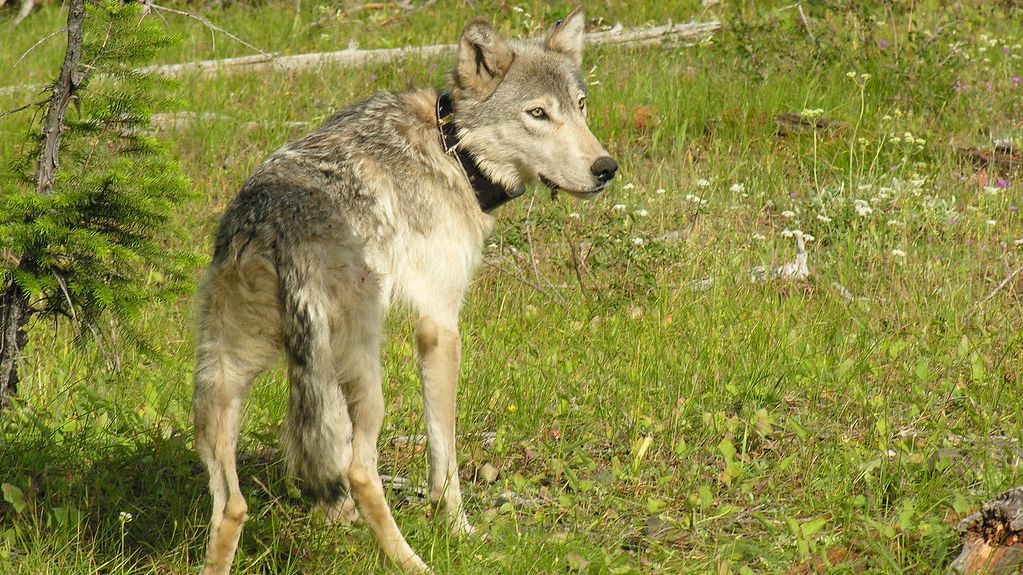
Imagine waking up on a Saturday morning to news that feels like it belongs in a history textbook, not your local headlines. A black-coated female gray wolf has officially crossed into Los Angeles County, the first time the species has been documented this far south in California since 1924. Think about that for a moment. While Los Angeles has been transforming from orange groves to mega-metropolis over the past century, gray wolves vanished from the landscape entirely. Now one has returned, padding through mountain terrain on four silent paws, marking what some experts are calling nothing short of miraculous.
This isn’t just another wildlife story. A 3-year-old female gray wolf reached the mountains north of Santa Clarita on Saturday, marking the first sighting in Los Angeles County in over a century, and was identified as BEY03F, the wolf recently split from the Yowlumni Pack in Tulare County and traveled through Kern County to find a new mate and habitat. She’s not lost or confused. She’s on a mission, wearing a GPS collar that tracks her every move, and biologists are watching with bated breath to see what happens next.
The Remarkable Journey of BEY03F
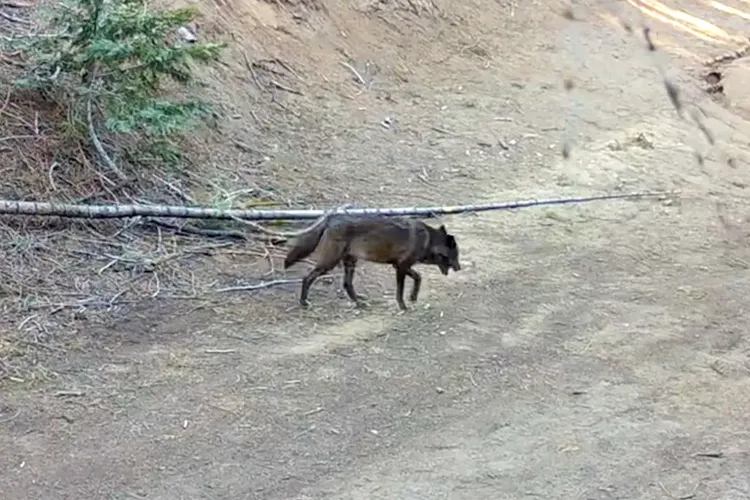
The three-year-old wolf was born in 2023 in Plumas County, north of Lake Tahoe, as part of the first litter of the Beyem Seyo pack. To put this in perspective, she started her life in Northern California’s rugged wilderness and somehow navigated her way south through an increasingly urbanized landscape. The wolf was born in 2023 in Plumas County’s Beyem Seyo Pack and has traveled more than 370 miles while heading south, officials say, including crossing State Route 59 near Tehachapi several times just days ago.
Let’s be real, this isn’t a casual stroll. This young wolf has been traveling for what biologists estimate could be roughly 500 miles throughout the state. Last May, BEY03F was caught in Tulare County and fitted with a GPS tracking collar, and the department has been monitoring her movements since, with Hunnicut estimated that she has traveled more than 500 miles throughout the state. She’s crossed busy highways, navigated through agricultural lands, and somehow avoided the countless dangers that come with being a large predator in California. The odds were stacked against her from the start.
Why She’s Making This Dangerous Trek
You might wonder why a wolf would risk everything to travel hundreds of miles through unfamiliar territory. The answer is actually quite simple and deeply primal. She’s looking for love. They will typically break from their pack to find a mate, sometimes traveling thousands of miles to establish a new pack. This dispersal behavior is hardwired into wolf biology, ensuring genetic diversity and the establishment of new territories.
It is the dispersal – or mating – season for gray wolves, and so it is expected to see them on the move like this, Hunnicut said, with wolves have been documented to have traveled hundreds, even thousands, of miles, and BEY03F is looking for a suitable habitat and a mate, and is hoping other wolves are doing the same in the area. Think about the determination that requires. She left everything familiar behind, driven by instinct and the hope of finding a mate somewhere out there in the vast California wilderness. Honestly, it’s both inspiring and heartbreaking at the same time.
The Dark History That Makes This Moment So Significant
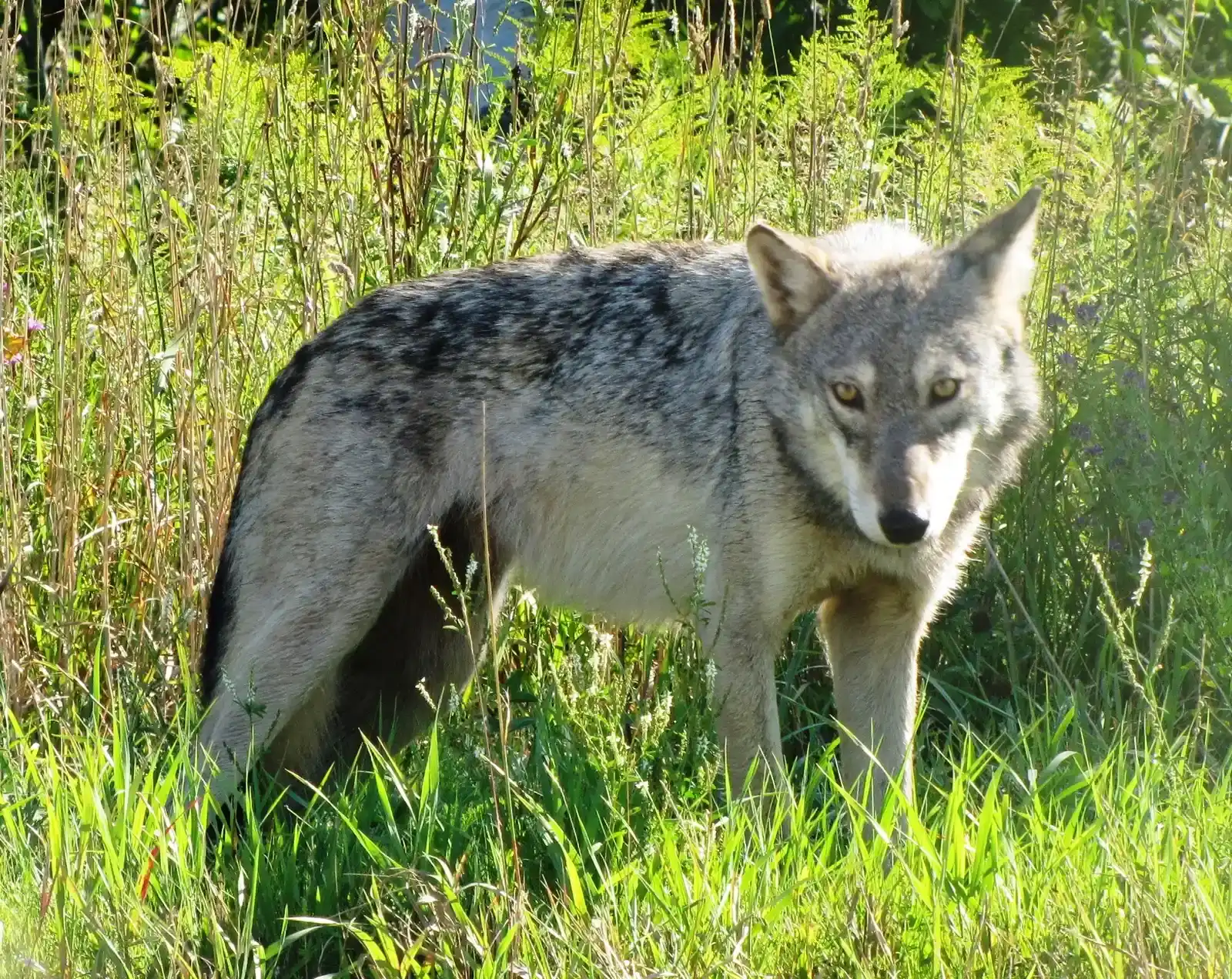
Gray wolves were eliminated from California by hunters and trappers roughly a century ago, with the last known wild wolf in the state shot in 1924. This wasn’t accidental. It was systematic eradication. In the 1920s, wolves native to California were pushed out, with human activity was the leading cause of the eradication of wolves in the state, as wolves were built up to be feared and were profiled as predators that posed a threat to humans.
The extermination campaign was thorough and brutal. Bounty programs encouraged hunters and trappers to kill every wolf they could find. Within a relatively short period, an entire species that had roamed California for thousands of years was wiped out completely. For nearly a century, the howl of a gray wolf was nothing but a distant memory in the California wilderness, replaced by silence where wild sounds once echoed through canyons and forests.
California’s Slow Wolf Recovery Since 2011
The species began returning in 2011 when a lone wolf crossed into California from Oregon, and wildlife officials now estimate at least 60 wolves live in the state. That first wolf, known as OR-7, became something of a celebrity. His journey marked the beginning of what conservationists hoped would be a natural recolonization of California by wolves dispersing south from Oregon and Washington.
Natural recolonization began in California in 2011 before the formation of the Shasta Pack in 2015, which is no longer active There are nine confirmed wolfpacks in California, located in Shasta, Plumas, Lassen, Shasta, Tehama, Siskiyou and Tulare counties. The growth has been gradual but steady. From zero wolves to at least 60 in fifteen years represents remarkable progress for a species that was completely absent from the state for nearly a century. Still, it’s worth noting that these populations remain concentrated in Northern California, making BEY03F’s journey south all the more extraordinary.
The Dangers She Still Faces
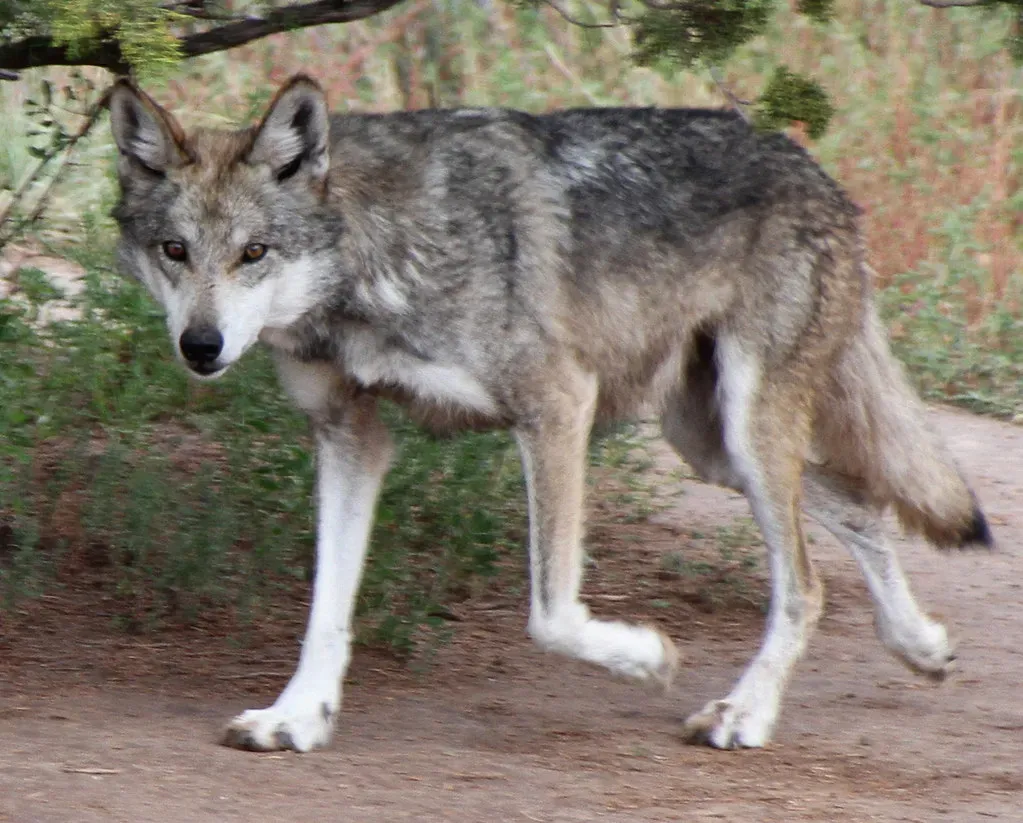
Here’s the thing that keeps wildlife biologists up at night: highways. In November 2021, a wolf traveled south from Oregon to the edge of L.A. County. However, OR-93 was killed by a vehicle strike on the 5 Freeway in Kern County, near where BEYO3F is currently staying. That tragic death illustrates the single biggest threat facing wolves attempting to navigate California’s increasingly fragmented landscape.
On the way south she crossed State Route 59 near Tehachapi, a risky move in a state where the leading known cause of wolf deaths is vehicle strikes. Every time BEY03F crosses a highway, she’s gambling with her life. The California Department of Fish and Wildlife is monitoring her location constantly, knowing that one wrong move near a busy freeway could end her journey permanently. It’s hard to say for sure, but the tension around her survival must be palpable among the biologists tracking her every move.
What Happens Next: Hope and Uncertainty
Her journey isn’t over, Hunnicutt told the Times, adding that continued movement suggests she has not yet found a mate or suitable habitat. BEY03F then traveled hundreds of miles into Los Angeles County on Saturday, Feb. 7, when her collar gave a signal to wildlife agencies that she was north of Santa Clarita in the San Gabriel Mountains, and on Monday, Feb. 9, her signal indicated she went back north into Kern County, east of Lebec. She’s still searching, still moving, still hoping to find what drove her on this incredible journey in the first place.
The possibility of a wolf pack establishing itself in Southern California seems almost fantastical. There are no records of wolves in the San Gabriel or coastal regions, but the likelihood of her finding a mate is not impossible, with researchers were surprised to discover the pack that BEY03F belonged to in Northern California, as no one expected a pack to pop up there, and that’s because two wolves wandered hundreds of miles, so it’s possible that some other wolf is doing the same thing. Wildlife has a way of surprising us when we least expect it. Could another dispersing wolf be out there right now, making a similar journey? The experts admit it’s possible, even if unlikely.
What strikes me most about this story is the resilience it represents. After being hunted to complete extinction in California, gray wolves have clawed their way back through a combination of legal protections, natural dispersal, and sheer determination. BEY03F embodies all of that in her solo journey through mountains, valleys, and perilous highways. Whether she finds a mate and establishes a Southern California pack or continues wandering north remains to be seen. Either way, she’s already made history simply by setting paw in Los Angeles County for the first time in over a century. That’s something worth howling about. What would you have guessed were the odds of this happening even a decade ago?