
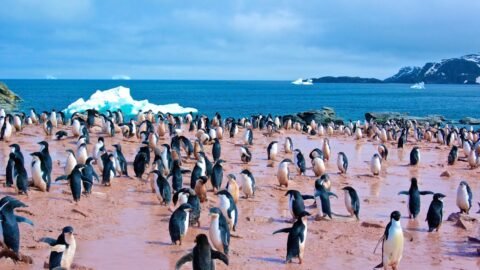
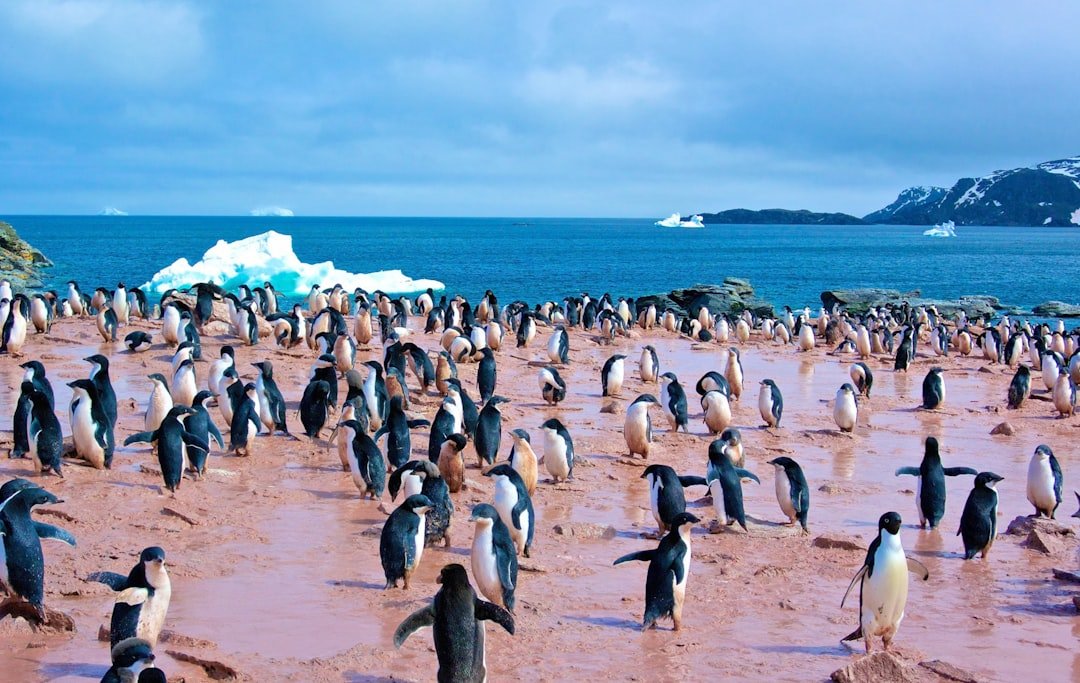
Unprecedented Monitoring Uncovers Rapid Phenological Shifts (Image Credits: Unsplash)
Antarctic Peninsula – Penguins across this rapidly warming region have advanced their breeding timelines by up to two weeks, according to a comprehensive decade-long study linking the shifts to climate change.[1][2]
Unprecedented Monitoring Uncovers Rapid Phenological Shifts
Researchers captured the fastest phenological change—alterations in the timing of life cycle events—ever documented in birds, and possibly vertebrates, through an innovative network of cameras. The study, published this month in the Journal of Animal Ecology, examined data from 2012 to 2022.[2]
Penguin Watch, a collaboration between the University of Oxford and Oxford Brookes University, deployed 77 time-lapse cameras across 37 colonies in Antarctica and nearby sub-Antarctic islands. Each device recorded images alongside air temperature, tracking the precise moment of “settlement”—when penguins first continuously occupied nesting zones. Colony sizes varied from a dozen nests to hundreds of thousands, providing a sub-continental perspective.
Senior author Professor Tom Hart, founder of Penguin Watch, highlighted the value of this approach. “Ecologists are good at counting populations to show trends, but often the early warnings of decline can be found in the behavioural change of animals, which can be very hard to monitor,” he said. “This study proves the benefits of monitoring animals at a landscape level.”[3]
Differing Advances Across Penguin Species
Gentoo penguins led the changes, advancing their breeding by an average of 13 days over the decade, with some colonies shifting up to 24 days earlier. Adélie and chinstrap penguins followed with averages of 10 days each.
| Species | Average Advance (per decade) | Maximum Advance | Ecological Notes |
|---|---|---|---|
| Gentoo (Pygoscelis papua) | 13 days | 24 days | Foraging generalists; populations expanding |
| Adélie (Pygoscelis adeliae) | 10 days | Not specified | Ice specialists; colonies declining |
| Chinstrap (Pygoscelis antarcticus) | 10 days | Not specified | Krill specialists; colonies declining |
Lead author Dr. Ignacio Juarez Martínez noted the scale of the transformation. “We are very concerned because these penguins are advancing their season so much, and penguins are now breeding earlier than in any known records,” he stated.[1]
Climate Warming Fuels the Phenomenon
Temperatures at the monitored colonies rose at 0.3°C per year—four times the Antarctic average of 0.07°C—marking these sites among Earth’s fastest-warming habitats. Statistical models identified temperature as a primary driver, though other factors like earlier sea ice breakup, snow melt, and phytoplankton blooms likely contributed.
These environmental cues appear to prompt earlier arrivals, but researchers caution that the pace challenges long-term adaptability. Co-author Dr. Fiona Jones emphasized broader relevance: “As penguins are considered ‘a bellwether of climate change’, the results of this study have implications for species across the planet.”[3]
Risks to Penguins and Antarctic Ecosystems
Earlier breeding risks mismatches with prey availability, particularly for krill-dependent Adélie and chinstrap penguins. Chicks may face starvation in initial weeks if food peaks lag behind. Gentoo penguins, versatile feeders switching between krill and fish, stand to gain, already expanding into former territories of declining species.
Interspecies competition intensifies for food, space, and nests. Dr. Juarez Martínez warned, “The changes are happening so fast that the penguins could end up breeding at times when their prey is not available yet. This could result in a lack of food for the penguin chicks… which could be fatal.”[1] Penguins recycle deep-sea nutrients to surface waters, fueling algae and the food web; their diversity loss threatens ecosystem resilience.
Key Takeaways
- Breeding advances represent the quickest phenological shift in birds, driven by extreme local warming.
- Gentoo penguins thrive as generalists, while specialists like Adélie and chinstrap falter.
- Landscape-scale camera networks offer vital early warnings for conservation.
Penguins signal urgent climate threats to polar life. Further monitoring will clarify if these shifts sustain populations or herald declines. What actions should prioritize Antarctic protection? Share your thoughts in the comments.


