
Why Your Dog Knows You’re Coming Home 20 Minutes Before You Arrive
You’ve experienced it countless times. You walk through the door after a long day, and there’s your dog, tail wagging, eyes bright, practically vibrating with excitement. How did they know? Maybe your partner tells you the dog started hovering by the window exactly when you left the office. Maybe your neighbor mentions seeing your pup pacing near the door a full twenty minutes before your car even turned onto the street.
It feels like magic, honestly. Sometimes it almost seems like your dog has a direct line to your thoughts, tracking your every movement from miles away. The truth is both simpler and more fascinating than any sixth sense. Your dog isn’t reading your mind. They’re reading the world around them in ways we can barely imagine, picking up on signals so subtle that we humans miss them entirely.
That Incredible Nose Is Smelling Time Itself
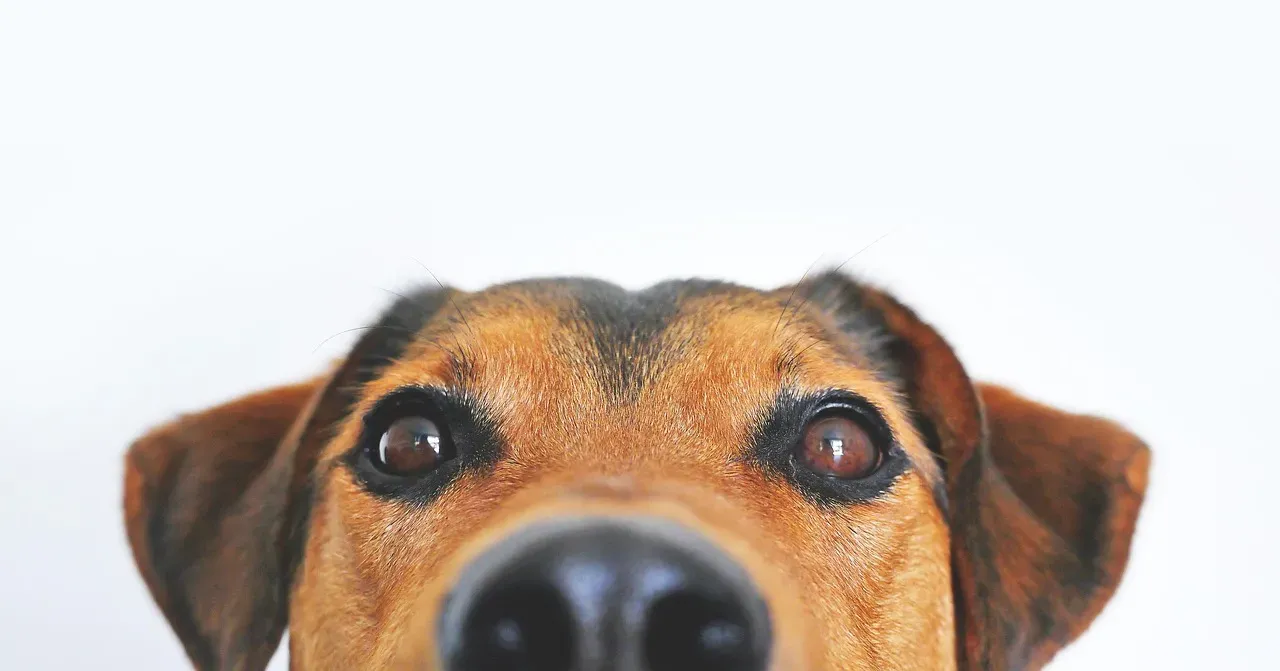
Dogs have roughly forty times more smell-sensitive receptors than humans, ranging from about 125 million to nearly 300 million in some dog breeds, which creates a completely different experience of the world. Think about how you might notice when dinner is cooking. Now imagine experiencing that scent with such intensity that you could tell exactly how long ago someone cooked that meal, or even predict when they might cook again.
It’s possible that dogs predict their owner’s arrival by the concentration of scent lingering since they’ve left the house, with scent decaying slowly over the day. When you leave for work in the morning, your scent saturates your home. As hours pass, that scent gradually fades. Your dog learns to associate a specific level of scent concentration with your imminent return. It’s like they’re smelling the passage of time.
Some researchers even tested this theory by refreshing a person’s scent in the home while they were away. The dogs became less accurate in predicting returns, suggesting they truly were using scent as a kind of olfactory clock. Dogs can detect substances at concentrations of one part per trillion – a single drop of liquid in 20 Olympic-size swimming pools.
Ears That Hear Tomorrow Coming
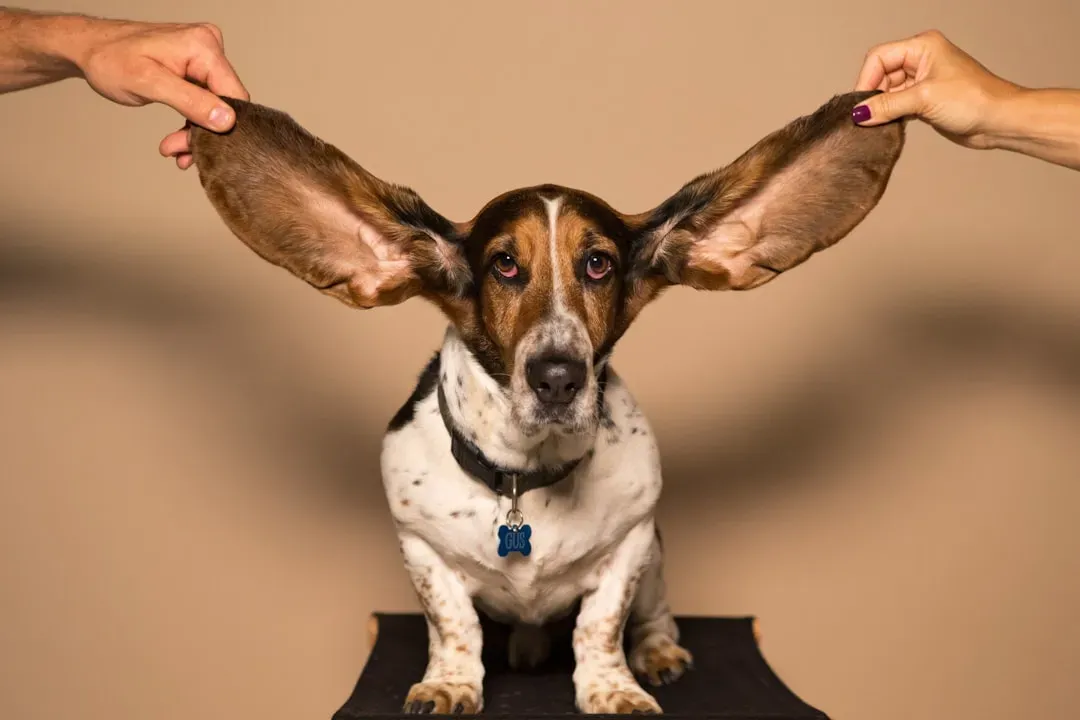
Dogs can hear sounds in the frequency range of 40 Hertz to 60,000Hz, while the average human ear picks up sounds from 20Hz to 20,000Hz. Let that sink in for a moment. Your dog hears an entire universe of sound that’s completely silent to you.
Dogs can hear sounds from 80 feet up to a mile away and even further under the right conditions, with their sense of hearing outstripping those of humans by at least four to five times. Picture this scenario: you’re still several blocks away, but your dog already recognizes the specific pitch of your car engine, the rhythm of your footsteps, or even the particular jingle of your keys. Dogs can recognize the distinctive noise of your car, and through experience they learn to pair events together through associative learning.
They’re not just hearing you approach. They’re hearing the world shift in anticipation of your arrival. Maybe it’s the neighborhood bus that always passes five minutes before you turn the corner. Perhaps it’s the sound of traffic patterns changing during your commute time. Dogs piece together these auditory clues like a complex puzzle we didn’t even know existed.
The Power of Pattern Recognition
Here’s where things get really interesting. Dogs are very tuned in to their biological clocks, and if you always come home around the same time, your dog may rely on his circadian rhythm to roughly predict when you are about to come home. They’re natural pattern detectors, constantly analyzing sequences of events.
Dogs recognize patterns where a particular sound or signal always precedes a particular thing. Your dog doesn’t need to read a clock. They read the rhythm of the household. If another family member always starts preparing dinner around the time you come home, your dog notices. If the afternoon light hits the living room at a certain angle when you typically arrive, they register it.
Dogs are very tuned in to the slightest changes in their environments and easily pick up even the most subtle cues, including pre-arrival signs from those around them. They watch other family members for behavioral changes that signal your imminent return. Someone glances at the clock more frequently? Your dog sees it. Someone unconsciously moves toward the door? Your dog files that information away.
When Science Can’t Quite Explain It All

There are times when researchers must admit they don’t know what drives certain dog behaviors, such as the case of Jaytee, a mongrel terrier who repeatedly demonstrated the uncanny ability to anticipate his owner’s arrival up to 30 minutes prior. In controlled experiments, this particular dog went to the window significantly more when his owner was actually returning, even at random, non-routine times.
The fascinating part? Nobody else knew when the owner was on her way as she returned at non-routine times, sometimes arriving in unfamiliar vehicles. This ruled out the usual explanations of routine, sound, or cues from other household members. In experiments where the owner returned at randomly-selected times, Jaytee was at the window just 4 percent of the time during her absence but 55 percent of the time when she was returning.
Let’s be real, we don’t have all the answers. Some aspects of the dog-human bond remain beautifully mysterious. Whether it’s an exceptionally refined version of the senses we understand, or something we haven’t quite figured out yet, doesn’t really matter. What matters is that connection runs deep.
What This Means for You and Your Dog
Understanding how your dog anticipates your return isn’t just fascinating trivia. It reveals the depth of their awareness and attachment to you. Studies show dogs only missed their owners a little bit after 30 minutes, but when owners had been gone for two hours, dogs missed them significantly more. Your absence registers deeply in their experience of the day.
Dogs can sense when you’re gone for a long time because they’re highly perceptive to environmental changes, picking up on your departure routine and the absence of your familiar scent, with disruptions in daily routines causing them to feel unsettled or anxious. This is why maintaining somewhat consistent schedules, when possible, helps your dog feel more secure. They thrive on predictability.
Consider varying your routine occasionally to prevent your dog from becoming overly fixated on exact timing, which can actually contribute to separation anxiety. Mix up departure and arrival times when feasible. The goal isn’t to confuse your dog, but to build their confidence that you’ll always return, regardless of when.
Conclusion

Your dog’s ability to anticipate your arrival isn’t supernatural, though it certainly feels that way sometimes. It’s a beautiful combination of extraordinary sensory abilities, pattern recognition, and the deep bond you share. They’re reading scent gradients you can’t perceive, hearing sounds beyond your range, and noting patterns you don’t consciously create. All of this converges into that moment of joyful anticipation when they know you’re almost home.
The next time you walk through the door to find your dog waiting, remember they’ve been tracking your return through a symphony of signals invisible to human perception. It’s not magic, though it might as well be. It’s just your dog being utterly, remarkably themselves.
What’s your dog’s pre-arrival routine like? Do they have a specific spot where they wait, or maybe a particular behavior that signals they know you’re coming? Every dog expresses this anticipation a little differently.