

You’ve probably noticed it before. You’re sitting on the couch after a long day, letting out a big yawn, and suddenly your dog does the same. Mouth wide open, maybe a little squeak escaping. It’s adorable, sure.
It’s easy to assume your pup is just tired too. Maybe they had a hard day chasing squirrels or napping in various sunbeams around the house. Yet there’s actually something much deeper happening when your dog mirrors your yawn, something that reveals just how connected they are to you.
The science behind this behavior might surprise you. It touches on empathy, emotional bonds, and the unique relationship dogs have developed with humans over thousands of years. Let’s explore what’s really going on when your furry friend catches your yawn.
It’s a Sign of Emotional Connection, Not Just Mimicry
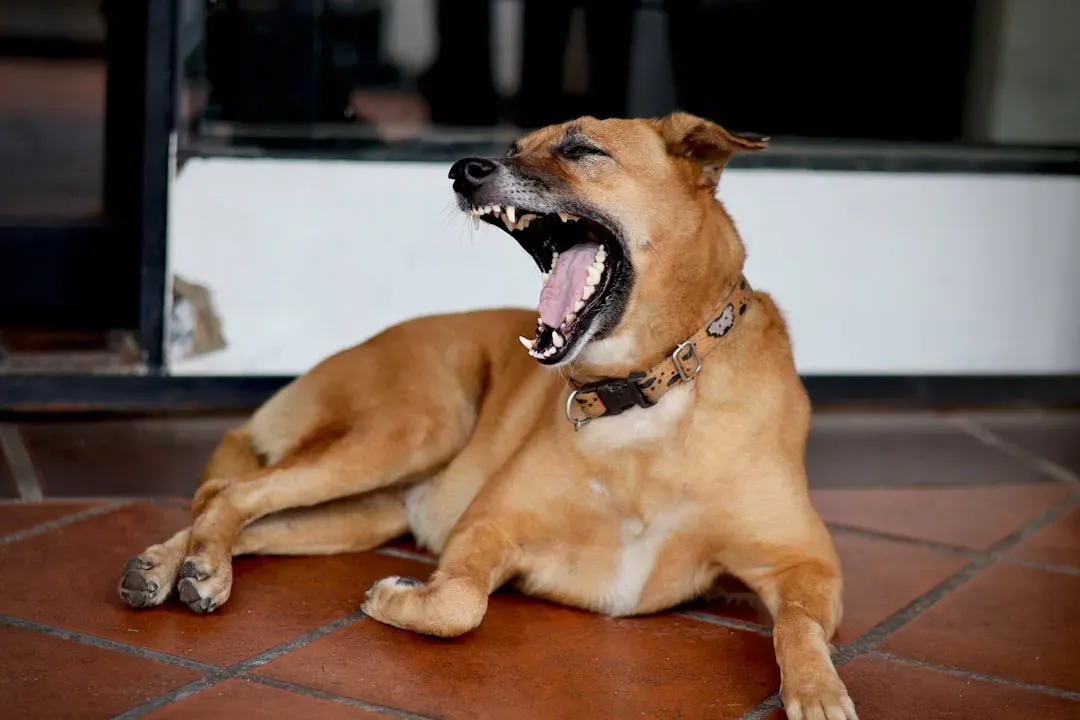
A study conducted in 2008 by researchers at the University of London showed that dogs could catch yawns from humans, with 72 percent of them yawning back. That’s actually a higher rate than between humans. Think about that for a moment.
Dogs yawned more frequently when watching a familiar model than an unfamiliar one, demonstrating that the contagiousness of yawning correlated with the level of emotional proximity. Your dog isn’t just copying a behavior randomly. They’re responding specifically to you because of the bond you share.
This familiarity bias tells us something important. When your dog yawns after you do, it’s likely because they feel emotionally connected to you. An animal behavior researcher noted that the emotional bond between people and their dogs may be reciprocal.
Mirror Neurons Make It Possible
So how does this actually work in your dog’s brain? The mechanism behind contagious yawning between humans and dogs is likely rooted in the mirror neuron system, a part of the brain responsible for empathy and the understanding of others’ actions and intentions.
Mirror neurons are fascinating. When you see someone perform an action, these neurons fire in your brain as if you were doing the action yourself. This system is not unique to humans and has been identified in other species, including dogs.
This means when your dog watches you yawn, their brain is essentially experiencing the yawn along with you. It’s not a conscious decision. Their brain automatically responds to what you’re doing, creating that contagious effect. This neural wiring suggests dogs possess at least a rudimentary form of empathy toward humans, which honestly is pretty remarkable when you think about it.
It’s Part of Thousands of Years of Living Together
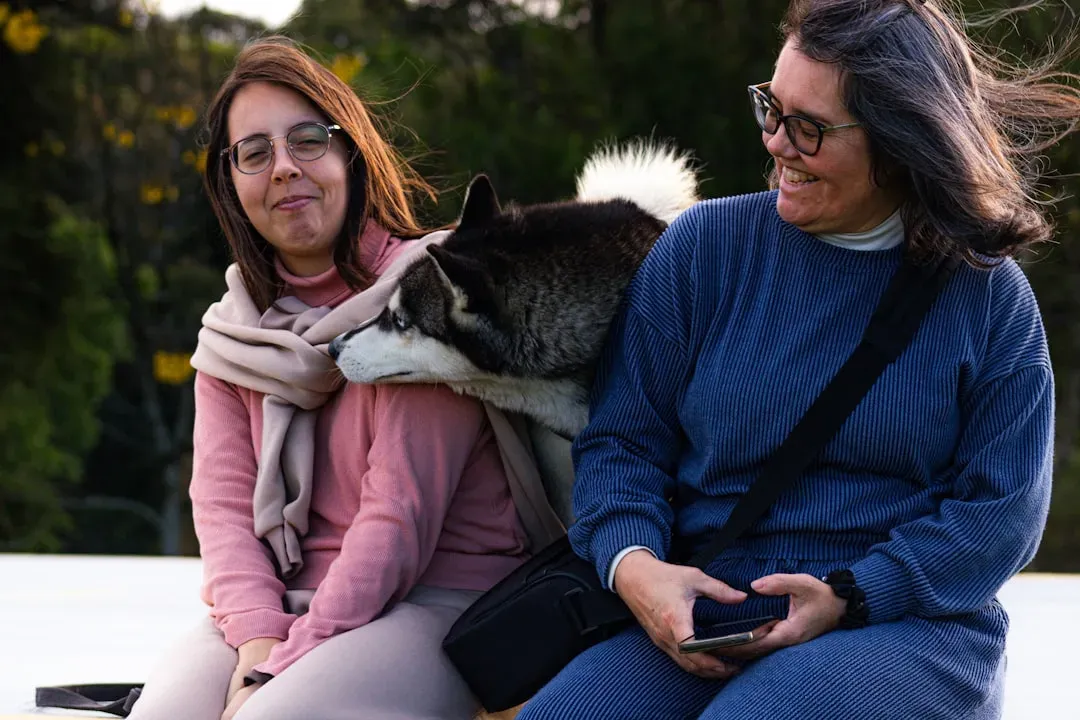
Since dogs and humans have been living together for between 14,000 and 30,000 years, contagious yawning may be deeply rooted in canine evolutionary history. That’s a long time for two species to influence each other. Dogs have evolved alongside us in ways that no other animal has.
Over the course of domestication, we have selectively bred dogs to be good companions and modern domestic canines are well-known for their ability to read subtle cues from their owners. Your dog can follow your pointing finger, read your facial expressions, and yes, catch your yawns.
Contagious yawning may be a way for animals who live together to coordinate activities, and dogs’ longstanding relationships with us may have enabled them to reach across species lines to feel what we’re feeling. This cross-species empathy is rare. It’s something special that we’ve developed with dogs through millennia of companionship.
Not All Scientists Agree It’s About Empathy
Here’s where things get interesting. While many studies support the empathy connection, the scientific community isn’t completely united. A Bayesian multilevel reanalysis of six studies provided robust support for claims that contagious yawning is present in dogs, but found no evidence that dogs display either a familiarity or gender bias in contagious yawning.
Some researchers have suggested alternative explanations. A few studies indicate that dogs might yawn due to mild stress or arousal rather than empathy. One interpretation suggests that human yawning, when presented in a stressful context, can influence arousal in dogs, which then causes some to yawn.
The debate continues. Not every dog yawns contagiously, and the rate varies significantly between studies. What’s clear is that something is happening between you and your dog during these moments, even if scientists are still figuring out all the details. Personally, I think the bond explanation feels right when you watch it happen in real time.
It’s Not Always About Empathy, Watch for Context
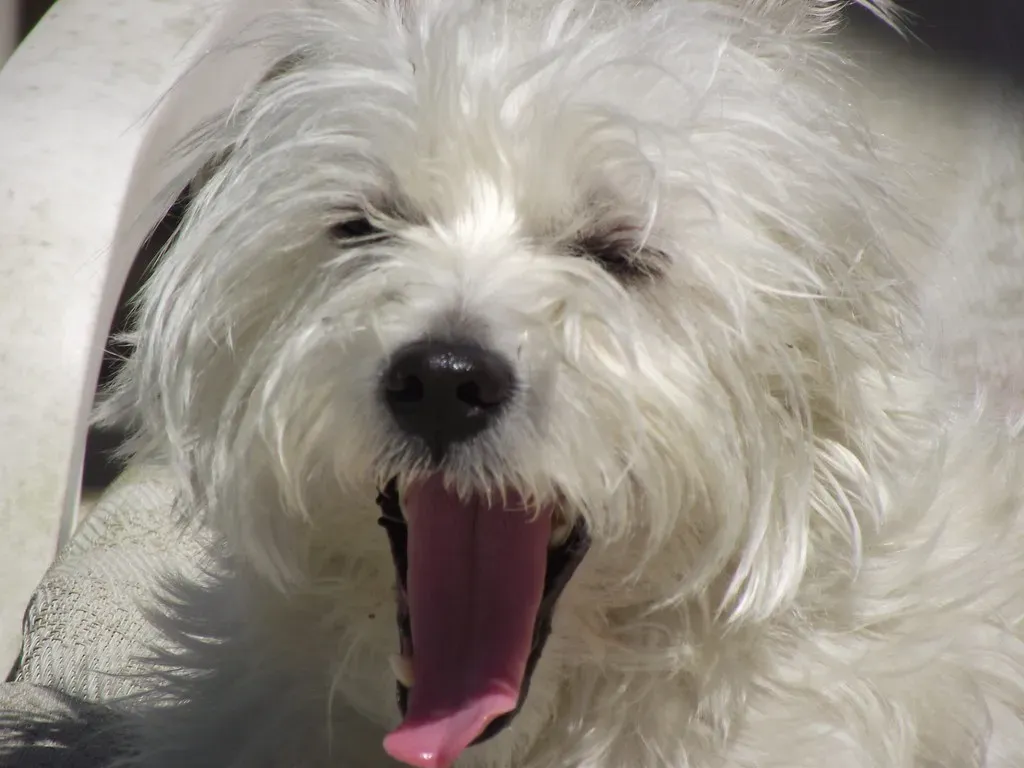
While contagious yawning can be a heartwarming sign of connection, it’s important to know that dogs yawn for many reasons. Yawning can be a sign of stress and anxiety in dogs, and stress-related yawns are often associated with other body language.
If your dog is yawning during a vet visit, when meeting new people, or in unfamiliar situations, they might be using it as a calming signal. Yawning can act as a self-soothing mechanism for dogs, and can slow a dog’s breathing, which helps them calm down in stressful situations.
Pay attention to what’s happening around your dog when they yawn. Are they relaxed and comfortable with you? That yawn after yours is probably a connection thing. Are they in a tense situation with their ears back and tail tucked? That’s likely stress. Context matters a lot here.
Conclusion
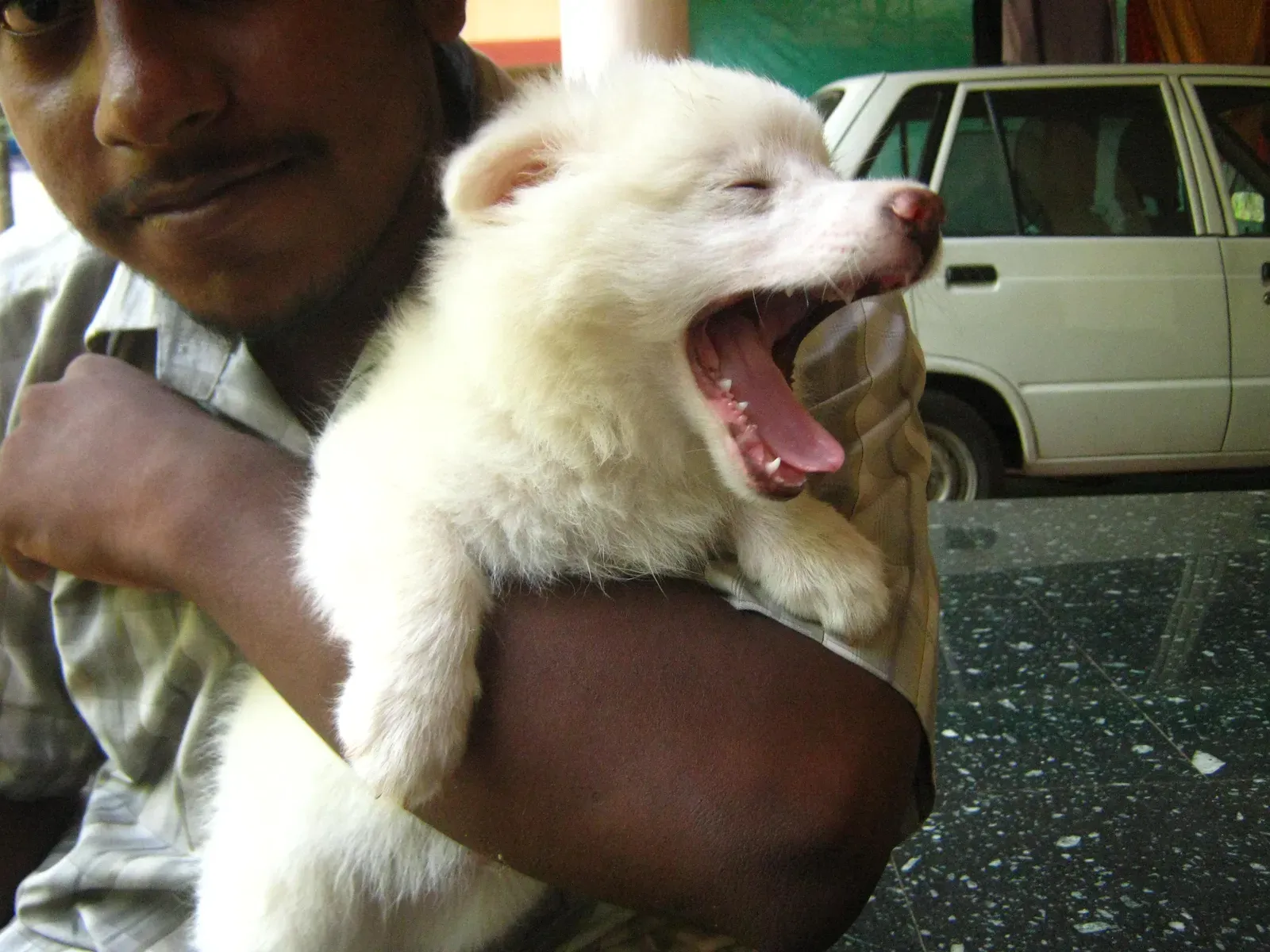
The next time your dog yawns right after you do, take a moment to appreciate what might really be happening. Whether it’s empathy, emotional bonding, or their mirror neurons firing, your dog is responding to you in a way that reflects thousands of years of shared history. They’re tuned into you in ways that go beyond simple training or habit.
This small, everyday behavior reveals the depth of the relationship between you and your furry companion. It’s a reminder that dogs aren’t just pets. They’re emotionally intelligent creatures who have evolved to understand and connect with us on a profound level.
What do you think when your dog yawns after you? Do you see it differently now?


