
Southern Elephant Seals Rebound in South Africa Amid Uncertain Global Trends
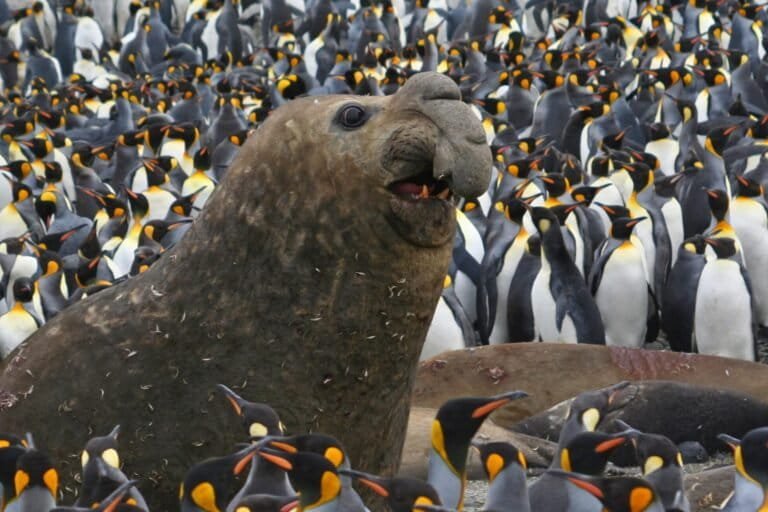
Sharp Declines Give Way to Population Growth (Image Credits: Imgs.mongabay.com)
South Africa — Southern elephant seals breeding on Marion and Prince Edward islands achieved a major conservation milestone as their national status shifted from near threatened to least concern.[1]
Sharp Declines Give Way to Population Growth
The turnaround stands out after years of troubling drops. Between 1986 and 1994, the Marion Island colony shrank by 37 percent, part of an 83 percent overall decline since 1951.[2][1]
Recent counts tell a different story. Researchers estimated about 5,500 individuals across the two islands in 2023, up from roughly 3,000 in 2016. Nearly 1,400 pups arrived that year alone.[1]
This growth prompted the update in the 2025 Mammal Red List for Southern Africa, a collaborative effort by the Endangered Wildlife Trust and South African National Biodiversity Institute. The assessment reviewed 336 mammal species and followed IUCN standards.
Past Crashes Remain a Puzzle
Experts still grapple with what drove the earlier collapses. Food shortages topped suspicions, possibly from depleted prey stocks amid shifting ocean conditions.[1]
Climate influences and oceanographic changes likely played roles, altering foraging patterns and prey distribution. “We do not fully understand the causes of the past decline, most likely attributed to food limitation,” said Tamanna Patel, Mammal Red List coordinator at the Endangered Wildlife Trust.[1]
Predation by killer whales regulates numbers but posed no acute danger. Entanglement in fishing gear occurred rarely, and no major land-based threats hit breeding sites over four decades.
Protections Pave the Path Forward
Robust safeguards underpinned the recovery. The Prince Edward Islands form a marine protected area, shielded further by South Africa’s Seabirds and Seals Protection Act of 1973.
These measures limited human interference far from mainland pressures. Seals here enjoy separation from commercial fisheries, though monitoring continues for subtle risks like genetic drift in small groups.
Patel emphasized the lesson: “This tells us that conservation and increased protection of species habitats can result in species recovery.” Ongoing research, including satellite tracking and body mass studies at Marion Island, tracks vital signs.[2]
Global Status Hides Regional Struggles
The species holds IUCN least concern status worldwide, with estimates near 700,000 individuals stable since the mid-2000s.[3]
Yet trends vary sharply. Bird flu ravaged colonies in Argentina recently, while historical drops hit sites like Macquarie Island. South Atlantic groups remain largest, but Indian and Pacific subpopulations fluctuated without clear explanations.
- South Georgia hosts over 113,000 breeding females.
- Kerguelen Islands support up to 200,000 in the Indian Ocean.
- Macquarie numbers fell steadily since 1949.
Nic Rawlence, a paleo-genetics expert at the University of Otago, voiced caution. “I’m quite surprised that southern elephant seals in South Africa have been downgraded to Least Concern given the causes of the stark population declines in the second half of the 20th century are not fully understood,” he noted.[1]
Key Takeaways
- Targeted protections reversed local declines, boosting South African numbers to 5,500.
- Mysteries around food and climate persist, demanding more research.
- Global stability masks hotspots of trouble like disease outbreaks.
This regional win underscores conservation’s power, even as broader ocean changes loom. Sustained vigilance could secure these massive divers—the ocean’s deepest-diving mammals—for generations. What steps should follow to unravel global threats? Share your thoughts in the comments.