
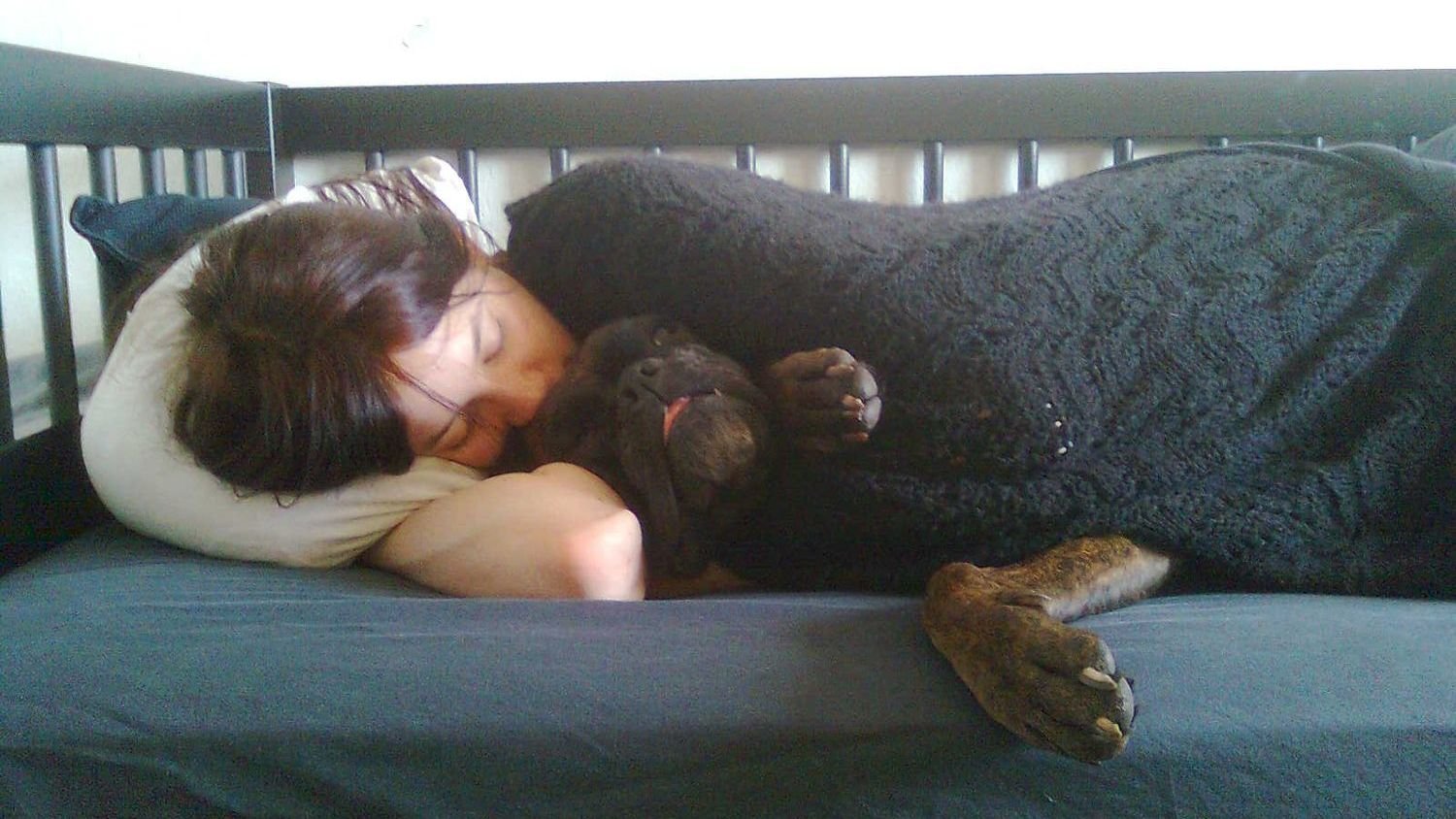
You tuck yourself in for the night, roll over, and there they are – your dog, curled up between you and the bedroom door like a fluffy security guard who never asked for the shift. It’s one of those moments that makes you smile and wonder at the same time. Is it love? Instinct? Anxiety? Honestly, it’s probably all three, wrapped in fur.
This quiet, deliberate behavior is one of the most fascinating things dogs do, and most people never stop to ask why. Understanding it can completely change how you see your dog and how you care for them. Let’s get into it.
Your Dog Is Hardwired to Guard the Gate
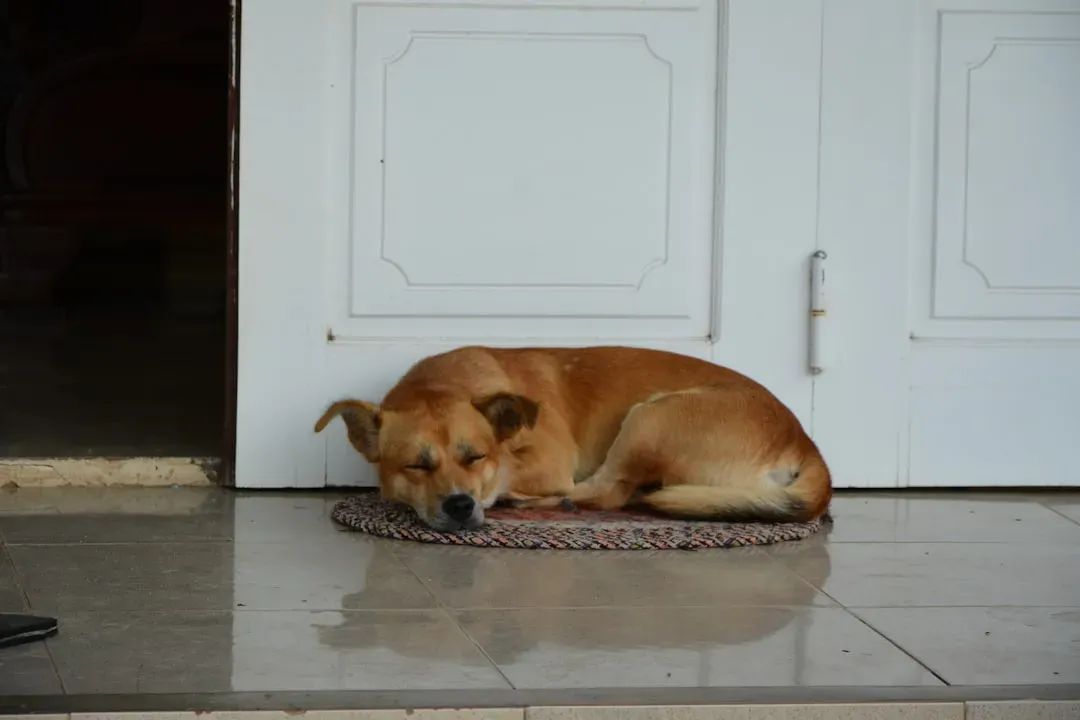
Here’s a surprising truth: your dog’s sleeping spot isn’t random at all. Dogs are natural guardians, and by sleeping by the door, they place themselves between their loved ones and the outside world, positioning themselves to alert the family at the first sign of intrusion or danger. Think of them as the original home security system, one that runs on belly rubs and kibble.
Dogs sleeping or laying by the door can be traced back to their instinct to protect their territory. In the wild, canines would seek a vantage point near the entry of their den to guard against potential threats and intruders. That ancient wiring hasn’t disappeared just because you’ve got a deadbolt and a Ring doorbell.
Breed plays a role too. Breeds developed for protection or alert work, such as German Shepherds, Dobermans, or livestock guardian dogs, tend to be more attentive to their surroundings, even at rest. Herding breeds may also show this tendency because they’re hardwired to monitor movement and maintain awareness of their “flock,” which can include their human family. So if your Border Collie is parked at your bedroom door every night, they’re literally herding you to safety in their mind.
It Is an Act of Pure, Primal Love
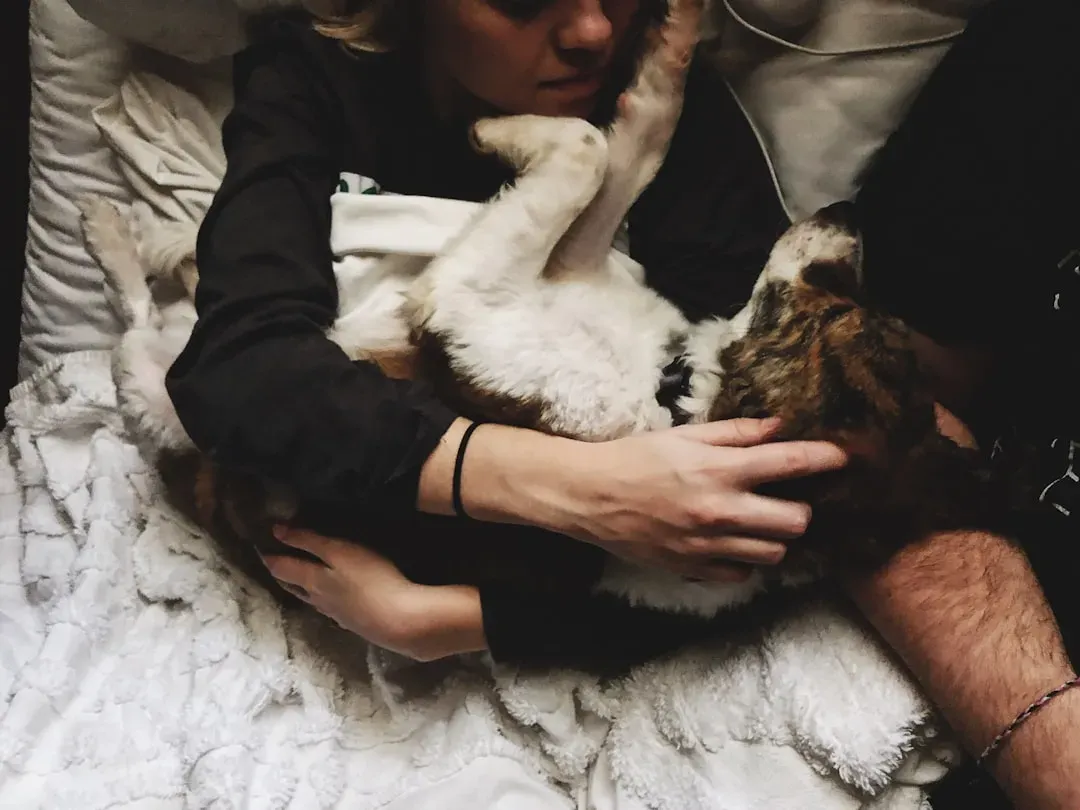
Sleeping by the door can be a sign of secure attachment, meaning the dog isn’t necessarily anxious but simply being attentive, affectionate, and emotionally attuned to your whereabouts. Your dog feels that you’re important to them, and being by the door may signal deep trust and affection. Your presence and proximity ultimately act as an emotional anchor that offers them a sense of safety and security.
When a dog chooses to sleep next to you, it’s an expression of trust and affection. Dogs view their owners as part of their pack, and sleeping together serves as a way to strengthen this bond. It’s a clear sign that your pet sees you as a source of safety and comfort. I think that’s one of the most beautiful things about dogs – they choose their safe place, and that place is you.
Beyond instinct, the emotional bond between a dog and its owner plays a huge role in protective behavior. Dogs form attachments that mimic parental loyalty, and for many, their human is the center of their world. Sleep is a vulnerable time for both the human and the dog, and proximity during sleep strengthens that connection. That spot ? That’s not just a sleeping spot. That’s devotion.
When Comfort and Anxiety Look Almost Identical
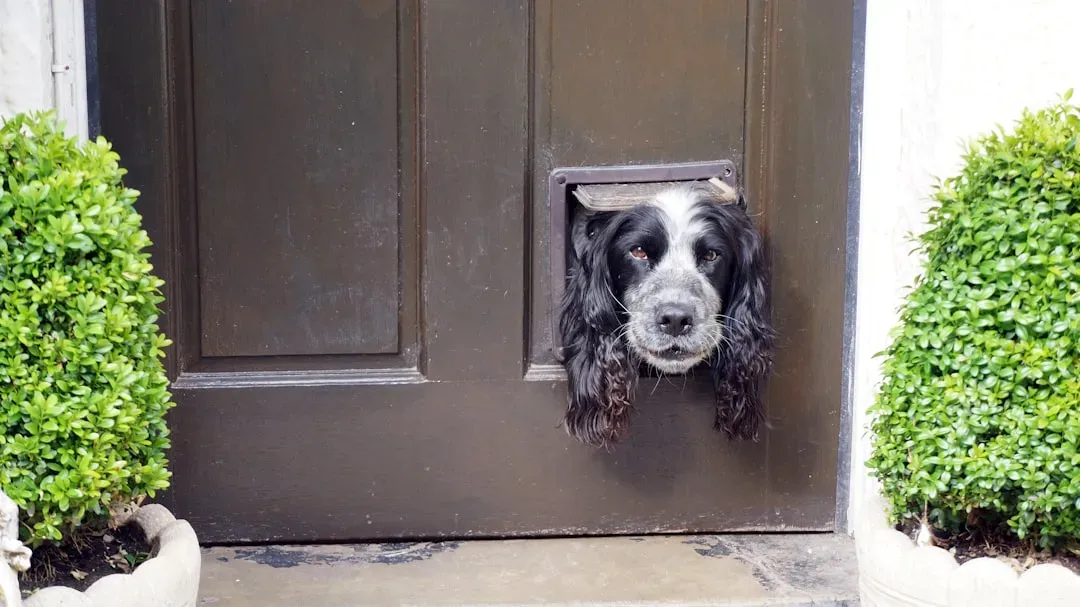
Here’s the thing – not every dog who sleeps by the door is doing it from a place of calm confidence. For many dogs, especially those who tend to develop strong attachments, the door can be an area of mixed feelings. When exiting with their owners, dogs are happy and eager to explore the world with their favorite person. But when their owners exit without them, the door becomes a symbol of separation and uncertainty. By sleeping by the door, these dogs may feel as if they have some level of control over the whole coming-and-going situation.
Signs of separation anxiety can include excessive barking, whining, howling, pacing, and destructive behavior when left alone. If your dog is quietly sleeping by the door, that’s one thing. If they’re panting, restless, or destructive every time you grab your keys, that’s a different conversation entirely.
Dogs suffering from separation anxiety truly suffer when their owners leave the home, which leaves them in a deeply anxious emotional state. Dogs who perceive the door as a source of tension may suffer as well if they feel threatened by the possibility of strangers or delivery people entering. In these cases, dogs may need professional intervention, as always being near the door can reflect an underlying anxiety that requires close monitoring and treatment. When in doubt, reach out to a certified canine behaviorist. Your dog will thank you for it.
The Door Tells Your Dog Everything They Need to Know
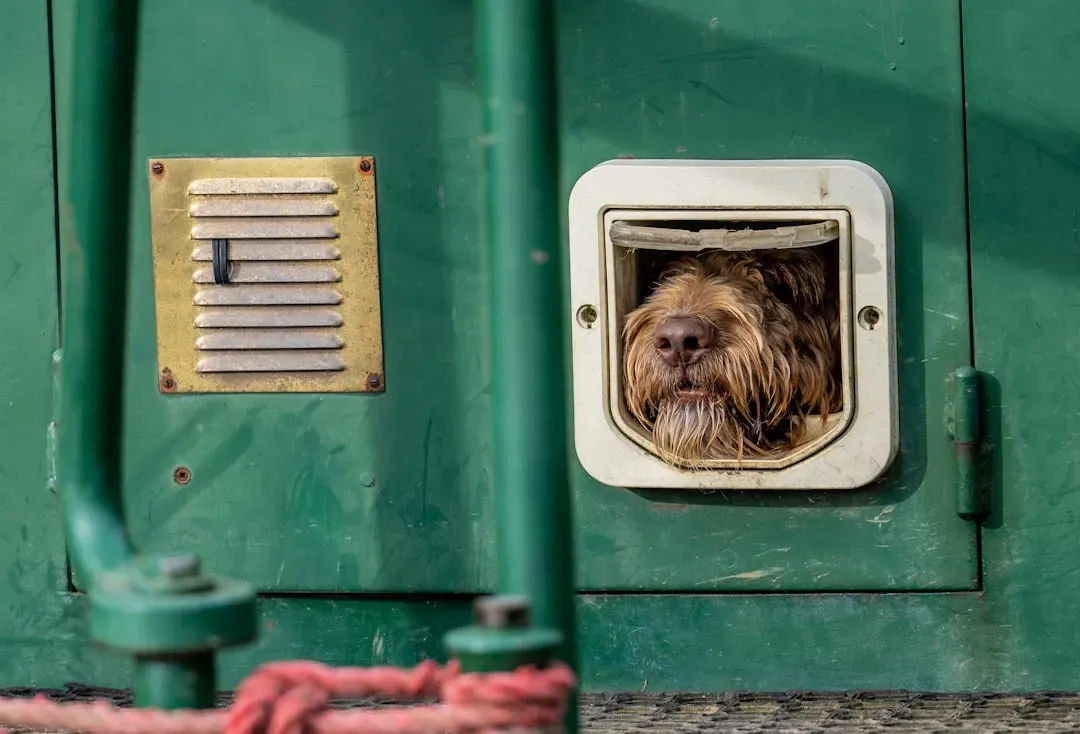
Dogs are remarkably perceptive creatures. According to research by animal psychologist Thomas Zentall and canine cognition researcher Kristina F. Pattison, dogs have object permanence – the understanding that objects, people, and other animals still exist even when they’re not in sight. This means your dog knows that their friends and favorite people are out there in the world, and one might come in any moment. That’s not just cute. That’s genuinely impressive cognitive behavior.
Your dog might see the doorway as a place of good things. It’s where their beloved human walks through after work. It’s where their favorite dog walker arrives to pick them up. Think of it like a dog’s version of a front-row seat to the best show in town – the show where you come home.
Dogs are often more aware of their surroundings than we realize, and positioning themselves facing the door gives them the best vantage point for detecting anything unusual. Whether it’s a slight creak, the mailman approaching, or a distant car pulling into the driveway, they hear it all. This behavior ensures they can alert their humans at the first sign of anything out of the ordinary. Your dog is, essentially, working while you sleep.
What You Can Do to Support or Gently Redirect This Behavior
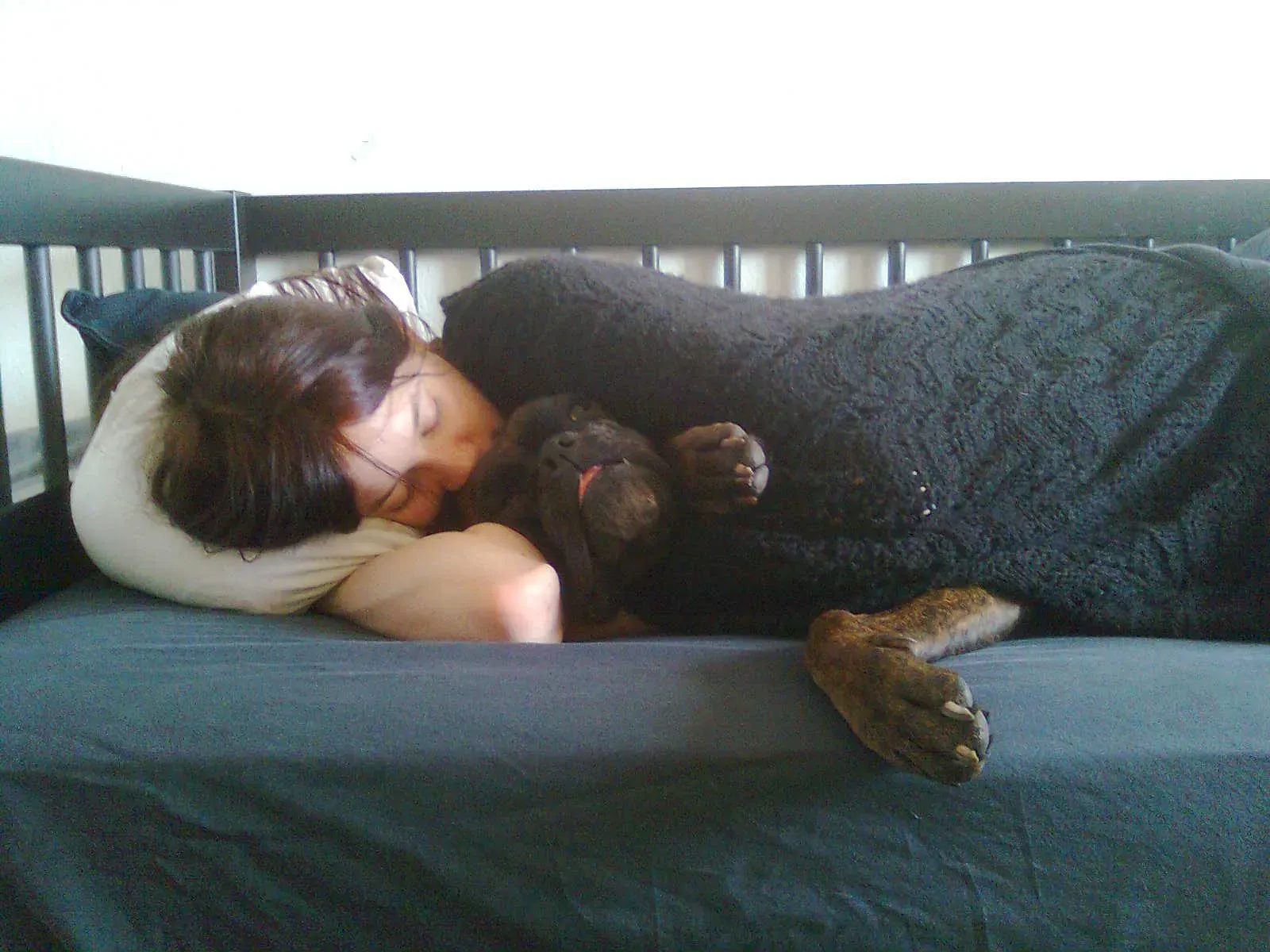
If your dog’s door-sleeping habit is sweet and comes from a secure, calm place, honestly, there may be nothing to change. Providing your pup with options on where to sleep is always a good idea. Having multiple beds, especially a couple of different types and materials, gives your dog the option to choose where they’d like to sleep depending on how they’re feeling. Let them have agency. It matters to them.
However, if the behavior is rooted in anxiety or creates a safety hazard, gentle redirection works wonders. Give your dog a cue to move to a new location, and then reward them with treats, play, or praise when they move there. Never punish them for being where instinct tells them to be. That will only create confusion and erode their trust in you.
Teaching your dog to feel safe without hyper-vigilance can help them relax at night and encourage healthier behavior. A protective but balanced dog can offer peace of mind, knowing they are near, and help you sleep more soundly. The goal isn’t to undo their protective love. It’s to make sure it comes from a peaceful, grounded place.
Conclusion

Your dog sleeping is one of the most layered, meaningful behaviors you’ll ever witness. It speaks of ancient instincts, quiet devotion, and a love that doesn’t clock out at bedtime. Whether your pup is channeling their inner wolf guardian or simply trying to be the first face you see when you walk in, that chosen spot is never accidental.
Take a moment tonight, when you see them settled there, and appreciate what it actually means. They chose that position. They chose you. And there’s really nothing more loyal than that. So, does knowing all of this change how you see your dog’s favorite sleeping spot?


