
Northeast Texas – Law enforcement agencies collaborated on February 10 to free over 200 dogs and puppies from a sprawling suspected dogfighting operation across more than 20 properties.[1][2]
One of Texas’ Largest Seizures Ever
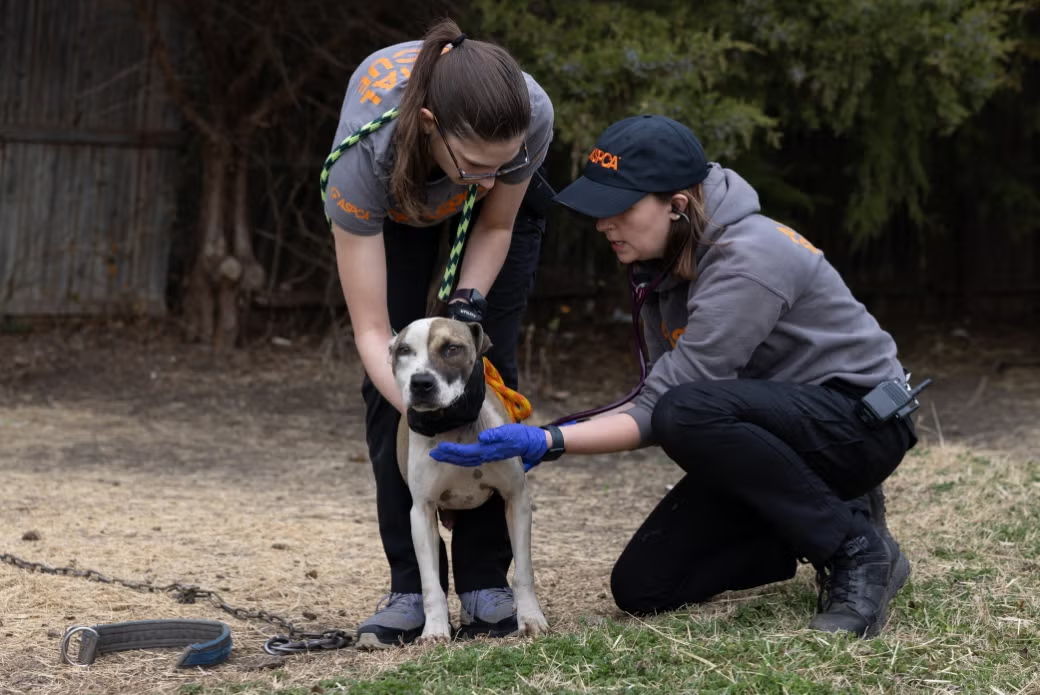
The raid, dubbed Operation Fight Club, marked one of the biggest dogfighting interventions in state history. Authorities executed 27 search warrants simultaneously at sites spread across Dallas, Ellis, Kaufman, and Smith counties.[1] This coordinated strike exposed an underground network that had evaded detection for some time.
Dallas Police Chief Daniel C. Comeaux described the effort as extensive and highly organized. He emphasized its ties to broader crimes like illegal gambling.[3]
Grim Discoveries at Raid Sites
Investigators found dogs chained to heavy weights in rundown, improvised kennels. Many bore scars suggestive of repeated fights, alongside training gear such as treadmills, weighted collars, medications, and even fighting pits.[1][4]
Additional seizures included firearms, rifles, pistols, and narcotics like cocaine and fentanyl. These findings underscored the violent underworld fueling the activity.[4]
Though no arrests occurred immediately, officials vowed to pursue charges as the probe continues.
Key Players in the Multi-Agency Push
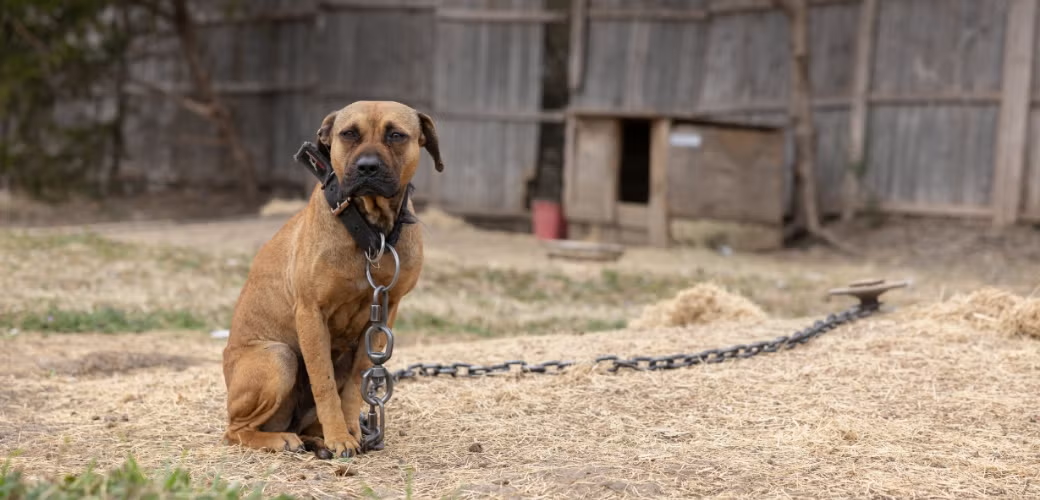
Several organizations united for the operation. The Dallas Police Department and Texas Department of Public Safety led enforcement, while Dallas Animal Services managed initial handling and transport.[1]
- ASPCA: Offered expertise in planning, removal, forensics, and investigations; transported nearly 150 dogs to its recovery center.
- Operation Kindness Humane Society: Provided veterinary and forensic exams on-site.
- Garland Animal Services and SPCA of Texas: Assisted with removals and sheltering.
- FBI Dallas: Supported the federal angle in some reports.[5]
Ed Jamison, CEO of Operation Kindness, hailed the teamwork as a model of collaboration.
Recovery and Rehabilitation Underway
Nearly 150 of the animals now receive specialized care at an ASPCA facility. There, teams conduct forensic veterinary checks, behavioral assessments, medical treatments, and enrichment programs.[2]
Teresa Ladner, ASPCA vice president of Criminal Practice & Investigations, noted the persistent challenge of dogfighting nationwide. She praised partners for delivering urgent aid to the victims.[3]
| Agency | Primary Role |
|---|---|
| ASPCA | Forensic exams, recovery center care |
| Dallas Animal Services | Handling and transport |
| Operation Kindness | Veterinary support |
Key Takeaways
- Over 200 dogs saved from extreme cruelty in a record-scale Texas bust.
- Multi-agency model proves effective against hidden networks.
- Focus shifts to healing and potential adoptions after exams.
This operation highlights progress in combating animal cruelty, even as underground threats linger. The dogs’ journey from chains to care offers hope, but sustained vigilance remains essential. What steps can communities take to spot and stop dogfighting? Tell us in the comments.


