

Picture this: your dog is standing at the back door, barking with every ounce of their little soul. Are they desperate to go outside? Did they spot a squirrel? Or are they just bored out of their mind and demanding your full attention? If you’ve ever stood there genuinely puzzled, you’re not alone. Most dog owners have played this guessing game a thousand times.
Here’s what might surprise you. Your dog isn’t just making noise. They’re talking to you, and honestly, they’ve been doing it for thousands of years. Dogs have evolved beside humans for thousands of years and are masters at reading us. The least we can do is return the favor. So let’s dive in and learn to truly listen.
Why Your Dog Barks More Than Their Wild Cousins

It might sound wild, but your dog’s noisy personality is actually a gift from domestication. While wolves primarily use body language and howling to communicate, dogs have developed barking as a versatile way to connect with humans and each other. Think of it like this: wolves are the strong, silent type, while your Lab is more like that friend who can’t stop texting you updates.
Wolf barks represent only about two and a half percent of all wolf vocalizations, used in warning, defense, and protest. In contrast, dogs bark in many social situations, with acoustic communication in dogs being described as hypertrophic. That’s a fancy way of saying your dog has a LOT to say.
Barking has been shown to be context dependent, and provides information for humans about the inner state of the dog. It is assumed that dog barking emerged through selective processes in which human preferences for certain acoustic aspects of the vocalization may have been paramount. In other words, we shaped them to talk to us. Pretty incredible, right?
The Secret Language of Pitch, Frequency, and Duration

Before you can decode what your dog is saying, you need to understand the three big building blocks of any bark. The pitch, frequency, and duration of a bark all play an important role in what a dog is expressing. It’s a bit like reading a text message: the words matter, but so does the punctuation, the caps lock, and how many exclamation marks someone used.
In more general terms, the lower and harsher the bark and the shorter the inter-bark intervals, the more serious the dog. A playful dog or a lonely one will have a higher-pitched bark than a dog telling off a companion or warning an intruder. Low and slow means business. High and bright usually means happiness.
The duration of a dog’s bark will indicate how much thought they’ve put into their bark. The longer the sound, the more likely that the dog is making a conscious decision to bark and the actions they’re planning. Short bursts of bark can indicate a dog’s excitement or interest in something around them. So the next time your dog gives one quick, excited yip, they’re probably just thrilled about something small, like a rustling leaf.
The Alert Bark: Your Dog’s Inner Security Guard
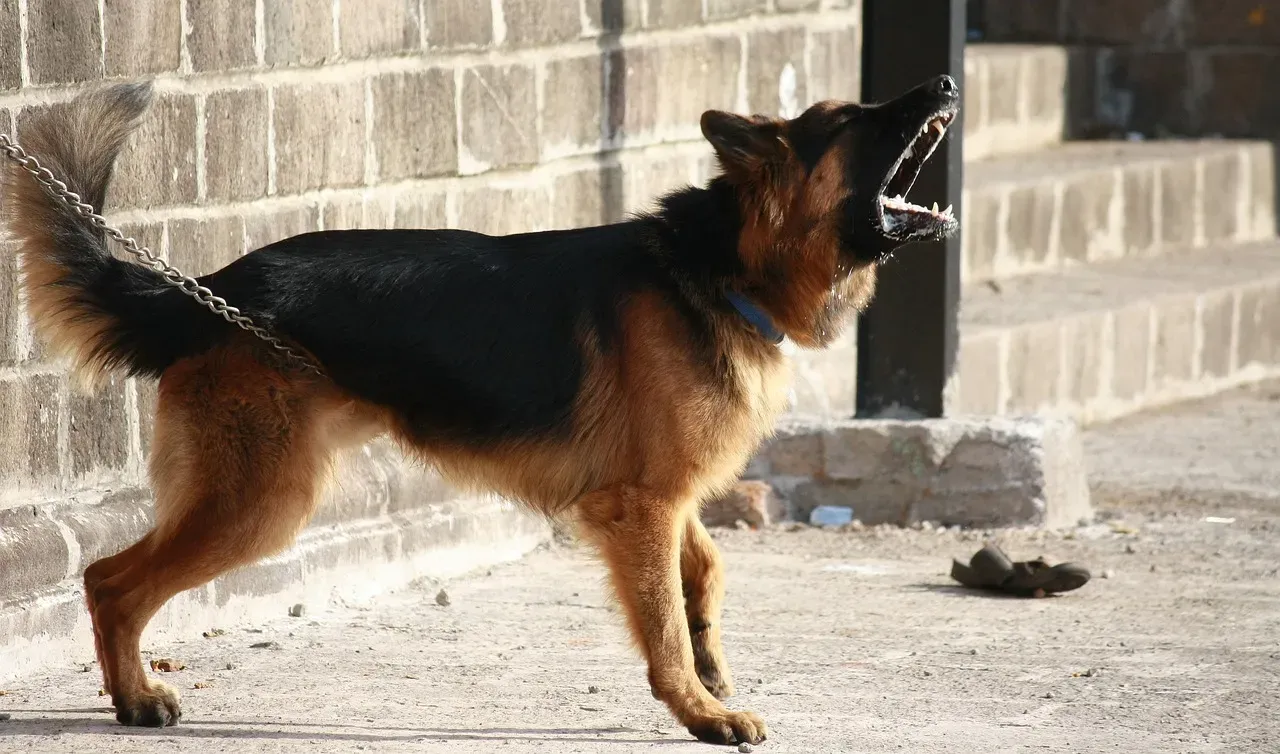
Alarm barks are characterized by a lower pitch and continuous frequency. These barks are a dog’s way of warning their owners of a potential threat. The American Kennel Club notes that the lower the pitch of the bark, the more serious the dog believes the situation to be. That deep, rapid rumble at the front door? Your dog is genuinely convinced something needs your attention.
If your dog is emitting two to four barks with pauses in between in a low pitch, this typically means a “Call the pack, there is danger” message. It’s ancient instinct, plain and simple. Even if the “danger” turns out to be a delivery driver, your dog is doing exactly what they were built to do.
The best thing you can do here is acknowledge them calmly. The goal of the alert bark is to draw attention to what a dog perceives as a potential threat or situation that requires investigation. If your dog frequently alert-barks at home, it might be helpful to acknowledge their concern, assess the situation, and reassure them once you determine that everything is okay. Just a calm “I see it, we’re good” goes a long way toward settling them down.
The Playful Bark: Pure, Unfiltered Joy

Honestly, the playful bark might be one of the best sounds in the world. Playful barks are typically high-pitched and accompanied by a wagging tail or “play bow.” These barks signal excitement and a desire to engage in fun activities, like playing fetch or running around in the yard. If you’ve ever seen a dog do that goofy front-paws-down stretch, you know exactly what I mean.
When you play fetch, tag, or anything really with your dog, they seem to have a universal posture and bark for the occasion. It’s generally a high-pitched “Harr-ruff” sound which basically means “come on, throw the ball, I want to play.” There’s zero ambiguity there. Your dog is basically laughing at you to hurry up.
High pitched bark sequences with long inter-bark intervals were considered happy and playful, independently from their tonality. So if those barks are spaced out and bouncy sounding, feel free to smile back. Your dog is in full celebration mode and they want you in it with them.
The Anxious and Lonely Bark: When Your Dog Is Struggling

This one is hard to hear, especially if you know what it means. Anxious barks are a dog’s way of showing distress. These barks can vary in pitch but tend to be accompanied by whining, yelping, or mournful howling. If you’ve ever left the house and heard your dog start up as soon as you closed the door, that sound stays with you.
Dogs that suffer from separation anxiety may bark excessively when left alone. Beyond non-stop barking, signs of separation anxiety in dogs include trembling, panting, destructive behavior, and vomiting. These are real health signs, not just nuisance behaviors. Please don’t ignore them.
If your furry friend barks frequently, with deliberate pauses between each bark, they are trying to explain that they are lonely and feeling unloved. If you hear this, drop what you are doing and give that dog all the attention they need. Sometimes the fix is that simple. Other times, working with a trainer or a vet on a proper anxiety plan makes all the difference in your dog’s quality of life.
The Science Is Catching Up to What You Already Felt

I think what strikes me most about modern bark research is that it validates what every devoted dog owner already sensed intuitively. Experiments have now shown that dogs use different barks and growls to communicate different things. In one experiment, researchers recorded a “food growl” where a dog was growling over food, and a “stranger growl” where a dog was growling at the approach of a stranger. Dogs are not just making random noise.
There is some evidence that humans can determine the suspected emotions of dogs while listening to barks emitted during specific situations. Humans scored the emotions of dogs performing these barks very similarly and in ways that made sense according to the context. Our instincts about what our dogs are saying are surprisingly accurate.
Science is now even using AI to go deeper. University of Michigan researchers are exploring the possibilities of AI, developing tools that can identify whether a dog’s bark conveys playfulness or aggression. It’s fascinating stuff. Still, you don’t need cutting-edge technology to connect with your dog. You just need to slow down and actually listen.
Conclusion: You’re Already More Fluent Than You Think

Learning your dog’s bark language isn’t about becoming a scientist. It’s about deepening one of the most genuine bonds you’ll ever have. You can better understand what your dog’s barks mean when you connect them with your dog’s body language positions. Pitch, timing, posture, context: put those four things together and you have a real conversation happening.
Your dog has been trying to talk to you since the day they came home. Every bark, whine, and growl is a sentence in a language they are fluent in, and one you are absolutely capable of learning. Start paying attention, be patient with yourself, and trust your gut. By identifying that your pup is happy, sad, angry, or anxious, you will know how best to react. This creates a bond and also enhances their quality of life.
The next time your dog barks, don’t just hear it. Listen to it. You might be amazed by how much they’ve been saying all along. What has your dog been trying to tell you? Share your stories in the comments below.


