
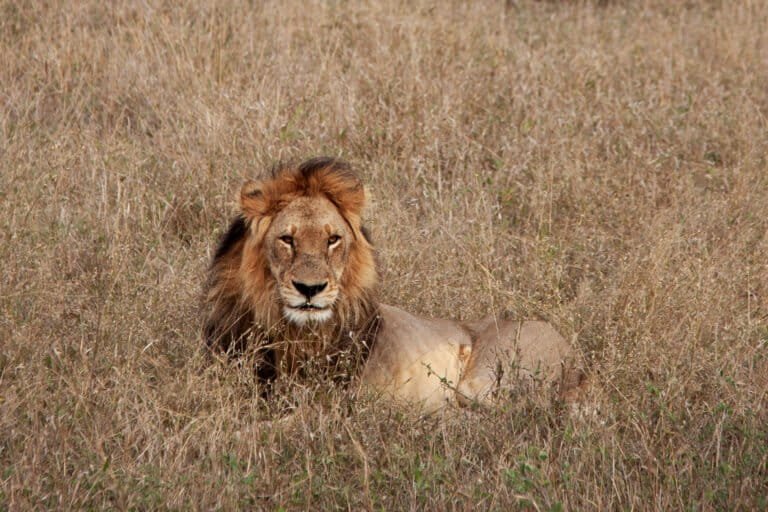
Northern Botswana – Traditional cattle herding practices have transformed a deadly conflict between lions and villagers into a model of coexistence along the Okavango Delta.[1]
A Near-Extinction Averted
By the end of 2013, villagers poisoned around 30 lions, more than half the local population in the northern Okavango, after repeated attacks on grazing cattle.[1]
Exasperated farmers had watched their livelihoods erode as big cats preyed on unattended herds. This retaliation nearly wiped out the prides roaming the plains. Conservationists recognized the urgent need for change to prevent further losses.
Communities Living Sustainably Among Wildlife (CLAWS) Conservancy stepped in, launching efforts that blended local knowledge with modern tools. The organization tracked individual lion behaviors to tailor non-lethal responses. Over time, these initiatives rebuilt trust between people and predators.[1]
Technology Bridges the Gap
CLAWS introduced the Lion Alert System in 2014, fitting GPS collars on lions and sending mobile alerts to villagers when cats neared settlements or herds.[1]
This early warning allowed farmers to secure livestock before attacks occurred. Locals also named collared lions in Indigenous languages, fostering emotional ties. Names ranged from reverent, like Mayenga (“decorated by the Gods”), to wary ones such as Kufakuduze (“If you come for my cattle, I will find you”).
Andrew Stein, CLAWS founder, noted that personalizing lions shifted perceptions: “They are the ones who decide whether these animals live or die.”[1]
Rediscovering Hands-On Herding
Modern life had eroded traditional practices, where boys once watched herds around the clock. School attendance left cattle vulnerable, prompting adult men to avoid the task seen as low-status.
Jack Ramsden, CLAWS herding coordinator raised in Maun near the Delta, leads training for 24 full-time herders across three villages. They manage communal herds of about 700 cattle out of 5,000 in five villages, using rotational grazing, rangeland ecology lessons, and veterinary care.[1]
At night, mobile canvas bomas enclose animals. Lions approach but retreat without visual cues, Stein explained: “They can hear and smell the cattle, but if they don’t see them, they don’t attack.”[1]
- Cattle losses dropped to a maximum of 10 over five years, from dozens or hundreds annually.
- Lion numbers rose 50% in the past four years.
- Cub survival climbed from one-third to 70%, as fewer alpha males died and infanticide declined.
Profits and Pathways Ahead
In May 2025, CLAWS sold 14 cattle as certified Wildlife-Friendly Beef at a 10% premium to safari lodges like Vumbura Plains Camp. This rewards lion-safe herding and plans quarterly sales.
Steven Osofsky, Cornell wildlife health professor and former Botswana officer, champions removing veterinary fences that block migrations. These barriers, erected in the 1950s for disease control, killed countless herbivores and fragmented habitats.
A January 2026 study by Osofsky’s team deemed sections of the Northern Buffalo Fence (top 62 km) and Zambezi Fence (eastern 35 km) removable without raising risks, especially with herding enabling vaccinations. CLAWS and partners seek $11 million to expand to 14 communities.[1]
Key Takeaways
- Communal herding slashes cattle deaths and stabilizes lion prides.
- Wildlife-friendly markets incentivize sustainable practices.
- Fence removals could reconnect ancient routes in the Kavango-Zambezi Transfrontier area.
This model offers hope across southern Africa, where lions dwindled over 50% in 25 years, leaving fewer than 25,000 continent-wide. Botswana’s success proves coexistence pays off for wildlife, farmers, and tourism. What steps could your community take for human-wildlife harmony? Share in the comments.


