

You come home after the worst day imaginable. You haven’t said a word. You haven’t cried. You haven’t even slumped dramatically onto the couch yet. Still, before you can do any of that, your dog is already there, pressing a warm nose into your hand, tail moving gently, eyes locked onto yours. How on earth did they know?
It’s one of those moments that makes you pause and think, “Is my dog reading my mind?” Honestly, the answer is almost as fascinating. Science has been quietly unraveling this mystery for years, and what researchers have found goes far deeper than most dog owners ever imagined. Get ready to see your furry best friend in a whole new light.
Your Dog’s Nose Knows Things You Can’t Even Imagine
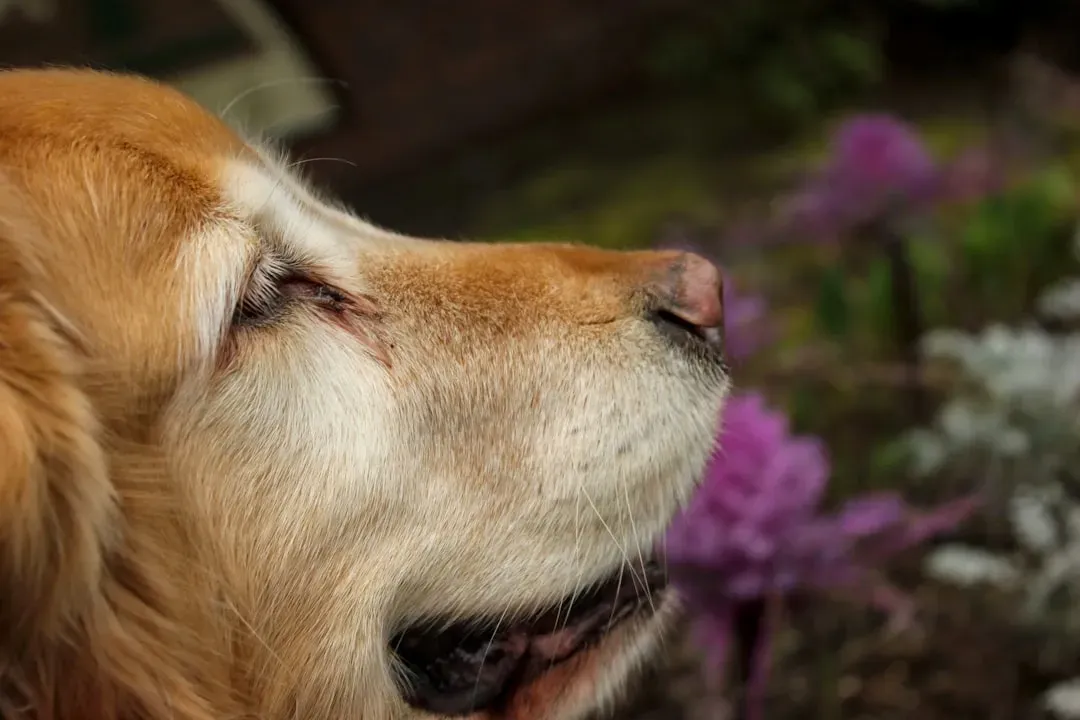
Here’s the thing most people don’t realize: your dog isn’t just sniffing around for treats or squirrels. Dogs have evolved to read verbal and visual cues from their owners, and with their acute sense of smell, they can even detect the odor of stress in human sweat. Researchers have now found that not only can dogs smell stress, represented by higher levels of the hormone cortisol, they also react to it emotionally.
Think of it this way. When you’re stressed, your body is basically leaking chemistry. Research provides evidence that dogs can detect an odour associated with acute stress in humans from breath and sweat alone. Importantly, this finding was unrelated to exertion or exercise, suggesting that the cortisol levels were a product of psychological, rather than physical, stress. So yes, your dog smells your Monday morning dread. Every single time.
A study published in Scientific Reports found that dogs can detect human stress through scent, making them more cautious and risk-averse, and that our stress levels can directly influence our dogs’ behavior. Humans tend to rely most on sight to make sense of their environments, but dogs’ most dominant sense is actually smell, which gives them a very different perspective on the world around them.
They Read Your Face Better Than Most Humans Do

Dogs can recognize six basic emotions including anger, fear, happiness, sadness, surprise, and disgust, and process these in similar ways as humans, with changes to heart rate and gaze. That’s not a small thing. That’s an entire emotional vocabulary, read through your face alone. I think that’s genuinely remarkable for a species that can’t speak a single word.
Studies conducted by the University of Tokyo and the University of Veterinary Medicine Vienna found that dogs were able to recognize human emotion by watching their faces. Dogs approached happy faces faster and hesitated before approaching angry faces, leading researchers to conclude that dogs can differentiate between emotional expressions because of their memories from other human relationships.
Dogs show a subtle right-hemisphere bias when processing emotional cues, tending to gaze toward the left side of a human’s face when assessing expressions, a pattern also seen in humans and primates. So the next time your dog stares deeply at you like a tiny, furry philosopher, they are quite literally analyzing your expression with a specialized brain process. Let that sink in.
They Can Literally Hear the Sadness in Your Voice

Several studies have demonstrated that dogs respond to the sights and sounds of various human emotions, including crying, vocal tones, and facial expressions. The sounds of happiness are likely to result in a positive reaction like tail wagging, whereas sadness and fear can result in a negative reaction like yawning. Your tone of voice is essentially a live broadcast your dog never misses.
Dogs can determine human emotions using only their ears, at least for happiness, fear, and sadness, using the right side of their brain for processing negative emotions and the left side for positive ones. It’s almost like their brain is pre-wired as an emotional sorting machine. Additional data on heart rate, tail wagging, and yawning supported these findings.
Dogs are able to understand the emotional tones of our voices, particularly the difference between positive and negative sounds. Not only that, but they can match the sound to the corresponding facial expression. Studies have shown that dogs pay more attention to facial expressions which match the emotional state of an accompanying vocalization. Let’s be real, that’s a level of attention to detail most of us barely manage with other people.
Emotional Contagion: Your Feelings Literally Become Theirs

This is probably the part that surprises people the most. Your dog doesn’t just notice your emotions from across the room. They actually absorb them. Dogs don’t just observe your emotions, they can “catch” them too. Researchers call this emotional contagion, a basic form of empathy where one individual mirrors another’s emotional state. A 2019 study found that some dog-human pairs had synchronized cardiac patterns during stressful times, with their heartbeats mirroring each other. This emotional contagion doesn’t require complex reasoning; it’s more of an automatic empathy arising from close bonding.
Your emotional state may be contagious to your dog. If you are sad, they are affected by it and come close to nuzzle you. Your dog is comforting you while seeking comfort themselves. It’s a beautiful, two-way street of feeling. Dogs have long been recognized for their remarkable ability to offer comfort and support to humans during times of distress, and research reveals that dogs display empathic-like behavior when they encounter a human crying, but not when they encounter a talking or humming human.
Evolution Made Them This Way, and It Matters for You Both

Humans and dogs have been close companions for perhaps 30,000 years, according to anthropological and DNA evidence, so it makes sense that dogs would be uniquely qualified to interpret human emotion. Thousands of years of shared life didn’t just make dogs loyal. It rewired their brains to understand us in ways that are still astonishing scientists today.
Dogs have smaller brains than their wild wolf ancestors, but in the process of domestication, their brains may have rewired to enhance social and emotional intelligence. Clues come from a Russian fox domestication experiment, where foxes bred for tameness showed increased grey matter in regions related to emotion and reward. These results challenge the assumption that domestication makes animals less intelligent. Instead, breeding animals to be friendly and social can enhance the brain pathways that help them form bonds.
Here’s the practical part, because this is genuinely important for every dog owner. When the stress odor was present in research trials, dogs were less likely and slower to approach a bowl that was uncertain to contain a treat. This suggests that being stressed around your dog, or even just being around the smell of another stressed person, may have a negative effect on your dog’s mood and possibly even your relationship with your dog. Maintaining a relationship based on positive reinforcement and engaging activities is the best way to keep your dog happy.
A Conclusion Worth Sitting With

Your dog is not performing magic. They are not guessing. They are doing something far more incredible: they are using millions of years of evolved biology, a nose that humbles every human sense, and a brain specifically shaped by living alongside us, all just to understand how you feel.
The next time your dog nudges you during a hard moment, don’t take that lightly. Dogs may not be able to read our minds, but by reading our behavior and feelings, they meet us emotionally in a way few other animals can. That quiet, warm presence beside you on a bad day is not coincidence. It is connection, running deep and ancient and real.
So maybe the question isn’t just “how does my dog know when I’m sad?” Maybe the better question is: now that you know just how deeply your dog feels alongside you, how will you show up for them in return? We’d love to hear your story. Tell us in the comments how your dog has shown up for you when you needed it most.


