
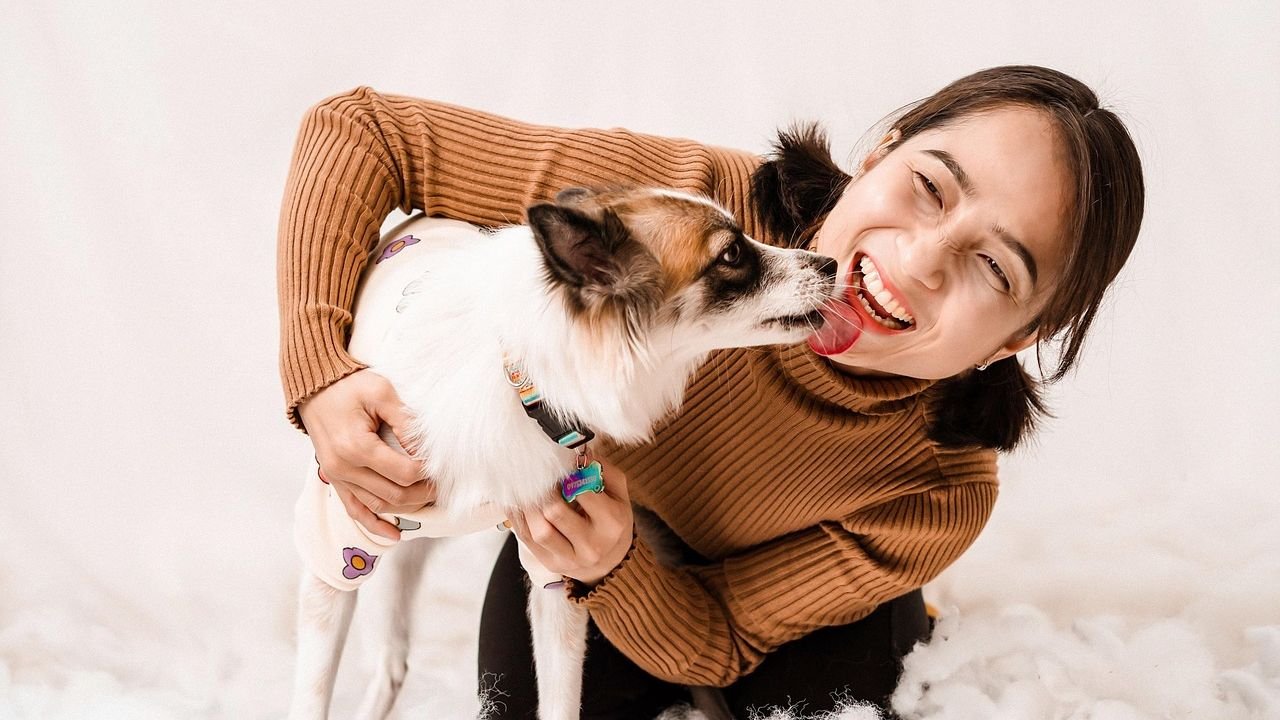
Picture this. You’re relaxing on the couch after a long day, and your dog wanders over, looks you dead in the eyes, and slowly drags their tongue across your hand. Sweet, right? A little kiss, a tiny love note. But here’s the thing – that lick might mean something completely different from what you think it does.
Dogs can’t talk. They can’t text you a heart emoji or tap you on the shoulder and say, “Hey, I’m stressed.” Instead, they’ve built an entire communication system out of something most of us have always written off as just being cute. Every lick, every slurp, every gentle swipe of the tongue is a message – and the more fluent you become in this language, the deeper your bond with your dog will grow. Let’s dive in.
The Deep Roots of Why Dogs Lick at All

From their earliest days, puppies rely on licking their mother for nourishment and comfort. That early association establishes licking as a soothing and nurturing activity. It’s practically baked into their DNA before they even open their eyes. Think of it like a baby’s first language – before words, there’s touch.
Mother dogs lick their puppies not only to clean them but also to stimulate their bodily functions. This early mother-puppy interaction establishes an important form of communication and bonding, and as puppies grow, they mimic this behavior, using licking to explore the world and express affection and care.
Researchers of wild canids – wolves, coyotes, foxes, and other wild dogs – report that puppies lick the face and muzzle of their mother when she returns from a hunt to her den in order to get her to regurgitate for them. Your dog doing the same to you? Honestly, less romantic once you know that. Still, it’s deeply rooted social behavior, not just randomness.
Dogs use many nonverbal methods to communicate, one of which is licking. The act of licking is a common way for dogs to express their instinctual needs, feelings, and desires – to both humans and other animals. So every time your pup gives you a lick, they’re essentially speaking in the only language they’ve ever known.
The Lick of Love: Affection, Bonding, and the Feel-Good Chemistry
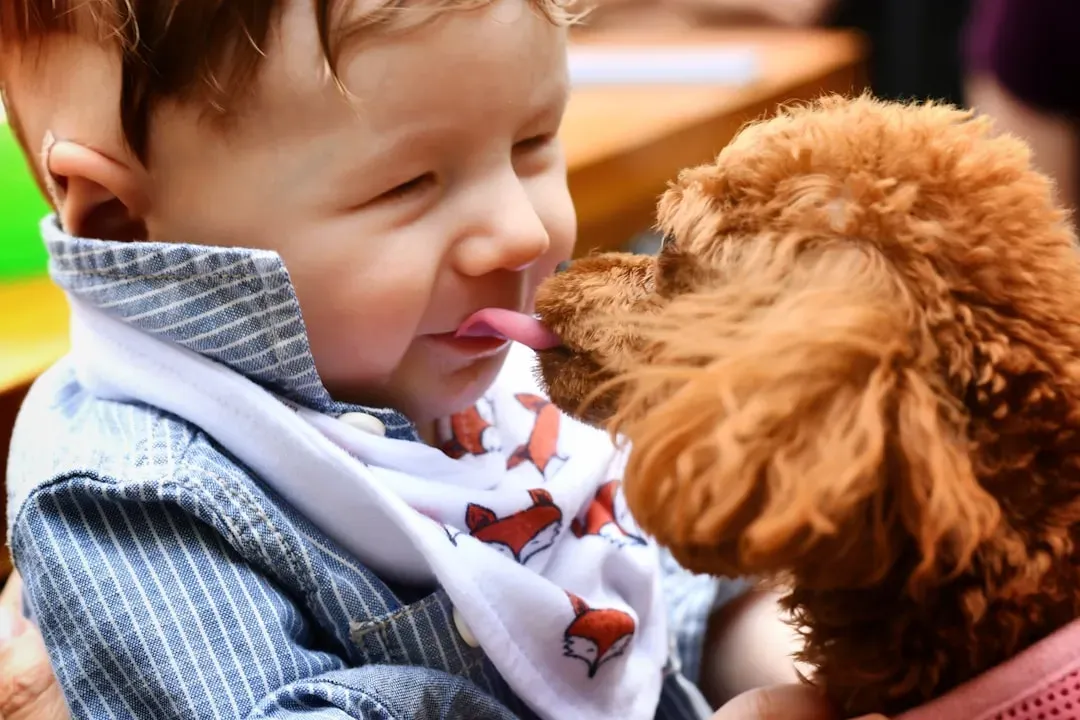
Let’s be real – the most heartwarming explanation is often also the true one. Although licking started as a food-seeking behavior, it has now become a ritualized greeting for many dogs. Some wild species in the dog family will lick pack members just to welcome them home. So those daily slobbers really might just be a sign that your dog is happy to see you.
When your dog licks you, both of you experience a boost in oxytocin, often called the “love hormone.” This hormone strengthens the bond between dogs and their owners, reinforcing licking as a behavior that fosters trust and emotional connection. So it’s not just emotional – it’s actual chemistry happening in both of your bodies at the same time. Pretty remarkable if you ask me.
Licking also plays a significant role in a dog’s emotional wellbeing. Similar to human behaviors such as nail-biting or fidgeting, licking can be a self-soothing activity that releases endorphins, the body’s natural feel-good hormones, and these endorphins can improve your dog’s mood and reduce stress and anxiety levels.
Dogs will lick you when you pet them as a way of communicating their mutual affection and love. Licking can be a sign that your dog may be sympathizing with you. A 2023 study in Evolutionary Human Sciences found that dogs can perceive human facial expressions and emotions, and will lick in response as a way of expressing empathy if they notice sad or negative faces. In other words, your dog really does know when you’re having a bad day.
When a Lick Is Actually a Warning Signal

This is where things get really important, and honestly, not enough dog owners know about it. A slow lick could be viewed as affection but should more accurately be seen as a polite way of saying “please, go away.” The dog is simply trying to communicate discomfort – not dish out kisses.
Licking can serve as a warning to stop. If the licking does not properly warn us to stop, the dog’s behavior will escalate into a less polite way of communicating the need. At that point, there are a few options for the dog: move away from the person, growl, snap, or bite. That slow lick during grooming or nail trimming? Pay close attention to it.
Research has found that dogs lick their mouths as a response to looking at angry human faces, suggesting that domestic canines may have a functional understanding of emotional information. Animal behavior researchers found that mouth licking in domestic dogs is not simply a response to food or uncertainty, but appears to be used as a signal to try to communicate with humans in response to visual cues of anger. Your mood matters more than you might realize.
Lip licking may play the same role as in intraspecific communication – as an appeasement signal occurring with reduced interindividual distance and sent in advance to express peaceful intentions. Think of it like your dog raising a tiny white flag. Learning to read it can genuinely prevent conflict.
When Licking Signals Something Is Wrong Medically

Sometimes a lick isn’t about communication at all. It’s a cry for help. While some licking is normal, persistent and intense licking can point to underlying behavioral issues. Just like humans might nervously tap their feet or bite their nails, dogs can develop excessive licking as a coping mechanism for stress or anxiety. This could be triggered by separation anxiety, loud noises, changes in their environment, or even boredom.
Gastrointestinal issues such as nausea, acid reflux, or other digestive discomfort can prompt dogs to lick excessively, as they might be trying to soothe their upset stomach. Dental problems, including toothaches, gum disease, or foreign objects lodged in the mouth, can also cause a dog to lick frequently to relieve the pain or irritation. So if your dog is suddenly licking surfaces, floors, or the air – take note.
A 2012 study published in the Journal of Veterinary Behavior found a relationship between dogs who obsessively licked surfaces and internal gastrointestinal disorders. This is one of those findings that feels minor but could genuinely save your dog from prolonged discomfort if caught early.
To help determine the underlying cause of your dog’s licking, your veterinarian will first perform a thorough physical exam. Additional testing may also be needed, such as bloodwork, a urinalysis, radiographs, or an ultrasound. Together, these diagnostics can help provide a more well-rounded view of any potential issues with your dog’s health. Don’t wait on it – early action is always better.
How to Respond to Your Dog’s Licking the Right Way

Here’s where practical advice really pays off. If you smile or laugh as your dog licks your feet, you could be providing positive reinforcement for the behavior. They quickly learn that licking your feet gets them attention from you, and this may not only extend the licking session but make it more likely to happen in the future. Your reaction matters far more than you think.
To manage and train dogs exhibiting excessive licking, a combination of positive reinforcement and behavior modification techniques is often effective. Positive reinforcement involves rewarding desirable behavior to encourage its recurrence while ignoring the unwanted licking. Behavior modification might include providing mental stimulation through puzzle toys, increasing physical activity, or creating a structured routine that gives the dog a sense of security.
Dogs may lick out of boredom, in which case increasing enrichment could reduce the behavior. Activities like lick mats can provide an outlet for bored dogs who like to use their tongues. Sometimes the solution really is that beautifully simple. A five-dollar lick mat at enrichment time can work wonders.
Gentle licking is often a sign of affection or a greeting behavior, while intense licking may suggest overexcitement or underlying discomfort. Learning to read those subtle differences is one of the most useful skills any dog owner can develop – and it honestly just takes mindful observation over time.
Conclusion: Every Lick Tells a Story
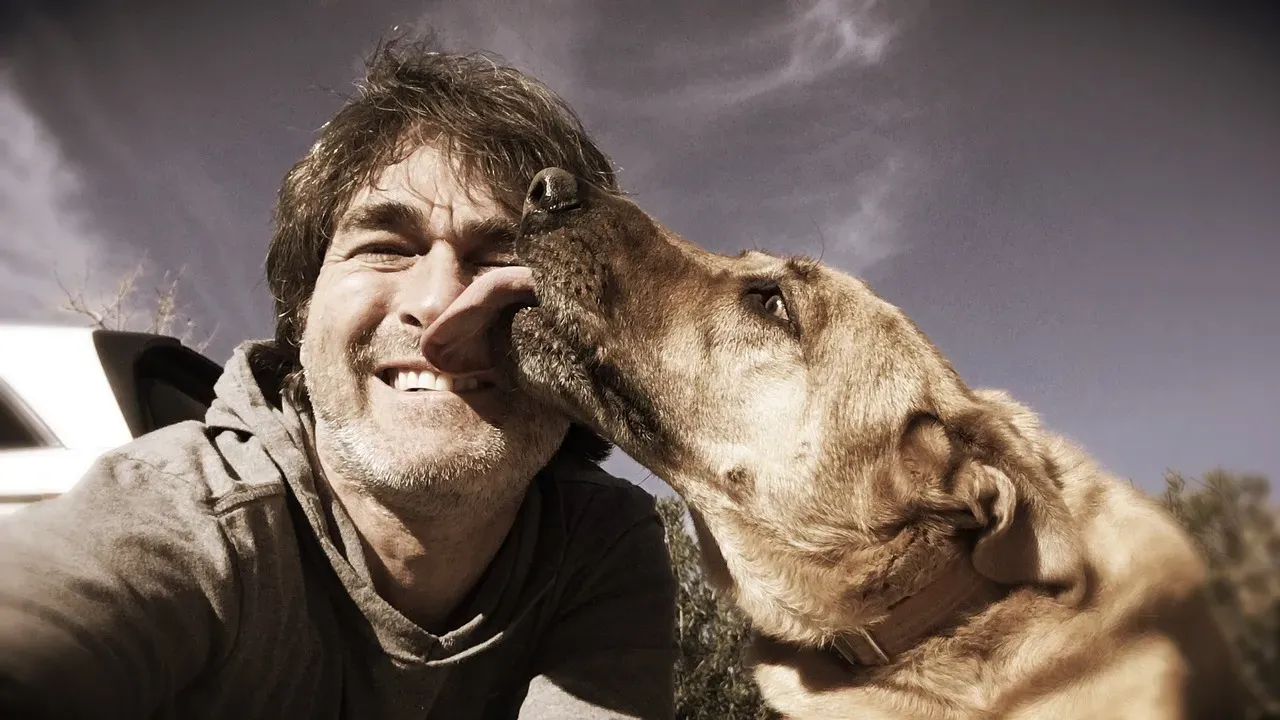
Dogs are constantly talking to us. They’ve been doing it for thousands of years, using the only tools they have – their body, their eyes, and yes, their tongue. Once you start seeing licking as language rather than just a quirky habit, everything shifts. You stop brushing it off and start listening.
Whether it’s a warm, enthusiastic greeting lick after you’ve been away for hours, a slow and deliberate swipe that means “please give me some space,” or a frantic lick-lick-lick that signals something deeper is going on, your dog is always saying something worth hearing.
You don’t need to be a canine behaviorist to understand your dog better. You just need to pay attention, respond with empathy, and trust that the relationship you’re building one lick at a time is one of the most genuine connections you’ll ever have. That’s not a small thing. That’s everything.
What does your dog’s licking tell you? Share your story in the comments – we’d love to hear it.


