
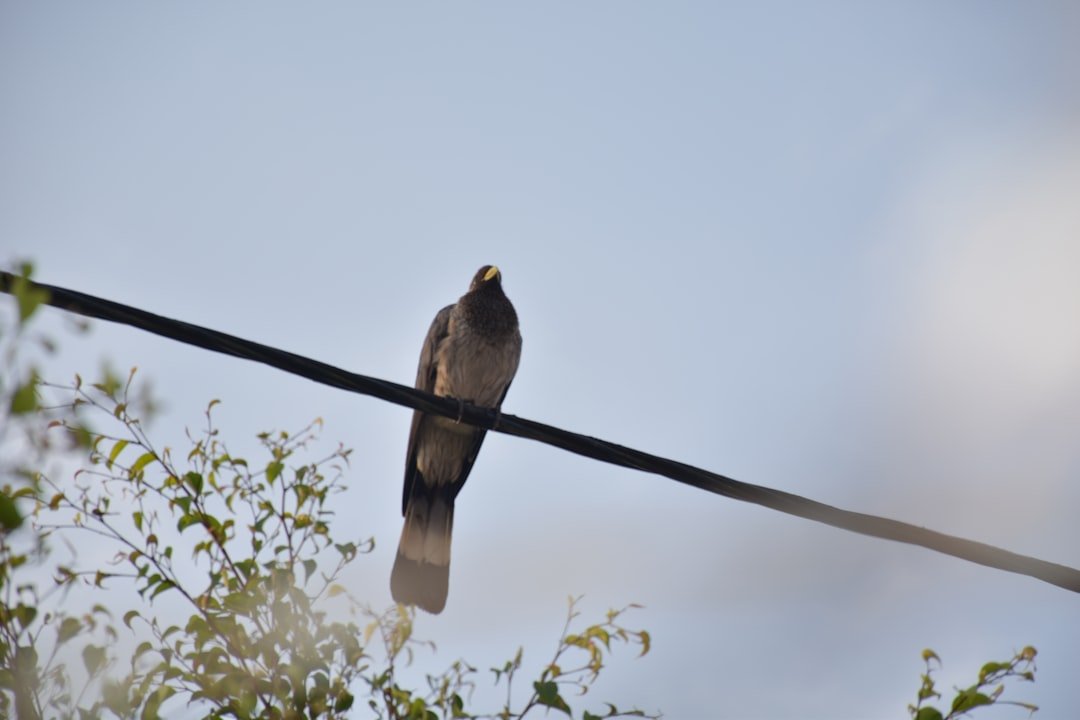
Pervasive Effects Emerge from Vast Data Pool (Image Credits: Unsplash)
A sweeping review of scientific studies spanning nearly four decades demonstrated that human-generated noise profoundly disrupts bird lives across six continents.
Pervasive Effects Emerge from Vast Data Pool
Researchers synthesized findings from more than 150 studies published since 1990, examining 944 effect sizes across 161 bird species.[1][2] The meta-analysis, published in Proceedings of the Royal Society B, revealed consistent patterns in how traffic, construction, aircraft, and urban sounds interfere with essential avian functions.[3]
Lead author Natalie Madden, formerly of the University of Michigan, highlighted birds’ reliance on sound: “They use song to find mates, calls to warn of predators, and chicks make begging calls to let their parents know they’re hungry.”[4] Noisy environments masked these signals, altering behaviors from communication to habitat selection.
Communication and Foraging Fall Silent
Birds adjusted songs by making them louder, higher-pitched, or differently timed to compete with human din, yet vital messages often failed to transmit.[1] Courtship displays halted, and parent-offspring interactions suffered as begging calls went unheard.
Foraging efficiency dropped sharply; birds spent more time vigilant, approached food slower, and fed less frequently, stunting growth in nestlings.[3] Risk assessment shifted too, with heightened caution in loud areas reducing overall feeding time and exposing young to nutritional deficits.
Stress, Aggression, and Habitat Shifts
Physiological responses included elevated stress hormones like corticosterone in urban birds, impairing immunity, metabolism, and long-term health.[4] Aggression rose, potentially sparking conflicts over resources.
Habitat use changed as birds avoided noisy zones, lowering nest densities and forcing shifts into riskier territories.[1] Traits influenced vulnerability: cavity-nesters faced worse growth impacts than open-nesters, while ground-nesters endured greater reproductive harm.[2]
- Communication: Strong alterations in song structure and calls.
- Risk behaviors: Heightened vigilance, slower predator responses.
- Foraging: Reduced efficiency and intake.
- Aggression: Increased territorial disputes.
- Physiology: Hormone imbalances, developmental stress.
Reproduction Suffers Most Severely
The analysis pinpointed reproduction as hardest hit, with strong negative effects on breeding success, egg survival, and fledging rates.[3] Early noise exposure compromised future fitness, compounding pressures amid North America’s loss of 3 billion breeding adults since 1970.[4]
Sixty-one percent of global bird species now show declining populations, largely from habitat loss, but noise emerges as an underrecognized factor.[3] Urban dwellers exhibited chronically higher stress, while forest canopy and vegetation sometimes buffered sounds.
Practical Steps Toward Quieter Habitats
Senior author Neil Carter emphasized predictability enables action: “If we can predict them, then we can mitigate them, we can reduce them, we can reverse them.”[4] Simple changes include electric vehicles and tools over gas-powered ones, scheduling machinery outside breeding or migration seasons, and erecting sound barriers.
Buildings could incorporate noise-muffling materials, akin to anti-collision designs, while quieter road surfaces and vegetation buffers offer broader relief.[1]
Key Takeaways
- Noise pervasively alters bird communication, foraging, and risk assessment across 161 species.
- Reproduction faces the strongest negative impacts, varying by nest type and height.
- Mitigation through electric tech, timing, and design proves feasible and effective.
This study underscores noise as a modifiable threat amid biodiversity crises. Targeted reductions could restore acoustic spaces vital to avian survival. What steps can communities take locally? Share your thoughts in the comments.


