

You’re sitting there minding your own business, maybe watching TV or folding laundry, when you gently lift your rescue dog off the sofa. Then it happens. That long, soulful, almost operatic howl fills the room. It’s part protest, part heartbreak, and honestly, a little bit hilarious – except when it’s 11 PM and your neighbors share a wall.
If you’ve experienced this, you’re definitely not alone. Rescue dogs are wonderfully complex creatures, and that howl is actually telling you something important. The question is, what exactly? The answer goes deeper than you might think, and understanding it could genuinely change how you see your dog. Let’s dive in.
It Goes Way Back: The Ancient Language of the Howl

Here’s something that stopped me in my tracks when I first learned it. That howl isn’t random noise. It’s a language with ancient roots that your dog inherited from her wild ancestors.
Like many canine behaviors, howling has ancestral roots. In the wild, safety-conscious wolves would bellow to announce their location to other pack members. Brave wolves would howl to warn other animals away from their territory. Your dog may not be marking territory or locating packmates, but even now, dogs howl as a form of communication.
Think of it like a legacy app running on old software. Even though domestic dogs no longer rely on howling to survive, the behavior remains hard-wired. It’s almost like a legacy feature – your dog may never need to summon a packmate across a valley, but their nervous system still knows how.
So when your rescue girl gets lifted off the sofa and lets out that dramatic howl, she’s doing something deeply instinctive. She’s vocalizing a feeling. She’s communicating. The real question is what that feeling actually is.
The Sofa Isn’t Just a Sofa to Her

Let’s be real here. To us, a sofa is furniture. To a rescue dog, particularly one with a turbulent past, it’s something far more significant. It represents warmth, security, and closeness to you.
Rescue dogs or those with a history of rehoming are especially prone to separation anxiety. Past experiences of abandonment may lead them to believe every absence means they’ll be left for good. Being lifted off the sofa, even momentarily, can feel like a small version of that abandonment.
Bringing home a rescue dog is a rewarding experience, but it can come with some challenges. Many rescue dogs have experienced trauma, abandonment, or instability in their past, which can make adjusting to a new home feel overwhelming.
The sofa puts her right next to you, at your level, smelling your scent, feeling your warmth. It’s not just comfort. It’s proof that she belongs. Remove her from it and you’ve disrupted something that feels, to her, genuinely important. That howl? It’s protest and grief wrapped in one loud note.
Separation Anxiety: The Real Culprit Behind That Howl

Honestly, this is the big one. Most rescue dogs that howl when removed from a comfortable space close to their owner are displaying a classic symptom of separation anxiety. It doesn’t have to be a full departure from the house. Even just physical distance can trigger it.
Dog separation anxiety is a behavioral condition where a dog becomes distressed when separated from their owner or left alone. While it’s natural for dogs to bond closely with their families, anxiety takes that attachment to an unhealthy level. Instead of relaxing when you leave, anxious dogs may panic, believing they’ve been abandoned.
Dogs may bark, whine, or howl for extended periods when they’re experiencing this distress. These noises are not about disobedience but rather a way for your dog to call out for comfort.
Dogs rescued from a shelter, especially if they’ve been there for a very long time, can be chronically anxious. The same goes for pets that have been rehomed multiple times. So if your girl came from a complicated background, that howl is probably carrying a lot of emotional baggage inside it.
Importantly, punishment does not work to stop this behavior. Your dog is not being deliberately naughty or attention-seeking. Just as humans suffer panic attacks, dogs with separation anxiety can’t control when it happens to them. In fact, punishment only increases anxiety and makes it worse.
She May Also Be Playing You – A Little

Now, I say this with the deepest affection for rescue dogs everywhere. Sometimes, that howl is also a learned behavior. Dogs are incredibly smart, and your rescue has probably figured something out: howling gets a reaction.
Some dogs learn that howling can get them attention from people. If your dog howls for this reason, her howling will usually occur in your presence when she wants attention, food, or a desired object.
If howling reliably brings you running, some dogs learn to use it like a “human remote.” That’s a perfect description, honestly. Your dog has essentially discovered a button that makes you appear. Why wouldn’t she press it?
To avoid accidentally rewarding this behavior, totally ignore her as soon as she starts making noise. Don’t look at her, touch her, or speak to her. Don’t try to scold her either. Dogs, like kids, often find any attention rewarding – even negative attention. So scolding your dog might actually make her howling behavior worse.
It’s a hard thing to do when you’re faced with those big rescue dog eyes. But staying neutral is actually the kindest long-term strategy.
What You Can Actually Do About It

The good news is this is genuinely manageable. It takes patience, some consistency, and a willingness to understand your dog on her terms. Think of it less like fixing a problem and more like helping someone feel safe in a new home.
Dogs thrive on routine, and consistency makes them feel safe. Start by feeding, walking, and playing with your dog at the same time each day. A predictable routine helps your dog understand what to expect, especially during transitions or when you need to move her.
Providing lots of physical and mental stimulation is a vital part of treating many behavior problems, especially those involving anxiety. Exercising your dog’s mind and body can greatly enrich her life, decrease stress, and provide appropriate outlets for normal dog behaviors. A physically and mentally tired dog doesn’t have much excess energy to expend in anxious moments.
Another effective training tactic is to reward quiet behavior. When your dog is being well-behaved and not responding to triggers, give her a treat or a special toy. It’s difficult to notice your dog doing nothing, but rewarding this behavior shows her the right way to get your attention.
For more serious cases, systematic desensitization and counterconditioning are two common treatments for fears, anxiety, and phobias. It’s often most effective to use these two procedures together when trying to resolve animal behavior problems. A certified animal behaviorist or your vet can guide you through this process step by step.
You can also confine your dog to a safe room with windows, toys, and objects with your scent on them, such as dirty laundry, which can bring her comfort when she can’t be physically close to you.
Conclusion
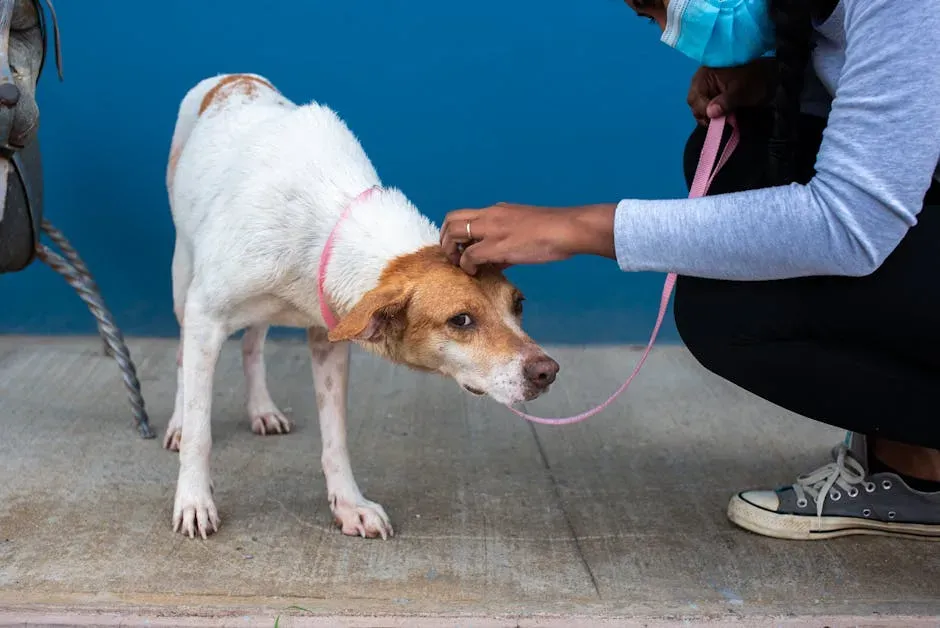
That howl, as dramatic and sometimes inconvenient as it is, is actually one of the most honest things your rescue dog will ever do. She’s telling you she loves being near you, that safety feels fragile to her, and that she needs help learning the world won’t fall apart every time things change even slightly.
Understanding that these behaviors come from fear and not defiance helps reframe the whole issue. Instead of punishing a dog for unwanted actions, the goal becomes providing support and finding constructive solutions.
Your rescue girl has been through things you may never fully know. The fact that she howls when you move her isn’t a problem. It’s a conversation. The more you listen, the better your bond will be.
What does your rescue dog do when she really doesn’t want to leave the sofa? Tell us in the comments – I’d love to hear your story.


