
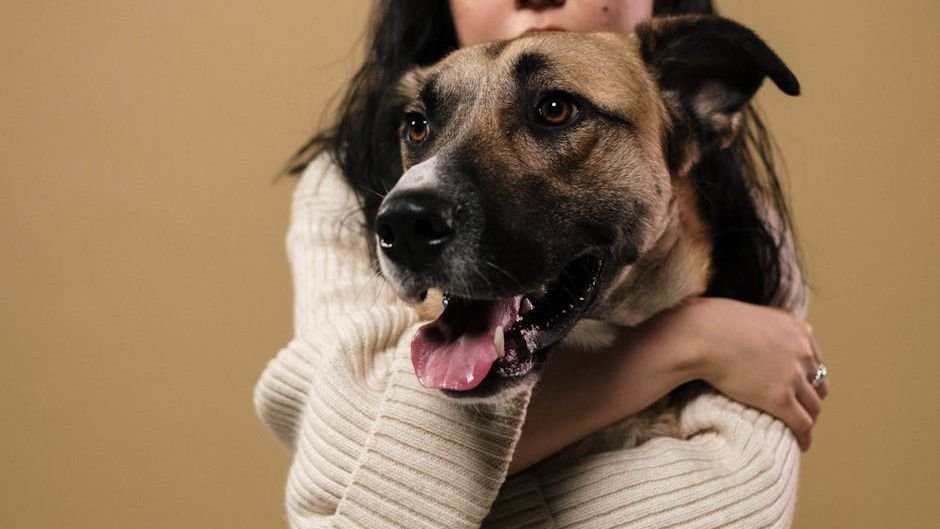
Picture this. You’ve had one of those days. The kind where everything that could go wrong, did. You walk through your front door feeling hollowed out, and before you’ve even dropped your bag, there’s a warm body pressed against your legs, a tail going like a helicopter, and two eyes fixed on you like you’re the most important thing in the universe. Somehow, you breathe a little easier.
Most of us chalk that up to love. Loyalty. The magic of dogs. But here’s the thing – science has caught up with what dog lovers have felt for centuries. What happens in those moments isn’t just emotional. It’s physiological, hormonal, and genuinely profound. The connection between you and your dog runs all the way down to your heartbeats. Literally.
If you’ve ever wondered why your dog seems to know exactly how you feel, or why just sitting beside your pup can pull you out of a funk, you’re about to find out. Let’s dive in.
The Heartbeat That Mirrors Yours: What the Science Actually Shows
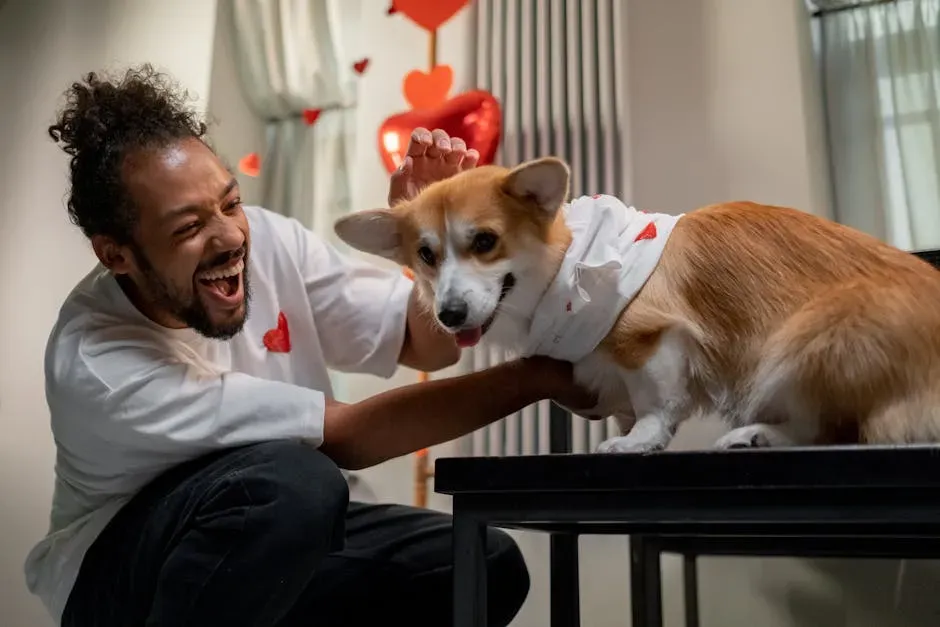
Here’s a fact that honestly gave me chills when I first read it. A study titled “Behavioral and emotional co-modulation during dog–owner interaction measured by heart rate variability and activity” reveals that during interactions, the hearts of dogs and their owners actually synchronize, beating in unison as if connected by an invisible thread of understanding. This isn’t a metaphor. It’s measurable biology.
Conducted at the University of Jyväskylä, researchers found that heart rate variability – the variation in the heartbeat intervals, which indicates the state of the autonomic nervous system – was interconnected between dogs and their owners during interaction. High heart rate variability is associated with a state of relaxation, while low variability signals stimulation or strain.
In this study, the owner’s high heart rate variability was connected to the dog’s high heart rate variability, and vice versa. Researchers observed that both heart rate and physical activity levels adapt between dogs and owners, with the strongest emotional connection appearing during restful moments, indicating shared relaxation.
Notably, the physiological synchronization between dogs and owners occurred only within established pairs. When researchers randomly matched dogs with non-owners, this connection disappeared, confirming that the bond between a dog and its owner uniquely facilitates this co-modulation. Think about that for a second. It only works because of your specific relationship. That’s not a coincidence. That’s a bond.
The Love Hormone Loop: Oxytocin and the Chemistry of Bonding
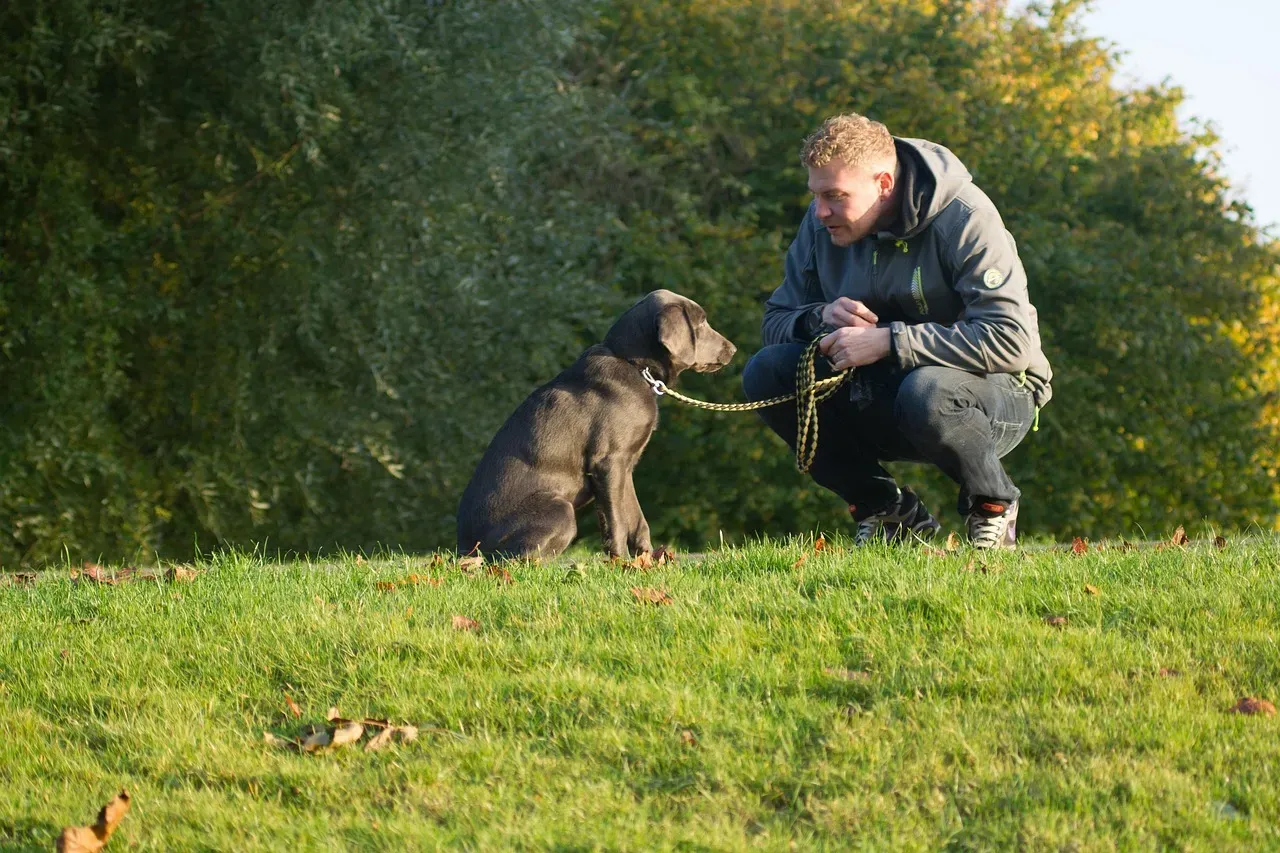
Let’s talk about oxytocin. One of the most compelling discoveries in the science of dog-human connection is the role of oxytocin, often called the “love hormone,” a neurochemical released when we hug someone we care about, snuggle a baby – or gaze into our dog’s eyes. That warm, melty feeling when your dog looks at you? That’s real chemistry at work.
Humans bond emotionally as we gaze into each other’s eyes, a process mediated by oxytocin. Research shows that such gaze-mediated bonding also exists between us and our dogs. Scientists found that mutual gazing increased oxytocin levels, and administering oxytocin increased gazing behavior in dogs, an effect that transferred to their owners.
Petting causes both humans and dogs to experience an increase in oxytocin. Because dogs affect us and our oxytocin levels much the same way human babies do, the bond we have with our dogs can feel like the bond between mothers and children. The mechanism behind the connection is the same. Honestly, that’s extraordinary when you sit with it. Your body responds to your dog the way a mother responds to her child.
Oxytocin is increasingly recognized to have a role in human-dog bonding and interactions and a positive influence on various health outcomes including cardiovascular function and stress reactivity. So that evening cuddle session? It’s doing more for your health than you probably realize.
Your Dog Knows How You Feel – Before You Do
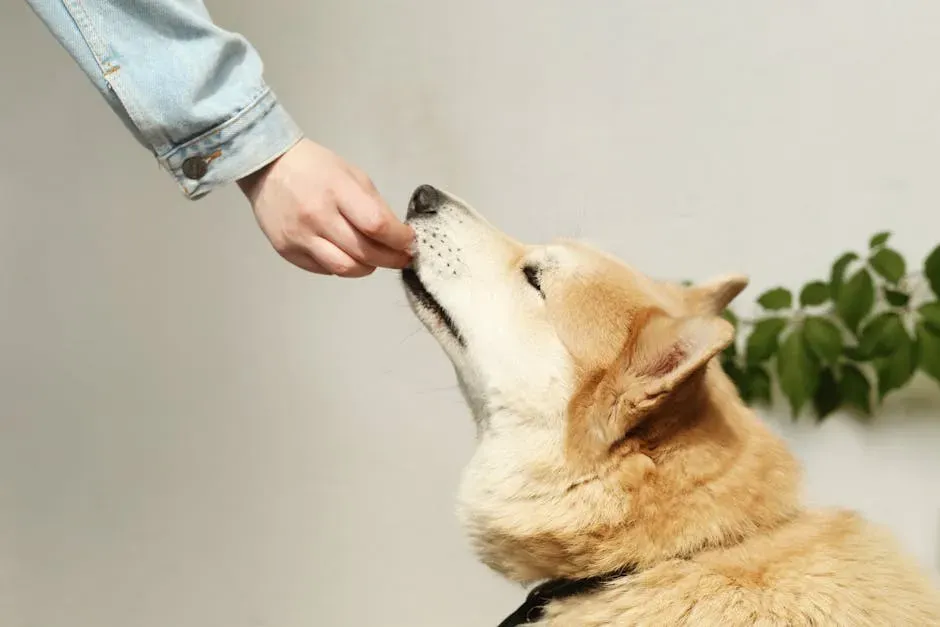
Here’s something that never gets old no matter how many times I read about it. Dogs can recognize emotions in humans by combining information from different senses – an ability that has never previously been observed outside of humans. Not in chimpanzees. Not in dolphins. Dogs alone have evolved this remarkable, multi-sensory emotional intelligence directed toward us.
Dogs have a remarkable ability to read the facial expressions and body cues of human beings. While some research found that dogs focus more on bodily expressions, other studies have shown that dogs process human facial expressions similarly to the way people do. One study found that dogs respond to human faces expressing six basic emotions – anger, fear, happiness, sadness, surprise, and disgust – with changes in their gaze and heart rate.
When humans experience stress or fear, the body releases hormones such as cortisol and adrenaline, causing subtle changes in scent. A dog’s sense of smell is powerful enough to detect these chemical shifts. So if your dog starts pacing or nudging you before you’ve even consciously registered your own anxiety, they’re not being dramatic. They literally smelled it coming.
Just as human toddlers look to their parents for cues about how to react to the world around them, dogs often look to humans for similar signs. When their people project feelings of calm and confidence, dogs tend to view their surroundings as safe and secure. You are, in a very real sense, your dog’s emotional compass.
Your Emotions Are Contagious – And Your Dog Catches Them

Let’s be real about something that not every dog owner wants to hear. Dogs are amazingly social beings, so they are easily infected with our warmth and joy. The converse is also true, which means an owner’s stress and anxiety can also become the dog’s stress and anxiety. That connection is a two-way street, and it has real consequences for your dog’s wellbeing.
If you’re anxious, your dog may become anxious. If you’re calm, your dog tends to relax. If you’re excited, your dog’s energy rises. It’s almost like living with a four-legged mood mirror. Think about that the next time you’re tense during a thunderstorm and your dog won’t stop pacing.
Dogs respond best to calm, confident energy. Yelling or frustration can create confusion rather than clarity. Dogs thrive on predictable emotional responses, and inconsistent reactions can increase anxiety or behavioral issues. This is genuinely useful to know. Your energy is one of the most powerful training tools you have.
Dogs living in tense environments may show behavioral issues like excessive barking, chewing, or separation anxiety. On the other hand, a calm and structured household helps them thrive. Creating peace in your home isn’t just good for you. It’s a profound act of care for your dog.
The Real Health Benefits of This Extraordinary Bond
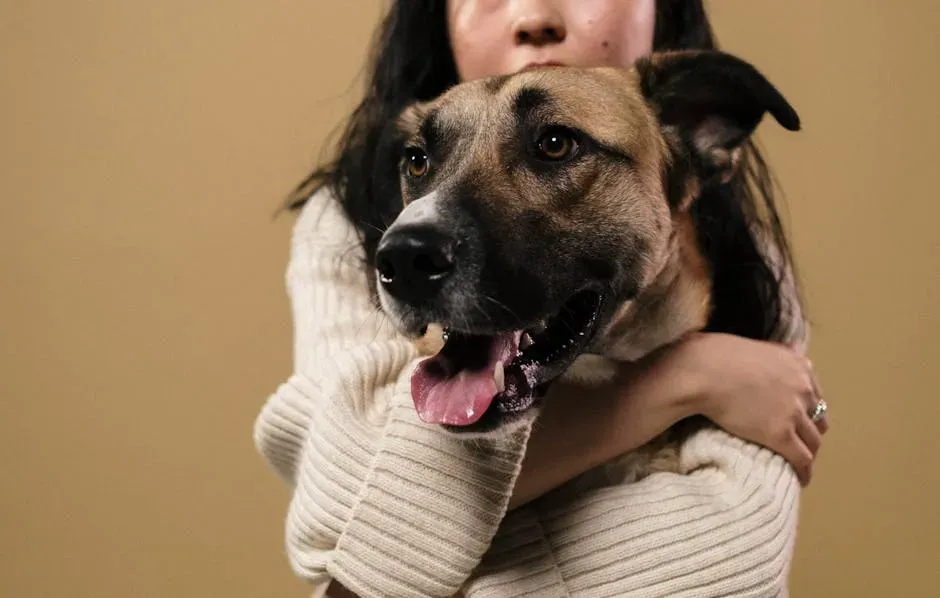
Here is where things get genuinely exciting for your own health, not just your dog’s. Dog ownership is associated with lower risk of death over the long term, which is possibly driven by a reduction in cardiovascular mortality. Owning a dog can literally help you live longer. I don’t think we say that enough.
Even just petting a familiar dog lowers blood pressure and heart rate, slows breathing, and relaxes tense muscles. Scientists at Washington State University discovered that petting a dog for just ten minutes can have a significant impact, with study participants showing a significant reduction in cortisol, a major stress hormone.
Owning a dog has been linked to better mental health and a lower perception of social isolation, which can reduce the risk of heart attacks and cognitive issues. Being socially isolated is a strong risk factor for worse health outcomes and premature death. Your dog is, among many things, a powerful buffer against one of modern life’s quietest dangers.
Therapies that incorporate canine companions could harness these findings, employing them in settings from hospitals to rehabilitation centers, where emotional alignment with a calm, steady heartbeat might accelerate recovery and encourage healing. The science of canine connection isn’t just heartwarming. It’s becoming genuinely medicinal.
How to Deepen the Bond You Already Have

So what do you actually do with all of this? Here’s the practical part, and I think it’s more straightforward than people expect. Dogs and owners’ heart rates align during relaxed interactions, indicating shared emotional states. The emotional state sync is strongest during rest. Translation: quiet time together is not wasted time. It might be some of the most valuable time you share.
Prioritize shared stillness. Sit with your dog without your phone. Let them rest their head on your lap. Just petting a dog can lower the petter’s blood pressure and heart rate, while having a positive effect on the dog as well. Both of you benefit from those slow, unhurried moments. That’s not just sweet. That’s science.
Positive reinforcement, bonding time, and early socialization all enhance a dog’s emotional responsiveness. Regular training sessions are not just about teaching commands. They’re relationship-building exercises. They tell your dog, “I see you. I’m paying attention to you.” And dogs feel that deeply.
Dogs can detect when we’re anxious or upset, and they often react with comforting behaviors like nuzzling or sitting close by. They don’t just read our body language; they absorb and reflect our emotional state. For anxious or overwhelmed pet parents, this means your dog may become a calming anchor, as their presence can help regulate your nervous system, and vice versa. Lean into that. Let your dog be your anchor. Let yourself be theirs.
Conclusion: A Bond Written in Biology

Thousands of years of shared history have produced something science is only now beginning to fully understand. The bond between you and your dog isn’t just emotional loyalty or trained behavior. The physiological and emotional mechanisms involved in strengthening attachment bonds between humans also support the emotional relationship between humans and dogs. You were, in a very real sense, built for each other.
Your dog reads your face, smells your stress, mirrors your heartbeat, and keeps a piece of your emotional world inside their nervous system every single day. That’s not magic. That’s millions of years of co-evolution producing something genuinely beautiful. And honestly? The more we understand it scientifically, the more remarkable it becomes.
So the next time your dog curls up beside you at the end of a long day and your shoulders finally drop, know that something profound is happening. Two heartbeats, different species, finding the same rhythm. The alignment of heartbeats offers a silent form of communication, where both parties can resonate with each other’s emotional rhythms – a bond that hints at the evolutionary depths of the human-dog relationship, where survival and companionship may have forged these empathetic ties, unifying separate species in a shared existence.
What moment with your dog first made you feel that unspoken connection? We’d love to hear about it in the comments.


