

You’ve probably had one of those moments. You walk through the front door after the worst day imaginable, not a word said, face neutral, bags down, and your dog is already there, nudging your hand, pressing their warm body against your leg. How did they know? It wasn’t luck. It wasn’t magic. Your dog was reading you in ways that would genuinely blow your mind if you knew the full picture.
Dogs have spent thousands of years evolving alongside humans. That closeness has shaped them into something truly remarkable: living, breathing, tail-wagging biosensors tuned specifically to us. Science is only now catching up to what dog owners have suspected all along.
So if you’ve ever wondered what your dog actually knows about you, prepare to be amazed. Let’s dive in.
1. Your Dog Can Literally Smell Your Stress

Here’s something that stopped me in my tracks when I first read it. The physiological processes associated with an acute psychological stress response produce changes in the volatile organic compounds coming from your breath and sweat that are detectable to dogs. That’s not poetic guesswork. That’s a published scientific finding.
Dogs experience emotional contagion from the smell of human stress, leading them to make more “pessimistic” choices, according to a University of Bristol-led study published in Scientific Reports, which was the first to test how human stress odors affect dogs’ learning and emotional state. Think about that. Your anxiety doesn’t just affect you. It affects your dog too. So the next time you’re spiraling before a big meeting, your pup already knows.
2. They Can Read Six of Your Basic Emotions From Your Face

Numerous studies have found that dogs use three main senses, including sight, smell, and hearing, to determine human emotions. Dogs can recognize six basic emotions including anger, fear, happiness, sadness, surprise, and disgust, and process these in similar ways as humans, with changes to heart rate and gaze. That’s not a trick. That’s cross-species emotional intelligence.
Dogs behave differently depending on their owner’s emotional state, gazing and jumping less at owners when they are sad, with their compliance with the “sit” command also diminished. It’s a little humbling, honestly. Your dog isn’t just a furry mirror. They are actively responding to who you are in that moment.
3. Your Dog Knows When You’re Afraid, Even Before You Show It

A dog is sensitive to fear in humans. When a dog perceives fear in a person through smell, body language, or facial expressions, it can result in behavior mirroring, which means a dog will show fear-based reactions in response to being exposed to a fearful human. That old childhood warning to “not let the dog know you’re scared” turns out to have real science behind it.
One study examined dogs’ behavioral responses to a stranger after exposure to sweat samples, one collected from a happy human and the other from a frightened human. Overall, the dogs showed more social behaviors toward a neutral stranger after the “happy” sample and more avoidance after the “fear” sample. Your emotional chemistry is broadcasting a signal your dog picks up loud and clear.
4. They Can Detect Cancer With Their Nose

Some dogs can be taught to detect different types of cancer by smelling the chemicals that cancer cells emit. These aren’t specialty dogs either. The non-profit cancer training dog organization In Situ Foundation has trained 52 dogs to detect cancer, using shelter and rescue dogs whenever possible, and dogs train by smelling breath, saliva, urine, and plasma sent in by doctors. The fact that ordinary rescue dogs can do this is something else.
Dogs seem to particularly notice the presence of melanoma, a form of skin cancer, in humans. Some untrained pups have repeatedly sniffed at a spot on the skin of a pet parent who was later diagnosed with the disease. If your dog keeps returning to the same patch of skin, it’s worth a conversation with your doctor. Your pup might know something you don’t.
5. Your Dog Can Sense Low Blood Sugar
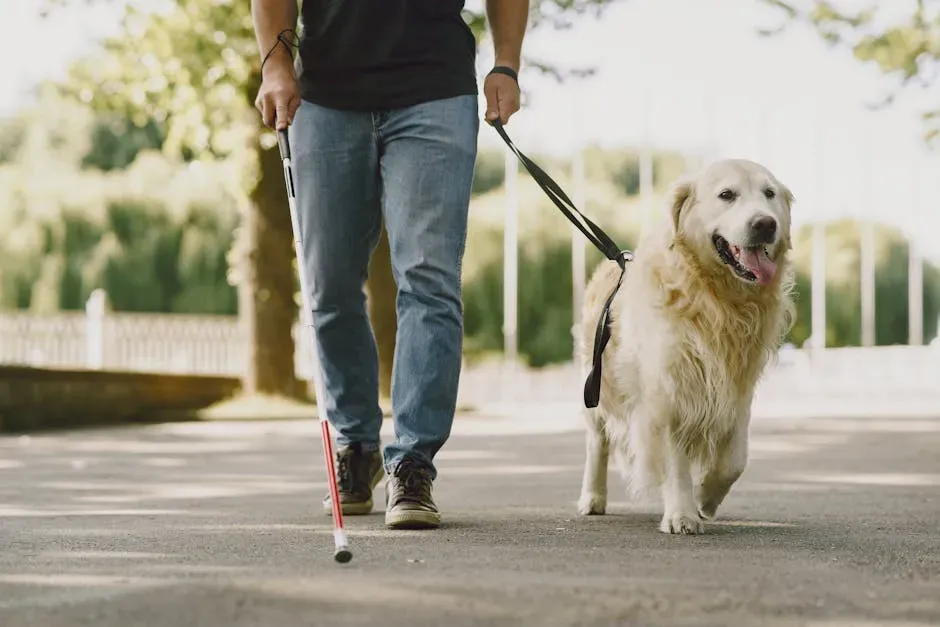
Canines can detect low and high blood sugar levels and are even being explored as “biocompatible, patient-friendly alarm” systems for humans. Numerous case studies have shown that trained dogs can exhibit specific behaviors such as vocalizing, nuzzling, licking, biting, jumping, and staring at their owners when blood sugar levels drop. That’s a living alert system right there in your living room.
Researchers have found that a person’s mood, which can be an indicator of a larger illness, triggers a dog’s sense of smell. Human emotions manifest physically in chemical signals emitted by the body, and dogs can decipher those changes. For people with diabetes, a trained detection dog is more than a companion. They can be lifesaving.
6. They Know a Seizure May Be Coming

Studies show that dogs can alert owners of upcoming seizure episodes within time periods varying from 15 to 45 minutes prior to a seizure occurring, and dogs are now even trained to be seizure alert service dogs. Fifteen to 45 minutes is a meaningful window. That’s enough time to get to safety, take medication, or alert someone nearby.
One theory is that a dog’s detail-oriented vision can detect small changes in the person’s movements, changes that humans, including the person about to have the seizure, do not notice. It’s likely a combination of smell and vision working together. The science isn’t fully settled yet, but the real-world results speak for themselves.
7. Your Dog Can Sense a Pregnancy

During early pregnancy, a woman’s body begins producing hormones like human chorionic gonadotropin (hCG), progesterone, and estrogen in significantly higher amounts. These hormonal surges alter body chemistry and consequently body odor. Though imperceptible to humans, these scent shifts are likely noticeable to dogs. Your dog may pick up on a pregnancy before you’ve even taken a test.
Although it hasn’t yet been proven that dogs can detect pregnancy, it’s evident that many dogs’ behaviors do change during this time. Many owners have reported that their four-legged companions became more attentive, protective, or even possessive during their pregnancies. Whether it’s the hormones, the changing body shape, or the shift in routine, your dog is paying attention to all of it.
8. They Feel the Weather Changing Before You Do

Dogs recognize changes in barometric pressure (the amount of air pressure in the atmosphere) and electrostatic charge (static electricity). This is why your dog might start pacing, hiding, or acting restless when the sky still looks perfectly clear. They’re not being dramatic. They’re genuinely picking up on something real.
Before the weather changes, there are shifts in barometric pressure and in the static electricity in the air. Some humans are somewhat sensitive to these changes, for instance people who get headaches when a low-pressure system is on the way. Dogs are even more so. Think of your dog as a weather station with a tail. A very, very anxious weather station.
9. Your Dog Reads Your Body Language Better Than Most Humans

Through studying thousands of hours of human behavior from their side of the living room, dogs come to know our minds. One study found that dogs know when we’re doing something intentionally, such as putting something out of their reach, or unintentionally, like accidentally dropping something, and will behave differently when the action is unfriendly or just clumsy. That’s a level of social awareness that honestly rivals toddlers.
Even if you don’t yell in front of your dog, they can pick up on your negative energy when you and your partner fight. Your pup may notice your clipped tone of voice, the fact that neither of you is speaking, the stiffness of your posture, or the agitated way you’re walking or opening drawers. Let’s be real, your dog is watching all of it. There are no secrets in a home with a dog.
10. They Sense When You’re Sad, Even When You’re Hiding It

Sadness, distress, anxiety, and anger are emotions that trigger physiological responses in us. This can change our speech patterns, movements, posture, and smell. Since a dog’s senses are so heightened, they can detect these signals and understand what happens next. You don’t have to cry out loud for your dog to know you’re not okay.
A human’s stress and anxiety are contagious to their dog. Dogs living with people who are chronically stressed are negatively affected in the long-term. This is both touching and sobering. Your emotional health is directly connected to your dog’s wellbeing. Taking care of yourself is, in a very real sense, taking care of them too.
11. Your Dog Knows Whether Someone Is Trustworthy

Dogs can sense from a human’s overall body language and energy whether they are “good” or “bad.” If a person is nervous, anxious, angry, or hostile, they put off a type of energy much like when a person is speaking loudly or making wild gestures. This will put the dog on alert, making them uncomfortable and nervous themselves. Ever notice your dog warm up to a stranger immediately, or inexplicably growl at someone who seems totally fine? Trust that instinct.
A dog can sense an angry or “bad” human by their increased heart rate and blood flow because of chemicals emitting through our skin’s surface; likewise, they can also sense true happiness in humans. Your dog isn’t judging a book by its cover. They’re reading the chemical story underneath. It’s hard to say for sure they’re always right, but their record is pretty impressive.
12. They Know When You’re About to Leave

Your dog has learned all the clues that indicate a departure is imminent, such as luggage pulled from the closet or the way you always spread clothes out on your bed. It’s not psychic. It’s pattern recognition taken to an extraordinary level. Think about how a toddler learns to read routines. Your dog has spent years building an entire map of your daily habits.
A dog who has lived among people is a much better reader of us than we are of them. In a way, dogs are anthropologists. They spend a lot of time observing us and thus learn associations between behaviors we might not know about ourselves. In the home, you might see this in their learning to predict the difference between you getting up to take them out and getting up to go to the fridge. The suitcase goes out and your dog already knows. No announcement needed.
Your Dog Is More Tuned Into You Than You Realize
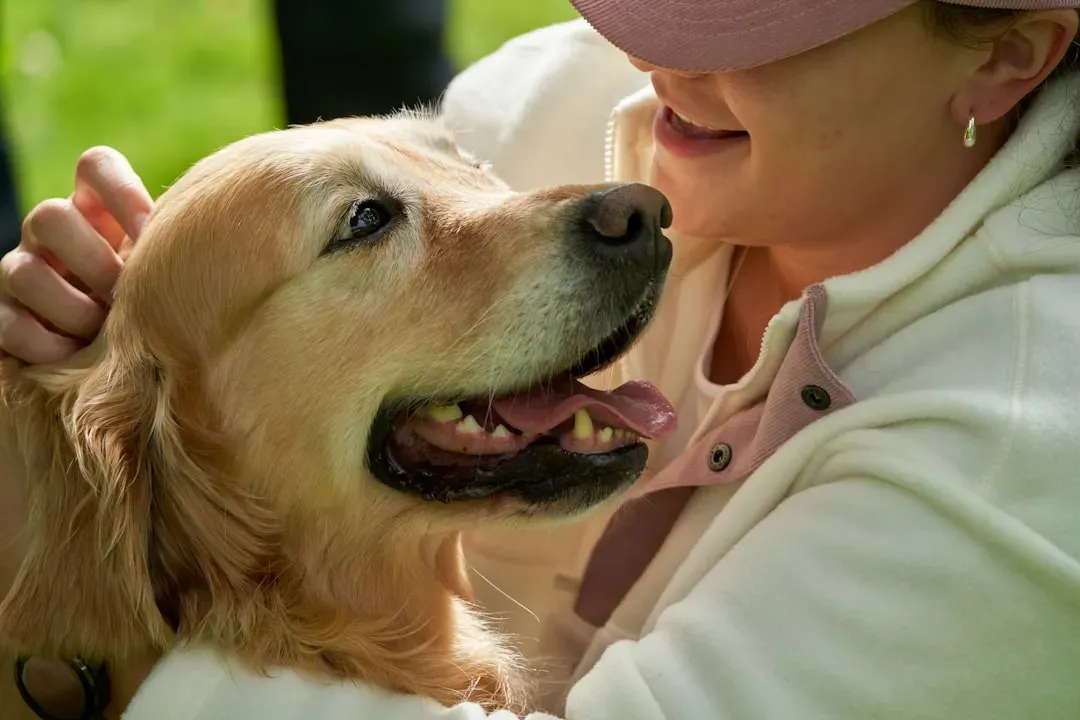
Honestly, after going through all of this, I think most of us underestimate what our dogs are actually experiencing. They’re not just waiting for walks and dinners. They are actively reading us, emotionally syncing with us, and in some cases, protecting us from health threats we can’t even perceive ourselves.
The science is clear, and it keeps getting richer. Dogs’ social cognition facilitates interaction with humans, and the ability to read and respond appropriately to emotional cues may have been, and may still be, key for the establishment of these interspecific bonds. This isn’t coincidence. It’s thousands of years of co-evolution doing its quiet, beautiful work.
So next time your dog leans against you, follows you from room to room, or tilts their head when you sigh, know this: they are paying closer attention than almost anyone else in your life. The question is, are you paying the same attention back to them? What has your dog sensed about you that surprised you the most? Drop it in the comments, we’d love to hear your story.


