
Most people believe that heroism is a uniquely human trait, reserved for those who can process complex moral dilemmas or act out of a sense of duty. However, the data reveals a different story: some of the most selfless, calculated, and physically demanding acts of bravery in history weren’t performed by humans at all, but by dogs. While we often view our pets as simple companions motivated by treats and affection, history proves they are capable of extraordinary tactical thinking and sacrifice under pressure. Here’s what the historical record actually says about our four-legged protectors.
#17 — Gander: The Grenade-Catching Newfoundland

Gander wasn’t just a mascot; he was a tactical asset who saved an entire platoon of Canadian soldiers during the Battle of Lye Mun in 1941. During a heavy firefight with Japanese forces, a live grenade landed dangerously close to several wounded soldiers who were unable to move.
While the men scrambled for cover, Gander sprinted toward the explosive, scooped it up in his mouth, and ran it toward the enemy lines. The grenade detonated just as he reached the opposing side, killing him instantly but sparing the lives of his human brothers-in-arms. This act was so unprecedented that Gander was posthumously awarded the Dickin Medal, the highest honor a military animal can receive.
Many historians argue that Gander’s instinct to protect his “pack” overrode his own survival drive in a way that remains statistically rare in the animal kingdom. His sacrifice changed the way the military viewed the utility of large-breed dogs in active combat zones. But as impressive as Gander’s bravery was, it’s nothing compared to the endurance test faced by the dog at #16…
#16 — Togo: The Unsung Hero of the Great Race of Mercy

While most people recognize the name Balto, it was actually Togo who performed the most grueling labor during the 1925 diphtheria serum run to Nome, Alaska. While Balto ran the final 55-mile leg, Togo led his team through a staggering 261 miles of sub-zero temperatures and life-threatening terrain.
Togo navigated the dangerous ice of Norton Sound, at one point leading his team across breaking ice floes in the dark. His musher, Leonhard Seppala, credited Togo’s “uncanny” sense of direction for keeping the team from plummeting into the freezing Arctic waters. Despite being 12 years old—elderly for a working sled dog—Togo refused to stop until the medicine was within reach of the final relay point.
The controversy over which dog deserves the most credit still rages among Alaskans, with many claiming Togo’s role has been unfairly scrubbed from popular history. To this day, Togo is considered by experts to be the most athletic dog to ever participate in a serum run. However, the physical toll on Togo was massive, and his story is only the beginning of what dogs have done in the snow. Wait until you see why #15 is still legendary in the Alps…
#15 — Barry: The Lifesaver of the Great St. Bernard Pass

In the early 1800s, a Saint Bernard named Barry became a legend by reportedly saving the lives of 40 people trapped in the treacherous Swiss Alps. Barry didn’t just find people; he was trained to use his body heat to revive frozen travelers and bark until rescuers arrived.
One of Barry’s most famous rescues involved finding a small child trapped on an icy ledge. According to local historical accounts, Barry licked the child to wake him up and then somehow coaxed the boy to climb onto his back, carrying him to the safety of the monastery. It is a feat of strength and intelligence that many modern biologists still find difficult to explain.
While some myths suggest Barry carried a small cask of brandy around his neck, historians confirm this is a fabrication—Barry actually carried specialized medical supplies and high-calorie rations. His legacy remains so vital to the region that there has been a “Barry” at the Great St. Bernard Hospice almost continuously for 200 years. If you think mountain rescues are tough, you haven’t seen what the dog at #14 did in the heat of a burning building…
#14 — Stubby: The Most Decorated War Dog of WWI
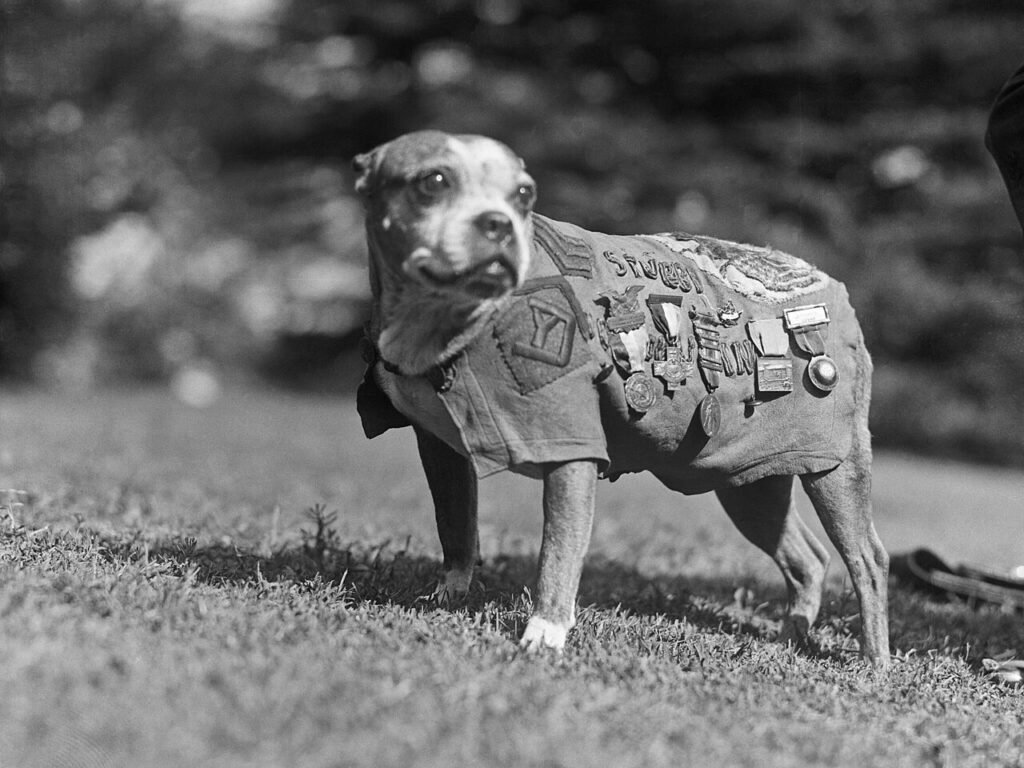
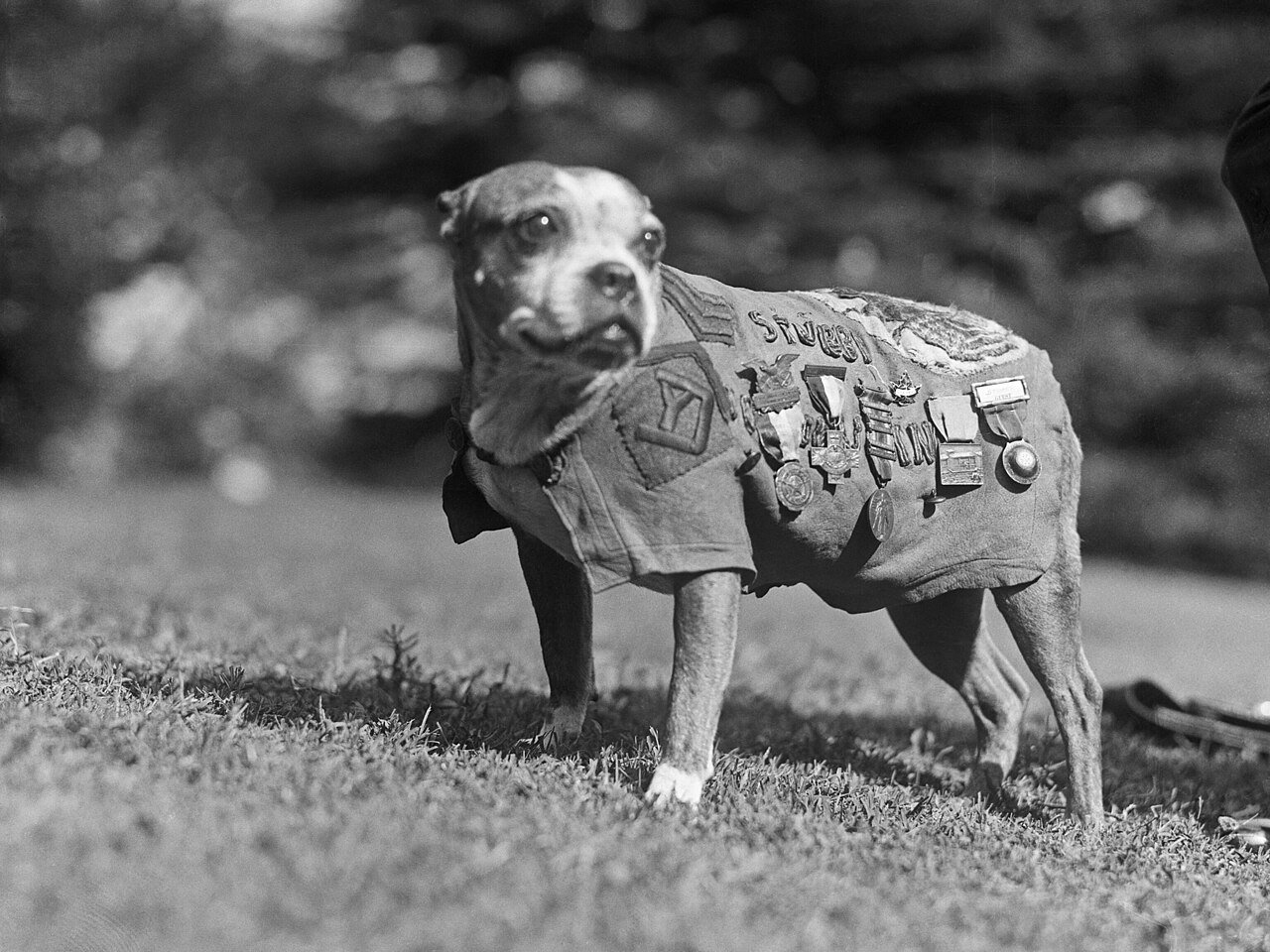
Sergeant Stubby was a stray Boston Terrier mix who became one of the most decorated war dogs of World War I, serving alongside American troops in France. Adopted by soldiers of the 102nd Infantry Regiment, Stubby quickly proved his worth on the battlefield—warning troops of incoming gas attacks, locating wounded soldiers, and even capturing a German spy. His bravery and loyalty earned him numerous medals and a battlefield promotion to sergeant, making him the first dog in U.S. military history to receive such an honor. After the war, Stubby became a national hero, marching in parades and meeting U.S. presidents, leaving behind a legacy as a symbol of courage, companionship, and the unbreakable bond between humans and dogs.
Stubby’s most incredible moment came when he single-handedly captured a German spy. The dog discovered the spy mapping out Allied trenches, bit the man’s leg, and held him pinned to the ground until American soldiers could arrive to make the arrest. Stubby’s presence was so vital to morale that he was smuggled into France under a private’s overcoat.
Experts note that Stubby learned to distinguish between English and German speech, which allowed him to identify intruders in the dark. He survived a mustard gas attack and a grenade injury, returning to the front lines each time. Stubies’s bravery was unmatched, but the tactical intelligence of the dog at #13 helped win one of the most important battles in history…
#13 — Chips: The World War II Hero of Sicily
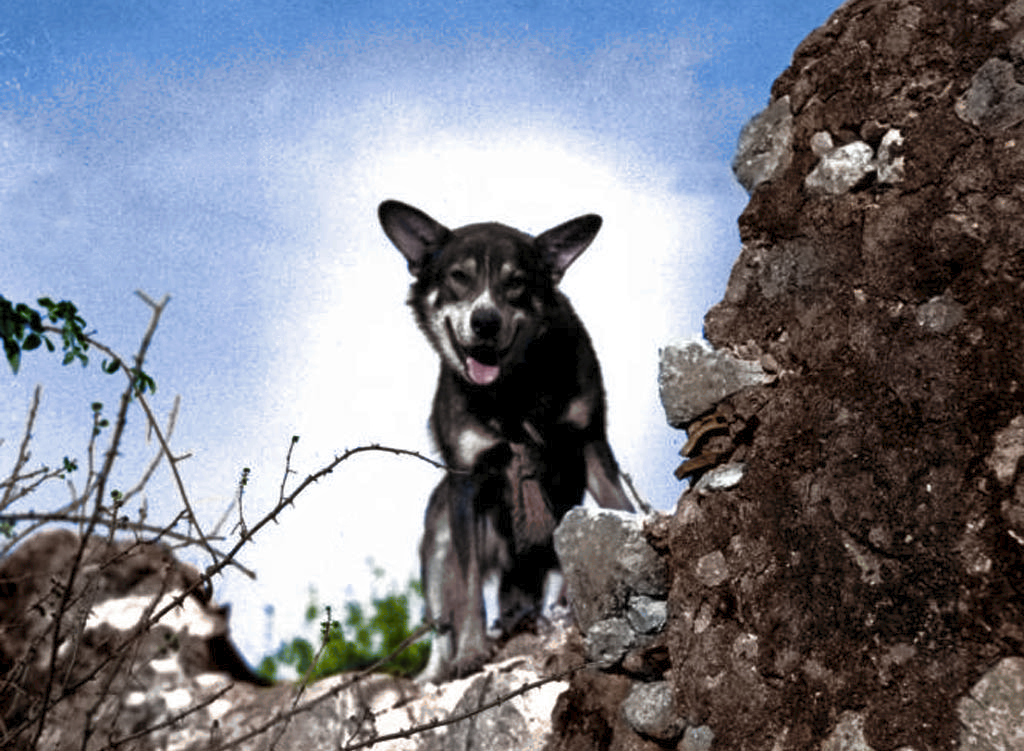
Chips was a Husky-Collie-German Shepherd mix who became the most decorated dog in World War II, though his medals were later stripped because military policy at the time forbade “decorating animals.” During the invasion of Sicily in 1943, Chips and his handler were pinned down by a hidden Italian machine-gun nest.
Without waiting for a command, Chips broke free from his lead, sprinted into the pillbox, and attacked the gunners. Moments later, an Italian soldier emerged with Chips clamped onto his throat, followed by the rest of the crew in surrender. Chips suffered scalp wounds and powder burns, but his sudden assault prevented a total massacre of his platoon.
Later that same day, Chips was credited with helping to capture ten more enemy soldiers. Despite the controversy over animal medals, General Dwight D. Eisenhower personally shook Chips’ paw in recognition of his service. Chips proved that a dog could change the tide of a land invasion, but the dog at #12 proved they could be just as effective at sea…
#11 — Lucca: The Marine Corps Specialist

Lucca, a German Shepherd/Belgian Malinois mix, served as an explosives detection dog for the U.S. Marine Corps for six years. During her career, she led over 400 patrols in Iraq and Afghanistan, and in all those missions, not a single soldier was injured while following her lead.
Her luck ran out in 2012 when she signaled a secondary IED that detonated near her. Lucca survived the blast but lost her front leg. Despite the trauma, her spirit remained unbroken; her handler noted that she was up and walking on three legs within 10 days of the injury. She was the first U.S. dog to be awarded the Dickin Medal since the program’s inception.
Military experts believe Lucca’s ability to “pattern match” scents and human behavior was superior to high-tech electronic sweepers. She is credited with saving the lives of hundreds of servicemen and women. But as heroic as military service is, the dog at #10 proved that a simple family pet can be just as brave…
#10 — Swansea Jack: The Waterfront Guardian
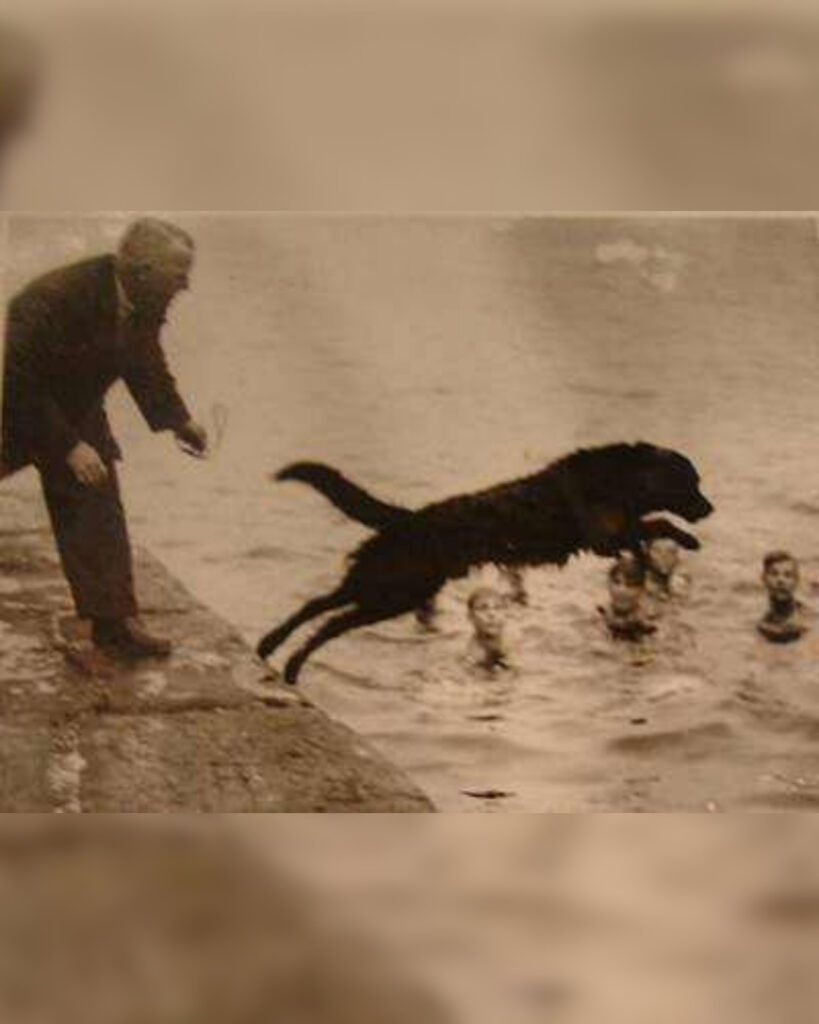
In the 1930s, a black retriever named Jack lived near the docks in Swansea, Wales. While most dogs are afraid of rushing water, Jack became famous for diving into the dangerous, murky river Tawe to save struggling swimmers. His first rescue involved a 12-year-old boy, and he didn’t stop there.
Over the course of his life, Swansea Jack was officially credited with saving 27 people from drowning. He remains the only dog to have been awarded two bronze medals by the National Canine Defence League and was named “Dog of the Century” by the local populace.
Locals were so moved by his bravery that they erected a permanent monument in his honor. While some skeptics claim the number of rescues was exaggerated, local newspapers from the era documented nearly every single event. Jack showed bravery in the water, but wait until you hear about the dog at #9 who faced a much more terrifying predator…
#9 — Kabang: The Dog Who Faced a Motorcycle
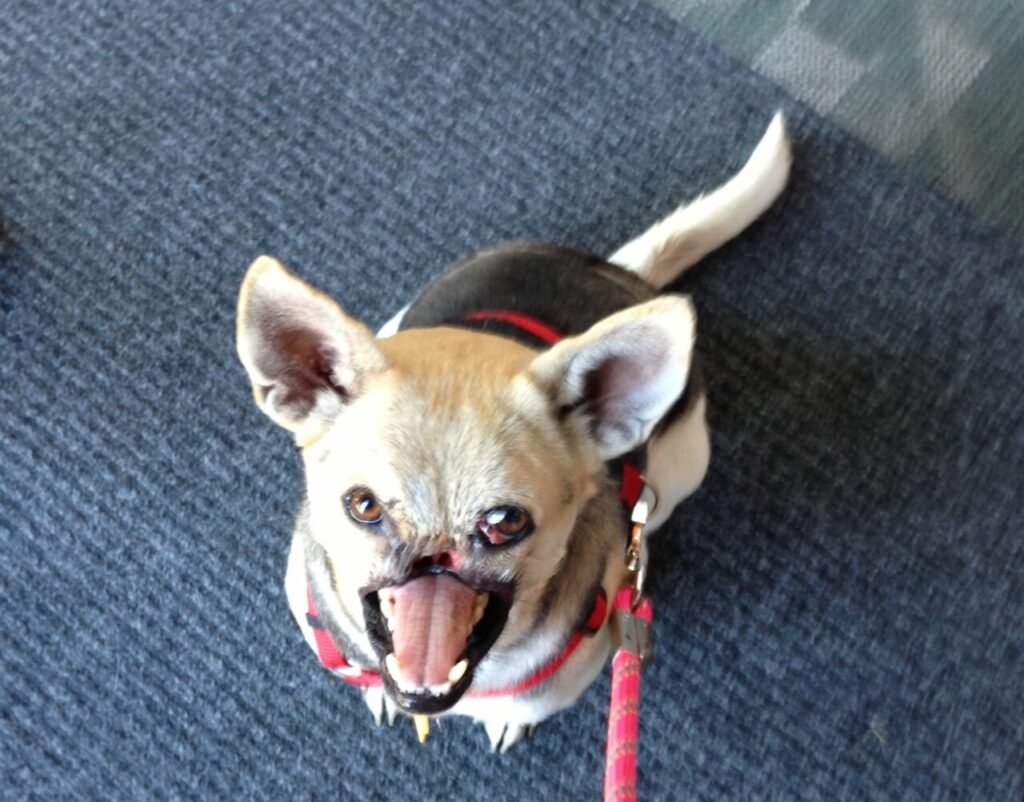
Kabang, a mixed-breed dog from the Philippines, became a global symbol of sacrifice in 2011. While walking with her owner’s daughter and niece, Kabang saw a speeding motorcycle heading directly for the two young girls. Without hesitation, she lunged between the bike and the children.
The impact was horrific; Kabang lost much of her upper jaw in the collision, but the two girls were completely uninjured. Veterinarians initially thought she wouldn’t survive, but a global crowdfunding campaign raised $27,000 for her surgery in the United States.
Kabang became a national hero in the Philippines, proving that “heroism” isn’t just for trained military K9s. Her story is a rare example of a dog clearly prioritizing a human life over its own physical safety in a split-second decision. But she isn’t the only dog to survive a brush with death; the hero at #8 navigated the ultimate disaster…
#8 — Salty and Roselle: The Twin Heroes of 9/11
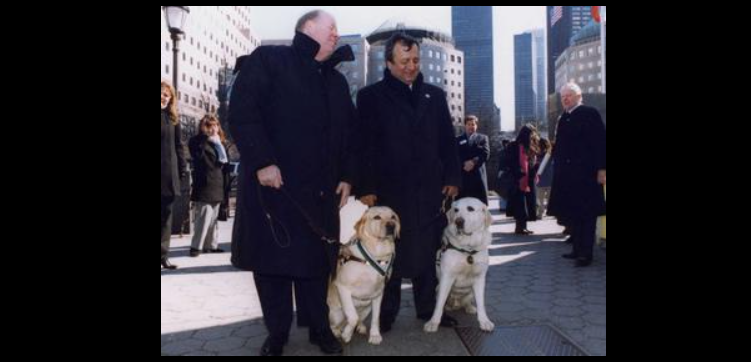
On September 11, 2001, Salty and Roselle were working as guide dogs inside the World Trade Center. When the planes hit, the chaos and smoke were enough to disorient even the most seasoned emergency responders. However, these two dogs remained completely calm, successfully guiding their blind owners down more than 70 flights of stairs.
Roselle, a Labrador Retriever, guided her owner Michael Hingson down 78 floors through thick smoke and debris, even as the building began to groan under the stress of the fire. It took them over an hour to exit, and Roselle led Michael into a nearby subway station just moments before the North Tower collapsed.
Salty performed a similar feat from the 71st floor, refusing to leave his owner’s side even when a coworker tried to lead the dog away to move faster. Both dogs were later awarded the Dickin Medal for their “dauntless devotion to duty.” Their calmness under pressure saved two lives that would have otherwise been lost, but the dog at #7 saved an entire city from a very different kind of threat…
#7 — Balto: The Face of the Serum Run
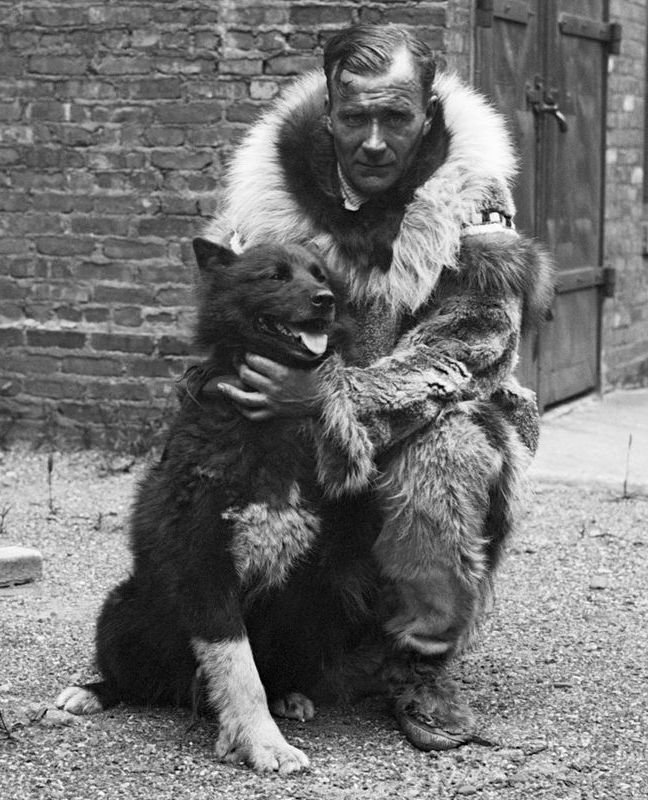
Gunnar_Kaasen_with_Balto: Brown Brothers, Public domain, via Wikimedia Commons
While Togo covered the most distance, Balto was the dog who brought the medicine home. In February 1925, Nome, Alaska, was being ravaged by diphtheria. The only way to get the life-saving serum to the city was via a 674-mile dog sled relay through a massive blizzard.
Balto led the final leg of the journey, navigating through whiteout conditions where the visibility was essentially zero. His musher, Gunnar Kaasen, admitted that he couldn’t even see his own hand in front of his face, let alone the trail. Balto relied entirely on his nose and memory to find the path.
When they reached Nome, the serum was still frozen and viable, saving thousands of lives. Balto became an overnight celebrity, with a statue erected in New York’s Central Park just months later. While he’s often the only dog remembered from the run, his steady nerves in the final stretch were crucial. But the dog at #6 proved that heroism can happen in the most domestic of settings…
#6 — Trakr: The Hero of Ground Zero

Trakr was a German Shepherd from Canada who traveled with his handler to New York City immediately following the 9/11 attacks. While hundreds of search dogs worked the pile, Trakr is credited with finding the last remaining survivor of the disaster.
Trakr sniffed out Genelle Guzman-McMillan, who had been trapped under the rubble of the South Tower for 27 hours. His discovery allowed rescue workers to focus their digging, eventually pulling her out alive against all odds. Trakr worked until he collapsed from smoke inhalation and chemical exposure.
In 2009, Trakr’s DNA was chosen as the most “worthy” to be cloned in a contest, resulting in five puppies that were trained as search and rescue dogs. Trakr’s legacy lives on in his descendants, but some dogs are born survivors themselves. The hero at #5 survived the most isolated environment on Earth…
#5 — Bamse: The Symbol of Norwegian Resistance

Bamse, a massive Saint Bernard, served on a Norwegian minesweeper during World War II. He wasn’t just a mascot; he was a peacekeeper. During fights in Scottish ports where the ship was docked, Bamse would break up brawls between sailors by putting his paws on their shoulders to calm them down.
His most famous act of bravery occurred when a sailor was targeted by a man wielding a knife. Bamse charged the attacker and knocked him into the water, then stayed with the injured sailor until help arrived. He also became famous for boarding local buses alone to round up his crew and bring them back to the ship before curfew.
When Bamse died in 1944, he was buried with full military honors, and hundreds of people lined the streets. He remains a national icon in Norway to this day. While Bamse fought human enemies, the dog at #4 fought a much more ancient threat to protect her “flock.”
#4 — Sheila: The Sheepdog of the Cheviot Hills
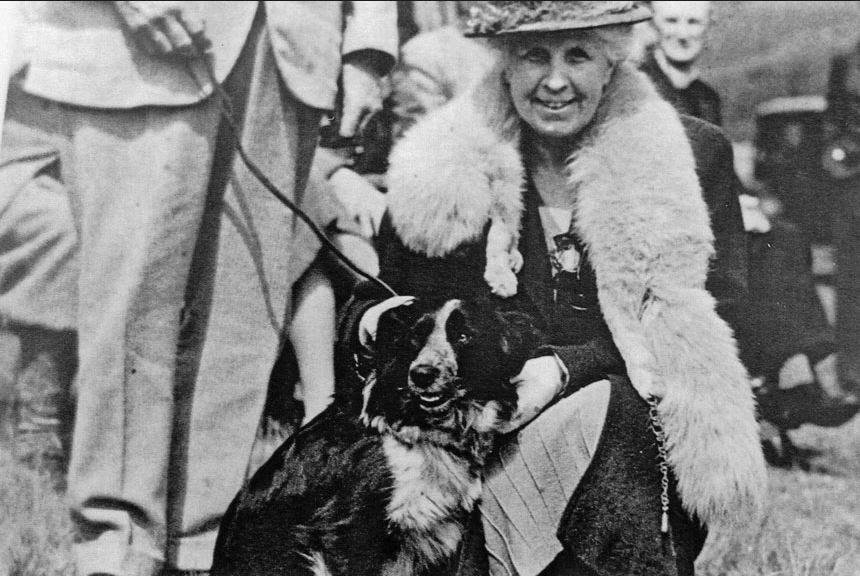
In 1944, a B-17 Flying Fortress crashed into the Cheviot Hills in Northumberland during a blizzard. The crew was stranded in deep snow, and rescuers had no idea where the wreckage was located. Sheila, a Border Collie, managed to lead her shepherd owner through the blinding snow to the exact crash site.
Sheila found four of the airmen huddled together in the freezing cold and led them back to the shepherd’s cottage. Without her incredible tracking ability, the men would have succumbed to hypothermia within hours. She was the first non-military dog to be awarded the Dickin Medal.
Airmen from the crew remained in contact with the shepherd’s family for decades, crediting the dog with their lives. Sheila proved that working dogs have an innate sense of responsibility that extends beyond their own species. But that’s nothing compared to the dog at #3, who waited nearly a decade for a friend…
#3 — Hachiko: The Definition of Loyalty

Hachiko is perhaps the most famous dog in Japanese history, known not for a single act of violence or rescue, but for a decade-long act of devotion. Every day, Hachiko met his owner, Professor Ueno, at Shibuya Station. One day in 1925, the professor died at work and never returned.
For the next nine years, nine months, and fifteen days, Hachiko returned to the station at precisely the time the train was due. He waited through rain, snow, and heat, becoming a fixture of the community. People would bring him food and water, moved by his unwavering commitment.
Hachiko’s story became a national sensation, used in Japanese schools to teach the value of loyalty. When he finally passed away, his death made national headlines, and a statue was built on the exact spot he waited. Hachiko reminds us that heroism isn’t always about action; sometimes it’s about the strength of a bond. However, the dog at #2 saved an entire family from a silent killer…
#2 — Jet of Iada: The Blitz Survivor

During the London Blitz of World War II, many people were trapped under the ruins of their own homes. Jet of Iada, an Alsatian, was trained specifically for search and recovery in these conditions. His most famous rescue involved a mother and daughter trapped in a cellar under 15 feet of rubble.
Initial sweeps by human rescuers suggested no one had survived the collapse, but Jet refused to leave the area. He barked and dug until workers agreed to dig deeper, eventually finding the two women alive but nearly out of oxygen. Jet is credited with saving over 150 people during the bombing of London.
His ability to detect life through thick layers of brick and mortar was considered “miraculous” by the Civil Defence Services. Jet was awarded both the Dickin Medal and the Medallion of the PDSA. While Jet saved lives in the city, our #1 hero saved his owner from one of nature’s most terrifying encounters…
#1 — Maya: The Pit Bull Who Challenged a Predator

In 2008, Angela Marcelino was brutally attacked by a man in her own home. But her Pit Bull, Maya, didn’t just bark; she launched a tactical defense that saved Angela’s life. Maya cornered the intruder, biting him and refusing to let go until he was forced to flee the house.
The most incredible part? Maya’s intervention didn’t just save Angela; her DNA was recovered from the intruder’s blood left on Maya’s fur, leading to his arrest and conviction. This case changed the public perception of Pit Bulls, highlighting their potential for loyalty and protection when raised in a loving home.
Maya was later named the “Dog of the Year” by the American Humane Association. Her story proves that even a dog with a controversial reputation can be a pure hero when the moment calls for it. She didn’t just fight; she provided the evidence to put a criminal away.
The Bottom Line
From the freezing plains of Alaska to the war-torn trenches of Europe, these 17 dogs prove that bravery is not a trait exclusive to humans. Whether it was Sgt. Stubby capturing a spy or Togo running 260 miles through a blizzard, these animals acted with a level of selflessness that continues to baffle scientists and inspire historians. They remind us that the bond between humans and dogs is built on more than just companionship—it’s built on a documented history of mutual survival and extraordinary courage.
Did we miss a heroic dog you know about? Tell us their story in the comments below!


