
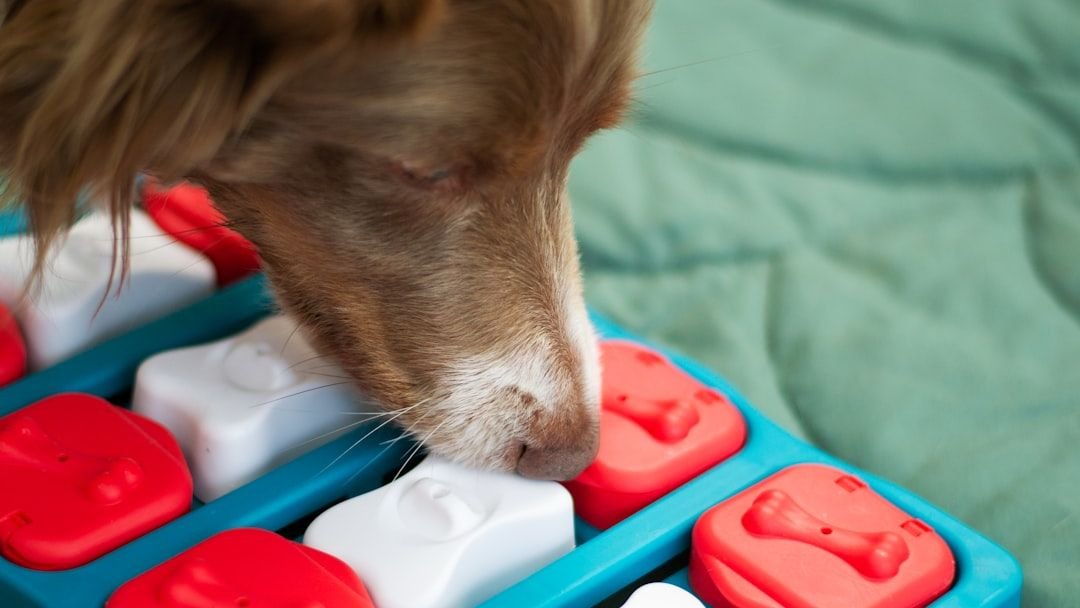
Picture this: it’s a grey January morning, the kind where even the birds seem to have given up. You’re wrapped in a blanket with a warm coffee, and your dog is staring at you with that look. You know the one. Part guilt trip, part desperate plea, part barely-contained chaos. The walks are shorter, the outdoor adventures are on hold, and your living room is starting to feel like a pressure cooker of pent-up canine energy.
Here’s the thing most dog owners don’t realize until it’s too late. Physical exercise creates an athlete, but mental stimulation creates a balanced companion. Winter isn’t just a logistical inconvenience for your dog. It’s a genuine wellbeing challenge. The good news? You don’t need a backyard, a dog park, or even your coat. You just need a little creativity and the seven ideas waiting for you below. Let’s dive in.
Why Your Dog’s Brain Needs a Workout Just as Much as Their Body
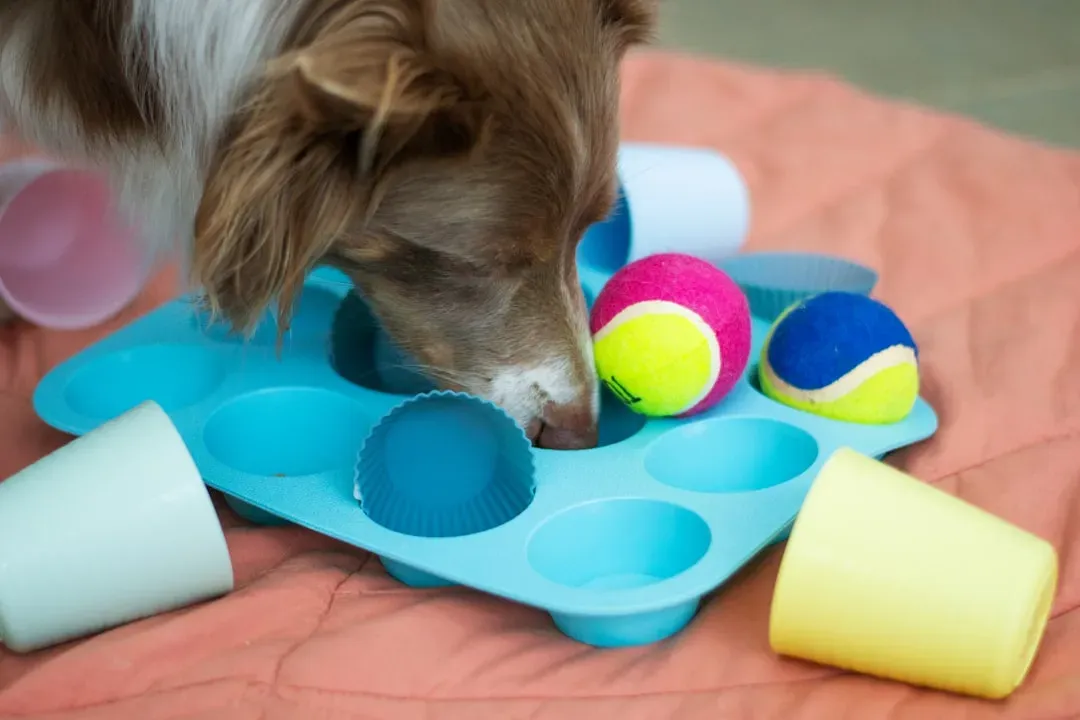
Mental stimulation is an effective way to help dogs expend energy because it engages their brain in activities that require focus, problem-solving, and memory recall. Just like physical exercise, cognitive tasks consume energy by stimulating brain activity. The brain relies on glucose as its primary energy source, and when a dog is engaged in mentally challenging activities, such as solving puzzles, learning new commands, or participating in scent work, it burns more glucose. Think of it like this: a sudoku puzzle exhausts your brain in ways a jog around the block simply doesn’t.
Mental stimulation also increases the activity of neurotransmitters like dopamine and serotonin, which help dogs feel calm and content after exertion. Providing mental challenges helps reduce stress and boredom, which are common triggers for hyperactivity or destructive behaviors. So when your dog is shredding the couch cushions in February, it’s not rebellion. It’s biology calling out for more.
Spot the Warning Signs: Is Your Dog Already Bored Stiff?

Before jumping into solutions, it helps to know what you’re dealing with. Pacing, struggling to settle down, or constantly patrolling around the house can often mean that your dog has excess energy with no outlet. Barking at every sound or staring out the window and barking at every passerby is often your dog’s way of creating their own entertainment when they’re bored. Obsessive or repetitive behaviors such as tail chasing, excessive licking, or spinning in circles can develop into compulsive behaviors when dogs don’t have enough enrichment or healthy outlets.
Winter is often when behavioral issues skyrocket. Dogs are under-stimulated, owners are frustrated, and the walls of the house start to feel a lot closer. You might be seeing more chewing, more barking at the window, or a sudden inability to settle down in the evening. Honestly, if any of that sounds familiar, you’re not failing as a dog parent. You’re just overdue for a game plan.
Turn Mealtime Into a Mind Game With Puzzle Feeders and Snuffle Mats
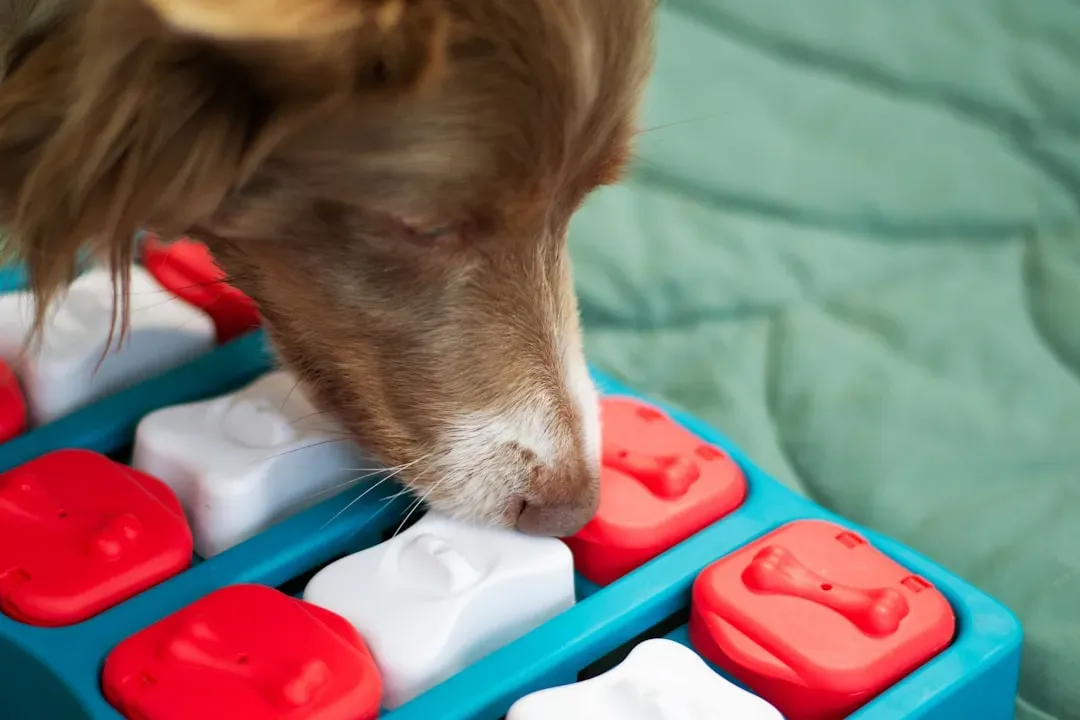
Your dog’s ancestors had to work hard for their food, spending hours tracking and hunting their prey. These days, our dogs usually eat their meals in seconds. Science shows that dogs enjoy working for their food, so try using puzzle toys and LickiMats to extend feed times and challenge your dog at the same time. Swapping out the regular bowl for a snuffle mat is honestly one of the easiest upgrades you can make, and it costs less than a fancy coffee.
Use a snuffle mat, a food dispensing toy, or a treat release ball to encourage your dog to search, sniff, and problem solve. This taps into their natural foraging instincts, turning a quick meal into a focused activity that can last ten to fifteen minutes and burn significant mental energy. Rotating between different puzzle types every few days keeps things interesting. Dogs can quickly lose interest in the same activities, so it’s important to rotate their toys and games regularly. Introducing new challenges keeps your dog curious and excited about playtime.
Nose Work and Scent Games: Unleashing the Power of the Sniff
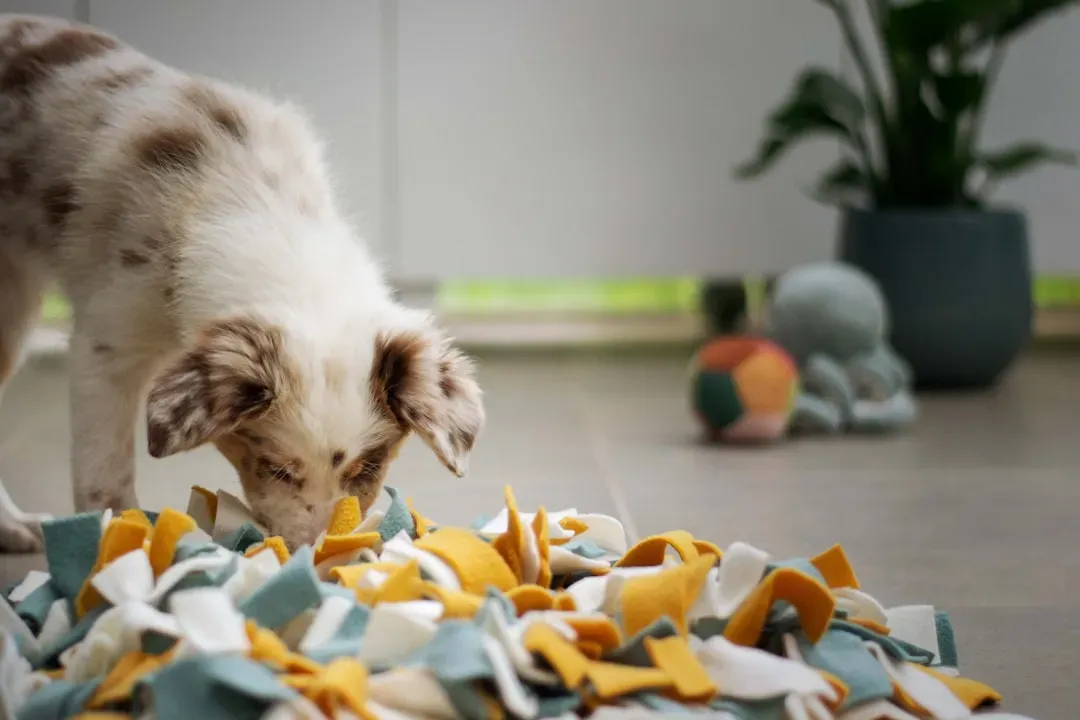
Let’s be real. Your dog’s nose is basically a supercomputer that we’ve been dramatically underusing. Dogs have an incredible sense of smell, and hiding treats around your home taps into their natural hunting instincts. This game is simple yet highly effective for mental stimulation. Start easy. Hide a treat under a cup or behind a chair, say the magic word “find it,” and watch your dog transform into a little detective. Gradually increase the difficulty as they get better.
A dog’s nose is their main tool for exploring the world, and using it is incredibly tiring. Hide high-value treats or your dog’s favourite toys around the house and encourage them to track them down. You can build this into a whole “indoor sniffari,” scattering treats through multiple rooms and letting your dog work their way through. Fifteen minutes of intensive brain games can be as exhausting as a one-hour walk. I know it sounds crazy, but your dog could be genuinely tired after this, and you barely had to stand up.
Indoor Agility Courses: Your Living Room Is a Playground in Disguise
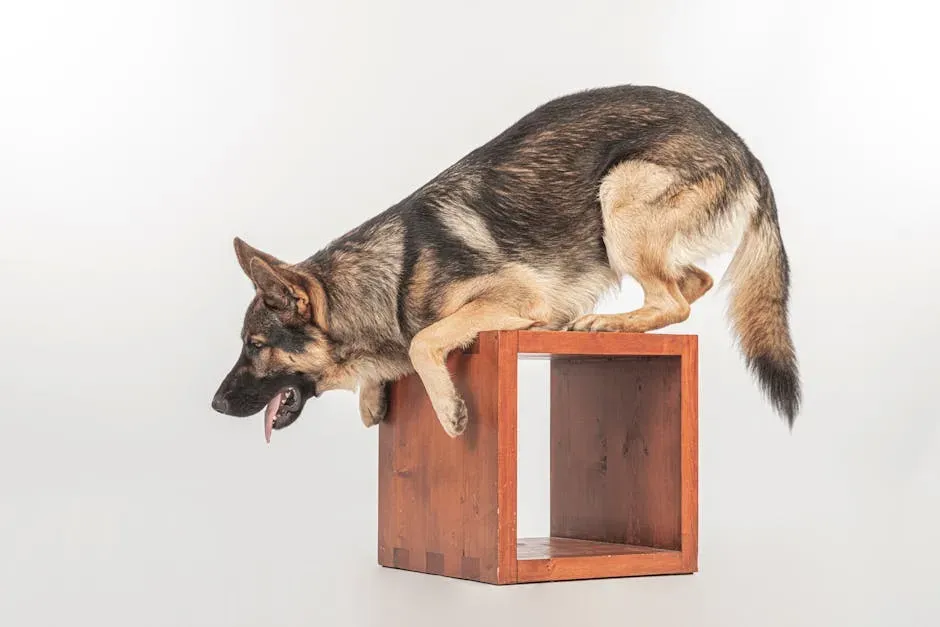
While full agility courses are often set up outdoors or in specialized facilities, indoor pets can benefit from modified agility activities in the comfort of a home setting. You can use your creativity to create a mini agility course in your living room or hallway using everyday items such as pillows, chairs, and boxes to mimic traditional obstacles. By guiding your dog through the course with treats or a favorite toy, you provide not only physical exercise but also mental stimulation, as they must think through how to maneuver each obstacle.
Practicing agility strengthens the bond between owner and pet, as it requires teamwork and communication to successfully complete the course. The course does not need to be massive because there are many benefits beyond energy expenditure; agility training is also beneficial for a dog’s overall well-being as it builds their physical strength, improves coordination, and boosts flexibility, all of which are essential for maintaining health as they age. For high-energy breeds especially, this is a genuine game-changer on a stormy afternoon.
Teach New Tricks: Winter Is Your Secret Training Season

Winter is actually the perfect time to double down on training and behavior foundations. Since we are inside more, we can control the environment better. Training doesn’t have to be a formal, intense drill session. Even five minutes of practicing “spin,” “roll over,” or “put your toys away” gives your dog a sense of purpose and accomplishment. Dogs genuinely thrive when they feel like they’ve earned something.
Training activities at home or via classes can offer productive entertainment for bored dogs. Whether you’re reinforcing basic cues or teaching fun tricks, training helps reduce boredom and grow your bond. Just a few minutes of training each day can make a noticeable difference in your dog’s behavior and mood. Clicker-trained dogs offer new behaviors rather than waiting for instructions, and that’s incredibly stimulating and exciting for them. The confidence boost alone is worth every treat.
Interactive Tug and Hide-and-Seek: Playful, Structured, and Surprisingly Deep

Tug-of-war is a great way to engage your dog’s mind and body while reinforcing positive behaviors. While it may seem like a purely physical game, it also requires focus and problem-solving skills. The key, though, is structure. This activity must have rules. The dog must sit and wait before chasing. They must “drop it” on command. This exercises impulse control alongside the prey drive. Without those rules, you’re just building excitement. With them, you’re building a well-rounded dog.
Activities like hide-and-seek, where your dog has to find you, or tug-of-war let you play together and build your bond. Scent games where you hide dog treats or dog toys around the house are also fun boredom busters. Hide-and-seek is particularly brilliant because it works on recall, scent tracking, and emotional connection all at once. Call your dog’s name from a different room and reward them enthusiastically when they find you. Simple, free, and wildly effective.
Create an Enriched Environment: Make Your Home Feel Less Like a Box
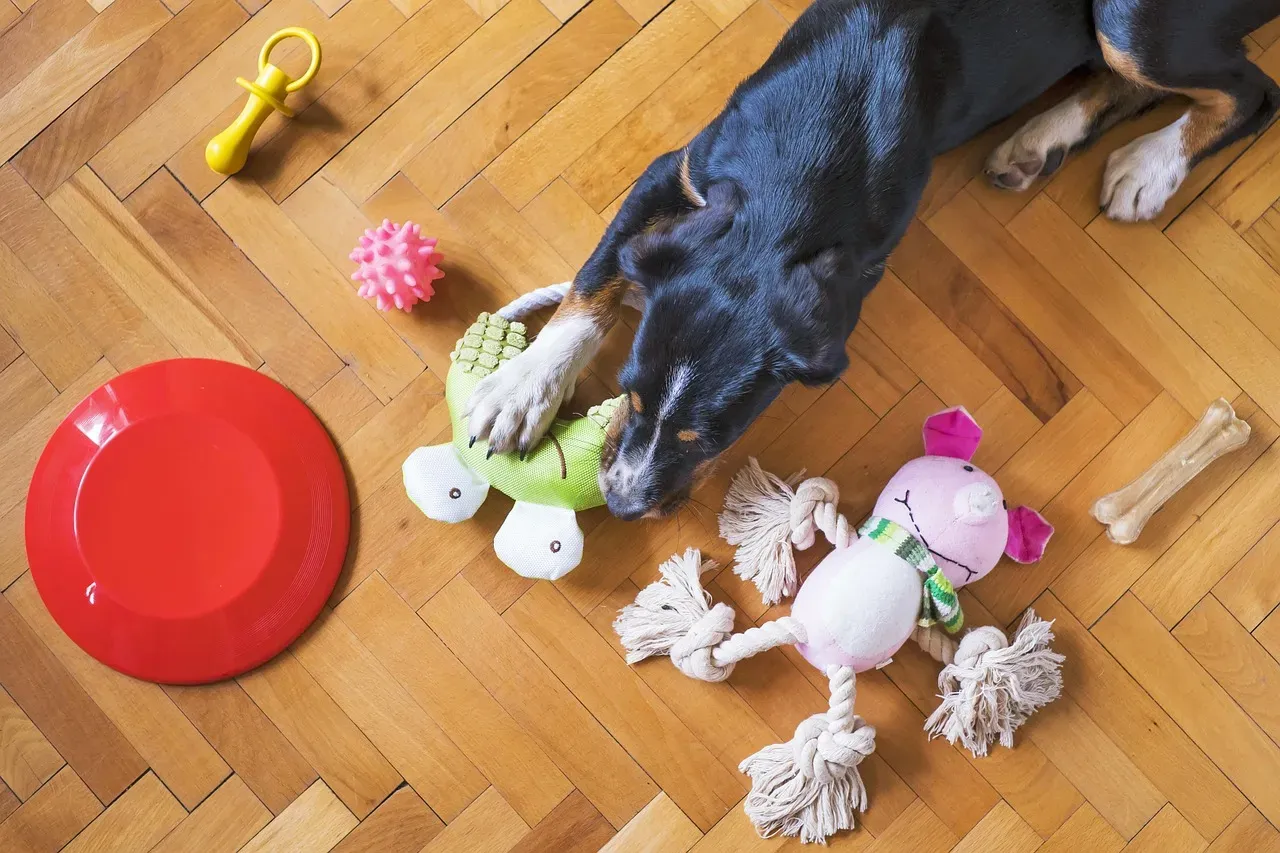
Sometimes the issue isn’t what you’re doing with your dog. It’s the environment they’re spending most of their time in. An enriching environment can help keep your dog mentally engaged at home. Rotate interactive toys: swap out puzzle feeders, snuffle mats, and frozen treat-stuffed Kongs to keep playtime fresh and stimulating. Provide visual stimulation: set up a cozy window spot. Add a bird feeder or turn on dog-friendly TV for extra entertainment.
Instead of one long play session, aim for multiple short bursts of ten to fifteen minutes each. It’s easier to fit into your day and keeps your dog’s interest high. Think of it like spacing out good meals rather than serving one enormous feast. Keeping a predictable daily routine gives structure and anticipation while reducing restlessness. Even something as simple as doing enrichment activities at the same time each day can calm an anxious or bored dog significantly.
A Winter That Works for Both of You
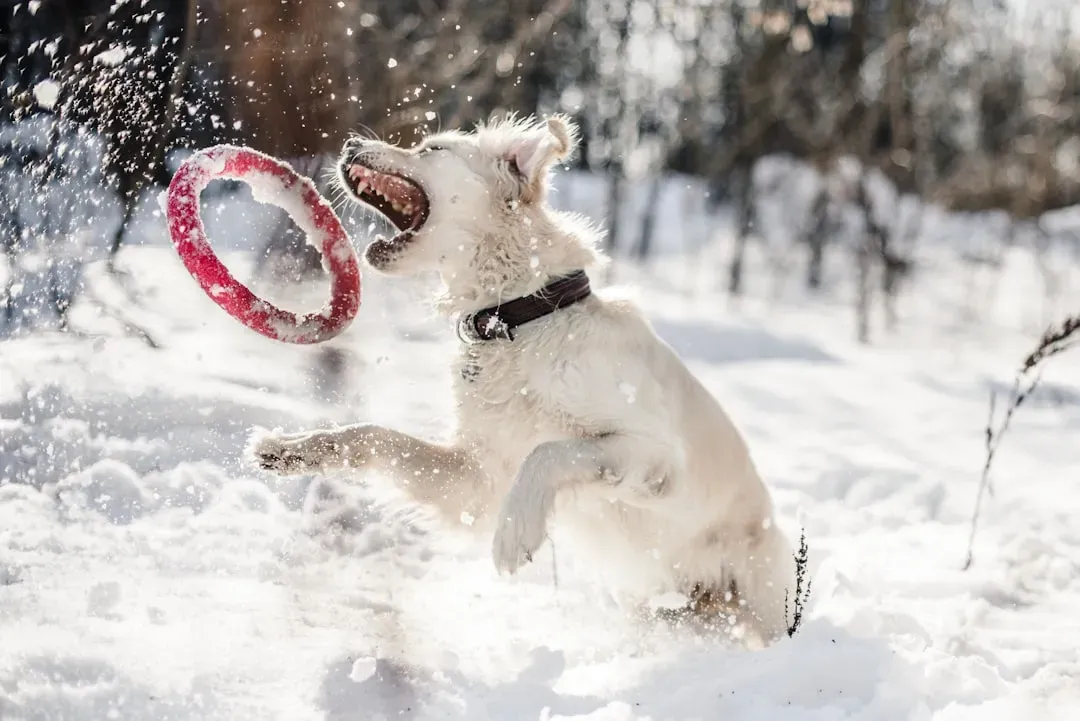
Winter doesn’t have to be the season your dog dreads and you dread alongside them. Mental enrichment is just as important as physical exercise, and it helps prevent boredom, destructive behavior, and anxiety. The seven strategies above aren’t complicated. They don’t need fancy equipment or a lot of space. What they need is consistency and a little imagination.
By incorporating a variety of physical exercise and, crucially, mental enrichment activities into your dog’s daily routine, you can quickly address understimulation. You’ll be rewarded with a calmer, happier, and better-behaved companion who is too busy thinking and sniffing to chew your dining table. That’s a trade worth making on any cold winter morning. Your dog is counting on you to make winter interesting. The question is: which of these seven ideas will you try first?
What do you think? Which activity surprised you most, and which will you be setting up today? Drop your thoughts in the comments below, we’d love to hear how your pup gets on.


