

You come home to find the couch cushion demolished. Or your dog has been barking so persistently the neighbors knocked. Maybe they’ve been pawing at your leg every five minutes, refusing to settle. It’s easy, in those moments, to feel frustrated. Easier still to label it misbehavior and move on.
The truth is, most of what we call “bad habits” in dogs aren’t really bad habits at all. They’re messages. Your dog doesn’t have the words to say “I’m scared,” “I’m bored,” or “I need you right now,” so they use the tools they have: their body, their voice, and whatever happens to be within reach. Learning to read those signals doesn’t just reduce frustration. It can genuinely change your dog’s quality of life.
Your Dog Is Communicating All the Time, Whether You Realize It or Not

Dogs communicate their wants, needs, happiness, and fear primarily through body language. That stare across the room, the head tilt when you ask a question, the way they position their body near the door before you’ve said “walk” – it all counts. Dogs are communicating with us all of the time. It’s just that we often don’t recognize it.
Unlike people, canine body postures and scent cues are significant components of dog language, while vocal communications are less significant. People are listeners; dogs are watchers. That fundamental difference is where a lot of miscommunication between dogs and owners begins. We wait for a sound. They’re already telling us everything with their posture.
Often, actions that we assume mean one thing are actually the dog telling us the exact opposite – determining what that wagging tail or lifted paw really means could be the difference between a pleasant interaction and a bite. Staying curious about what your dog is trying to say is one of the most useful habits you can develop as an owner.
Excessive Barking: Not Noise for Its Own Sake

While barking is a natural form of communication for dogs, excessive barking can become a nuisance. It’s crucial to understand the cause, which can range from alerting you to a stranger’s presence to boredom or anxiety. There’s a real difference between a dog that barks at the mail carrier once and a dog that barks for hours every time you leave. The second one is telling you something urgent.
Separation anxiety is triggered when dogs become upset because of separation from their guardians, the people they’re attached to. This behavior isn’t done out of spite. It’s actually a response to fear or stress – it’s a way to self-soothe. Think of it less as your dog acting out and more as your dog having a very hard time alone.
Prevention matters enormously here. Providing lots of physical and mental stimulation is a vital part of treating many behavior problems, especially those involving anxiety. Exercising your dog’s mind and body can greatly enrich his life, decrease stress, and provide appropriate outlets for normal dog behaviors. A simple morning walk before you leave for the day can shift the entire dynamic. Exercise is crucial for managing barking behavior. A tired dog is less likely to bark out of boredom or frustration. Ensure your dog gets adequate physical and mental exercise daily.
Destructive Chewing: Boredom, Anxiety, or Something Deeper?

Destructive chewing is almost always communicating something: boredom, anxiety, excess energy with nowhere to go, or a lack of appropriate outlets that make the couch the next best option. When you come home to shredded furniture, the instinct is to scold. The more useful instinct is to ask what was happening while you were gone.
Boredom and anxiety in dogs can look very similar, and many of the signs overlap. Chewing, digging, pacing, or attention-seeking can occur with either condition. One clue is the pattern: dogs who are bored often improve with increased enrichment and structured activity; dogs with anxiety may continue destructive or repetitive behaviors even in a stimulating environment. Knowing which you’re dealing with shapes everything about how you respond.
Chewing also combats boredom and can relieve mild anxiety or frustration. Dogs who chew to relieve the stress of separation anxiety usually only chew when left alone or chew most intensely when left alone. If the damage only happens in your absence, that pattern alone is a significant clue. Persistent chewing, especially on unusual items, may indicate underlying health issues, and a veterinarian can assess your dog’s overall health and suggest dietary adjustments or treatments if needed.
Pawing, Nudging, and Attention-Seeking: They’re Asking, Not Demanding
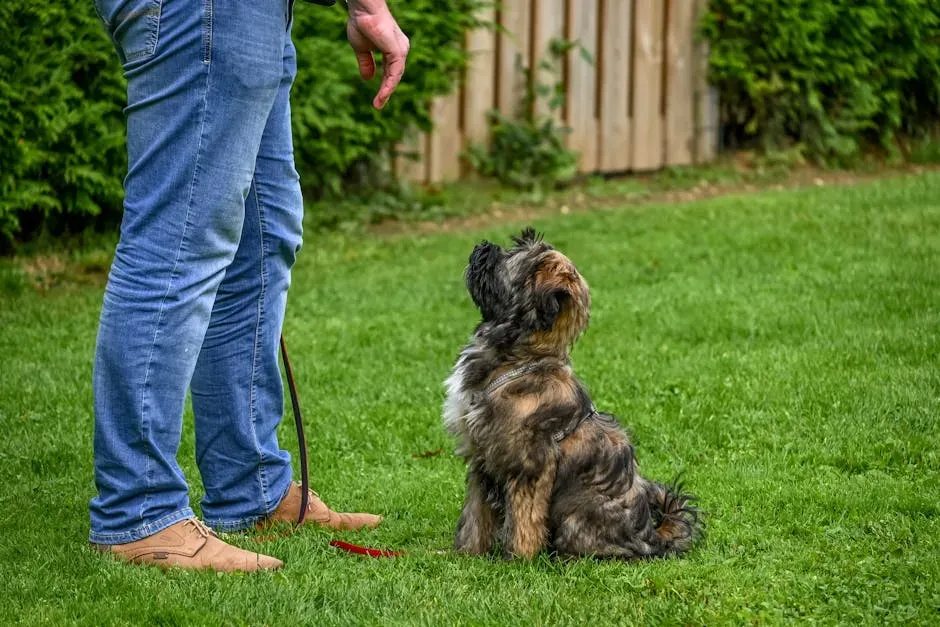
Action-prompting behaviors are any signals your dog uses to get you to do something for them. They help bridge the communication gap between dogs and humans. These behaviors develop naturally, but they’re also shaped – intentionally or not – by reinforcement. That paw on your knee during dinner didn’t appear from nowhere. At some point, it worked.
If your dog nudges you and you respond by petting or feeding them, they learn that nudging works. If they hover by the door and you open it, that behavior becomes their go-to “I need to go out” signal. Most of the time, these behaviors start as polite requests. They only escalate into something overwhelming when the original signal was consistently ignored or the reinforcement became unpredictable.
Attention-seeking behavior is any action a dog performs to get a human to notice them. It can include barking, whining, jumping on you, pawing you, or mouthing you with their jaws. Rather than suppressing these behaviors entirely, the smarter approach is teaching your dog a calmer, more acceptable way to ask for the same thing. One of the ways to manage attention-seeking is to provide your dog with alternative behaviors. Your dog wouldn’t be asking for your attention if they didn’t want or need something in the first place. So, teach them a more effective way to get what they want. Then, reward that alternative. For example, if they want you to greet them when you get home, teach them to sit to say hello instead of jumping up.
Scratching, Digging, and Chewing Furniture: When Stress Takes Over the Body

Dogs that scratch at or chew on their owner’s property are often described as bored. But often there are layers to those behaviors. Yes, they may be born of boredom, but they may also be used as a form of communication that says, “Hey, human, do stuff with me.” Context is everything. Does it happen at specific times? Only when you’re in another room? Only after a long day at home with no walks?
Changes to your dog’s environment, whether gradual or sudden, can be upsetting and cause abnormal or unwanted behaviors. It can cause your dog to feel threatened or fearful, which can include insecurity, jealousy, and anxiety. Examples include noisy road work outside, a house move, the arrival of a new baby or pet, new smells in the house, or even new feeding bowls. Small environmental changes that seem trivial to you can register as genuinely stressful to a dog.
Destructive dog behaviors can almost always be traced to an underlying issue. A dog suffering from behavior problems perhaps is bored, is being accidentally encouraged, or might even be suffering from a medical condition. Before labeling something a bad habit, it’s worth asking whether your dog’s physical needs – enough exercise, enough mental engagement, enough connection – are actually being met. Dogs need more than love. Make sure they have proper nutrition, a safe environment, mental enrichment, and exercise.
When to Involve a Professional

Most dog behavior problems don’t stay the same. They escalate over time. The behaviors that feel manageable today can become significantly harder to address six months from now, particularly when anxiety is involved. Early action is genuinely easier than delayed action.
Injuries, along with many underlying health conditions or current illnesses, can cause abnormal dog behavior either due to chemical imbalances in the body, pain and discomfort, or nerve problems. Any abnormal behaviors should always be reviewed by a vet first. A sudden shift in behavior in an otherwise settled dog is worth a vet visit, not just a training adjustment. Sometimes what looks like a behavioral issue has a physical cause.
Positive reward-based training teaches your dog that good things happen when they do what you ask, strengthens your bond, and provides mental stimulation that will help tire them out, making them less likely to misbehave. If you’ve tried adjusting routines and haven’t seen improvement, call a dog trainer for obedience and basic skill-building, or a behaviorist for aggression, anxiety, or deep emotional behavior issues. There’s no shame in asking for help. The goal is a dog that feels understood, not a perfectly compliant animal.
Conclusion: Behavior Is a Language Worth Learning

Your dog isn’t trying to make your life harder. They’re doing the only thing they can: using the behaviors they have available to tell you what they need. When you start reading those signals with curiosity instead of frustration, the whole relationship shifts.
Your dog is “talking” to you all the time. If you learn what your dog is saying, you will develop a deeper bond of trust and respect. Plus, your newfound understanding of your dog’s emotional state can help you predict their behavior and prevent problems before they arise.
Most of what gets labeled a “bad habit” is really just an unanswered question. The more fluently you can read the question, the better the answer you can give. That’s not just good training. That’s good companionship.


