
Reviving the Amazon: Communities Partner with Experts to Protect and Restore Vital Rainforest
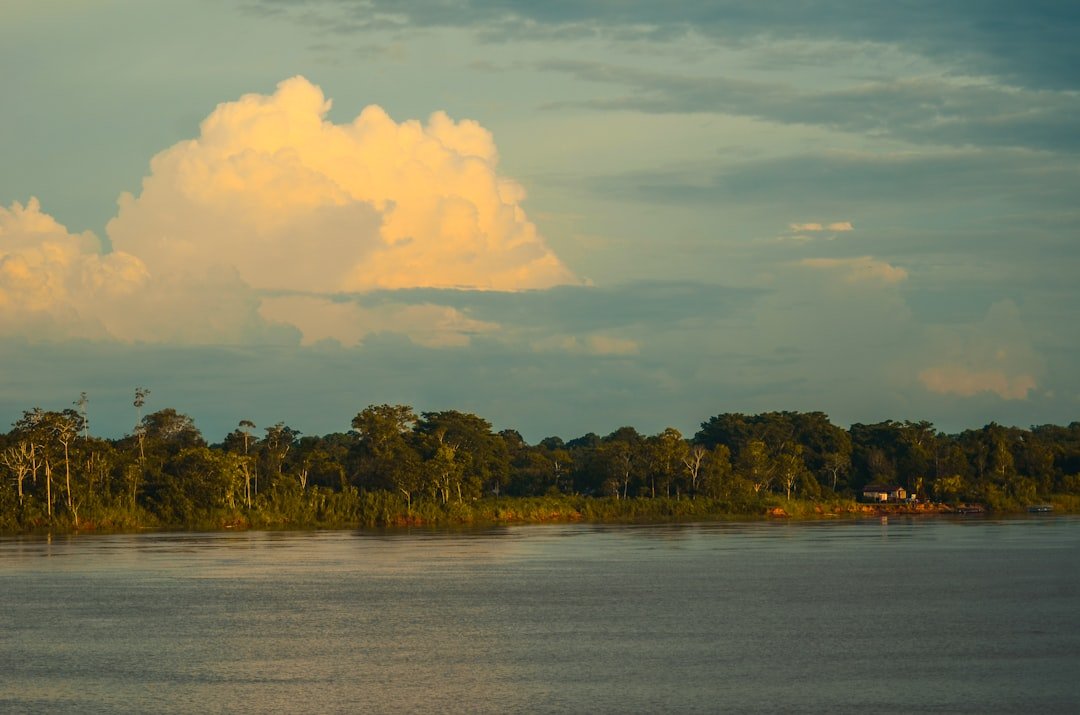
The Amazon Basin spans nine countries and holds unparalleled biodiversity, yet deforestation and climate pressures threaten its stability. Local communities, often Indigenous, have long stewarded these lands, now collaborating with organizations like Conservation International to safeguard remaining forests, heal degraded areas, and deepen knowledge of ecological dynamics. These efforts blend traditional wisdom with modern science, offering a blueprint for large-scale conservation.[1][2]
Local Guardians Take the Lead
Indigenous and rural communities across the Amazon drive protection initiatives, establishing vast conserved zones that respect their rights and knowledge. In northern Peru, 16 Indigenous groups worked with Conservation International to designate the Medio Putumayo-Algodón Regional Conservation Area, covering over 700,000 acres. This move halted illegal logging and mining while linking an 18,000-square-kilometer corridor for species like jaguars and giant river otters.[1]
These areas preserve carbon stores essential for climate regulation and grant communities legal authority over forests, rivers, and plants. Similar successes emerged in Bolivia, where four municipalities created protected zones totaling 907,244 hectares between late 2025 and early 2026. Leaders emphasized collective processes involving men, women, and youth to ensure lasting benefits, such as sustainable Brazil nut harvesting.[2]
Scaling Up Restoration on a Grand Level
Brazil’s “arc of deforestation” sees ambitious tree-planting to counter losses, with Conservation International spearheading the world’s largest tropical restoration project. The initiative targets 73 million trees across 30,000 hectares in the southern Amazon and forest heartlands, aiding Brazil’s goal of reforesting 12 million hectares by 2030.[3]
Teams employ the innovative “muvuca” technique, scattering diverse native seeds to boost tree diversity and cut costs compared to sapling planting. Early results exceeded expectations, with yields triple the forecast – 9.6 million trees projected on 1,200 hectares instead of 3 million. Miguel Moraes of Conservation International Brazil noted, “We’re seeing a tree yield that is three times higher than our initial estimates… This is a very good result, and it offers hope of overcoming the challenge of reducing restoration costs to enable restoration at a large scale.”[3]
At the individual level, Peruvian farmer Alex González transformed his Pucayagro land from cattle pastures to native groves of aguaje and açaí palms. Supported by Conservation International, he integrated aquaculture ponds in a closed-loop system, reviving wetlands and attracting over 90 bird species while supplying sustainable paiche fish to markets.[1]
Bridging Science and Tradition for Deeper Insights
Understanding the Amazon’s rhythms informs smarter protection, as seen in Peru’s Alto Mayo region where Conservation International’s Rapid Assessment Program cataloged over 2,000 species, including 27 new to science. Awajún Indigenous guides led expeditions through swamps, coffee fields, and logged zones, revealing how forest patches sustain biodiversity even in modified landscapes.[1]
These findings guide communities in land stewardship, highlighting resilient ecosystems amid human activity. In Bolivia, new Andean-to-lowland corridors protect species like harpy eagles and Amazon river dolphins, stitching together a “conservation mosaic.” Eduardo Forno, vice president of Conservation International-Bolivia, stated, “These four municipalities have stitched together a vast ‘conservation mosaic’… local leadership can deliver durable conservation that strengthens communities and outlasts political cycles.”[2]
Key Strategies Powering Success
Conservation efforts thrive through targeted approaches that prioritize people and nature:
- Protected area expansions, like Bolivia’s 907,244 hectares, connect habitats and curb deforestation.
- Innovative restoration methods, such as muvuca seeding, achieve high-efficiency regreening.
- Community-managed zones empower Indigenous groups with legal tools for sustainable use.
- Scientific expeditions uncover species and processes to refine strategies.
- Agroforestry models blend farming with habitat recovery, boosting livelihoods.
Half the Amazon already falls under formal protection via Indigenous lands and reserves, storing 31.5 gigatons of carbon.[4]
Key Takeaways
- Community-led initiatives protect millions of hectares while honoring traditional knowledge.
- Restoration projects like Brazil’s 73-million-tree effort demonstrate scalable solutions.
- Science and local expertise together reveal paths to resilient ecosystems.
These partnerships signal a turning point for the Amazon, where local resolve meets global support to avert tipping points. As efforts expand ahead of key climate talks, the rainforest’s recovery hinges on sustained action. What steps can we take to support this vital work? Share your thoughts in the comments.