
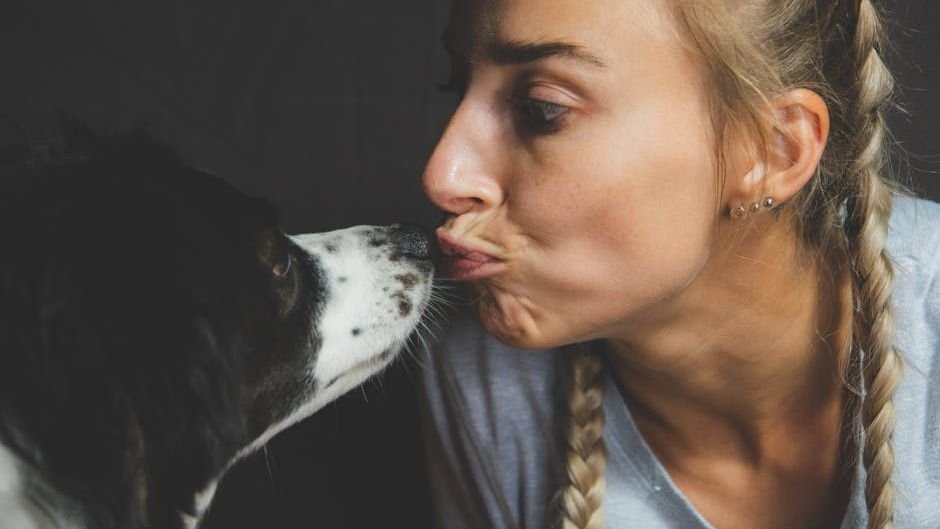
Most people who love dogs already sense it. There’s something going on behind those eyes – something that feels uncomfortably close to what happens inside us. Your dog shifts toward you when you cry. They know the sound of your keys before you touch the door. They can pick a bad day from a good one without a single word being spoken.
For a long time, science dismissed this as projection. We were told we were anthropomorphizing, reading human feelings into simple animal behavior. But that narrative has changed significantly over the past decade, and the research now tells a far more nuanced story. Your dog isn’t just reacting to your behavior. They are, in a very real sense, tuned into you.
Your Dog’s Brain Processes Emotions the Way Yours Does

The idea that dogs are emotionally simpler than us doesn’t hold up well against the neuroscience. During brain scans, the areas of the brain that light up when people have emotions also show increased activity in dogs going through similar situations, and the chemicals that make us feel stressed or relaxed are the same in both species. That parallel is hard to dismiss.
In studies, dogs exhibited brain activity similar to humans when exposed to emotional stimuli. Using MRI scans, researchers found that dogs’ brains are activated in a manner akin to ours when they hear happy sounds, which proves that dogs process positive emotions in a way parallel to humans.
Research using fMRI found that viewing a familiar caregiver activated brain regions in dogs associated with emotion and attachment processing in humans. In contrast, strangers elicited activations mainly in regions related to visual and motor processing. Happy stimuli led to increased activation of the caudate nucleus, which is associated with reward processing, while angry stimuli activated limbic regions. In other words, your dog’s brain doesn’t just register your presence. It categorizes the emotional quality of it.
They Read Your Face More Carefully Than You Might Think
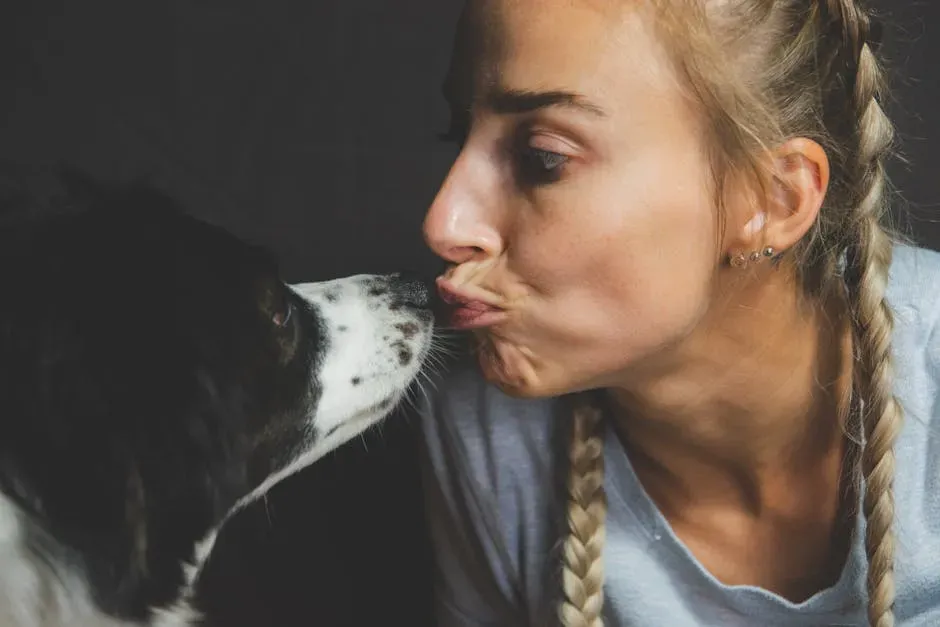
Dogs have been empirically shown to be particularly sensitive to human emotions. They discriminate and show differential responses to emotional cues expressed through body postures, facial expressions, vocalizations, and even odors. This isn’t guesswork on their part – it’s a highly developed perceptual skill.
A study conducted by Eötvös Loránd University in Hungary demonstrated that dogs can distinguish between happy and angry human faces, an ability that is quite rare in the animal kingdom. Researchers used pictures of different facial expressions and confirmed that dogs spent more time looking at the happy faces – a significant breakthrough showing how dogs use visual cues to decipher human emotions.
Research conducted by scientists at the University of Lincoln in the United Kingdom shed light on the left-gaze bias in dogs. This phenomenon suggests that when dogs look at human faces to determine emotions, they tend to gaze more at the left side of the face rather than the right. One theory suggests this left-gaze bias is linked to the human brain’s emotional processing. Just like humans, dogs have a left and right hemisphere in their brains, with the left hemisphere associated with positive emotions. When dogs focus on the left side of a human’s face, they might be instinctively seeking out positive emotional cues. They aren’t just looking at you. They’re studying you.
The Oxytocin Loop That Bonds You Both
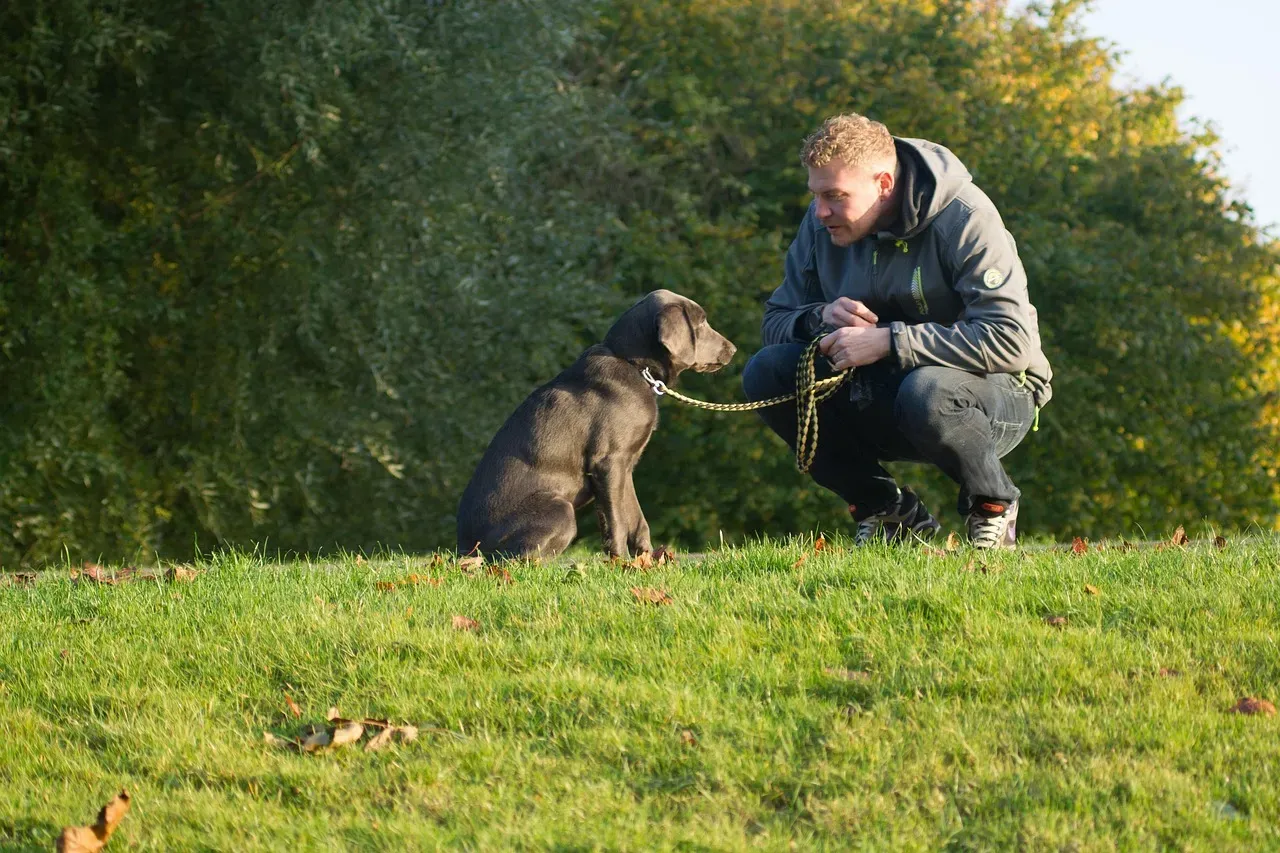
One of the most compelling findings in canine science involves the hormone oxytocin – the same neurochemical at the center of human bonding, trust, and love. A number of studies have shown that when dogs and humans interact with each other in a positive way, such as cuddling, both partners exhibit a surge in oxytocin, a hormone which has been linked to positive emotional states.
Research published in Science found that mutual gazing increased oxytocin levels, and that sniffing oxytocin increased gazing in dogs, an effect that transferred to their owners. Wolves, who rarely engage in eye contact with their human handlers, appear resistant to this effect. That tells us something profound: this gaze-bond loop is not just a learned behavior. It co-evolved across thousands of years of domestication, built specifically for the relationship between dogs and people.
Multiple studies show that when people pet dogs, it reduces cortisol, the stress hormone, and boosts oxytocin and dopamine, the feel-good hormones, in both parties. The bond isn’t one-directional. Your dog genuinely feels the warmth of your connection, and their brain chemistry changes because of it.
Separation Isn’t Just Inconvenient for Your Dog – It Can Be Genuinely Distressing

Many owners underestimate how deeply their absence registers emotionally for their dogs. Separation anxiety is triggered when dogs become upset because of separation from their guardians, the people they’re attached to. Escape attempts by dogs with separation anxiety are often extreme and can result in self-injury and household destruction, especially around exit points like windows and doors.
Separation-related disorder in dogs is a multi-faceted phenomenon, and dogs can react to the absence of their owner due to different inner states such as fear, panic, or frustration. It isn’t simply misbehavior when your dog chews the door frame or howls for an hour. According to certified applied animal behaviorist Patricia McConnell, PhD, although we can’t know for sure what’s in a dog’s mind, we can think of separation anxiety as the equivalent of a panic attack.
If you suspect your dog struggles when alone, practical steps can help. Desensitizing your dog to pre-departure cues can reduce their anxiety. These cues, such as picking up car keys, packing a lunch, or putting on shoes, are the behaviors owners exhibit prior to leaving and can be a significant source of distress. You can help decrease your dog’s anxiety by changing up your routine or performing these actions when you are not actually leaving. Catching these signs early and addressing them compassionately makes a real difference to your dog’s quality of life.
We Often Misread What Our Dogs Are Actually Feeling

Here’s the twist most dog lovers don’t see coming: even though dogs have deep emotional lives, we as owners are often surprisingly poor at reading them accurately. New research has revealed that people often do not perceive the true meaning of their pet’s emotions and can misread their dog. The reasons include a human bias toward projecting our own emotions onto our pets.
In one study, when people saw a video of a dog apparently reacting to a vacuum cleaner, everyone said the dog was feeling bad and agitated. When they saw a video of the dog doing the exact same thing but this time appearing to react to seeing a leash, everyone reported that the dog was feeling happy and calm. People were not judging the dog’s emotions based on the dog’s behavior, but on the situation the dog was in.
This matters practically. Dogs don’t feel more complex emotions like shame, pride, or guilt the way humans do. This can be surprising for owners, especially those with a dog that has mastered a “guilty look” when something goes wrong. While it looks like guilt, the dog is actually exhibiting signs of fear as they await an impending punishment. Learning to observe your dog’s actual body language – rather than filtering it through human expectations – is one of the most useful things you can do for your relationship with them.
Conclusion: Caring Better Starts With Seeing Clearly
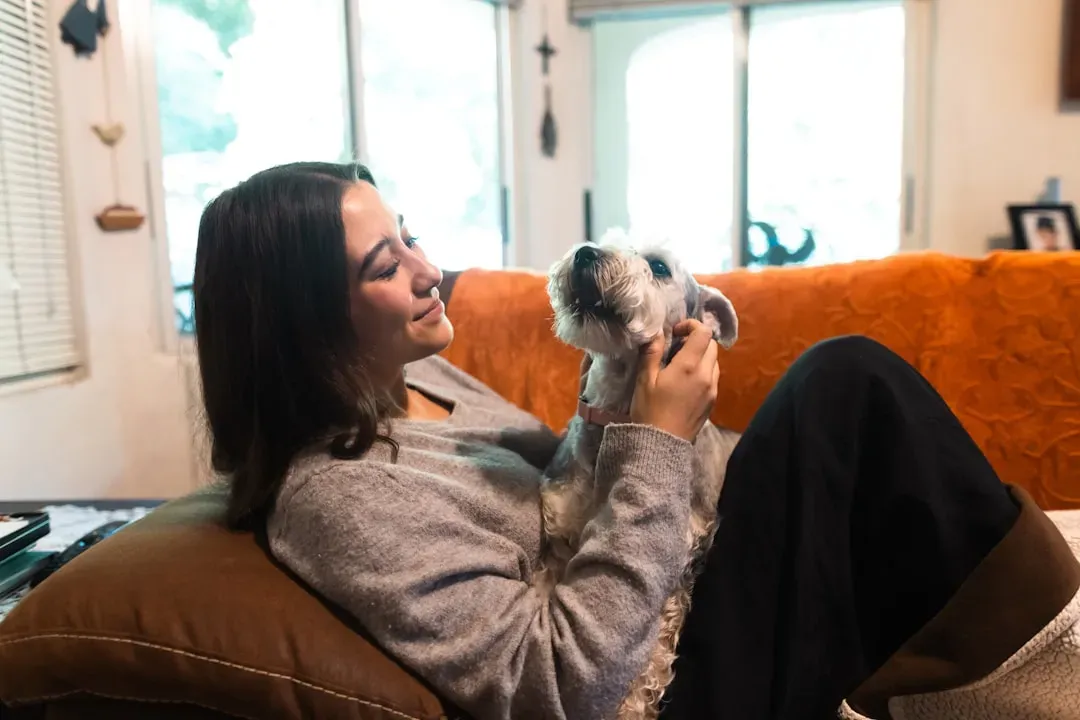
Dogs are sociable creatures that form strong ties with humans, and the emotional intelligence of dogs is a significant factor in the dynamics of the interaction between humans and dogs. The science increasingly confirms what many dog owners have quietly known for years: these animals are not emotionally simple. They feel, they bond, they grieve, and they track our inner states with impressive precision.
The emotional state of a dog is interrelated with their entire health and well-being, which highlights the relevance of veterinary care, balanced nutrition, and regular exercise in the process of fostering a canine companion that is both content and emotionally stable. Their emotional needs aren’t a bonus to address – they’re central to their health.
The real takeaway isn’t that your dog is a small human. It’s that their inner life deserves to be taken seriously on its own terms. Watch what they actually do, not what the situation tells you they should feel. Pay attention to the subtle cues their bodies send. And recognize that behind that steady gaze is a creature genuinely invested in you. Meeting that investment with awareness and care is perhaps the most honest form of love you can offer them.


