
Picture this: your 10-year-old Labrador, who once greeted every morning with a toy in his mouth and boundless energy, now spends most of his day staring at the wall or sleeping well past noon. You chalk it up to aging, give him an extra pat, and move on. But what if something else is quietly at play?
Many dog owners don’t realize that the mental needs of a senior dog don’t shrink with age. If anything, they become more urgent. The brain, just like the body, needs regular exercise to stay healthy – and when it doesn’t get it, the consequences go well beyond boredom.
Why Mental Stimulation Matters More as Your Dog Gets Older
As dogs age, they naturally become less physically active. Their bodies may no longer be capable of the rigorous exercise they once enjoyed, and health issues can limit mobility. What many owners don’t realize is that this decrease in physical activity should not mean a decrease in mental stimulation. In fact, cognitive stimulation becomes more important as a dog ages.
Cognitive dysfunction syndrome (CDS) is a common age-related brain disease in dogs that causes deterioration similar to Alzheimer’s disease in humans. Dogs may start to develop CDS around nine years of age. The condition is often underdiagnosed because behavioral changes progress slowly, and owners may assume certain changes are simply a normal part of aging.
Research shows that cognitive stimulation can slow the progression of canine cognitive dysfunction, improve memory, and reduce anxiety and restlessness. It may even enhance the quality of sleep and help manage some physical symptoms of aging. That’s a meaningful return for something as simple as a daily puzzle feeder or a new walking route.
The Warning Signs Your Senior Dog Isn’t Getting Enough
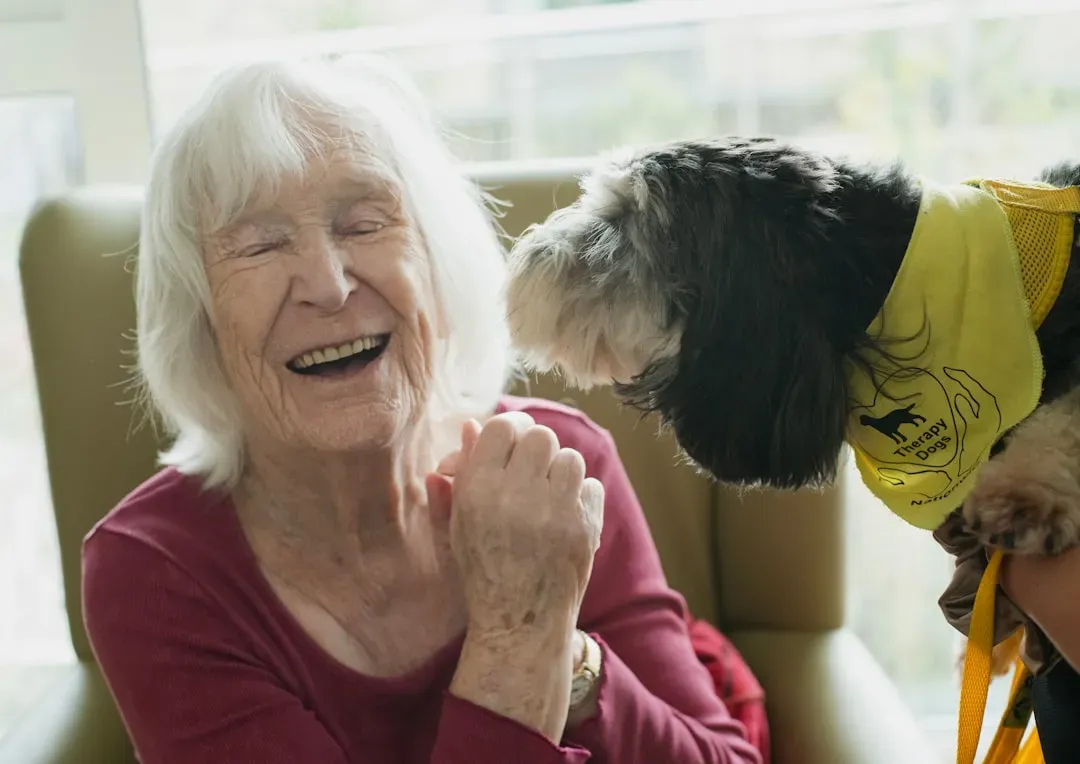
Veterinarians use the acronym DISHAA to describe the signs associated with cognitive dysfunction. It covers disorientation – like getting lost in familiar areas, not recognizing familiar people, or going to the wrong side of a door. It also includes changes in social interactions, such as becoming more clingy, more reclusive, or irritable when approached. Changes in the sleep-wake cycle are another key signal: increased sleeping during the day, paired with pacing and restlessness at night.
A decline in the physical or mental health of older dogs can be challenging for owners, whose relationship with their dog is affected by behavioral changes. Although owners tend to consider many of these changes as normal aging, it’s important to differentiate between normal aging and pathological aging, since behavioral changes may be the first indication of declining health and welfare.
Surveys have found that a striking proportion of owners with dogs aged 11 to 16 reported behavioral impairments across categories including orientation, social interactions, housetraining, and sleep-wake cycles – yet the vast majority of affected dogs had never been reported to a veterinarian. If your dog seems confused, detached, or just “off,” don’t wait for the next scheduled check-up. Bring it up now.
What the Research Actually Says About Brain Enrichment
Findings from the Dog Aging Project, involving thousands of companion dogs, reveal a strong link between regular physical activity and lower levels of cognitive dysfunction. Less active senior dogs consistently show higher dysfunction scores, while those maintaining movement fare better across memory, attention, and adaptability measures.
Notably, dogs with an extensive training history were less likely to exhibit signs of cognitive decline. Dogs that received daily neuroprotective supplements such as omega-3 fatty acids also tended to have better cognitive outcomes. These findings reinforce the idea that a lifetime of consistent engagement – not just late-stage intervention – makes a real difference.
Multiple studies have consistently reported that behavioral enrichment can slow age-dependent cognitive decline. A synergistic effect has also been observed when combining long-term behavioral enrichment with an antioxidant-rich diet. It’s not about any single magic fix; it’s about building a consistent, varied routine that challenges the brain from multiple angles.
Simple but Effective Ways to Stimulate Your Senior Dog’s Mind
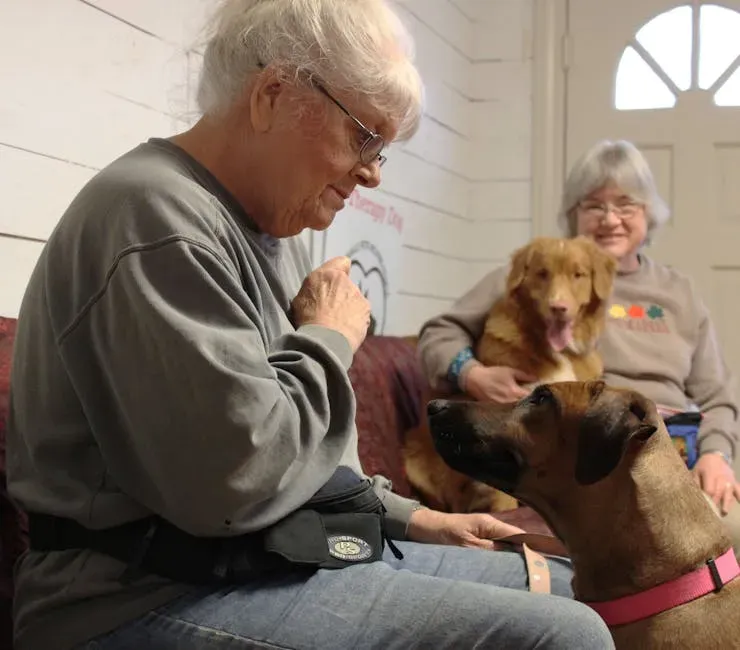
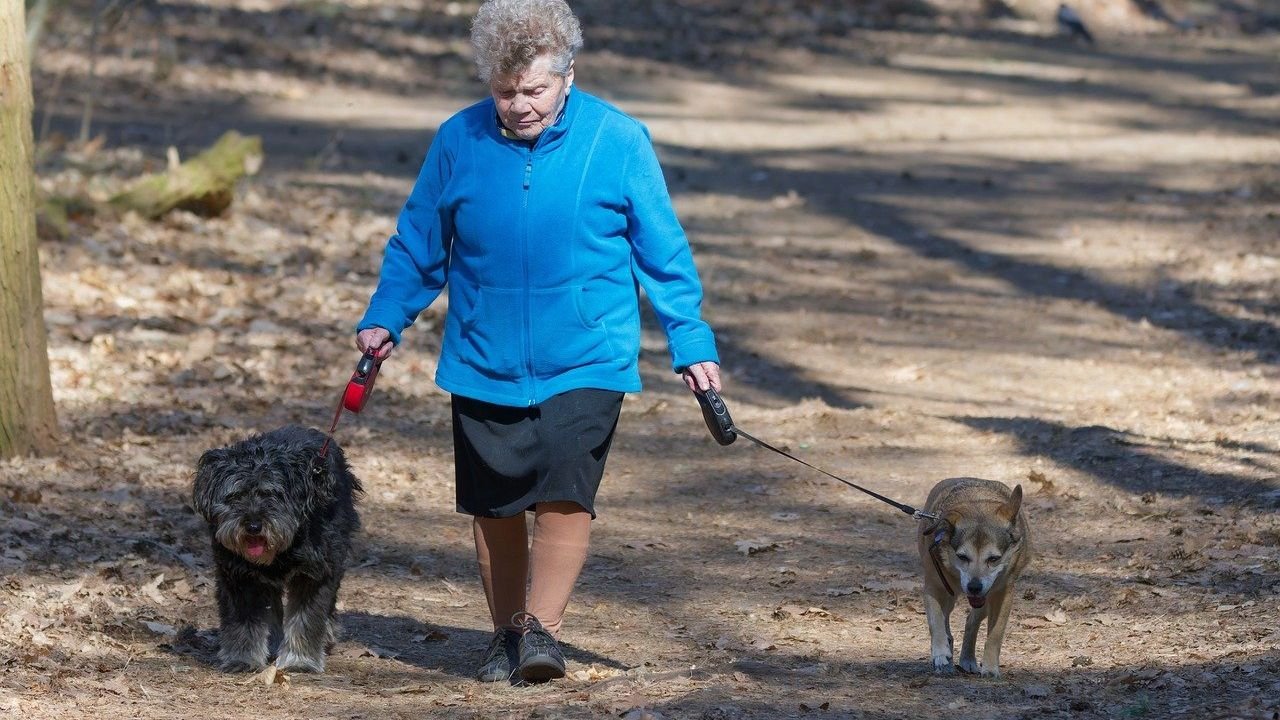
Olfactory stimulation is particularly enriching for senior dogs, as their sense of smell remains sharp even as other senses may decline. Engaging that sense of smell is one of the most effective ways to keep their brains active and provide meaningful mental stimulation. A simple sniff walk – where your dog sets the pace and follows their nose – costs nothing and delivers real cognitive benefit.
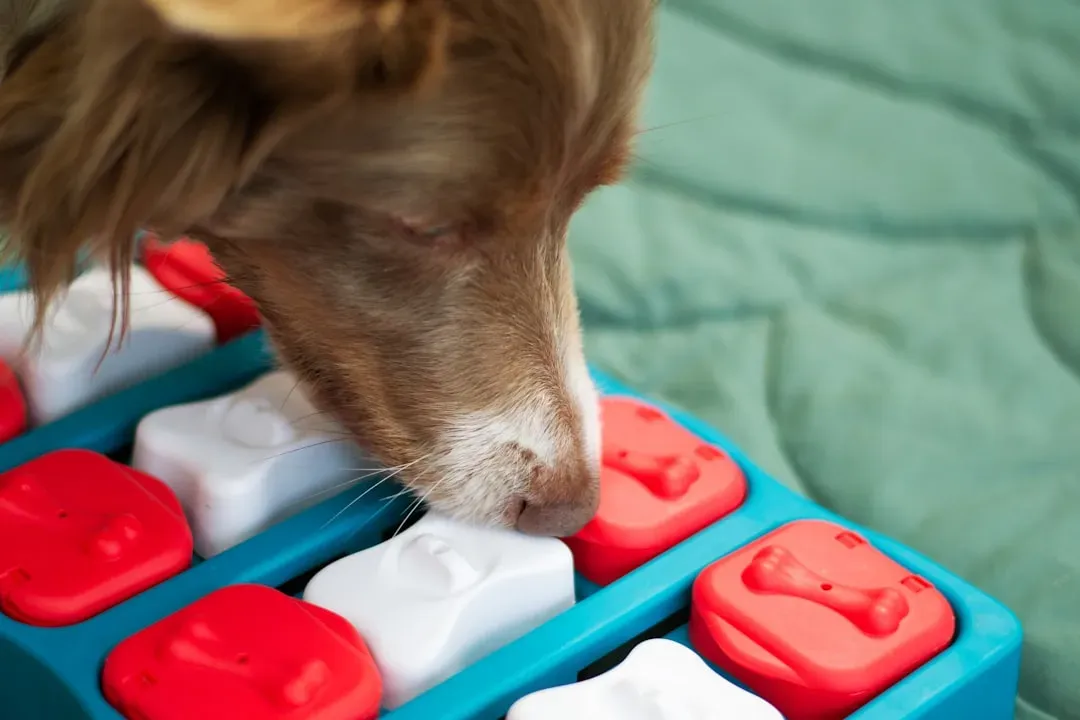
A range of activities can serve as mental stimulation for senior dogs, including short sniffing walks for both exercise and sensory experience, interactive puzzle toys that challenge problem-solving skills, training sessions that reinforce old tricks or introduce new simple commands, and gentle games like hide-and-seek with healthy treats. The key is variety. Rotating these activities keeps things fresh and avoids the dullness that comes with pure routine.
Positive reinforcement training is a particularly valuable tool for senior dogs because it is mentally stimulating but does not require intense physical exertion. Teaching an older dog new tricks requires more patience and time than training a younger dog, but it is entirely achievable. Starting with simple tricks and gradually working up to more complex tasks keeps the goal clear. The aim is not to show off your dog’s skills, but to keep their mind sharp and genuinely engaged.
How to Talk to Your Vet and Build a Brain Health Plan

Before embarking on any new enrichment activities with your senior dog, it’s essential to start with a comprehensive vet check. This ensures that your dog is healthy enough to enjoy planned activities without experiencing pain or discomfort. Regular vet visits also help you monitor your dog’s health and make necessary adjustments to any enrichment plan over time.
Your veterinarian can guide you in building a wellness plan that incorporates both mental stimulation and supplements that help protect brain tissues, slowing the changes associated with cognitive decline. Antioxidants found in food help counteract harmful chemicals that damage the brain. Certain nutrients are available in prescription diets and specially formulated supplements designed to target cognitive decline in senior dogs.
Early intervention with environmental enrichment, diet, and medical management can improve quality of life for dogs affected by CDS. That means the conversation with your vet shouldn’t wait until things look serious. Raising it early – even when your dog seems fine but is simply getting older – is exactly the right call.
Conclusion: Your Older Dog Still Has a Curious Mind Worth Nurturing
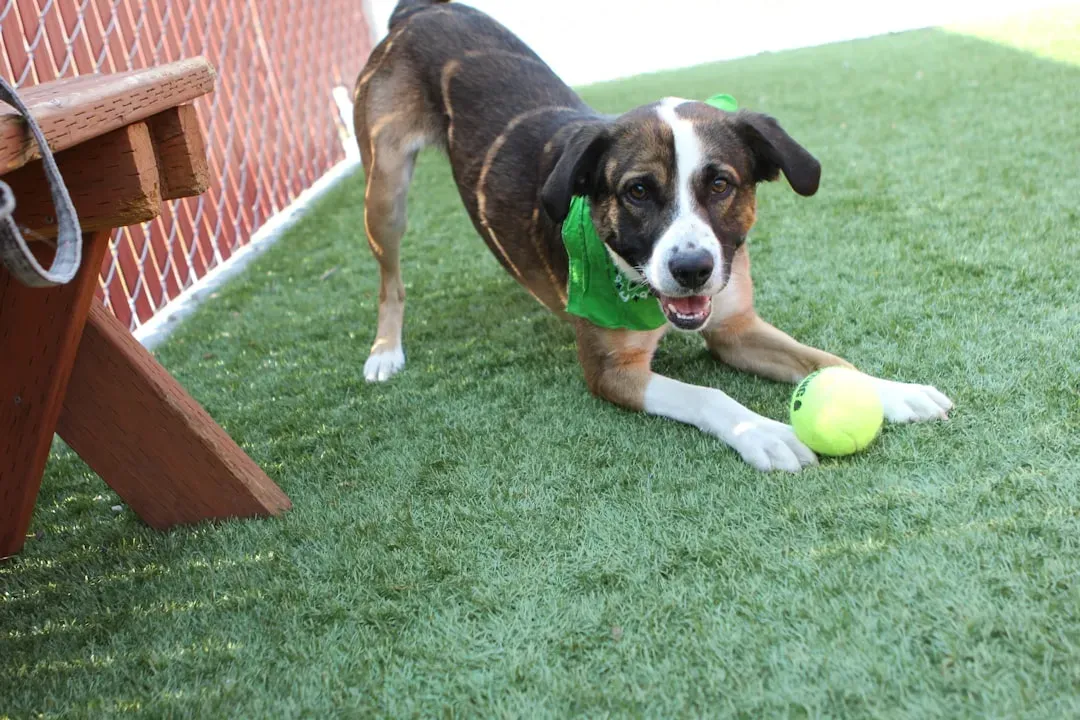
Aging doesn’t erase a dog’s desire to explore, learn, and connect. It just changes what that looks like. The senior dog sleeping in a sunbeam isn’t done with the world – they may simply be waiting for you to offer it to them in a gentler, more thoughtful way.
Environmental enrichment is very helpful for maintaining brain health, based on the principle of “use it or lose it.” Continuing to provide your dog with physical exercise, play sessions, new toys, and even new training can all help enrich the lives and brains of older pets. None of this has to be elaborate or exhausting.
A puzzle feeder at breakfast. A new route on your afternoon walk. Five minutes of gentle trick practice before dinner. These small, consistent choices add up in ways that matter deeply to your dog’s quality of life. The graying muzzle in front of you still holds a mind worth feeding – and you’re already the right person to do it.


