
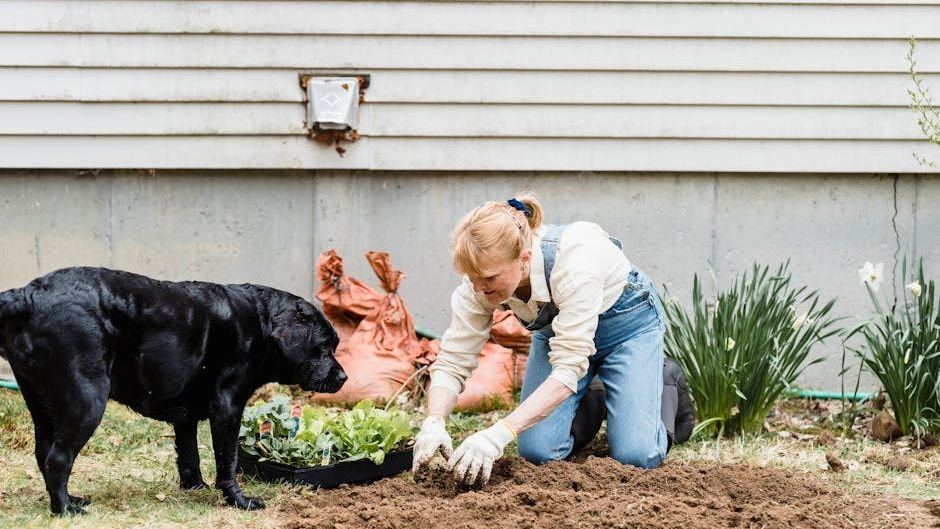
In Stroud, Gloucestershire, a local councillor has transformed her garden into an unlikely laboratory for waste management. Gill Thomas, who owns no dog of her own, has gathered more than 750 bags of abandoned pet poo since last September, feeding it into a home wormery.[1][2] The effort, sparked by littered hotspots in her district, now paves the way for a scientific trial to determine if the resulting compost can safely nourish fruits and vegetables.
A Councillor’s Drive to Tackle Dog Poo Litter
Gill Thomas serves as Stroud District councillor and holds the distinction of being Gloucestershire’s sole master composter focused on dog waste. Her initiative began when a resident flagged a severe “dog poo grot spot” near Bussage, prompting her to collect 350 bags from that area alone. She installed her own collection bin to encourage responsible disposal, and now gathers roughly 60 bags each month from local paths and fields.[1]
Thomas views the problem through an environmental lens. Overflowing bins and bagged waste strewn across countryside paths represent not just an eyesore but an unsustainable burden. With millions of dogs across the UK producing an estimated 1,000 tonnes of waste daily, she argues for innovative repurposing rather than landfilling or incineration.[3]
Inside the Wormery: A Stomach-Churning Transformation
At home, Thomas processes the collected bags in a wormery, where worms break down the waste over about six months. She describes the initial stages as “stomach-churning” and “revolting,” yet the end product emerges as dark, earthy compost. Already, she has applied it successfully to cultivate pumpkins and sunflowers, providing early evidence of its potential as a soil enhancer.[1]
This hands-on approach builds on her role as litter and clean environment champion for the council. Thomas has become a licensed waste carrier to handle the volumes legally and shares her methods to inspire others. While flowers thrive now, the leap to edible crops demands rigorous validation.
University of Gloucestershire Steps In with Rigorous Testing
The University of Gloucestershire will launch a trial this autumn, backed by researchers keen to bridge knowledge gaps. The study will evaluate various composting techniques, including cold and hot methods, using dog poo supplied by a local doggy daycare. Central to the effort is confirming whether the output proves pathogen-free and suitable for vegetable patches.[1]
Researcher Dr. Richard Cook emphasized the priority: “What we will do in our approach is to try to put in a way to find some funding to do some proper testing to make sure that what comes out the other end, excuse the pun, is pathogen free, that’s our main concern.”[1] The team plans comprehensive analysis for contaminants beyond bacteria, reflecting a methodical push toward practical application. This collaboration elevates Thomas’s experiment from backyard curiosity to structured science.
Veterinary surgeon Dr. Alice Judge, collaborating with Thomas, highlights data shortages. “It can be done with strict precautions,” she noted. “We don’t know about the resulting compost regarding some pathogens, antibiotic resistance, veterinary drugs in the faeces and microplastics from dog poo bags.”[2] Past studies from North America suggest composted dog waste can sometimes outperform livestock manure in quality, offering cautious optimism.
Navigating Risks: Pathogens and Beyond
Traditional guidance warns against composting dog poo due to risks from bacteria like E. coli and salmonella, plus parasites such as roundworms, hookworms, and whipworms. These concerns have long sidelined pet waste from standard compost heaps intended for food gardens. The trial addresses this head-on by simulating real-world conditions and monitoring breakdown processes.
Additional worries include residues from veterinary medications and tiny plastic fragments from biodegradable bags. Hot composting, which reaches higher temperatures, may neutralize more threats than worm-based systems. Results could redefine guidelines, potentially unlocking a nutrient-rich resource currently squandered.
Toward Sustainable Solutions
Thomas envisions compost from dog poo lining shelves at major DIY stores. “Because I have proof that it can grow things and it can be more than just poo that goes in the ground or gets burnt up in to the air,” she said.[1] Positive trial outcomes might spur community schemes across Stroud District, easing landfill pressures and curbing litter.
Her broader call challenges ingrained attitudes: “We’ve just got to be looking at this waste in a different way, we’ve got to retrain our brains.” As the autumn trial unfolds, it holds promise for greener pet ownership – one bag at a time.


