

Picture this: you step out to grab coffee, maybe twenty minutes tops, and when you come back your dog greets you like you’ve returned from a six-month expedition. That familiar tail-wagging chaos is endearing, sure, but it raises a genuinely curious question. Does your dog actually have any sense of how long you were gone?
The honest answer is more layered than most people expect. Dogs don’t experience time the way we do, with glances at a phone, mental countdowns, or the slow crawl of a boring meeting. Their relationship with time is wired into biology, smell, memory, and routine in ways that science is only beginning to fully map. What emerges is a picture that’s both surprising and deeply fascinating.
No Clocks, But Not Clueless: The Basics of Canine Time
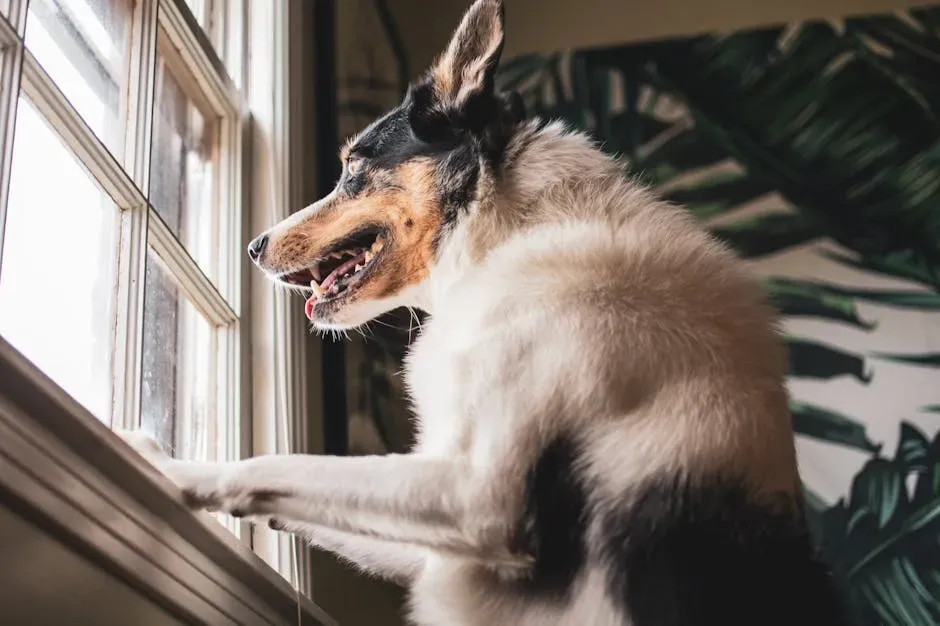
Dogs don’t measure time in hours, minutes, or seconds. Instead, they rely on a combination of environmental cues, routines, and internal rhythms to gauge the passage of time. This isn’t a limitation so much as a completely different operating system.
While humans rely on clocks and calendars to track time, dogs perceive the world’s temporal rhythms in a fascinatingly different way. Their understanding of time isn’t based on hours and minutes but rather on a sophisticated combination of biological signals, environmental cues, and their remarkable sense of smell.
Scientists believe that dogs experience time through a mix of sensory inputs and biological processes, and just like humans, dogs have an internal clock governed by circadian rhythms. That internal clock does a lot of heavy lifting, more than most owners realize.
The Internal Clock: Circadian Rhythms and the 24-Hour Cycle
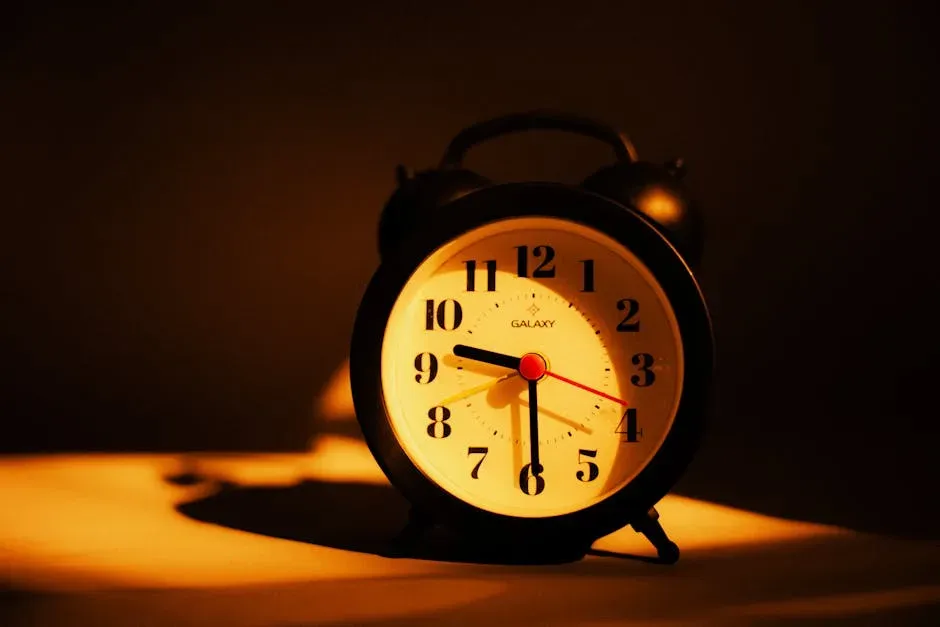
Dogs don’t perceive hours and minutes the way we do. Instead, their internal clocks rely on circadian rhythms, a cycle roughly 24 hours long regulated by hormones and environmental changes like light, temperature, and activity levels.
Defined as the changes experienced over a 24-hour period, an animal’s circadian rhythm is controlled by its biological clock. Circadian rhythm is key in a dog’s relationship with time. Physiological changes in the body tell a dog when it is time to wake up, sleep, eat, go to the bathroom, and exercise. It is, in the most literal sense, their version of a schedule.
Dogs form expectations: if dinner is always at 6 pm, their brain begins to anticipate it, and maybe wag their tail around that hour. Like most mammals, dogs have a circadian rhythm, an internal 24-hour clock that helps regulate sleep-wake cycles and other physiological processes. While their actual sleep cycles differ from ours, dogs have evolved to sync fairly closely with human schedules.
Smelling Time: The Nose Knows More Than You Think
It’s a known fact that dogs have an impressive sense of smell. In Alexandra Horowitz’s book “Being A Dog,” she discusses a dog’s ability to smell the passage of time by the intensity of the scent. For example, when you are home, your scent is strongest. When you leave, that scent begins to fade, and dogs appear to track that fading like a natural timer.
Research suggests dogs assess how long a person has been gone by scent strength, with fresher scent meaning recent presence. An informal BBC demonstration seems to suggest that it is the dissipation of your bodily scent which serves as a sort of clock that allows the dog to smell the passage of time and mark when you are about to return. It’s a remarkable workaround for not having a wristwatch.
The idea behind this is that if you can somehow renew or refresh the human’s scent in the house, then the dog will underestimate the amount of time that has passed and will not be alert and waiting in anticipation at the usual time. That single finding reshapes how we think about what a dog is actually doing when it paces by the door.
Episodic Memory: Do Dogs Actually Remember the Past?
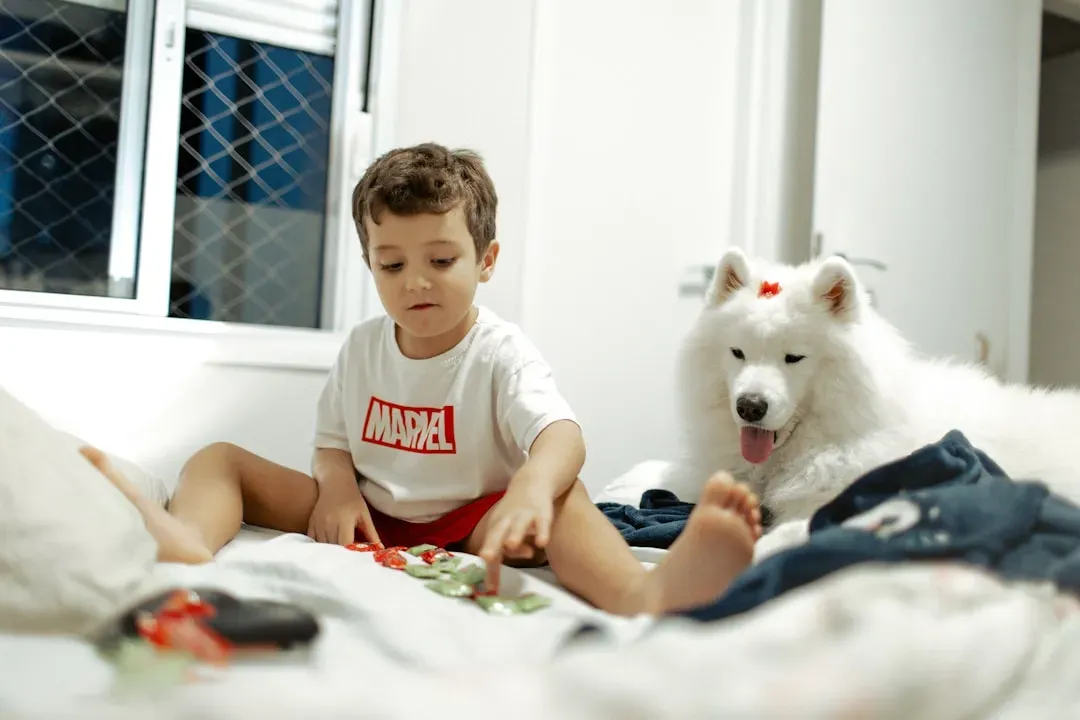
Recent studies have suggested that animals, including dogs, can perceive time in much more nuanced ways than we previously thought. Research into episodic memory indicates that dogs may retain memories of past events, which, in turn, helps them understand time passing and relate certain events to their consequences.
Pavlov’s classic experiments showed us that dogs form implicit memories, the type of unconscious memory that allows them to perform learned behaviors, like touching their nose to a bell on cue or recognizing feeding routines. Whether dogs also have episodic memory, the ability to recall past events with context and detail, is still up for debate. Scientists remain cautious, but the evidence is growing.
We know that dogs are capable of emotional and scent memory, and one study has determined that dogs may have episodic memory. This means dogs were able to recall a behavior taught through a mimicry protocol and were able to recall that episode of learning in the future. That’s a meaningful step beyond simple instinct or reflex.
How Dogs React to Absence: The Science of Separation

Behavioral studies have revealed that dogs react more intensely when owners are away for longer versus shorter periods. Videos tracking tail movements, facial expressions, and vocalizations have confirmed that dogs show stronger reunion responses after extended absences. The difference is real, and measurable.
In one experiment, dogs showed stronger reactions when their owners were gone for two hours compared to 30 minutes. The longer the absence, the more enthusiastic the greeting. Yet this doesn’t necessarily mean dogs count hours. Most likely, their emotions respond to the increasing unfamiliarity of scent and environmental cues as they change over time.
When left alone, dogs don’t count the hours like we do, but they do experience time’s passage through changes in their environment and internal rhythms. This understanding helps explain why some dogs experience separation anxiety or show different levels of excitement depending on how long their owner has been away. Their reaction isn’t based on counting hours but on their perception of time through various biological and environmental signals.
Routine, Environment, and What You Can Do With This Knowledge

Temperature changes throughout the day also serve as time markers. Dogs feel the cooler morning air, the warm afternoon, and the evening chill. These subtle shifts help them gauge where they are in the daily cycle. Sound patterns work similarly. Morning bird songs, afternoon traffic noise, and evening quiet all signal different times of day. Dogs with good hearing pick up on these audio cues and use them to track time.
A key to your dog’s emotional health lies in predictable rhythms. Feeding, walks, rest, and play should occur at consistent times whenever possible. For very routine-driven breeds like Beagles or Dachshunds, having meal times shift by hours can confuse their internal clocks and create frustration.
Understanding this perception of time has practical uses for pet owners. By changing up training routines and your dog’s schedule, you can help prevent your dog from fixating on specific time intervals and encourage flexibility and adaptability. Varying the duration of training exercises or mealtimes can help prevent your dog from becoming overly reliant on routine and predictability. This approach fosters mental stimulation and engagement, promoting a more enriching and fulfilling life for your canine companion.
A Different Kind of Intelligence: What It All Really Means

There’s something quietly humbling about all of this. We’ve spent centuries assuming dogs operate on pure instinct, living in a perpetual present with no real grip on past or future. The science tells a different story.
While there’s a lot we don’t yet know about how dogs perceive time, we do know they use a combination of internal rhythms, environmental patterns, and their powerhouse sense of smell to make sense of their world. That’s not simplicity. That’s a parallel form of awareness.
Understanding the subtleties of time perception in animals like dogs allows us to refine our training methods, ensuring that we communicate with them in ways that align with their perceptual world. Factors such as age, breed, personality, and even overall health can also influence how a dog perceives time. No two dogs experience the day in quite the same way.
Every dog owner who has ever felt guilty leaving for work, or noticed their dog stirring fifteen minutes before the usual walk, has glimpsed this truth without knowing it. Your dog isn’t broken or dramatic. They’re reading the world through a completely different set of instruments, and they’re remarkably good at it. The clock on the wall means nothing to them. The scent you left behind, the light shifting through the window, the familiar rumble of your car engine at the end of the day – that’s their clock. It turns out, it’s a pretty precise one.


