
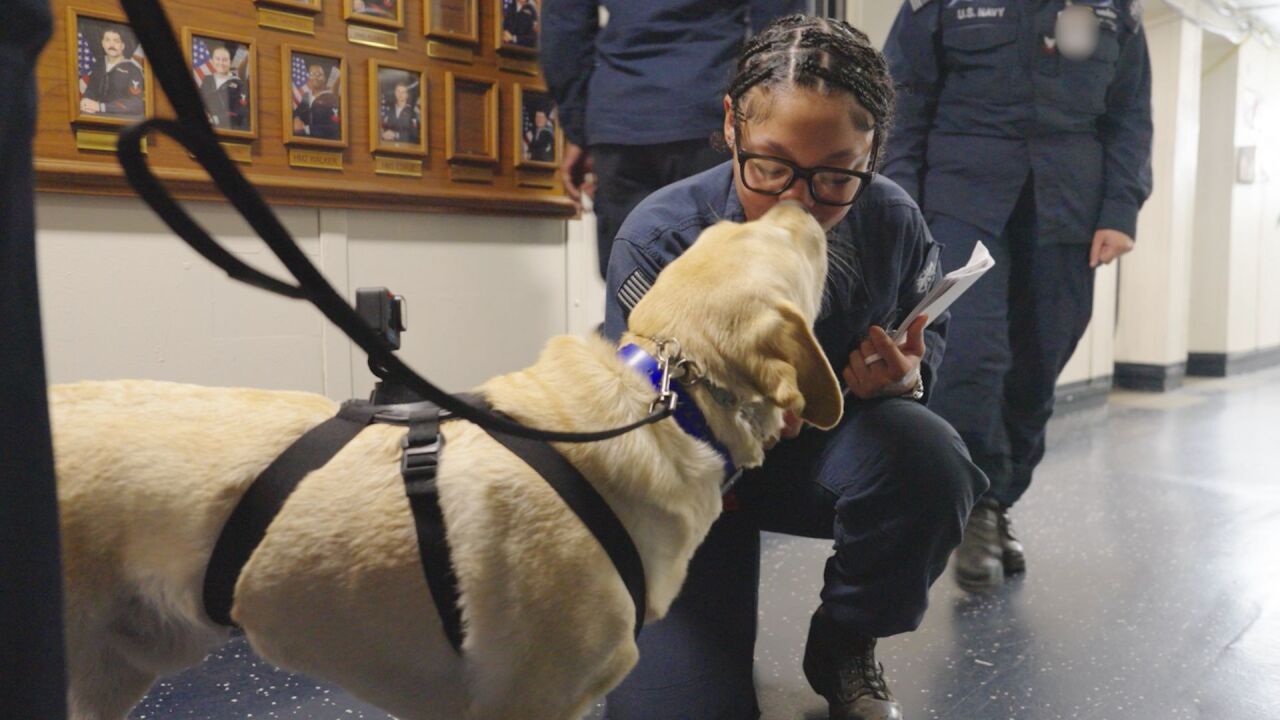
A yellow Labrador named Commander Ike moves steadily through the narrow passageways of the USS Wasp, pausing when a sailor reaches down for a brief pat. Far from port and surrounded by the open ocean, the dog’s presence offers a steady point of calm amid the routines of shipboard life. As reported by Scripps News, the U.S. Navy has begun stationing these expeditionary facility dogs full-time on select warships to help crews manage the pressures that build during extended deployments. Six dogs now serve across the fleet through a partnership with the nonprofit Mutts with a Mission.
Why Mental Health Support Matters at Sea
Deployments can stretch for months with limited contact to family and few opportunities for privacy or change of scenery. Sailors work long shifts, share tight quarters, and face the constant demands of maintaining a warship in all conditions. These factors can compound stress in ways that differ from life on land. The Navy’s decision to embed therapy dogs reflects an effort to address those strains directly where they occur.
Unlike shore-based counseling, the dogs travel with the crew and remain available around the clock. Their role is not to replace other mental health resources but to provide an immediate, low-pressure form of support that fits naturally into daily operations.
The Dogs and Their Training
Each dog undergoes specialized preparation before joining a ship. Commander Ike and the others are selected for temperament and then trained to interact calmly with large groups in confined spaces. They learn to recognize signs of tension and respond with quiet presence rather than high-energy play. Once aboard, the dogs live full-time with the crew, sharing the same environment and schedule.
The partnership with Mutts with a Mission supplies the animals and ongoing guidance. The organization works with the Navy to match dogs to specific vessels and to monitor how the program evolves. Six dogs currently serve in this capacity, with placements chosen to cover a range of ship types and deployment lengths.
Daily Life with a Shipboard Dog
On the USS Wasp, Commander Ike’s routine blends into the ship’s rhythm. He accompanies sailors during breaks, sits beside them during quiet moments, and offers a living reminder that connection remains possible even at sea. Crew members report that simply walking the dog or sitting with him provides a brief shift in focus that helps reset the day.
The dogs also participate in structured activities when the schedule allows. These sessions give sailors a predictable outlet without requiring formal appointments. Because the animals live among the crew, their support feels integrated rather than separate from normal operations.
One middle section of the program’s approach stands out for its emphasis on consistency. Rather than rotating dogs on and off ships, the Navy keeps each animal assigned to a single vessel for the duration of its service. This stability allows both the dog and the crew to build familiarity, which appears to strengthen the bond over time.
What Comes Next for the Initiative
The current fleet of six dogs represents an early stage of the effort. Navy leaders continue to evaluate how the animals affect overall crew well-being and whether additional placements would be useful. Feedback from sailors and commanding officers helps shape adjustments to training and deployment practices.
Because the program is still expanding, questions remain about long-term outcomes and the ideal number of dogs needed across the fleet. Officials have indicated they will monitor results closely before deciding on further growth.
The program shows how small, consistent forms of support can fit into the demanding world of naval service. As more ships welcome these dogs, the Navy gains another tool for helping sailors maintain balance during long periods away from home.


