
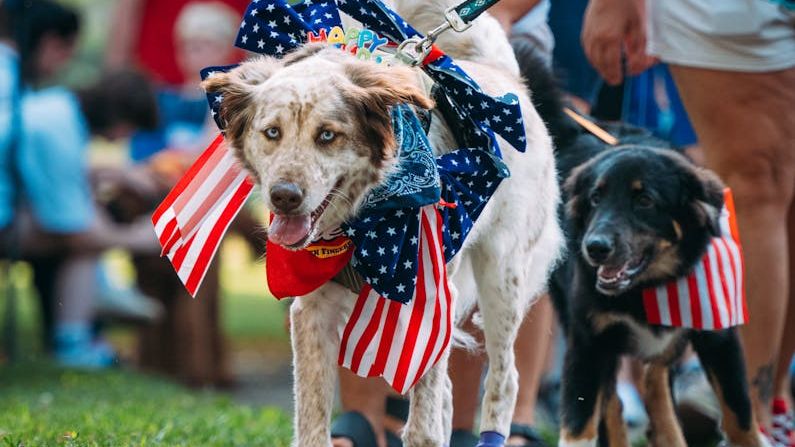
Can I Bring My Dog to a Parade? Advice from Our Vet Expert – Image for illustrative purposes only (Image credits: Pexels)
Pet owners often picture their dogs enjoying the same community celebrations they do, yet parades introduce sudden crowds, loud sounds, and unpredictable movement that can overwhelm even friendly animals. The decision to include a dog carries real consequences for its comfort and safety, especially when excitement masks early signs of distress. Veterinary guidance emphasizes preparation and close observation to reduce those risks without assuming every dog will adapt the same way.
Start With a Clear Assessment of Temperament
Some dogs handle new environments with curiosity while others react with avoidance or fear from the first moments of noise and movement. Owners who know their pet’s usual responses to strangers or loud events gain an early advantage in deciding whether a parade fits that profile. Uncertainty remains because individual reactions can shift with factors like recent health changes or prior experiences that are not always obvious in advance.
Watch for subtle cues such as panting without heat, tucked tails, or attempts to pull away before committing to the outing. These observations help separate dogs that might enjoy limited exposure from those better left at home. The line between mild interest and rising anxiety is not always sharp, which is why many experts recommend a short test walk near similar activity first.
Handle Practical Preparations in Advance
Microchipping offers a reliable backup if a dog becomes separated in the crowd, and current identification tags add another layer of protection. Checking the forecast for extreme heat or storms prevents unnecessary exposure that could lead to exhaustion or dehydration. A sturdy leash and harness keep the animal close without restricting natural movement during the event.
These steps address common hazards but do not eliminate every variable. Weather can change quickly, and even well-prepared dogs may encounter unexpected triggers once the parade begins. Owners who treat preparation as a checklist rather than a guarantee stay more alert throughout the day.
Monitor Conditions and Behavior on Site
Parades often feature fireworks, marching bands, or vehicle engines that create sudden volume spikes capable of startling sensitive hearing. Keeping distance from the loudest sections and watching for signs of overheating or choking on dropped treats helps catch problems early. Regular checks for labored breathing or excessive drooling allow quick adjustments before minor issues escalate.
Every dog processes stimulation differently, and what appears manageable at the start can intensify over time. Owners who remain flexible and ready to leave maintain better control than those who push through visible discomfort. This ongoing attention forms the core of responsible participation rather than a one-time decision.
Know When Alternatives Serve Everyone Better
If a dog shows clear stress through shaking, hiding, or refusal to move forward, the kindest option is often to skip the event entirely. Quieter walks in familiar areas or watching a recorded version from home can still create shared moments without the added pressure. Veterinary perspectives highlight that forcing participation rarely improves long-term comfort and may increase future anxiety around similar settings.
Recognizing these limits protects both the animal and the owner’s peace of mind. Many households discover that selective outings build stronger trust over time than repeated attempts to include every celebration. The choice ultimately rests on reading the individual dog rather than following a universal rule.


