Picture this. Your dog paces restlessly across the room, ears pulled back, tail tucked low. You call their name, but they barely register your voice. Something feels off, doesn’t it? Maybe it’s the chaos of daily life, the unpredictable routines, or even just the energy you bring home after a stressful day. Here’s the truth that many dog owners overlook: your home environment shapes your dog’s emotional world in profound ways. Studies show that nearly 40 percent of dogs exhibit signs of stress, which means your pup might be struggling silently.
The good news is that creating a calm, predictable space can transform your dog’s mental state. We’re not just talking about a cozy bed in the corner. We’re talking about a sanctuary where your dog feels safe, secure, and genuinely relaxed. So let’s dive into how your home can become the foundation for a happier, less anxious dog.
Why Your Dog’s Stress Matters More Than You Think

Let’s be real, stress isn’t just an inconvenience for your dog. It’s a full-body experience. Environmental factors, such as housing conditions or exposure to stressful stimuli, directly impact cortisol levels by triggering the hypothalamic–pituitary–adrenal (HPA) axis, which is basically your dog’s alarm system.
It can take up to 72 hours for cortisol levels to return to normal, meaning one stressful event can ripple through your dog’s behavior for days. For dogs who regularly experience overwhelming or over arousing events, cortisol levels stay elevated long term, which means a more touchy and edgy dog in general who is quicker to overreact to things. Chronic stress doesn’t just make your dog irritable. It can weaken their immune system, lead to compulsive behaviors, and even shorten their lifespan.
Predictability Is Your Dog’s Best Friend

Dogs thrive on routine. It is still essential to develop a routine for your dog to help give them a more predictable, happy life. What seems to work best is predictability. Think about it from your dog’s perspective: when every day looks different, they’re constantly on high alert, trying to guess what comes next.
Stressful or unpredictable interactions often reinforce fear, so create a stable environment with structured routines for meals, walks, and rest. Honestly, this isn’t just about sticking to a rigid schedule. It’s about consistency in the small things. Feed your dog at similar times. Walk the same route occasionally. Even your energy when you come home matters. Calm arrivals and departures signal to your dog that everything is under control.
How Your Own Stress Bleeds Into Your Dog’s World

You might not realize it, but your dog is basically a furry emotional sponge. Long-term stress synchronization in dogs and their owners was investigated, and the findings are eye-opening. Positive interactions are shown to reduce cortisol levels, while negative or unpredictable social environments can elevate them.
Your dog picks up on everything: your tone of voice, your body language, even your breathing patterns. If you’re anxious, your dog feels it. That doesn’t mean you need to be zen all the time, but it does mean being mindful. When you walk through the door after a rough day, take a moment. Breathe. Your dog will mirror your state more than you realize.
Creating Safe Spaces That Actually Work

Creating a quiet and designated space for your dog can help alleviate their anxiety triggers. This isn’t about banishing your dog to a room. It’s about giving them a retreat when the world feels too much.
Think about adding a crate with the door always open, soft bedding in a quiet corner, or even just a dedicated spot away from foot traffic. Isolating your pet in a safe and quiet space can help calm their frayed nerves. Some dogs love the den-like feeling of a covered crate. Others prefer an open bed tucked under a table. Watch your dog’s behavior. Where do they naturally gravitate when stressed? That’s your starting point.
Sensory Overload and Why Less Is More
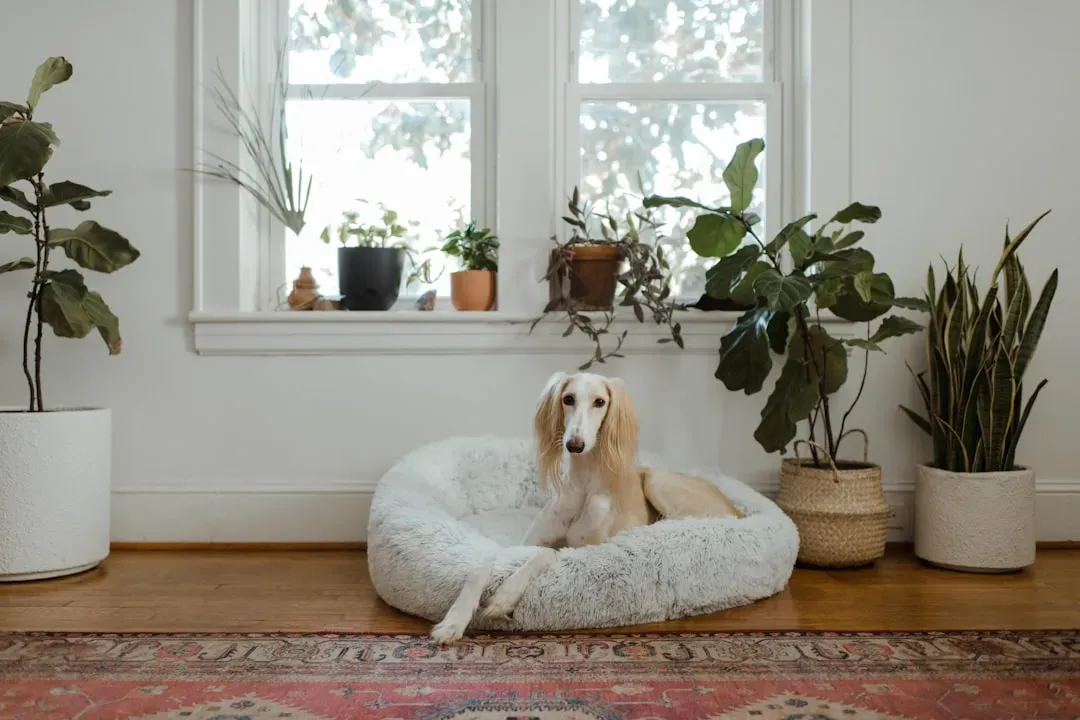
Let’s talk about what your dog hears, sees, and smells every single day. The TV blaring, kids running around, the doorbell ringing, traffic noise filtering through windows. It all adds up. Dogs have way more sensitive hearing than we do, so what seems like background noise to you might feel overwhelming to them.
Living walls with pet-safe plants improve air quality and create calming environments that reduce stress-related behaviors. You can also use calming music. Music therapy has been proven to be beneficial, and research has shown that many dogs prefer classical music. Dim the lights in the evening. Lower the volume. Create pockets of peace throughout your home where your dog can decompress.
The Power of Mental Enrichment Over Physical Exhaustion
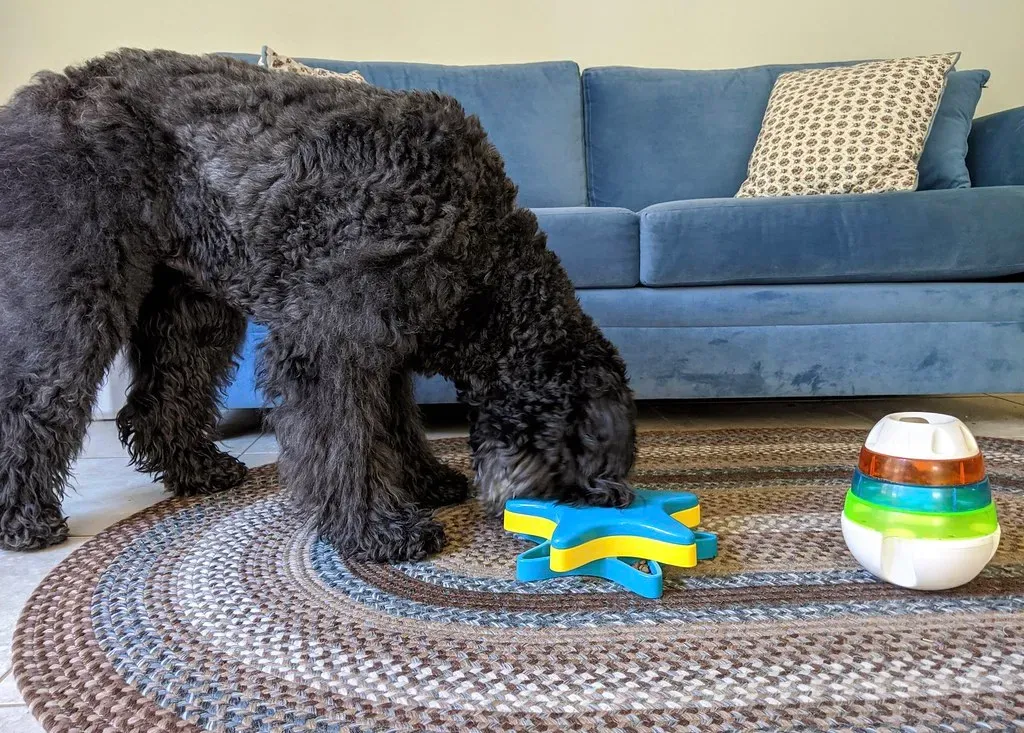
Here’s something many dog owners get wrong: they think a tired dog is a calm dog. Sometimes yes, but not always. 15 minutes of fetch might be more overstimulating than exhausting for your dog, and all that cortisol produced can tip your dog over into undesirable behavior.
Mental stimulation is the game changer. Provide ample exercise and mental stimulation, such as puzzle toys or short training sessions, to channel pent-up energy positively. A sniff walk where your dog chooses the pace can be more calming than a high-intensity run. Puzzle feeders slow them down. Training sessions build confidence. Balance activity with intentional downtime, and you’ll see a shift in your dog’s baseline anxiety.
Conclusion

Creating a calm home environment isn’t about perfection. It’s about awareness. Your dog doesn’t need a perfectly quiet house or a flawless routine. They need consistency, safe spaces, and an owner who understands that their emotional world is deeply influenced by the energy and structure you provide. The payoff is huge: a dog who’s more relaxed, more confident, and genuinely happier in their own skin.
What small change could you make today to help your dog feel more at ease? Maybe it’s dimming the lights during dinner or adding a cozy corner just for them. Start small, stay consistent, and watch your dog transform. What do you think about it? Tell us in the comments.