
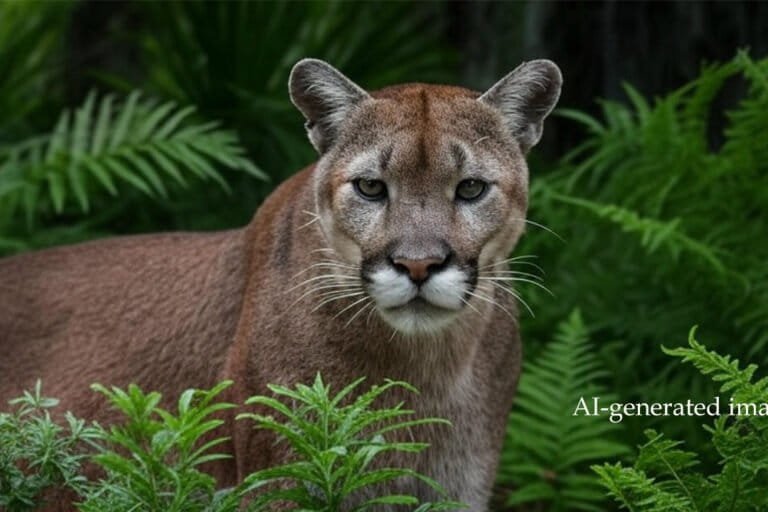
A Ghost Sighting in Lionless Lands (Image Credits: Imgs.mongabay.com)
Djibouti – A video shared via WhatsApp depicted a lioness sprinting across Route Nationale 11, right in front of a vehicle, prompting excitement among local conservationists familiar with the barren landscape.
A Ghost Sighting in Lionless Lands
Houssein Rayaleh, a field biologist working on Djibouti’s fragile ecosystems, received the footage from an ecotourism guide. The clip captured the big cat in motion along a road Rayaleh knew intimately. Such an event stunned observers.[1]
Lions have long been declared extinct in Djibouti, with no confirmed presence for decades. Wildlife surveys confirm the absence of the species amid habitat loss and human pressures.[2] The video quickly raised suspicions of fabrication, fitting a growing pattern of deceptive content that blurs lines between reality and invention.
Conservation professionals like Rayaleh now face the challenge of verifying such claims amid rapid digital sharing. False positives divert attention from genuine threats to species like the Djibouti francolin, a national symbol under Rayaleh’s protection efforts.[3]
The Flood of Fabricated Fauna
Generative AI tools have fueled an explosion of hyperrealistic wildlife videos on social media. Platforms overflow with clips showing impossible scenarios, from predators playing with prey to animals invading urban spaces.
One viral example portrayed a leopard entering a backyard where a child played; a house cat then chased it away. The video garnered over a million likes and thousands of shares.[4] Another depicted raccoons riding crocodiles down a river or bunnies bouncing on trampolines. In India, fake CCTV footage of tigers attacking people in Maharashtra spread panic, prompting unnecessary forest department responses.[5]
These creations exploit algorithms favoring engaging, emotional content. Mammals dominate, as they draw more views, sidelining less charismatic species crucial to ecosystems.[6]
From Viral Hits to Tangible Damage
Such deceptions foster fear and confusion. Viewers absorb distorted views of animal behavior, like predators exhibiting human-like affection. This anthropomorphism erodes understanding of true ecological roles.
In regions with human-wildlife tensions, fake attack videos incite retaliation. India’s 2024 tiger attacks, already numbering 73 fatalities, face compounded issues as hoaxes stoke anger against big cats.[5] Resources waste on false alarms, while real threats receive less urgency. Citizen science suffers too, as misidentified species skew distribution data.
Urban audiences, disconnected from nature, embrace these “false connections.” Children expect magical encounters, leading to disillusionment during actual outings.[7]
Scientists Urge Immediate Action
Researchers warn of deepening impacts. José Guerrero-Casado of the University of Córdoba noted, “They reflect characteristics, behaviors, habitats, or relationships between species that are not real. For example, we see predators and prey playing.”[6]
Co-author Rocío Serrano added, “There is already a total disconnect between citizens and wildlife… These videos create false connections with nature.”[4] Studies emphasize media literacy to counter misinformation, which spreads faster than facts.[6]
Calls grow for platforms to label AI content and schools to teach verification skills.
Arming the Public Against Fakes
Spotting deepfakes requires vigilance. Key signs include unnatural movements, inconsistent lighting, or behaviors defying biology.
- Check shadows and reflections for mismatches.
- Verify species presence in claimed locations.
- Cross-reference with trusted sources like IUCN data.
- Observe physics: dust, water, or fur often glitches.
- Question emotional extremes, like grateful rescues.
Key Takeaways
- AI fakes distort wildlife perceptions, harming conservation funding and efforts.
- False attack videos fuel fear and retaliation in conflict zones.
- Media literacy and labeling offer paths to mitigate the spread.
As digital wildlife tales multiply, true guardians like Rayaleh stress discernment. Protecting biodiversity demands seeing through the illusions. What steps will you take to verify the next animal video you see? Share in the comments.


