

Picture this: you’ve just come home after a long day, you took your dog on a solid walk, fed them their dinner, and settled into the couch. Your dog, however, is still pacing the living room, nudging you with their nose, or quietly chewing the corner of your favorite pillow. Sound familiar? If it does, here’s a truth that might surprise you – your dog may not be physically tired. They might be mentally starving.
Dogs, much like humans, need more than just physical exercise to stay healthy and happy. Mental stimulation is as crucial as their daily walks or feeding routines. Yet so many loving, well-meaning dog parents miss this piece of the puzzle entirely. The good news? It’s never too late to start, and it doesn’t take a lot of money or time to make a real difference. Let’s dive in.
Why Your Dog’s Brain Needs a Workout Too
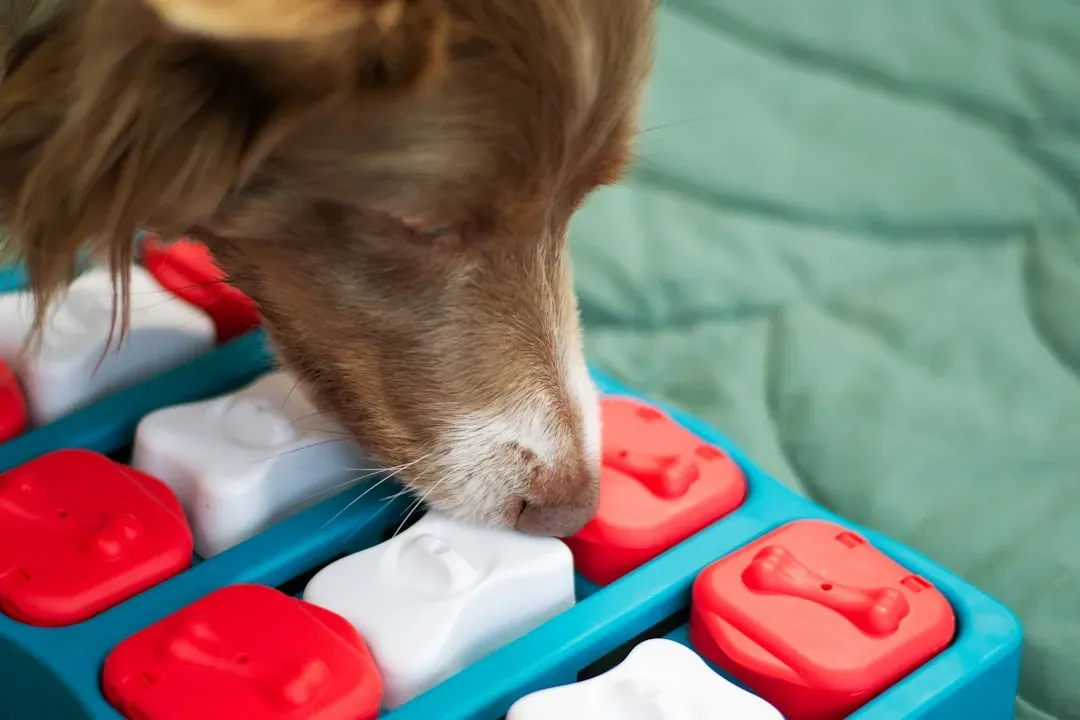
All dogs have natural behaviors they want to express, including chewing, running, chasing, shredding, digging, fetching, sniffing, playing, and more. Enrichment means giving your dog opportunities to express these natural behaviors, which is crucial to their physical and emotional welfare. Think of it like this: a human confined to a room with no books, no conversation, and nothing to solve would go a little stir-crazy. Your dog isn’t so different.
Environmental enrichment isn’t just fun – it physically reshapes the brain. Studies in animals show that enriched surroundings help keep the brain strong and flexible. Just like people, dogs’ brains get stronger when they’re challenged. Enrichment activities actually help build new brain connections, keeping their minds sharp and resilient over time.
Enrichment has been shown to have wide-ranging benefits for dogs including promoting relaxation, reducing stress and anxiety, improving resilience, strengthening bonds with their owner, and preventing and helping to treat undesirable behaviours such as excessive barking and fear aggression. That’s a pretty impressive list for something as simple as a puzzle toy or a sniff walk.
The Warning Signs Your Dog Is Under-Stimulated

Here’s the thing – your dog can’t text you to say “Hey, I’m bored.” Instead, they send messages in behaviors. Knowing how to read them can be genuinely life-changing for both of you. Signs that a dog is bored include tail-chasing, excessive barking, pacing, and digging.
Does your dog whine, pace, or get up from their resting position every few minutes? Dogs that just can’t settle, even after physical exercise, are suffering from a brain that just won’t be quiet. Exercising their brain will help them relax and finally settle down.
A bored dog isn’t just restless – they may be at greater risk for anxiety, destructive behavior, and even health issues. If your dog is still destroying shoes after a two-mile run, don’t just assume they’re being naughty. Their body has been exercised, but their mind hasn’t. That’s a crucial distinction most owners overlook.
The Science of Sniffing, Solving, and Foraging

Honestly, this is the part that gets me most excited. The science behind what happens in a dog’s brain during enrichment activities is genuinely fascinating. Studies have shown that engaging in enrichment activities can lower cortisol, the stress hormone, in dogs. The act of sniffing, central to most enrichment tasks, has a particularly calming effect on the canine nervous system. In fact, nose work has been shown to regulate heart rate and promote relaxation.
When your dog engages in foraging, sniffing, or problem-solving activities, their brain releases dopamine, the “feel-good” neurotransmitter. It’s basically a natural happiness boost. You’re not just keeping your dog busy – you’re actively flooding their brain with good chemistry.
Research suggests there is a need to diversify thinking around enrichment, shifting common thinking of it as one entity to instead consider it in different categories, and to ensure animals receive a mixture of types. In other words, one type of enrichment alone isn’t enough. Variety really is the spice of a dog’s life.
Practical Enrichment Ideas You Can Start Today

Let’s be real – you don’t need to spend a fortune or overhaul your entire routine. Some of the most effective enrichment activities cost absolutely nothing. Scatter feeding, or the “find it” game, involves hiding food around the house or yard and letting your dog hunt and sniff for each piece. When first introducing the game, make it easy by letting your dog watch where you put the treats. Then add the cue word “find it” to communicate when they can start their search. As your dog learns the game, you can progressively make it more challenging to increase their mental stimulation.
Chewing and licking can be self-soothing for dogs. You can give them more rewarding options with food-stuffed Kongs, long-lasting chews, and LickiMats. You can use anything from canned wet food or yogurt to peanut butter or pumpkin puree. Freezing these treats before giving them to your dog will keep them occupied for even longer.
Dog sports like agility, flyball, or obedience competitions provide excellent mental and physical stimulation. These activities require your dog to follow commands, navigate obstacles, and stay focused, which is great for their mental development. Participating in dog sports can also strengthen your bond and provide a fun and competitive outlet for your dog’s energy.
Tailoring Enrichment to Your Dog’s Age, Breed, and Personality

Not every dog wants the same thing – and that’s actually what makes this so much fun to figure out. If you have a scent hound such as a Beagle, you may find that your canine pal loves scavenger hunts. A sight hound, on the other hand, may prefer playing fetch. The options may also change as your dog ages. For instance, a senior dog may be better suited to a gentler mental challenge like a doggy version of the Three Cups game than a rigorous hike.
Enrichment isn’t just for puppies – senior dogs need mental stimulation too. Consistent exercise, problem-solving games, or even simple memory exercises help keep the mind sharp as they age. These canine enrichment activities support attention, learning, and overall happiness, giving older dogs more pep in their step and slowing down age-related decline.
Dogs need at least 20 minutes of mental stimulation per day, though this can vary widely among different breeds, ages, and individual dogs. You may find that two short training sessions at different times of the day work well and won’t overwhelm your dog. Think of it like seasoning food – a little goes a long way, and too much at once can be overwhelming.
Conclusion: A Happier Dog Is Just One Brain Game Away
Your dog doesn’t need a massive backyard, an expensive toy subscription box, or hours of your time. What they need is your attention, a little creativity, and a genuine commitment to treating their mental health as seriously as their physical health. Incorporating at least one form of mental enrichment into your dog’s daily routine can dramatically improve their emotional health and reduce unwanted behaviors. The science is clear: mental enrichment changes your dog’s brain for the better. It boosts mood, encourages healthy activity, reduces stress behaviors like barking, and helps dogs reconnect with their natural instincts.
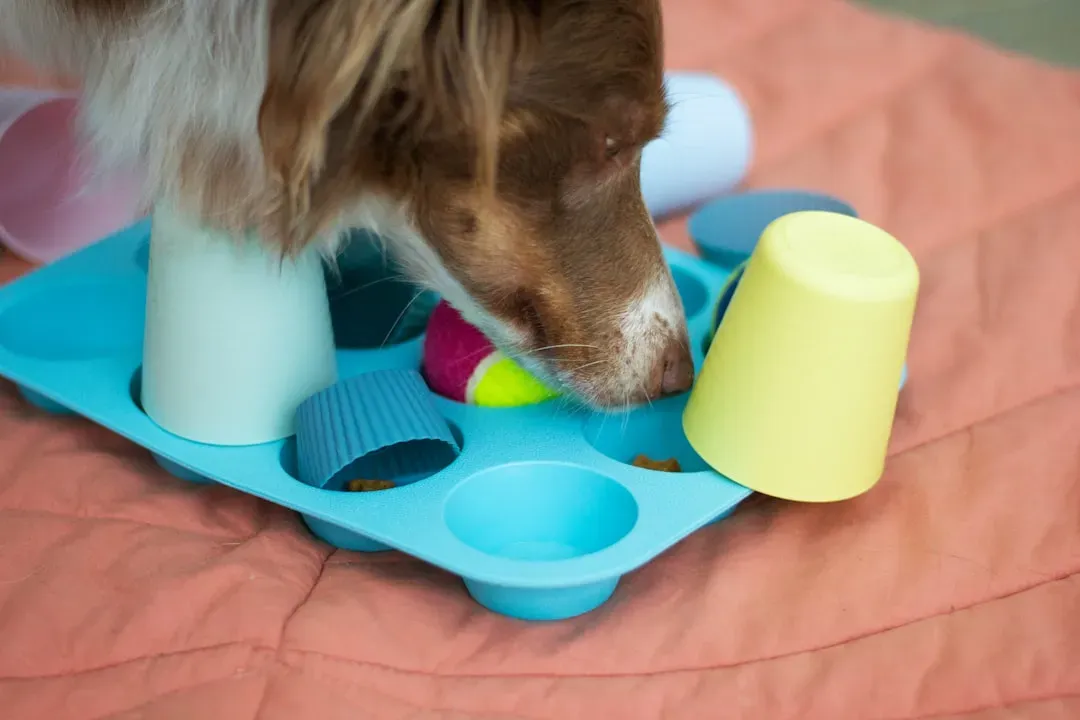
Start small. Hide a few treats in a muffin tin tonight. Let your dog sniff their way down the block tomorrow without rushing them. Notice the sparkle in their eyes when their brain finally clicks into gear. That look right there? That’s everything. A mentally fulfilled dog is a calmer, happier, and healthier companion – and honestly, that makes your life better too.
So, which enrichment activity are you going to try with your dog first? Tell us in the comments – we’d love to hear how your pup responds!


