

Picture this: it’s 2 a.m., and your dog is sitting in the middle of the living room, howling at what appears to be absolutely nothing. Or maybe your sweet, quiet pup suddenly won’t stop whining every time you put on your shoes. You love your dog more than almost anything, yet in moments like these, you find yourself thinking – what on earth are you trying to tell me?
Here’s the thing. Your dog actually has a lot to say. Dogs have a remarkable ability to communicate through a variety of sounds, or vocalizations, and because each vocalization conveys a specific message or emotion, understanding the meaning behind them can help owners address their pets’ needs more effectively – leading to a stronger bond and a happier, healthier dog. The problem isn’t that dogs aren’t communicating. It’s that most of us were never taught to truly listen. Let’s change that.
The Many Languages of the Bark

Most people think a bark is just a bark. It isn’t. Not even close. Dog barks are not one-dimensional – there’s a real assortment of barking styles, ranging from high “yap yap yap” sounds to deep, low-pitched rumbles, and some dogs bark a lot while others are typically quiet.
Interpreting a dog’s bark breaks down into three fundamental aspects: pitch, frequency, and duration. Dogs use the pitch of their voice to indicate how they feel about something, and generally, the lower the pitch, the more threatened or “in-danger” your furry friend feels. Think of it like a human’s tone of voice – a calm, high-pitched greeting sounds nothing like a low, tense warning.
Emotions can be expressed through barking, whether it’s a higher-pitched bark for excitement, a repetitive and monotone bark for boredom, a sharp and intense bark to alert you of a sound or sight, or a short, quick bark directed at another dog. So when your dog barks at the mail carrier differently than they bark during a game of fetch, they’re not just being random. They’re being remarkably specific. In more general terms, the lower and harsher the bark and the shorter the inter-bark intervals, the more serious the dog. A playful or lonely dog will have a higher-pitched bark than a dog warning an intruder.
Playful barks are typically high-pitched and accompanied by a wagging tail or a “play bow,” and these barks signal excitement and a desire to engage in fun activities, like playing fetch or running around in the yard. Once you start tuning in to the pitch, rhythm, and body language that accompanies a bark, it becomes less of a mystery and more of a conversation.
The Howl: Ancient Call, Modern Message
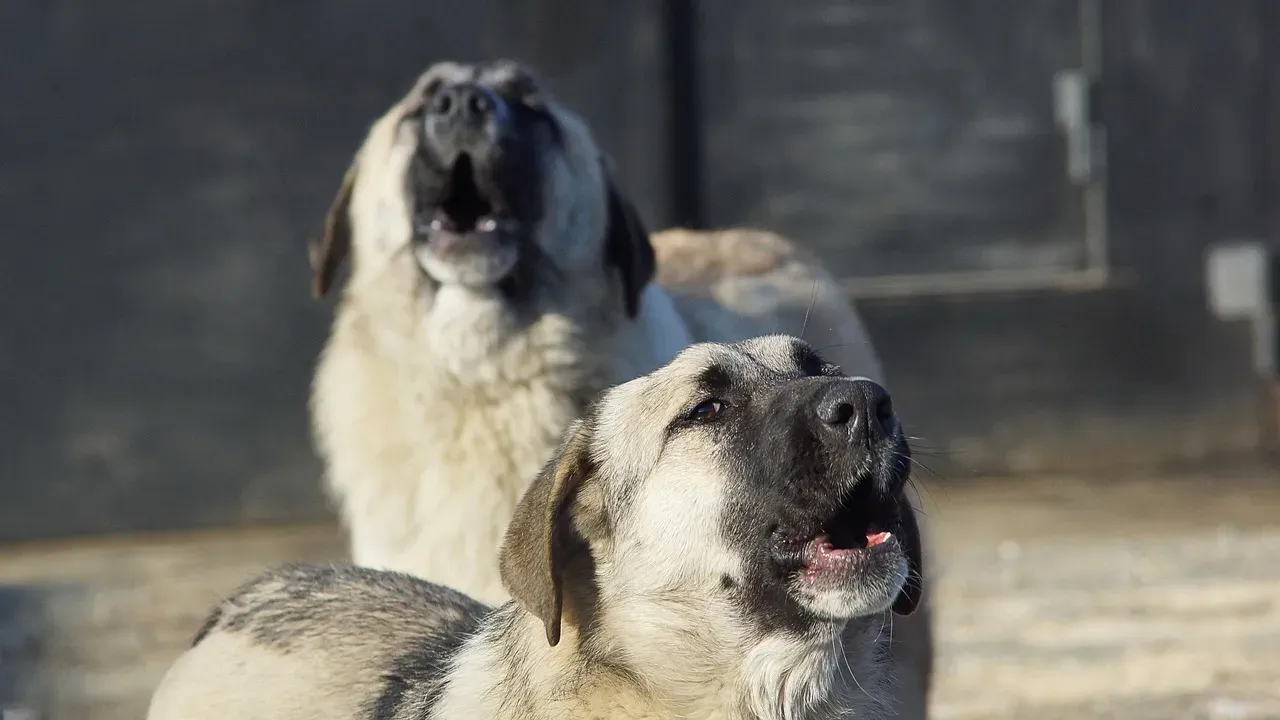
There’s something deeply primal about a dog’s howl. It can send chills down your spine or make you laugh out loud, depending on the context. Honestly, I think it’s one of the most fascinating things dogs do – it’s like getting a window into their wild ancestry.
Howling reflects dogs’ long-range communication instinct, passed down through their ancestral ties to wolves. In terms of howling, the wolf developed this vocalization for long-distance communication, territorial signals, and to foster relationships within the pack. The primary reason a wolf howls is for location-signaling, to find pack members or call the whole pack to its location.
The howl can communicate things to other dogs, such as “I am here” or “This yard is mine,” and dogs can also howl to get attention. Howling is a behavior with deep roots in canine evolution, often used by dogs to communicate with their pack or claim territory. While some dogs howl in response to sirens or music, others use it to express excitement or loneliness, and understanding the context in which your dog howls can help you interpret their message.
Any dog can howl, but some breeds – like the Siberian Husky, Bloodhound, and Dachshund – are known for their tendency to howl more than others. If your dog only howls when you leave the house, that’s a very different story. Separation anxiety howling only occurs when a dog is left alone or separated from their owner, and this kind of howling is usually accompanied by at least one other symptom of separation anxiety, such as pacing, destruction, elimination, depression, or other signs of distress. In that case, the howl isn’t ancestral instinct – it’s a cry for help.
Whining, Whimpering, and the Art of the Emotional Request

Whining is one of those dog sounds that can make you feel deeply guilty even when you have no idea what you did wrong. Your dog stares at you with those soft eyes, emits that high, thin sound, and somehow you feel responsible for all the world’s problems. Sound familiar?
In the dog world, whining is sort of like crying. Dogs whine and whimper to express feelings of fear, pain, anxiety, and unhappiness, but some whine at their human companions as a means of getting something they want – like food, play, a bathroom break, or attention. Whining can also be an expression of excitement, like when you arrive home or are getting your dog’s dinner ready.
A dog whining at the door before a walk is different from a dog who suddenly starts whining at night, struggles to settle, or cries when climbing stairs. A sudden change in vocalization deserves attention, and veterinary and behavior sources consistently note that whining can be linked to pain, fear, stress, separation-related distress, age-related changes, or a learned pattern that has been rewarded over time.
A dog who whines when lying down, getting up, jumping, using stairs, or being touched may be uncomfortable and should be checked by your vet. This is a big one. Many owners assume whining is behavioral when it’s actually physical. Dogs may vocalize because of arthritis, injury, dental pain, abdominal discomfort, urinary problems, neurologic disease, or other painful conditions. So if your normally quiet dog starts whining repeatedly, especially when moving, don’t dismiss it as drama. Get it checked out.
The Growl: Please Don’t Silence This One

Let’s be real about something that surprises a lot of dog owners: growling is good. Or at least, it’s important. Many people try to stop their dogs from growling, which is actually one of the most counterproductive things you can do.
Though dogs can growl while playing, they tend to use growling when they are fearful, upset, sensing a warning or threat, or protecting their territory. Growling can be seen as a negative behavior, but it is an important form of communication that can help prevent potentially dangerous situations, such as a bite, by signaling to others to stay back or indicating a personal boundary has been crossed.
Never try to stop your dog from growling. It’s an important method of communication that means “I don’t like that” or “please stop.” Teaching a dog not to growl takes away their ability to warn you, and you could end up with a dog who bites unpredictably, without warning. That’s a much scarier outcome than a growl you understand.
When a dog growls playfully, they have loose body language and a soft facial expression, such as a tail held in neutral position and soft ears moved slightly to the side. Both puppies and adult dogs may growl during play. The key is learning to read the whole picture – not just the sound, but the posture, eyes, and overall energy. If your dog continues to growl, refuses to take rewards, appears fearful and anxious, or escalates their behavior to barking, lunging, and biting, take them to a veterinarian for an exam, as sometimes medical conditions can cause a dog to growl and not want to interact with their environment.
When Vocalizations Signal a Health Problem

This is the section many dog owners skip over, and honestly, it might be the most important one. Your dog’s voice can be one of the earliest indicators that something is physically wrong – long before they show other obvious signs of illness.
A sudden change in dog sounds – like excessive whining, howling, or a raspy bark – might mean a trip to the vet is in order. Dogs that usually stay quiet but start barking nonstop or making high-pitched whimpers could be trying to say they’re uncomfortable. Some breeds are naturally vocal, but if a pup starts making different sounds than usual, like deep coughing or strained panting, you should pay attention. If they seem restless, avoid food, or act differently alongside new noises, something more serious could be going on.
Illnesses or diseases that cause any kind of painful or discomforting sensations for your dog – like cancer, arthritis, urinary tract infection, dental problems, and Cushing’s Disease – can all manifest through vocalization. Noise patterns like incessant barking or howling might even indicate cognitive decline, especially in senior dogs. Think of your dog’s voice as a running health commentary – a change in the script deserves your attention.
Owners should understand the common reasons behind each type of vocalization so that if there are any significant or persistent changes in a dog’s vocalization patterns, they can schedule an appointment with a veterinarian, behaviorist, or trainer, who can provide guidance on how to address the underlying reasons for the sound and develop a plan to manage it effectively. A practical tip: keep a short log for a few days – when the vocalization happens, what was going on right before it, your dog’s posture, and what helped. Videos from home can be very helpful for your vet because many dogs behave differently in the clinic.
Conclusion: Your Dog Is Always Talking. Are You Listening?

Dog sounds aren’t random noises – they’re vital, complex components of canine communication, acting as crucial indicators of your pet’s emotional states, behavior, and physical health. Understanding these vocal clues is just as important as recognizing a physical limp or a skin rash, and when you learn to decode what dog vocalization means, you strengthen your bond with your pet and gain a powerful tool for safeguarding their well-being.
AI models trained on audio and video data are already being used to identify patterns in dog vocalizations, with some evidence of breed-specific and age-related differences, and these advances may one day enable the translation of canine sounds into human language and help detect health or behavioral changes in pets. Science is racing to catch up to what dogs have been trying to tell us all along.
You don’t need a dog translator app, though. You need patience, observation, and a willingness to truly pay attention. Every bark, whine, howl, and growl is a sentence in a language your dog has been speaking their entire life. The more fluent you become, the richer and safer your life together will be.
So the next time your dog opens their mouth and makes that sound – whatever it is – ask yourself: what are they telling me right now? You might be surprised by how much you already understand. What do you think about it? Share your own experiences with us in the comments below.


